I want the readers to know how difficult it can be to search for a birthparent. If you are an adoptee, you already know!
One: You don't really get much help with the non-identifying information! Most states offer it free. Unless you're a psychic, you'll have no help to find BOTH SIDES of your family. Most of us were given up for adoption because our mother wasn't married. His name won't be in the paperwork, not usually.
Two: At age 18 an adoptee may request a search for birth parent(s) identity
and location and a copy of his or her impounded birth certificate. There are conditions. I paid $75 for a court order and had to wait to see if the judge would release my file. The judge said YES - but he/she could have said NO. AND I already knew and listed my birth parents names and dates of their death. I knew all that information - yes - but I still wanted to read my file. I'M SO GLAD I GOT MY FILE!
Three: Reading about Wisconsin laws where I was adopted, the state would require AN AFFADAVIT - from both birthparents? Really? So they can find and contact my birthparent but not me? They are MY parents. This bureaucracy is completely ridiculous. Do you think they make it difficult so an adoptee will give up?
They didn't write these laws for adoptees. NO! They wrote them to make it next to impossible for an adoptee to find out anything.
DNA tests are becoming the norm for an adoptee so we can find relatives FASTER and with much less headache.
(My comments are in parenthesis)
Wisconsin: How the Law Affects Adoptees
When an adoptee is 18 years old, he/she can request medical and genetic
information about his/her birth relatives and non-identifying social history
information.
(What good is that? Little help, very little hope.)
Upon written notification from a licensed medical provider, the Department of
Children and Families or another licensed adoption agency must make every effort
to notify an adoptee, 18 years or older, if a birth parent(s) or sibling has
developed a genetically transferable disease or condition.
(Now this would be a very scary situation, a letter or phone call you wouldn't expect. Why wasn't our medical information available to the adoptive parents at the time of birth?)
Also, at age 18 an adoptee may request a search for birth parent(s) identity
and location and a copy of his or her impounded birth certificate.
(Impounded - really?)
Identity and location of birth parent(s) will not be disclosed unless an
affidavit of consent has been signed by birth parent(s). If a court has legally
determined paternity, or the father's name appears on the impounded birth
certificate, affidavits usually will be needed from both birth parents.
(THEY can find them? What if she remarried and changed her name? What if she doesn't admit who is the father? So many unknowns while the adoptee waits and WAITS!)
If the birth parent(s) files the necessary affidavits of consent, identity
and location of the birth parent(s) and the impounded birth certificate will be
released upon request.
(How long will that take? How much will it cost an adoptee?)
If affidavits of consent are not on file, a search for the birth parent(s)
will be conducted. If located, the birth parent(s) has the option of signing an
affidavit of consent to release identifying information.
(Obviously the state has resources to search for our parents - they have money to do that. Why should either birthparent consent to give me my own information? Why did the state law offer them that option? It's MY information. Why don't they end these archaic laws? The adoption industry makes BILLIONS of dollars. I do know its about making "forever families" and adoptees are simply the commodity. These laws protect the adoption agencies, the state and the adoptive parents.)
Using her own money, Karen traveled to Iceland late last year to meet
Guðrún and the Iceland media covered it. Her wish was to reunite Guðrún
with her tribe and relatives. She succeeded.[caption]
Kimberly Linebarger, left, with sister Gudrun Drofn Emilsdottir, in
lobby of Seven Clans First Council Casino Hotel, Newkirk, Oklahoma,
November 19, 2018.[caption]
Guðrún Emilsdóttir, circa 1967, baby picture
Guðrún Emilsdóttir, adopted shortly after birth, was 28 before she tracked down her birth mother.
Her birth mother gave Emilsdottir her birth certificate, which named her father, Henry Linwood Jackson.
“My nephew started looking for Henry,” she said.
Eventually, he contacted Native American genealogist Karen Vigneault, a member of the Iipay Nation of Santa Ysabel in California who was profiled in an earlier VOA story. On Vigneault’s advice, Emilsdottir took a DNA blood test; they uploaded the results onto an online database and waited.
Emilsdottir has returned to Iceland but is planning to return to Oklahoma in July 2019 for the “Encampment,” a pow wow the Otoe-Missouria tribe has held annually for more than 130 years. It’s an occasion for the tribe to sing, drum, dance and remember their history and traditions. And celebrate family, lost and found.
The reunion happened because of the tireless methodical work of librarian and tribal genealogist Karen Vigneault (MLIS); she and I have worked together since 2013.
I learned yesterday that Karen has passed away at her home in San Diego.
She made miracles and reunions for adoptees, like these sisters.
It is impossible to put into words the impact she had on me and the lives of many adoptees she helped. She worked to find adoption records, tribal histories, family genealogy and find relatives that adoptees could contact and meet.
This loss is personal and devastating. Not just to me but to readers of this blog who are still searching and hoping and waiting and wanting to find their families.
I will post more when funeral arrangements are announced.
"With life's depradations, perpetrated against the vulnerable, the Great
Mystery is raising an amazing group of whom I coin 'Warrior Survivors'.
As the chief of the Turtle Island Warrior Society, and advocate for
Sky, Earth and All In Between, I also stand with these Survivor Warriors
in what in all reality is a battle against the crimes of abuse
perpetrated by those whom we are supposed to trust. In my journeys, I
met such a warrior. Her name is Annie O'Sullivan; an extraordinary human
being, with Sacred Fire which burns in her. Annie tells her story
eloquently, bringing readers, or listeners, to a place and time beyond
one's own realities. She takes us successfully out of the comfort zone,
and into a world of such cruel reality as to make it virtually
experiential. Yet, through the truth of her ordeals, this Warrior
Survivor shines with strength, power and hope - not just for herself -
but for all who have been through literal hell on Earth. It is a great
honor to know Annie, and I know that through her story, you will come to
know - and honor her - too." —Chief David Little Eagle, The Turtle
Island Warrior Society
Adoptee Annie O’Sullivan was born in the New England area. Growing up in a
military family she travelled much of the US with her family as they
followed her father’s military career. Soon after graduating from high
school she left to serve in the USMC. While on active duty she married
had two children attained the rank of Sergeant and ultimately entered
therapy. In the end Annie would log ten years of counseling, private,
group and hospitalization.
We applaud the broad coalition of federal lawmakers, attorneys general from 21
states, and 30 child welfare organizations who have joined 325 Tribal
governments and 57 Tribal organizations in filing numerous amicus briefs
with the U.S. Court of Appeals for the Fifth Circuit to defend the
Constitutionality of the Indian Child Welfare Act
(ICWA).
The past 96 hours have witnessed an unprecedented and overwhelming
demonstration of support for ICWA and its constitutionality as a wave of
amicus briefs were filed urging the Fifth Circuit to reverse the
district court’s ruling in Brackeen v. Zinke, which
erroneously deemed key provisions of ICWA as being
unconstitutional.
Passed more than 40 years ago by Congress, ICWA was designed to reverse
decades of cultural insensitivity and political bias that had resulted
in one-third of all Indian children being forcibly removed by the
government from their families, their tribes and
their cultural heritage.
ICWA ensures the best interests and wellbeing of Native American
children are protected. ICWA preserves the stability and cohesion of
Tribal families, Tribal communities and Tribal cultures. It maintains
and reinforces the political and cultural connections
between an Indian child and his or her tribe.
An Indigenous newborn taken from her mother just hours after birth in an apprehension broadcast live on Facebook is expected to be back home with her family later this week, an advocate for the family says. The infant has spent the five days since in an emergency placement with either a foster family or at a Winnipeg infant shelter where staff feed and change many of the newborns apprehended into care in the province, Cora Morgan, the First Nations Family Advocate at the Assembly of Manitoba Chiefs said in an interview on Monday. Ms. Morgan said she hoped the child would be returned to her mother and her great-aunt on Wednesday. Neither the hospital nor anyone from Manitoba’s Child and Family Services (CFS) would comment on why the infant girl was taken.
A total of 354 infants were removed from their families in Manitoba in
2017, 87 per cent of them First Nations; and 259 remained in care 12
months later, putting them on the fast-track for permanent wardship.
Photo
of Idaho Attorney General Lawrence Wasden, authorization provided by the Idaho Attorney
General Office, 2019.
Published January 17, 2019
BOISE, Idaho — Idaho Attorney General Lawrence Wasden
supports the Indian Child Welfare Act (ICWA) by filing an amicus brief
after meeting with tribal legal counsel from Idaho tribes. On Thursday,
January 10, 2018, at the Idaho Statehouse,
legal counsel for the Shoshone-Bannock Tribes (Brandelle Whitworth),
Coeur d’Alene Tribe (Eric VanOrden), Nez Perce Tribe (Darren Williams),
and Kootenai Tribe of Idaho (William Barquin) met with Idaho Attorney
General Lawrence Wasden and his senior staff
to discuss the ICWA and the Brackeen v. Zinke case.
After the meeting and upon the request of his own staff, Mr. Wasden
joined with the Attorneys General of Alaska, Arizona, California,
Colorado, Illinois, Iowa, Maine, Massachusetts, Michigan, Minnesota,
Mississippi, Montana, New Jersey, New Mexico, Oregon,
Rhode Island, Utah, Virginia, Washington and Wisconsin in the
bi-partisan group of states filing an amicus brief in defense of the
ICWA.
Just last month, the Fort Hall Business Council authorized the Shoshone-Bannock Tribes to join the tribal amicus brief in Brackeen. More than 280 Indian tribes and 50 tribal organizations, including the Association on American Indian Affairs, the National
Congress of American Indians, and the National Indian Child Welfare have joined the tribal amicus brief.
The Brackeen case involves a challenge by individual plaintiffs
and the states of Texas, Louisiana, and Indiana to the constitutionality
of the ICWA and its regulations. In October 2018, a judge in the U.S.
District Court for the Northern District of
Texas ruled that much of the ICWA and its regulations were
unconstitutional. The case is currently on appeal to in the U.S. Court
of Appeals for the Fifth Circuit.
Adoption didn’t solve the “Indian Problem.” Its weight simply shifted
to our small shoulders. No one told us “we” represented “them.” We had
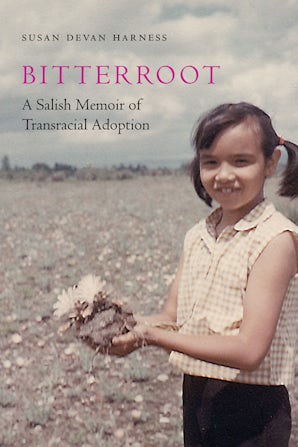
to find that out for ourselves. Some of us are still looking. Bitterroot is a roadmap. - Susan Harness
An author recounts how 1960s policies ripped apart families and communities, including her own.
Susan Devan Harness, author of Bitterroot: A Salish Memoir of Transracial Adoption
is a member of the Confederated Salish Kootenai Tribes, a writer
lecturer and cultural anthropologist living in Fort Collins, Colorado.
10-16-2019 This past weekend Bitterroot: A Salish Memoir of Transracial Adoption took
home two awards at the High Plains Book Festival: Creative Nonfiction
and Indigenous Writer. I am so honored to be among so many really great
authors.
Thank you goes to the readers and staff of the High Plains Book
Festival, the University of Nebraska Press for their seeing the value of
this project, my advisers Kate Browne and John Calderazzo, the
overwhelming support from friends and family and the
many voices who contributed to this work.
REGINA - Saskatchewan Premier Scott Moe apologized to survivors of
the '60s Scoop Monday for failing them and leaving them "caught between
two worlds."
"On behalf of
the government of Saskatchewan and on behalf of the people of
Saskatchewan, I stand before you today to apologize. I stand before you
to say sorry," Moe said before around 200 people at the legislature.
"We are sorry for the pain
and the sadness that you have experienced. We are sorry for your loss
of culture and language. And to all of those who lost contact with their
family, we're so sorry."
About
20,000 Indigenous children were seized from their birth families and
relocated to non-Indigenous homes starting in the 1950s until the late
1980s.
Our ability to have impact in communities is not possible without the perspectives of many, including you! Please take our annual survey so we can get to know you better. Each participant will be entered to win beautiful prints or jewelry. https://t.co/YFGHszQ9SKpic.twitter.com/UQsnFa2oKR
The Métis National
Council and the Government of Canada will be working collaboratively,
Nation-to-Nation, to develop a process to engage with survivors,
knowledge holders, and leadership to address the legacy of the Sixties
Scoop.
Over the past decades,hundreds of thousands of large-hearted Westerners—eager to fill out their families while helping a child in need–have adopted from poor and troubled countries. In many cases—especially in adoptions from China or former Soviet bloc countries—these adoptions were desperately needed, saving children from crippling lives in hard-hearted institutions.
But too few Westerners are aware that in too many countries, there’s a heartbreaking underside to international adoption.
For decades, international adoption has been a Wild West, all but free of meaningful law, regulation, or oversight. Western adoption agencies, seeking to satisfy consumer demand, have poured millions of dollars of adoption fees into underdeveloped countries.
Those dollars and Euros have, too often, induced the unscrupulous to buy, defraud, coerce, and sometimes even kidnap children away from families that loved and would have raised them to adulthood.
Since the fall of 2008, the Schuster Institute for Investigative
Journalism has been releasing our reporting on aspects of this problem.
Where did Westerners get the idea that the world was overflowing with
healthy orphaned babies in need of new homes? How is a child with a
living family transformed into a “paper orphan,” adopted for someone
else’s profit? Whose lives have been scarred by corrupt adoptions? What
U.S. policy changes might prevent children from being wrongfully taken
from their birthfamilies, simultaneously helping to keep Americans from
unwittingly creating an orphan instead of saving one?
This website offers a collection of the Schuster Institute’s releases
on intercountry adoption, as well as many of the source documents,
independent research, government materials, and other resources that
will help interested readers pursue the topic further if they wish.
Passed in 1978 to protect Indian children from predatory state welfare and adoption practices, the Indian Child Welfare Act (ICWA) keeps Native children with Native families and prioritizes Native homes in adoption cases. A longtime target of evangelical Christian organizations and anti-Indian hate groups, ICWA’s most recent challenge came this fall from a federal judge in Texas, who ruled the law unconstitutional in Brackeen v. Zinke. In Brackeen, the plaintiffs argued that because ICWA’s language refers to “Indian” children, the act violates equal protection and is therefore unconstitutional.
The Goldwater Institute, a libertarian think tank, litigation organization and veteran opponent of ICWA, joined Brackeen earlier this year to challenge the law. In September, Timothy Sandefur, vice president of litigation at the Goldwater Institute, spoke at the Cato Institute, another libertarian think tank based in Washington, D.C., about the 40th anniversary of ICWA...
Mary Katherine Nagle of Pipestem Law checked the facts and Sandefur’s analysis of them and provided context to some of the statements.
Excerpt: This is a gross mischaracterization of the law. It’s hard to understand
what Goldwater means by “Indianness generally” — but ICWA does not apply
to humans who have “Indianness generally.” ICWA only applies to
citizens of federally recognized tribes. Indeed, the statute has no
application unless an “Indian child” is at issue, and “Indian child” is
defined as “Any unmarried person under the age of 18 and is either (a) a
member of an Indian tribe or (b) is eligible for membership in an
Indian tribe and is the biological child of a member of an Indian
tribe.“ The act is directly and inextricably linked to citizenship in a
sovereign nation. If a child and his/her parents are not citizens of a
sovereign nation, ICWA will have no application to that child‘s foster
placement, adoptive placement, or the possible termination of the
parents’ rights — regardless of how much “Indianness” generally that
child may have in the eyes of Goldwater or anyone else. –Mary Katherine Nagle
NORMAN, Okla. — The Native American Journalists
Association (NAJA) issued the following statement after National Public
Radio broadcast and published “Native American Adoption Law Challenged
As Racially Biased” - an inaccurate and imprecise story about an Indian
Child Welfare Act (ICWA) custody case:
NPR violated its ethics policy by failing to thoroughly fact check its
reporting and allowing racist language and views on air unchallenged.
“Native American Adoption Law Challenged As Racially Biased” by Wade
Goodwyn contains multiple factual inaccuracies, lacks context, and
propagates racist language and ideas.
Goodwyn says "It turned out that Mason's mother - and therefore - Mason,
was part Indian." This is a misleading and incorrect statement: The
child's mother is a tribal citizen, therefore the child is also a tribal
citizen. This designation is foundational to federal Indian law. To
frame it otherwise is inaccurate and irresponsible, especially given the
sensitivity owed to children involved in ICWA cases. Goodwyn also
discloses the identity of a child involved in adoption proceedings – a
violation of their safety and privacy.
Goodwyn uses a quote from the child’s adoptive parent: "Mason didn't
even look Indian in the least regards." This is deceptive and
racially-coded language that defines the child's identity by physical
appearance or skin color. These types of depictions of Native people are
blatantly racist and should have been addressed by editors before
publication and in the story. In ICWA cases, the child’s identity is
based on a political connection to a sovereign nation, and is not based
on racial identifiers. This framing runs counter to NPR’s policy of
respect and accuracy.
The Goldwater Institute's Timothy Sandefur, who was chosen as a primary
source, provided a misleading argument that ICWA is a matter of race,
not of citizenship. This is disinformation often raised by groups that
seek to diminish and destroy the political identity of Indigenous
peoples and the sovereign status of tribal nations. By airing these
views nationally, NPR has provided a megaphone for anti-Indian ideas and
a platform for racism against Native people. As per NPR ethics,
reporters should check sources’ "facts," as advocates can skew the
context of the story.
NPR has an ethical obligation to report these views in their social and
political context but must also be committed to reporting these ideas
responsibly. The network’s ethics policy makes this clear in numerous
ways, and NAJA urges NPR to immediately correct the story. NPR should
also review its policies and personnel that allowed an unchecked
platform for racist ideas that propagate hostility and racism toward
Indigenous people.
It is the position of NAJA that NPR is in violation of its own ethics
policies by failing to conduct due diligence before publication. The
network continues to suffer missteps and stereotypical coverage of
Native communities, and NAJA has repeatedly offered free cultural
competency and ethics training to NPR staff and editors in the past with
no response. However, the offer remains and NAJA would be happy to work
with NPR to facilitate more accurate, and ethical, journalism.
NAJA is sponsoring an Indian Child Welfare Act reporting symposium at the University of Oklahoma. Learn more here.
In Bitterroot
Susan Devan Harness traces her journey to understand the complexities
and struggles of being an American Indian child adopted by a white
couple and living in the rural American West. When Harness was fifteen
years old, she questioned her adoptive father about her “real”
parents. He replied that they had died in a car accident not long after
she was born—except they hadn’t, as Harness would learn in a
conversation with a social worker a few years later.
Harness’s
search for answers revolved around her need to ascertain why she was the
target of racist remarks and why she seemed always to be on the outside
looking in. New questions followed her through college and into her
twenties when she started her own family. Meeting her biological family
in her early thirties generated even more questions. In her forties
Harness decided to get serious about finding answers when, conducting
oral histories, she talked with other transracial adoptees. In her
fifties she realized that the concept of “home” she had attributed to
the reservation existed only in her imagination.
Making sense of
her family, the American Indian history of assimilation, and the very
real—but culturally constructed—concept of race helped Harness answer
the often puzzling questions of stereotypes, a sense of nonbelonging,
the meaning of family, and the importance of forgiveness and
self-acceptance. In the process Bitterroot also provides a deep and rich context in which to experience life. NEW INTERVIEW: When Native American Children Are Adopted By White Families, It Isn't Always A Happy Ending
Author Bio
Susan Devan Harness (Confederated
Salish Kootenai Tribes) is a writer, lecturer, and oral historian, and
has been a research associate for the Tri-Ethnic Center for Prevention
Research at Colorado State University. She is the author of Mixing Cultural Identities Through Transracial Adoption: Outcomes of the Indian Adoption Project (1958–1967).
Praise
"What does it mean to be Native when
you weren't raised Native? What does it mean when the members of your
birth family who remained on the reservation tell you that you were
lucky to be raised elsewhere, but you don’t feel lucky? Harness brings
us right into the middle of these questions and shows how emotionally
fraught they can be. . . . It's time everyone learned about the many
ways there are of being Native."—Carter Meland, Star Tribune
“Bitterroot
is an inspiration—one woman’s quest to find herself among the racial,
cultural, economic, and historical fault lines of the American West. A
compelling, important memoir, as tenaciously beautiful as the flower for
which it’s named.”—Harrison Candelaria Fletcher, author of Presentimiento: A Life in Dreams
“One
Salish-Kootenai woman’s journey, this memoir is a heart-wrenching story
of finding family and herself, and of a particularly horrific time in
Native history. It is a strong and well-told narrative of adoption,
survival, resilience, and is truthfully revealed.”—Luana Ross
(Bitterroot Salish), codirector of Native Voices Documentary Film at the
University of Washington and author of Inventing the Savage
“A
page-turner of a memoir that illuminates a great
historical injustice. With wit and a sturdy heart, Susan Harness plumbs
her own and the American West’s uneasy past to shed the burden of living
‘in between’ and find wholeness. A compelling and moving
story.”—John Calderazzo, author of Rising Fire: Volcanoes and Our Inner Lives
Dr. Phil’s Hollywood-ized Adoption Propaganda : Earlier post
NPR has done this before. In October 2011, NPR aired a three-part series of programs on its
investigation of foster care for Native American children in South
Dakota. check this out
Some Native American advocates have since issued their own report supporting the reporters' findings.
NCAI President Jefferson Keel (Chickasaw Nation of Oklahoma) said: “The
stay granted yesterday by the Fifth Circuit Court of Appeals is a
welcome and positive step. It means that no Indian child who encounters
the child welfare system in Texas, Indiana and Louisiana during this
time should be denied the protections and safeguards afforded them under
the Indian Child Welfare Act. NCAI will continue to support the
intervening Tribal Nations and the Department of Justice as they fight
to protect the best interests of all Indian children across the United
States through the Indian Child Welfare Act.”
OTTAWA, Nov. 30, 2018 /CNW/ - Today, Indigenous Services Minister Jane Philpott, together with Assembly of First Nations National Chief Perry Bellegarde, Inuit Tapiriit Kanatami President Natan Obed, and Métis National Council President Clément Chartier, announced that the Government of Canada will introduce co-developed federal legislation on Indigenous child and family services in early 2019.
Indigenous children represent 52.2% of children in foster care in private homes in Canada.
The over-representation of First Nations, Inuit and Métis Nation
children in the child welfare system is a humanitarian
crisis.
Indigenous children who have been in care face greater risks of
adverse health outcomes, violence and incarceration.
This broad-based legislation will be inclusive of all Indigenous peoples while respecting a distinctions-based approach. The legislation would affirm inherent Aboriginal and Treaty rights as well as affirm principles consistent with the Calls to Action of the Truth and Reconciliation Commission, the United Nations Declaration on the Rights of Indigenous Peoples, and the United Nations Convention on the Rights of the Child.
Indigenous children represent 52.2% of children in foster care in private homes in Canada but account for only 7.7% of the overall child population.
The first five Calls to Action by the Truth and Reconciliation Commission relate to child welfare.
Call to Action #4 calls "upon
the federal government to enact Aboriginal child-welfare legislation
that establishes national standards for Aboriginal child apprehension
and custody cases and includes principles that:
Affirm the right of Aboriginal governments to establish and maintain their own child-welfare agencies.
Require all child-welfare agencies and courts to take the residential school legacy into account in their decision making.
Establish, as an important
priority, a requirement that placements of Aboriginal children into
temporary and permanent care be culturally appropriate."
In 2016, the Canadian Human Rights Tribunal ruled that Canada's First Nations Child and Family Services Program was discriminatory and ordered Canada
to immediately address the issue. The ruling prompted further
discussion on the creation of federal legislation as a way to ensure
better care for Indigenous children.
New federal legislation was
also called for in an Interim Report by the National Advisory Committee
on First Nations Child and Family Services, and in a resolution passed
in May of 2018 by the Assembly of First Nations in support of the
establishment of federal-enabling legislation for First Nations.
In January 2018,
the federal government held a National Emergency Meeting on First
Nation, Inuit, and Métis child and family services with representatives
of the Indigenous peoples and nations, the Assembly of First Nations,
the Inuit Tapiriit Kanatami and the Métis National Council, Indigenous
service organizations, experts and practitioners, elders, grandmothers
and youth with lived experience. At this meeting, the Government of Canada
announced its commitment to Six Points of Action that included the
potential for federal legislation, as called for in TRC Call to Action
#4.
"For the larger part of Canada's
history, Indigenous children have suffered as a result of racist and
misogynistic colonial policies. As legislators, we have an obligation to
do better for Indigenous children. We must support the development of
policies that do not force an ultimatum between the well-being of
children and their Indigenous identities." Senator Marilou McPhedran, Senate of CanadaManitoba
Terry Cross - Founder of the National Indian Child Welfare Association Terry Cross (Ha-ne-ga-noh), an enrolled member of the Seneca Nation, received his master’s degree in social work from Portland State University in Portland, Oregon. He is the founding executive director of National Indian Child Welfare Association, now serving as senior advisor. He is the author of Positive Indian Parenting and co-authored Towards a Culturally Competent System of Care, published by Georgetown University. He has 40 years of experience in child welfare, including 10 years direct practice.
Lawmakers Introduce Bipartisan Resolution Recognizing 40th Anniversary Of Indian Child Welfare Act
November 28, 2018 - 5:35am
U.S. SENATE News:
WASHINGTON, D.C. ―
U.S. Senators Tom Udall (D-N.M.) and John Hoeven (R-N.D.), vice
chairman and chairman of the Senate Committee on Indian Affairs,
respectively, along with U.S. Senator Lisa Murkowski (R-Alaska) and U.S.
Representatives Karen Bass (D-Calif.) and Tom Cole (R-Okla.), led 46
members of Congress Tuesday in introducing a bipartisan resolution
commemorating the 40th anniversary of the Indian Child Welfare Act
(ICWA), and recognizing its importance to promoting the stability and
security of Tribal communities and families.
ICWA
sets best-practice standards for child welfare and adoption proceedings
involving children who are members of a federally-recognized Tribe or
are eligible for membership in a federally-recognized Tribe.
It
was designed to respond to the disproportionately high number of Native
children who were unnecessarily removed from their families. When the
law was first enacted in 1978, one-third of all Native children in the
U.S. were placed in foster care or adoptive homes by child welfare
systems unfamiliar with tribal child rearing practices, resulting in
generations of displaced Native children. Over four decades, the law has
become the “gold standard” for child welfare policy and keeping Native
children connected to their communities and cultures.
“Native
American children, like all children, thrive when they are able to grow
up with the support of their families, communities, and cultures,”
Udall said. “Congress enacted the Indian Child Welfare Act in 1978 to
ensure that best practices in child custody for Native communities are
in place, keeping families togetherand kids healthy and safe. Now, on
the 40th anniversary of its passage, I’m proud to have worked with my
colleagues in the House and Senate to mark the important impact that
this law has had on generations of Native kids.”
“The
Indian Child Welfare Act is an important piece of legislation that
respects the principles of government to government relationships with
Tribes and Tribal sovereignty,” Hoeven said.
“The
Indian Child Welfare Act or ICWA is landmark legislation enacted four
decades ago to end the abusive practice of ‘adopting out’ Native
children in need of aid,” Murkowski said. “Its premise is that Native
children who grow up with a connection to their heritage and culture
become strong adults and parents. The State of Alaska and Alaska’s 229
tribes have partnered to ensure that this important legislation fulfills
its promise to our Native children. It is important that we celebrate
this partnership during this 40th anniversary year for ICWA is as vital
today as it was on the day it was enacted by Congress.”
“Forty
years ago, when the Indian Child Welfare Act became law, Congress
declared national policy for Tribal children,” Bass said. “Through the
Indian Child Welfare Act, Congress recognizes tribes’ sovereign
authority to make decisions about children who are tribal members.
Eighteen national child welfare and child advocacy organizations —
including the Child Welfare League of American, the National Association
of Social Workers, and the North American Council on Adoptable Children
— are united in their view that the Indian Child Welfare Act is the
gold standard for child welfare policies and practices that should be
afforded to all children. This bipartisan resolution affirms the
principles embodied in the Indian Child Welfare Act, including the
importance of protecting the best interests of American Indian and
Alaska Native children, promoting the stability and security of Indian
Tribes and families, and respecting tribal sovereignty. Congress should
pass it.”
“At
the heart of the Indian Child Welfare Act is the recognition that
Tribal heritage is a profoundly special and valuable heritage to know
and pass on,” Cole said. “Forty years since this monumental legislation
was enacted, we affirm our obligation to serve the best interests of
Native children and ensure that their Tribal heritage is not lost.”
In
addition to Udall, Hoeven, Murkowski, Bass, and Cole, the Senate
resolution is sponsored by Senators Charles Schumer (D-N.Y.), Heidi
Heitkamp (D-N.D.), Angus King (I-Maine), Elizabeth Warren (D-Mass.),
Patty Murray (D-Wash.), Maria Cantwell (D-Wash.), Amy Klobuchar
(D-Minn.), Ron Wyden (D-Ore.), Richard Blumenthal (D-Conn.), Mazie
Hirono (D-Hawaii), Jeff Merkley (D-Ore.), Tina Smith (D-Minn.), Tim
Kaine (D-Va.), Cory A. Booker (D-N.J.), Catherine Cortez Masto (D-Nev.),
Martin Heinrich (D-N.M.), Bernard Sanders (I-Vt.), Jon Tester
(D-Mont.), and Kamala D. Harris (D-Calif.) while the House resolution is
sponsored by Representatives Ben Ray Luján (D-N.M.), Ruben Gallego
(D-Ariz.), Terri Sewell (D-Ala.), Derek Kilmer (D-Wash.), Raúl M.
Grijalva (D-Ariz.), Rick Larsen (D-Wash.), Gwen Moore (D-Wis.), Judy Chu
(D-Calif.), Don Young (R-Alaska), Danny Davis (D-Ill.), Pramila Jayapal
(D-Wash.), Debbie Dingell (D-Mich.), Betty McCollum (D-Minn.),
Markwayne Mullin (R-Okla.), Norma Torres (D-Calif.), Tom Marino (R-Pa.),
Tony Cárdenas (D-Calif.), Eleanor Holmes Norton (D-D.C.), Alcee
Hastings (D-Fla.), Jim Langevin (D-R.I.), Ro Khanna (D-Calif.), and Tom
O’Halleran (D-Ariz.).
The full text of the resolution can be found HERE.
From left, Drew Nicholas, producer of “Blood Memory,” speaks along the
side of Oglala Lakota tribe member Jerry Dearly, Sandy White Hawk,
founding director of First Nations Repatriation Institute, and fellow
“Blood Memory” producer Megan Whitmer, during a panel on the preview
screening in the Beus Center for Law and Society on Nov. 20, 2018.
(Jonmaesha Beltran/DD) BLOOD MEMORY MOVIE
excerpt:
Over the past several years, as part of a coalition of groups including for-profit adoption agencies, the right-wing Goldwater Institute has spearheaded attacks against ICWA in multiple states, including California, Arizona, Oklahoma and Minnesota. They finally made inroads last month: After a Texas couple sued for the right to adopt a Cherokee Nation toddler, a federal district court judge, Reed O’Connor, struck down portions of the ICWA, finding that the disputed sections violate the Fifth Amendment’s equal protection guarantee by mandating racial preferences. The case may wind up before the Supreme Court, where Justice Brett M. Kavanaugh is widely believed to be a deciding vote against it.
As the Indigenous peoples of this land, countless generations have built a base of wisdom about how to raise our children in community.


Last month, a federal district court made an egregious
ruling ignoring the government-to-government relationship between tribal
 nations and the federal government. In Brackeen v. Zinke,
 the U.S. District Court in Northern Texas ruled in favor of Texas,
Indiana and Louisiana and several foster and adoptive families,
declaring that the Indian Child Welfare Act
 (ICWA) is a race-based law lacking a present-day articulation of its
need. The court found ICWA to be unconstitutional. In this context, it
is important to elevate the lingering effects of historical governmental
 policies and practices on Native children and families — including the
removal of tribal nations from their traditional homelands to
reservations, relocation of Native peoples to major cities, and numerous
 efforts to assimilate Native children.


  Prior
 to contact with European immigrants, tribal practices and beliefs about
 raising a child allowed a natural system of child protection to
flourish. Traditional Indian spiritual beliefs reinforced that all
things had a spiritual nature that demanded respect, including children.
 Not only were children respected, they were taught to respect others.
Extraordinary patience and tolerance marked the methods that were used
to teach Indian children self-discipline. At the heart of this natural
system were beliefs, traditions and customs involving extended family
with clear roles and responsibilities. Responsibilities shared by
extended family and community members made protection of children the
responsibility of all people in the community. Within the natural safety
 net of traditional tribal settings and beliefs, child maltreatment was
rarely a problem.


As European migration to the United States increased,
traditional tribal practices in raising children were devalued or lost
as federal programs sought to systematically assimilate Native people.
Efforts to “civilize” the Native population were almost always focused
on children. It began as early as 1609, when the Virginia Company, in a
written document, authorized the kidnapping of Indian children for the
purpose of civilizing local Indian populations through the use of
Christianity. The “Civilization Fund Act” passed by Congress in 1819
authorized grants to private agencies, primarily churches, to establish
programs in tribal communities designed to “civilize the Indian.”


Removing and relocating Native people onto reservations
between 1830 and 1871 forced tribes to leave behind customs tied to
their traditional lands, adjust their economies, and change their ways
of life without the support promised by the federal government.


A class in penmanship at the Red Deer Indian Industrial School. Photo courtesy Victoria University Archives.


From the 1860s through the 1970s, the federal government
and private agencies established large boarding schools, far from
reservations, where Indian children were placed involuntarily. Agents of
 the federal government had the authority to withhold food and clothing
from parents who resisted sending their children away. In boarding
schools, children were not able to use their Native languages or
traditional customs, were required to wear uniforms and cut their hair,
and were subjected to military discipline and standards.


As the federal government began to recognize how the
removal and reservation of tribal communities hurt Native people, it
instituted the Indian Relocation Act of 1956, moving thousands of
Natives to large cities. This program not only broke down family
systems, but also left families and individuals stranded away from their
 communities and natural support systems in unfamiliar environments.


In the 1960s and 1970s, the child welfare system became
another avenue that state and federal governments used to force the
assimilation of Native children. During this era, 25 to 35 percent of
all Native children were separated from their families — and 90 percent
of children removed were placed in non-Native homes.


In 1978, the passage of ICWA acknowledged the inherent
sovereign right of tribal governments and the critical role they play in
 protecting their member children and maintaining families.


In the face of centuries of unjust treatment of Native
families and communities by federal and state governments, tribal
governments have a responsibility to maintain the integrity of our
families and to raise our children within tribal communities. Advocates
in Indian Country are uniting because we know the adage “it takes a
village” is truer now that it ever has been — today, it takes a movement
 to raise an Indian child.


Sarah Kastelic is executive director of the
National Indian Child Welfare Association (NICWA) — the only national
American Indian organization focused specifically on tribal capacity to
prevent and respond to child abuse and neglect. Before coming to NICWA,
Kastelic served the National Congress of American Indians (NCAI),
including founding the NCAI Policy Research Center.
At
the Gathering for our Children and Returning Adoptees Powwow in 2015,
the American Indian community in Minneapolis welcomes home Native people
who were raised in foster care or adopted out. (Photo
courtesy of Red Lake Nation News.)
By Camille Erickson
Each year, the Minneapolis American Indian Center fills with
adoptees, formerly fostered individuals and families for the Gathering
For Our Children and Returning Adoptees Powwow. Now in its fifteenth
year, the powwow is held on Saturday, Nov. 3 2018 at the Minneapolis American
Indian Center (MAIC) to once again provide a vital space for community
healing and celebration.
“There are so many things that happen that day that are always
miracles,” said Jacque Wilson, coordinator of the Bois Forte Urban
Office and an organizer of the powwow.
The morning of the powwow, Sandra White Hawk (Sicangu Lakota) gathers
with adoptees, formerly fostered individuals and birth relatives to
visit with one another and share their experiences. White Hawk has been
an organizer of the powwow since its beginning, and she remains an
intrepid advocate for First Nations people impacted by foster care or
adoption. Among her myriad roles, she serves as the director of First
Nations Repatriation Institute.
Too often, conversations about the trauma caused by family separation
and adoption remain buried under a veil of silence, explained White
Hawk. Some attendees have never had the opportunity to attend a powwow
or connect with the American Indian community. White Hawk works hard to
foster a ceremonious and welcoming environment. “We mostly want to give
them an opportunity to share in a way that they’ve probably never been
able to,” White Hawk said.
For over a decade, a group of Native adoptees and formerly fostered
individuals in Minneapolis have met each month to support one another.
Many of them come out every first Saturday in November to welcome those
returning to the circle. “Because of their healing as part of this
community, they are there to greet our new people who have never been
here before,” said White Hawk. Elders also share stories about the
painful history of removal and cultural erasure in American Indian
communities that ripped thousands of youth away from their families and
tribal identity.
The space also welcomes and receives birth mothers. White Hawk hopes
that the gathering can serve as a time for birth mothers to develop
compassion for themselves and shed layers of guilt or shame. “For our
mothers who lost [children] under all kinds of circumstances, our hope
is that we continue to encourage them to be a part of our circle,” said
White Hawk. “They gave us life and that was the most important thing.”
Following the morning gathering, the powwow begins in the auditorium.
Community members are invited and encouraged to attend. The entrance of
the color guard in the grand entry signals the celebration’s beginning.
Adoptees and formerly fostered relatives follow in their stead, making
their way back to the circle. In the eyes of White Hawk, the following
“Wablenica ceremony” is dedicated to “taking care of the hearts of our
relative who are making their way back to this circle and the hearts of
our relatives who lost us.”
The ceremony can be laden with emotion, particularly grief, at the
beginning, she said. But by the end, the adoptees and formerly fostered
individuals stand in the circle and the community comes forward to
welcome them. “Our hearts are just lifted,” she said. “Some people have
never heard the phrase, ‘welcome home,’ and it makes them feel the
acceptance and sense of belonging that is so needed for our people.”
For many, this is the day that healing begins.
Fifteen years of dedication from three Native women
Sandy White Hawk. (Photo courtesy of Red Lake Nation News.)
The powwow started in 2003 with a call for healing. And Jacque
Wilson, Sandra White Hawk and Tina Knafla are three women whose lives
have been touched both personally and professionally by the impacts of
American Indian adoption and foster care. Throughout their lives of
service, they each have seen and felt the intergenerational trauma
present in their communities. “There is so much pain around adoption and
the loss of children because of the Indian adoption era and the
boarding school era,” said Knafla, who in 2003, worked with Hennepin
County as an ICWA adoptions recruiter. “I really felt like we needed to
address that.”
In addition to the forcible placement of American Indian children
into abusive boarding schools beginning in the 1860s, the Child Welfare
League of America instituted the Indian Adoption Project from 1958 to
1967. The Bureau of Indian Affairs and the U.S. Children’s Bureau were
also complicit in this program. The government ripped American Indian
children away from their tribes and families and placed a vast majority
of them into non-Native foster or adoptive homes. According to a 1976
surveys commissioned by the Association on American Indian Affairs, 25
to 35 percent of American
Indian children were removed from their
families between 1941 and 1967.
After exhaustive calls for justice from Native communities, The
Indian Child Welfare Act (ICWA) was enacted in 1978 by Congress. It
requires the state to place American Indian children experiencing foster
care with family or relatives as often as possible. But only about half
of Native children in foster care in Minnesota find Native homes,
according to the Minnesota Department of Human Services. And the trauma
from these twentieth century policies linger in the lives of adoptees
and their communities who still reckon with family separation.
After attending a National Indian Child Welfare Association
conference in Duluth in 2003, Knafla felt compelled to expand
opportunities for healing with the support of the county. She began
reaching out to community agencies and colleagues, including White Hawk
and Wilson, to uplift resources for Native communities processing the
impacts of family separation. The three women believed that a powwow
would provide a needed space for healing and celebration.
Organizers obtained the sponsorship of Hennepin County and the
Minnesota Department of Human Services, among other community agencies.
This support continues to keep the powwow strong and sustained. “That
collaboration is very unique between Hennepin County and the community,”
said Knafla. “We’re still here, 14 years strong.”
The year the powwow began, Wilson worked in the juvenile justice
courts representing state tribes in child welfare cases. She yearned to
see foster families participating in more culturally-relevant
activities. In her eyes, the powwow would provide an opportunity for
foster youth to establish a connection to their identity.
“The more the children know about who they are and where they come
from, the less traumatic it is for them,” explained Wilson. “It also
gives them a place to look for answers when they become older.”
Although her job has since changed, Wilson continues to support
people who she said have been away from their families or tribes for a
generation or more. The gathering would also be an opportunity to
connect families with foster care agencies to expand the availability of
culturally-involved, Native homes for youth still in foster care.
“This powwow is still important to me because that trauma has not
gone away on many levels,” she said. “It’s always important for
[returnees] to learn who they are, because in order to be a full human
being, it’s best that you know who you are, where you came from, or your
people.”
Adoptees from all over the country attend the powwow in Minneapolis.
“We’re trying to share what we’ve learned and get other tribes and
communities to recognize their returning adoptees and birth mothers in
whatever kind of ceremonies they want to do,” said Wilson.
Organizers of the powwow envision a time when reservations and Native
communities across the country create their own spaces that encourage
returning relatives to heal.
Official
Statement: Joint Statement on the Federal District Court of Northern
Texas denying to stay the court’s ruling on constitutionality of the
Indian Child Welfare Act
(Portland, OR, October 30, 2018)—The
National Indian Child Welfare Association, the National Congress of
American Indians, the Association on American Indian Affairs, and the
Native American Rights Fund are disappointed that the Federal District
Court of Northern Texas has denied a motion to stay their decision in Brackeen v. Zinke
pending appeal by the Fifth Circuit Court of Appeals. This will likely
cause great uncertainty and disruption for hundreds of vulnerable Indian
children and their families who are currently in state child welfare
systems within the states of Texas, Louisiana, and Indiana, especially
as we enter the holiday season and the Fifth Circuit moves forward with
what may be months of proceedings. Indian children and families deserve
better, and we hope that the Fifth Circuit will move quickly to consider
a motion to stay this lower federal court decision.
# # # Read the full joint statement here.




/arc-anglerfish-tgam-prod-tgam.s3.amazonaws.com/public/JMBJ75VFWVFHFDA24RCYTQQ3AA.jpg)


 Published December 19, 2018