BLOGGER changed, not allowing us to UPDATE this back-up blog

(UPDATED 726/2025) issues with blogger are preventing this
Showing posts with label Maine's apology for Indian Adoption Projects. Show all posts

Thursday, November 19, 2020

Maine’s Truth and Reconciliation Effort: A New Path Forward #TRC

The Unites States is a deeply divided nation, struggling to reconcile the legacies of its history. If that was ever in doubt, surely these last few months have exposed that stark truth, and this week’s election results made clear how far these rifts are from closing.
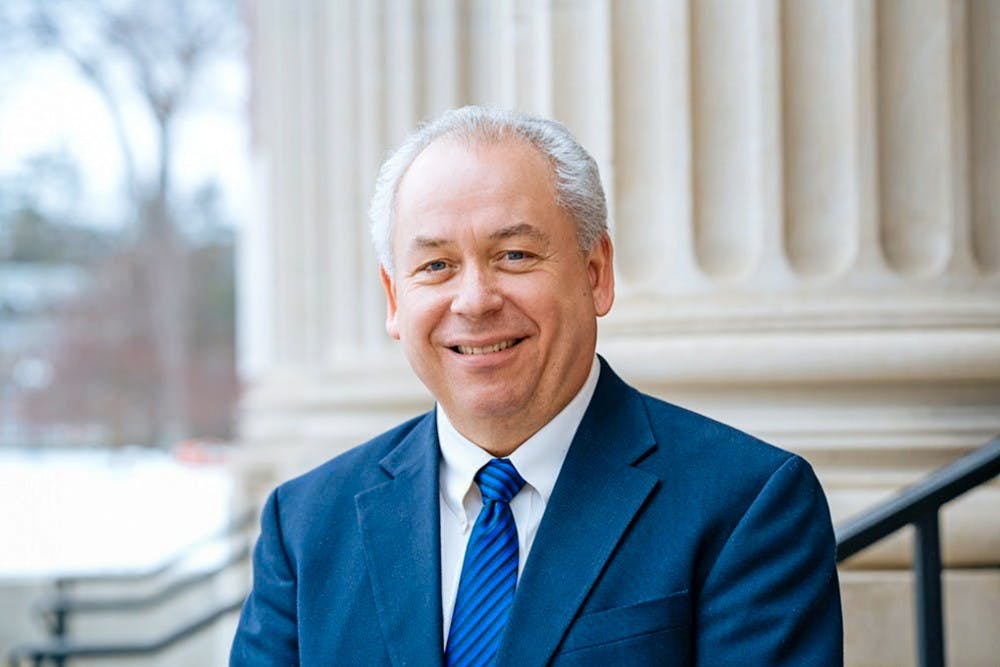
"The truth and reconciliation effort in Maine demonstrates how critical it is to build shared understanding of the different experiences each individual and community brings to the process," writes Martin Levine.

Individually and collectively, we are left to ponder a way forward that could change this depressing reality. Can we find a path that heals wounds? Can we find a way toward a common future, rather than seeing every issue as a competition over scarce resources? Are we doomed to a nation in which our success requires others to fail?

For real change, we may have to reconcile with those from whom we have grown separate and develop a shared understanding of our different life experiences. That’s the lesson we can learn from the state of Maine’s approach to meeting the child welfare needs of its Native American community.

Maine’s child welfare system was found to have entirely ignored the mandates of the Federal Indian Child Welfare Act, which was put in place to protect the interests of the Maliseet, Mi’kmaq, Passamaquoddy, and Penobscot tribes in their jurisdiction. Faced with the loss of critical federal funding, state child welfare officials moved quickly to create plans for making needed changes. As described in Next City by Valerie Vande Panne:

A group of social workers from the state’s Department of Health and Human Services (DHHS) reached out to the Muskie School of Public Service at the University of Southern Maine for help with fixing the problem. The idea became to go around the state and train social workers in Maine about ICWA requirements. But the state social workers were totally ignorant of tribes, history, and the way state policies had harmed the tribes, and they were suddenly trying to work with the very people that had been abused by their system.

And then… they stopped. They recognized that in order to move forward, more than good intentions were necessary. If the biases and divisions at the root of the problems were not addressed, even the best plans would fail.

Denise Altvater (Passamaquoddy), a leader in Maine-Wabanaki REACH (Restoration, Engagement, Advocacy, Change, Healing) who had been hired to help state social workers better understand the culture of the Native communities they served, noted, “One day, we decided we were stuck.” When racial tensions wouldn’t ease, a decision had to be made: “Do we keep doing what we’re doing, and call it the best we can do, or do we take the giant leap and go deeper?”

They went much deeper, forming what would be known as the Maine Wabanaki-Child Welfare Truth and Reconciliation Commission (TRC) to explore that which separated Native and white communities before they returned to building a new and improved system together.

For Maria Girouard (Penobscot), the executive director of Maine-Wabanaki REACH, the barrier to moving forward was not the lack of a plan, but the lack of a trusting relationship. “How the TRC did the work and fulfilled its purpose was just as important as the product it produced,” says Girouard. “More important was the truth-telling. There was a good deal of pushback all around to the idea.”

Social work educator Gail Werrbach, one of the five commissioners, recognized the need to address the historic realities that we all have inherited.

The white people are dying to reconcile. “Let’s reconcile and [now] everyone loves each other.” It’s such important work, and it’s hard work. I think the biggest challenge is that white people, we want to go faster, fix faster, feel better faster. That’s just not how historical trauma works. So, any cities or communities looking at similar kinds of commissions need to take a long-view time frame in anything they set up, and not get trapped in thinking people will be reconciled and move on. It’s been 500 years.

Penthea Burns, now a board member of Maine-Wabanaki REACH, describes the key learning that must guide efforts to address deep, systemic change. “We should always be talking about repair and reparations through the lens of understanding the harm that has been done,” says Burns. “As a white woman, how do I get my association to hear, and repair from a different level of commitment? How do we be different together? Our state officials had a lot of reticence around reparations from a bottom-line perspective, holding that as just writing a check. Reparations is so much deeper and more engaging than that.”

From this process emerged a new approach for the state to provide needed child welfare services to its Native American residents. This would be a shared construct, supported from a foundation of common understanding and shared responsibility.

TRC Commissioner Sandy White Hawk says truth and healing will happen only when the people are ready. Only then it will be possible to make deep and systemic change together. “You cannot heal during trauma. You can’t get over something that is still happening to you. It’s impossible. You don’t say to someone suffering from cancer, ‘get over it.’”

The truth and reconciliation effort in Maine demonstrates how critical it is to build shared understanding of the different experiences each individual and community brings to the process. If we have the patience to take the time this will take, we can make a difference. If we have the strength to feel the pain, to recognize the hurt of others and our responsibility for it, we have a chance to move beyond it. In this moment of great division, we will need to be strong and brave if we hope to make the future better.

This article was originally published by NPQ online, on Nov. 5, 2020.

Martin Levine is a Principal at Levine Partners LLP, a consulting group focusing on organizational change and improvement, realigning service systems to allow them to be more responsive and effective. Before that, he served as the CEO of JCC Chicago, where he was responsible for the development of new facilities in response to the changing demography of the Metropolitan Jewish Community. In addition to his JCC responsibilities, Mr. Levine served as a consultant on organizational change and improvement to school districts and community organizations. Mr. Levine has published several articles on change and has presented at numerous conferences on this subject.A native of New York City, Mr. Levine is a graduate of City College of New York (BS in Biology) and Columbia University (MSW). He has trained with the Future Search and the Deming Institute.


This article was originally published in the Nonprofit Quarterly(Volume xx, Issue xx, Season Year), www.npqmag.org. Used with permission.


Tuesday, November 3, 2020

What Truth and Reconciliation Looks Like in Practice #ICWA #NAAM2020


Historical, generational trauma cannot be overcome by slogans, marches, or performative allyship. Determining who suffers from racially oriented, systemic harm cannot be measured by an evaluation of skin tone. The harms done to communities of color across the country expand well beyond the Black community and deep into Native, Hispanic, and immigrant communities.

We are now 528 years after Columbus’ unfortunate arrival in the Caribbean and the enslavement of the Native population, 401 years after the first enslaved Africans arrived on these shores. The deficit and trauma will not be reconciled in a week, a month, or a year.

GREAT READ: What Truth and Reconciliation Looks Like in Practice – Next City

Tuesday, October 8, 2019

Dawnland wins EMMY

Documentary co-produced by NAS professor wins Emmy

by Emily Zhang | 10/8/19

10-8-19-duthu-courtesy-eli-burakian
Duthu began his involvement in the project as a consultant.
Source: Eli Burakian/Courtesy of Dartmouth College
“Dawnland,” a documentary co-produced by Native American studies professor N. Bruce Duthu, recently won the News & Documentary Emmy Award for Outstanding Research.
“Dawnland” tells the story of indigenous child removal in the United States during the 20th century — when child welfare authorities forced Native American children to live in non-Native foster care, adoptive homes or boarding schools. The documentary follows the first so-called Truth and Reconciliation Commission in the United States for the contemporary Wabanaki community in Maine.
Duthu said that he believes “Dawnland” serves as a cautionary tale about “state power being misdirected against vulnerable populations.”

Currently leading a the Native American Studies Domestic Studies Program in Santa Fe, NM, Duthu said he regretted that he was not able to join his team at the awards ceremony in New York City, but he described the ceremony as “wonderful,” adding that he was later told that many Wabanaki people featured in the documentary were present at the ceremony.
 Duthu said that his involvement with the project began when he was brought on as a consultant to help the production team with legal and policy aspects of the federal Indian Child Welfare Act. Later on, as Duthu continued to help the team with research, fundraising and resource connections, he was invited to become a co-producer.
“Dawnland” co-director Adam Mazo said he was introduced to Duthu by Native American studies professor Colin Calloway and expressed his gratitude for having Duthu on the team.
“His way of distilling complex ideas into more easily digestible pieces is super helpful for us, as we are not academics,” Mazo said.
According to Duthu and Mazo, one of the most important accomplishments during the production of “Dawnland” was finding the footage of a U.S. Senate hearing on the Indian Child Welfare Act that occurred in the 1970s. At the hearing, Native American witnesses testified that children were abused and forced into foster homes.
Duthu said that when the team was reading through the transcript of the hearing, they noticed that a senator asked a witness if the light was too bright. That was when the team realized the hearing had actually been videotaped. Following an extensive effort from many members inside and outside of the film team, they finally were able to discover the footage at a local television station in Boston.
“This took a lot of patience from the team, and a lot of hard work,” Duthu said.
Mazo said he was inspired to direct “Dawnland” after he first heard about the Truth and Reconciliation Commission in 2013. He added that this commission was “historic,” as it was the first of its kind in the United States sanctioned by the state and tribal governments. He also noted that “Dawnland” was related to a 2010 documentary he directed, “Coexist,” about forced reconciliation after the 1994 Rwandan genocide.
“We also want to acknowledge genocide in this country’s history,” Mazo said. “We hope [‘Dawnland’] is going to put a greater spotlight on the story of the Wabanaki people and the reality of indigenous child removal that continues in this country today.”
“Dawnland” senior advisor and co-founder of the Akomawt Educational Initiative Chris Newell described “Dawnland” winning an Emmy as a “surreal experience.” A member of the Wabanaki tribe that “Dawnland” documents, Newell said that he believed it was his responsibility to help the story of his community “to be told correctly.”
Newell, who is now involved in multiple educational projects focusing on the education of Native American history, said he valued the opportunity that “Dawnland” provided to tell the story of the Wabanaki people to a larger audience.
“I was just part of a team that helps tell the story, but the story belongs to the people that told their truth and they are the ones that this recognition should really reflect,” Newell said.
Native Americans at Dartmouth co-president Elsa Armstrong ’20 said she watched some “Dawnland” clips in Duthu’s class NAS 30.3, “Native American Literature and Law” last winter. She said she appreciated that the clips were able to show history from an indigenous perspective.
Evan Barton ’20 described Duthu’s teaching as “phenomenal,” saying that Duthu was able to “challenge [students] appropriately” to “inspire creative processes.” Though he has not watched “Dawnland,” Barton said he was really eager to see the film to learn about the impact of child foster care on indigenous communities.
Although Duthu said that he was not a filmmaker and does not currently plan to pursue more filmmaking, he added that he was open to new opportunities.
“I never expected to be involved with something as significant as ‘Dawnland,’ so I am always open to opportunities where I might be able to be helpful,” Duthu said.
“Dawnland” was screened on the Dartmouth campus last October in Loew Auditorium.

Monday, June 17, 2019

Let’s tell the true story of the founding of America #TRC


Many believe that “the past is past,” and it’s time to move on. Such thinking ignores the traumatic impact of genocide on future generations and the continued oppression of indigenous Americans. I recently watched the film “Dawnland” at Amherst Cinema, which highlights the first U.S. truth and reconciliation commission to investigate the government of Maine’s removal of generations of indigenous American children from their families. In the 19th and 20th centuries, tens of thousands of children on reservations were severed from their families and sent to residential schools and foster homes in order to eradicate indigenous Americans through forcibly acculturating their children — another form of genocide.
The Indian Child Welfare Act was established in 1978 to end this century-long practice and to instead “... protect the best interests of Indian Children and to promote the stability and security of Indian tribes and families by the establishment of minimum Federal standards for the removal of Indian children and placement of such children in homes which will reflect the unique values of Indian culture.”
Critics of the ICWA argue that the law is race-based, ignoring the sovereignty of tribal nations. A Federal Appeals Court judge will soon be deciding the fate of this 41-year-old law based on a case heard in March. The consequences of overturning the ICWA would once again threaten the welfare of Indigenous American families. Today, indigenous American children are three times more likely to be removed from their homes than white children, according to “Dawnland.”

READ: Columnist Sara Weinberger: Let’s tell the true story of the founding of America

Friday, March 17, 2017

Forum: Education continues on Wabanaki plight #ICWA

Forum: Education continues on Wabanaki plight:

LEWISTON — In 2015, a report focusing on Maine Wabanaki children and decades of discriminatory practices in the child welfare system was meant to spark changes and begin the healing process for the state's native tribes.

For Wabanakis and members of Maine-Wabanaki REACH, a group tasked with implementing the report's recommendations, that process is far from over.

Speaking during a Great Falls Forum in Lewiston on Thursday, Maine Wabanaki REACH Community Organizers Barbara Kates and Tom Reynolds underlined the importance of the work that had been accomplished but said more outreach and more education is needed.

The pair led a presentation titled “Truth, Healing and Change: Why Maine Needed a Truth and Reconciliation Commission,” which refers to the Maine Wabanaki State Child Welfare Truth and Reconciliation Commission established in 2013. 

The commission was charged with taking an intimate look at the causes behind the "disproportionate removal" from families of Native American children who were put into the child welfare system.
Among the biggest takeaways from its report was that Native American children in Maine were five times as likely to be placed in foster care as non-native children; Wabanaki children's native ancestry is often not identified during intake procedures; and the presence of institutional racism in state systems and the public.

The commission, made up of native and non-native members, was regarded as the first of its kind in the United States.

Since then, Kates said, the work of REACH, which stands for Reconciliation-Engagement-Advocacy-Change-Healing, has been, now that the truth is known, "What do we do now?"
A snippet from an upcoming full-length documentary detailing the emotional commission process was screened during Thursday's event, held at the Lewiston Public Library.

In compiling the report, the commission collected more than 150 statements from Wabanaki survivors, their families, foster families and employees of the state child welfare system.
In one such statement, a woman recalls being taken from her family for no reason, and as an adult, still didn't know why. Another remembered sitting in bleach with her sister while in foster care, "trying to convince each other that we were getting white."

REACH began as a collaboration of state and tribal child welfare workers who knew from their work together that major inequities existed in the way the state dealt with family issues within native communities.

Since the release of the report, REACH is still scheduling speaking events to educate Mainers on the history of the Wabanaki and native children, which have experienced forced assimilation dating back to the 1800s.

Kates and Reynolds provided a brief historical overview, including why Maine became a focal point on child welfare. During the 1950s and 1960s, national child welfare practices encouraged removing Native Americans from their communities and placing them in foster care. Boarding schools designed to assimilate Native Americans were also still prevalent.

According to the Truth and Reconciliation Commission report, the Indian Child Welfare Act, adopted in 1978, "marked one step toward upholding tribal rights, but effective implementation was another, and many states, including Maine, struggled with that process in the years after the law’s passage."
The act was meant to prioritize keeping Native American children in their homes within their tribal communities.

Reynolds said Maine was pressed by the federal government in the early 1990s to boost compliance with the act because of numbers that were still high, and was still struggling with it well into the 2000s.

"They kept finding that they were hitting their heads against a brick wall," he said, referring to continued issues leading up to the commission. "They realized they needed to dig deeper," he said.
Questions from the audience Thursday hit on education and what's next. Kates was asked whether local schools are adding the correct Wabanaki history into their curriculums.

Kates said no other state has yet to conduct a similar truth and reconciliation commission.
Penthea Burns, co-director of Maine-Wabanaki REACH, was originally scheduled to speak during the forum but had a conflict, Kates said.

Joe Hall, an associate professor of history at Bates College, introduced the speakers. 
Hall said Thursday's discussion was timely because school budgets are being drafted statewide.
"We get the opportunity to think about how we raise our children, which is not something that Wabanakis have always had the luxury of," he said. 

Kates has been involved with designing and delivering community presentations and ally-building workshops to increase understanding of Maine's shared history with the Wabanaki people.

Kates said that as a child welfare worker, it has been a "steep learning curve" in recognizing the complicated Wabanaki history. The commission found that there is still resistance to the idea that native people continue to experience "cultural genocide."

She said work to implement the recommendations from the study is ongoing. Those recommendations include the development of new trainings for the Maine Department of Health and Human Services, as well as legal and judicial offices, a policy to monitor compliance with the Indian Child Welfare Act and better support for foster and adoptive families.

The work of the commission, she said, opened the door for changes.

"It's the idea that we're here now," she said. "What do we do now?"

arice@sunjournal.com

Friday, October 16, 2015

MAINE's TRC: FIRST LIGHT FILM


New Short Film on Maine Truth and Reconciliation Commission

VIDEO Here.
Lots of good information here.
Press coverage here.

The longer movie is due out in 2017, but it’s very nice to have this short film and supporting website available now as an antidote to all of the Goldwater blitz.

NOW free online

PURCHASE:  DVD  |  DOWNLOAD  |  BOTH


“It’s not just about removing children, it’s dismantling every aspect of their being in the process.

— gkisedtanamoogk
First Light independently documents the work of the Maine Wabanaki-State Child Welfare Truth and Reconciliation Commission, the first such task force to investigate issues important to Native Americans. The commission was dedicated to uncovering and acknowledging the truth about what happened to Wabanaki children and families involved with the child welfare system. First Light is the debut film in the Dawnland series, which is anchored by the feature film Dawnland slated for release in early 2017.

Wednesday, June 17, 2015

US should follow Canada’s lead and reckon with its own destructive legacy


Library and Archives Canada / Reuters

Canada confronts ‘cultural genocide’ against aboriginal people

June 16, 2015

On May 31 the Truth and Reconciliation Commission of Canada (TRC) released a summary of its report on the history and legacy of the nation’s residential schools. The report concluded that Canada’s aboriginal policy, designed “to eliminate aboriginal governments … and cause aboriginal peoples to cease to exist as distinct legal, social, cultural, religious and racial entities in Canada,” has caused unspeakable and enduring suffering that amounts to “cultural genocide.”

The U.S. also had a shameful program of residential schools for its Native American children, often operated by churches with government funding. A reckoning for the destructive legacy of forced assimilation is long overdue. It’s time for the U.S. to follow Canada’s lead in establishing a truth and reconciliation commission and acknowledge the havoc its policies have wrought.

Canada’s legacy

Started in the 1880s, the schools were funded by Canadian government but run primarily by churches. An estimated 150,000 aboriginal children attended the residential schools during their century-long tenure. But the goal was never to educate the children. Instead, the schools were designed to destroy aboriginal culture by removing children from reservations and severing ties with parents and communities, in order to inculcate ‘civilized’ and Christian values. The last residential school closed in 1998, but the after-effects continue to exact a devastating toll today. This is true not only for those haunted by their stay at the schools but for the entire community of aboriginals whose culture and systems of government were targeted for annihilation.
Many of the 80,000 survivors recounted their harrowing tales of forced separation from their communities and brutal physical, sexual and psychological abuse to the Commission. And the TRC found that more than 3,000 aboriginal children perished in the in residential schools from abuse, neglect and illness. Justice Murray Sinclair, chair of the TRC, estimated that the figure could be far higher, since shoddy record keeping obscured the Commission’s final accounting.
The TRC was formed as part of the 2006 Indian Residential Schools Settlement Agreement, in the largest class-action lawsuit in Canadian history. In 2008, Prime Minister Stephen Harper acknowledged and apologized for the harm caused by Canada’s residential schools. But he has refused to commit to implementing the Commission’s 94 recommendations, including provisions for health, education, justice and commemoration. Canada cannot simply close this sordid chapter and move on. Instead, it must enact policies and programs that would ensure aboriginal communities have the support, tools and resources to heal and thrive.
The grave injustices of North American residential schools and their aftermath are clear. But seeking and speaking the truth is only the beginning of a long process of reconciliation.
Kill the Indian in him, and save the man,” Richard Pratt, a U.S. Army officer who pioneered the concept of off-reservation boarding schools opined in an oft-quoted 1892 speech. At the time, Pratt’s goal of cultural rather than physical genocide, though despicable, was less extreme for its time than that of others who advocated for the outright extermination of the nation’s native people.
But, as in Canada, the U.S. schools served their intended purpose of demolishing Native American traditions and history. Thousands of children died from abuse, neglect and malnutrition. Others were harshly punished for residual ties to their culture or spirituality. And the schools often pushed boys toward manual labor and girls to domestic service. As a 2009 United Nations report concluded, instead of working toward full integration “the training prepared Native children to be assimilated into the bottom of the socio-economic ladder,” where many continue to struggle.
The historical trauma inflicted on parents can haunt subsequent generations. Researchers found stress hormone adaptations in the children of Holocaust survivors, perhaps caused in utero, that may predispose them to ill health. And the effect is not limited to environmental factors: it may actually be woven into DNA. This trauma may partly explain the social ills that continue to plague Native communities both in the U.S. and Canada, including high rates of addiction, mental illness, domestic and sexual violence, family disintegration and poor physical health. Reservations in the U.S. experience suicide epidemics, and though the reasons are not clear, there is agreement that one of the factors is “the legacy of federally funded boarding schools that forcibly removed generations of Native American children from their homes,” according to The New York Times.

Need for reparations

The U.S. has made some efforts to end its history of forced assimilation.  For example, in 1978 Congress passed the Indian Child Welfare Act to keep Native American children with their families or communities. But nearly 40 years later, the law has failed to meet its mark, and Native American children are still being fostered and adopted into communities that fail to reflect their cultural heritage.
Last month a commission in Maine found that the state placed five times as many Native American children in foster care as non-native children. Maine is hardly alone: In 2013, advocates in Nebraska linked a spike in the number of the state’s Native American children in foster care to the legacy of boarding schools. And placement of children within their communities for fostering and adoption is hampered in part by lack of appropriate homes.
That shortage, which reflects the damage inflicted by governmental policy, reinforces the need for comprehensive reparations to heal and rebuild damaged communities. The specifics of a reparations package must be crafted and embraced by Native American groups. It would likely include individual and collective restitution, restoration and truth telling.
The grave injustices of North American residential schools and their aftermath are clear. But seeking and speaking the truth is only the beginning of a long process of reconciliation. Both Canada and the U.S. must commit to atoning for the schools’ horrors by expending political capital and economic resources to help Native communities truly recover.

Lauren Carasik is a clinical professor of law and the director of the international human rights clinic at the Western New England University School of Law.

SOURCE: The views expressed in this article are the author's own and do not necessarily reflect Al Jazeera America's editorial policy.

Monday, June 15, 2015

Beyond the Mandate: Maine TRC

Report Released by the Maine Wabanaki-State Truth and Reconciliation Commission

Here. (78 pages, pdf).
We further assert that these conditions and the fact of disproportionate entry into care can be held within the context of continued cultural genocide, as defined by the Convention on the Prevention and Punishment of the Crime of Genocide, adopted by the United Nations General Assembly in 1948. In particular, the convention notes that genocide means “any of the following acts committed with intent to destroy, in whole or in part, a national, ethnical, racial or religious group.” We posit that Article 2, Sections b and e –“Causing serious bodily or mental harm to members of the group” and “Forcibly transferring children of the group to another group” – apply to what Wabanaki communities face here in Maine.

***
This, too, we found to be true: providing and sustaining preventive support to Native families might be of the greatest use of all. One Wabanaki service provider commented, as did many, that tribal people view child rearing as the responsibility of an extended network of kin and connections. This person noted that the best way to help children is to “strengthen families as a whole and communities as a whole to be able to step up and care for kids when things aren’t optimal in their home lives so they don’t ever even need to enter the system.” (11/4/14)

Many of those who work in the state child-welfare system share this exact desire. When reflecting on the process of being involved with the Commission, a DHHS supervisor wrote, “This has been an amazing journey to bring truths to light. To bravely state fact, to move through and past pain toward healing. My vision for the future is a strong family system without the need for foster care.” (4/9/15)
The report ends with 14 recommendations, and comes out amid tensions between tribes and the state over fishing, water quality standards, and jurisdictional concerns.

THEIR WEBSITE: www.MaineWabanakiTRC.org

Tuesday, February 11, 2014

Maine Wabanaki-State Child Welfare Truth & Reconciliation Commission (TRC) is celebrating its one year anniversary


Post by Maine Wabanaki-State Child Welfare Truth and Reconciliation Commission.


Today marks the One Year Anniversary of the Commissioners being seated. Happy Day to the TRC!
The Maine Wabanaki-State Child Welfare Truth & Reconciliation Commission (TRC) is celebrating its one year anniversary! Created to uncover, document and explore the experiences of Wabanaki individuals with the state child welfare system, the TRC has spent this past year actively engaging with Wabanaki communities, DHHS workers and non-native community members from across the state.
Formally seated last February, the five Commissioners: Carol Wishcamper, gkisedtanamoogk, Sandy White Hawk, Matt Dunlap and Gail Werrbach, have been busy setting the Mandate into action. In addition to meeting the logistical needs of establishing a functioning TRC, the Commission has been visiting regularly with native communities to create working relationships and foster meaningful conversations. The TRC held its first official community listening session at Sipayik in November of 2013, and is scheduled to attend events at each of the remaining tribal communities and Wabanaki Health and Wellness before this year is out. Commissioners will also be attending private statement gathering sessions within communities and the TRC will be hosting several public events across the state.
In addition to facilitating structured truth commission listening sessions, the Commission has been actively working to promote understanding of the TRC and its process through events such as recent engagements with Justice Albie Sachs of South Africa and Commissioner gkisedtanamoogk's recent TEDx talk.
While it has been only one year since the five Commissioners were seated, there is an undeniable sense of urgency within the TRC. Under the formal Mandate signed in 2012 by all five tribal chiefs and the governor of the State of Maine, the Commission has just eighteen months remaining in which to complete its task. At the close of this time, a final report will be issued and disseminated across the state, summarizing the findings of the Commission as well as making formal recommendations. Despite the tight time frame, expectations are high. "It is a remarkable group," observed Commissioner Dunlap, "We have a lot to do, but certainly the right people to do it."
In carrying the work forward, the Commission continues to work closely with Maine Wabanaki REACH, a cross-cultural organization working to ensure that the voices of Wabanaki people are heard and their experiences respected.

For More Information, visit the website, www.MaineWabanakiTRC.org or their FaceBook page - or phone the office at 207. 664.0280.
Maine Wabanaki-State Child Welfare TRC is the nation's first TRC to address child welfare and native people - formerly Maine Tribal-State Child Welfare TRC
RELATED STORY (please click and watch the videos)


Tuesday, March 12, 2013

NPR update: Maine, Tribes Seek 'Truth And Reconciliation'

3 min 50 sec


In Maine, an unusual and historic process is under way to document child welfare practices that once resulted in Indian children being forcibly removed from their homes. Many of the Native children were placed with white foster parents and with white adoptive families.  Chiefs from all five of Maine's tribes, along with Gov. Paul LePage, have created a Truth and Reconciliation Commission to help heal the wounds.


Read the entire transcript here: http://www.npr.org/2013/03/12/174080043/maine-tribes-seek-truth-and-reconciliation

Sandy WhiteHawk is correct - we do not know how many children were taken. You can visit her website here: http://wearecominghome.com/Sandy_White_Hawk.html
Contact her organization, First Nations Repatriation Association!NS REPATRIATION INSTITUTE  

Thursday, December 20, 2012

5 picked for group to examine child welfare practices that split Native American families in Maine

VIDEO


Gkisedtanamoogk, a Wampanoag from the Mashpee community on Cape Cod, Mass., was named as a member of the Wabanaki-State Child Welfare Truth and Reconciliation Commission on Tuesday at a press conference on Indian Island.
Gkisedtanamoogk, a Wampanoag from the Mashpee community on Cape Cod, Mass., was named as a member of the Wabanaki-State Child Welfare Truth and Reconciliation Commission on Tuesday at a press conference on Indian Island. Buy Photo
Gail Werrbach of Bangor was named as a member of the Wabanaki-State Child Welfare Truth and Reconciliation Commission on Tuesday at a press conference on Indian Island.
Gail Werrbach of Bangor was named as a member of the Wabanaki-State Child Welfare Truth and Reconciliation Commission on Tuesday at a press conference on Indian Island. Buy Photo
 
INDIAN ISLAND, Maine — An unsettling piece of Maine’s history will be examined closely during the next three years by five people selected to investigate church and government assimilation practices that tore American Indian children away from their families and culture.
Members of the Maine Wabanaki-State Child Welfare Truth and Reconciliation Commission were announced Tuesday during a news conference on Indian Island, and their work will begin early next year. The members are:
• Matt Dunlap of Old Town, who on Dec. 4 was tapped to serve as Maine’s secretary of state, a post he also held from 2004 to 2010. He was named Maine Public Administrator of the Year in 2008 and served four terms in the Maine House of Representatives.
• Gkisedtanamoogk, a Wampanoag from the community Mashpee on Cape Cod, Mass. He is a family member of Nkeketonseonqikom, the Longhouse of the Otter, and is married with three children. Now of Orono, gkisedtanamoogk has been an adjunct instructor with the Native American studies and the peace and reconciliation programs at the University of Maine since 2005.
• Gail Werrbach, a 25-year faculty member at the University of Maine School of Social Work. She now is director of that school. She has researched and published articles on child mental health, community mental health training, Indian child welfare services and international social work.
• Sandra White Hawk, a Sicangu Lakota adoptee from the Rosebud Reservation in South Dakota. She founded the First Nations Repatriation Institute, an organization with the goal of creating resources for First Nations people affected by foster care who want to return home, reconnect and reclaim their identity.
• Carol Wishcamper has an organizational development consulting practice that works primarily with nonprofit organizations in the state. She has served as chairwoman of the state Board of Education and as a member of several gubernatorial and legislative study commissions.
The goal, according to the Truth and Reconciliation Commission mandate, which Gov. Paul LePage signed in June 2012 alongside Maine tribal leaders, is to “acknowledge the truth, create opportunities to heal and learn from that truth, and collaborate to operate the best child welfare system possible for Wabanaki children.”
Beginning in the late 1800s, the United States government established boarding schools for Native American children who were removed from their families in an attempt to assimilate them into American culture.
In the late 1950s, the Bureau of Indian Affairs and the Child Welfare League of America created the Indian Adoption Project, which removed Native American children from their families and tribes to be adopted by non-native families.
In 1999 the Wabanaki tribal nations joined with state child welfare officials to form the Truth and Reconciliation Commission with the goal of improving Maine’s compliance with 1978’s federal Indian Child Welfare Act, which set higher standards of protection for the rights of native children, their families and their tribal communities.
The five commissioners, who were selected by a 13-member committee, will travel to visit members of Maine tribes affected by these child welfare policies. They will gather documents, recordings and transcripts for preservation and make recommendations for improvements to the child welfare system. The commission will file a report on its final findings.
This is the first truth and reconciliation effort in the United States, according to the commission. Canada has its own under way.
Werrbach said the commission faces difficult, emotional work. It will be asking people to “open their hearts, open their souls, and tell their stories” about welfare policies that separated their families and subjugated their culture, Werrbach said, adding that she felt honored to “bear witness to that.”
Gkisedtanamoogk said he hopes the commission’s work will help to renew and strengthen the relationship between the state of Maine and the sovereign tribes that live within its borders.
“This work represents the possibilities of putting the relationship with the state and Wabanaki Nations on a footing that should have been the relationship all along — as partners,” gkisedtanamoogk said.

Related stories

Thursday, November 22, 2012

BBC covers Native American Adoption #NAAM

I was very happy to see the BBC compiled this story and video... It's important that our stories and history reaches a world audience.... Generations are impacted by removals and this story about the Maine Truth and Reconciliation Commission is a huge mark of progress in telling our TRUTH... Trace

Native Americans recall era of forced adoptions


In the decades after World War II hundreds of Native American children in the US were taken from their communities and given to white families through adoption or foster care.
The idea behind the Indian Adoption Project was to help them assimilate into "white culture" and live what authorities viewed to be a safer and happier life.
Denise Altvater, from the Passamaqoddy tribe in Maine, was removed from her family and adopted when she was seven years old.
"All of us, who have been taken away from our homes as children, still as adults, we don't feel like we have a place where we belong," she says.
In 1978, the Indian Child Welfare Act was passed to protect children and tribal communities. However, even in 2003 there were more than three times as many Native American children in foster care, per capita, compared to "Euro-American" children, according to the last available study.
Maine's child welfare services and tribes are launching a truth and reconciliation process this week. A group of five commissioners will listen to families and child welfare workers to compile the stories of those affected and help deal with their trauma.
Produced for the BBC by Anna Bressanin; camera by Ilya Shnitser

Watch video here: http://www.bbc.co.uk/news/world-us-canada-20404764
 

Tuesday, September 18, 2012

Healing from Indian child ‘takings’ is in the telling


Gov. Joseph Socobasin (from left), Chief Reuben Cleaves, Gov. Paul LePage and Chief Kirk Francis sign a declaration of intent on Indian Island to begin a truth and reconciliation process between the tribes and the state child welfare system.
Gov. Joseph Socobasin (from left), Chief Reuben Cleaves, Gov. Paul LePage and Chief Kirk Francis sign a declaration of intent on Indian Island to begin a truth and reconciliation process between the tribes and the state child welfare system. Buy Photo
Related stories

There is no way to take back the past. But if Maine wants to ensure that it never, ever repeats its racist, oppressive treatment of American Indian families and communities, it must know what it did. Under the first truth and reconciliation commission in the United States to be jointly agreed upon by state and tribal leaders, Mainers will have the opportunity to listen to mothers whose children were taken to be assimilated into white culture, and to those children — now adults — who were forced to live with foster families that were sometimes emotionally, physically and sexually abusive.
In order for the members of Maine’s five tribes to achieve some level of healing, it’s important for everyone who had a relevant experience with the child welfare system over the past few decades to participate in the Maine Wabanaki-State Child Welfare Truth and Reconciliation Commission. Sharing what happened is essential if the commission is to comprehensively investigate and make suggestions for improvements. Also important is the willingness of Mainers not connected to the child welfare system to listen and learn.
The formation of the truth and reconciliation commission is the result of years of work on the part of a convening group comprising people from the state, several organizations and each of the Wabanaki communities: Aroostook Band of Micmacs, Houlton Band of Maliseet Indians, Passamaquoddy Tribe at Motahkmikuk, Passamaquoddy Tribe at Sipayik and the Penobscot Indian Nation. The convening group helped draft a mandate, which the chiefs and Gov. Paul LePage signed on June 29, to lay out the three-year-long truth and reconciliation process.
A selection panel is accepting nominations for commissioners until Oct. 1, when it will choose five who “are trusted by both tribal and state governments and their respective citizens,” according to the mandate. The commissioners then will travel several days per month to reservations to listen to people’s experiences, seek to understand why the experiences occurred and determine what needs to change. The commission cannot pursue criminal or civil claims; its role is to create a written account and make recommendations for child welfare reform.
Historically, efforts to assimilate Indian children into non-native culture, in many cases, devastated tribal communities. In the 1800s, church groups, with government support, took Indian children and sent them to boarding schools, far from their culture, religion, language and families. Many of the children were abused; many died.
In 1958, the Bureau of Indian Affairs and the Child Welfare League of America partnered to establish the Indian Adoption Project to place Indian children with adoptive white families. Though the children were taken in many cases from reservations suffering from poverty, their removal resulted in a form of cultural genocide. Surveys by the Association of American Indian Affairs in 1969 and 1974 showed that between 25 percent and 35 percent of all Indian children were separated from their homes and living in foster care, adoptive care or institutions at the time. Though the federal Indian Child Welfare Act was passed in 1978 to give Indian children more protection, some problems persisted.
Maine’s truth and reconciliation commission is important because it sets the framework for understanding different perspectives of the state’s history. There is an air of something with national significance being accomplished, too. This commission is set to be the third such undertaking in U.S. history and the first to have this level of joint support from the state and tribes, according to commission Interim Director Carolyn Morrison. The nation will watch.
The aim of the process is not to make people feel guilty or seek reparations but to find a way to heal and build the relationship between the tribes and state. For people who will find it painful to tell their stories, know that those of us listening will be celebrating your strength.


[The new anthology TWO WORLDS, narratives by Native American and First Nations Adoptees will be out this week... tell your friends...Trace]

Wednesday, August 22, 2012

Maine's apology for Indian Adoption Projects

Maine signs Historic 'Truth and Reconciliation' Agreement with Indian Tribes

Related Media
Maine signs Historic 'Truth and Reconciliation' Agreementhttp://www.mpbn.net/DesktopModules/PDGNews/MediaPlayer.aspx?PDGNewsStoryID=22562&PDGNewsMediaID=5517&TabID=36&ModuleID=3478 Listen
 Duration:
4:14
archival photo
Chiefs from all five of Maine's tribes joined Gov. Paul LePage today (06/29/2012) in signing an historic agreement to create a Wabanaki-State Child Welfare Truth and Reconciliation Commission. 
It will examine child welfare practices that once resulted in large numbers of Indian children being forcibly removed from their homes. The ceremony in the State House Hall of Flags marks the first time that such an effort has occurred in the United States between Indian nations and a state government. Tribal members consider the agreement crucial to their healing process.

The statistics are sobering. Chief Brenda Commander of the Houlton Band of Maliseet Indians says at one time, 16 percent of all Maliseet children were in state custody. In the 1970's the Federal Indian Policy Commission backed that up with a report that found Indian children in Aroostook County were being placed in foster homes 60 percent more often than non-native children.

Chief Kirk Francis of the Penobscot Nation says children were placed in foster homes or sent away to boarding school in a cruel attempt at assimilation. They were separated from their families, their language, their cultural identities--and in some cases, he says, subjected to horrific abuse. 

Read article here: 

http://www.mpbn.net/Home/tabid/36/ctl/ViewItem/mid/3478/ItemId/22562/Default.aspx
 

click

Contact Trace

Name

Email *

Message *

NO MORE UPDATES

GO TO:  https://blog.americanindianadoptees.com/  for updates and news. THIS BLOG cannot be updated...