BLOGGER changed, not allowing us to UPDATE this back-up blog

(UPDATED 726/2025) issues with blogger are preventing this
Showing posts with label Australian orphans. Show all posts

Sunday, August 7, 2022

Australia: Second birth certificate created a legal fiction

Across the globe, adoptees are speaking up... and that is good... TL Hentz (blog editor)

My birth mother was not allowed to name her baby. But the name she gave me in her heart is real

Legislation once erased the original names and connections of forcibly adopted children. But even with this now addressed, family remains complicated
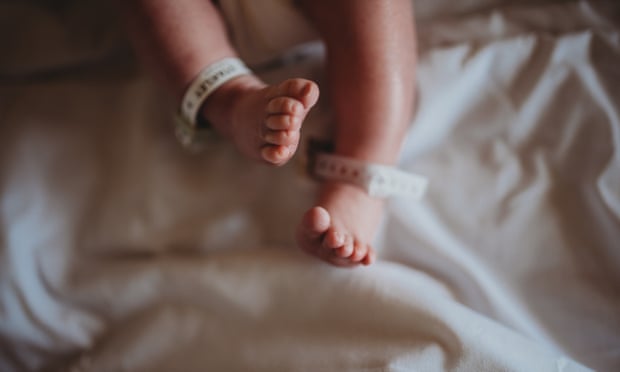
baby toes
The records of somewhere between 140,000 and 250,000 forcibly adopted babies were sealed by law, with all connection to their original family labelled top secret. Photograph: Cavan Images/Getty Images/Cavan Images RF
Anonymous
Sat 6 Aug 2022
It wasn’t until 2020, at the age of 52, that I was given the right to use my name. But as with all things adoption, nothing is quite as simple as it seems. Like other babies given to infertile couples under Australia’s “forced adoption” policies, my birth certificate was cancelled soon after I was born; a second birth certificate created a legal fiction to make it look like I was born to the infertile couple.

With a stroke of a pen I was denied connection with all of my family – my cousins, aunts, uncles, grandmothers – and my first given name. After a few months I was handed over to the couple who took me home. I had no social history, no medical, racial or genetic history. It was all top secret.

The records of somewhere between 140,00 and 250,000 Australian babies were sealed by law, with a promise that the truth would never be revealed.

Things on that front have gradually changed, and adopted people are now allowed to use the names on either of our birth certificates. When I first read about these changes I cried – it was the first time I had seen the dual identity and divided loyalty that shadows adopted people fully acknowledged.

But on my first birth certificate, the name my mother chose for me is missing, and I am identified by the word “Unnamed” with my mother’s surname. According to that certificate, my name is Unnamed Champion. My second birth certificate states the name given to me by my adopted family.

The Integrated Birth Certificate allows me to choose either of these two names, but it seems unhelpful for adopted people to be known as “Unnamed” when the intention of Integrated Birth Certificates is to help adopted people connect with their full identities.

It has taken me many months to realise that this profound breakthrough does not achieve what it set out to do: it does not allow me to see the name my mother wanted for me.

The only place my mother was ever allowed to use my name was inside her mind. While she was being told to stop crying by the “real” mothers breastfeeding their babies in the beds beside her, while she was given milk-suppression drugs without her knowledge, while she signed all the papers because she did everything she was told, the name was in her head and heart: Jona.

Like the perpetual state of longing, the name haunted her for years, though even now Jona still doesn’t exist. The state of New South Wales sent me to live with people who called me something else.  They called me Eudora*, the name I’ve been called for over 50 years.

The simple facts are this: I was born and hidden where my mother couldn’t find me. She had no advocate, and she was a minor, with no legal capacity to sign me away. A girl like her was not allowed to name her baby.

That was part of the punishment of being shamed and blamed in the birthing ward as a girl gone bad. Above the bed was a three letter sign, “BFA”, to identify that here was a Baby For Adoption.

“Unnamed Champion”. Born in a small regional town on the outskirts of Sydney, on a midwinter morning in the late 1960s, and no mention anywhere of “Jona”. For me, the confusion and cognitive dissonance seems impossible to resolve.

I recently explained to a psychologist that I have two families with two divergent histories. I look like these people. I sound like these people, I think and behave like these people, the people I was born to.
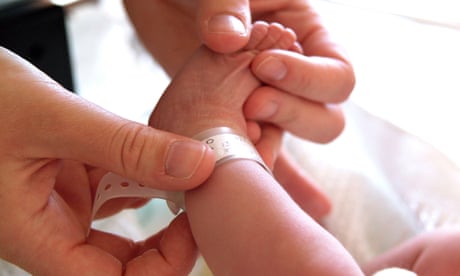
My brother, on the other hand, he is one of those people, from the other side of my life, the people I was sent to. My mum is one of those people. And my dad, well, he is one of those people too.

For an adopted person, the idea of dad is complicated. The idea of mum is complicated. The idea of brother and sister, home and belonging – it’s all complicated. Even your name, and the names we use to identify family – none of it is easy to understand.

Think of the words – mum, dad – how can anyone experience them without a visceral response in the belly, in the heart, in the throat? When I hear those words, there is a glitch, a realigning moment, while I track who holds those roles in my life. None of it gets easier over time.

In 2021 I applied to the Department of Community and Justice for my birth records. It is now July, 2022. A few months ago, I was asked to place an extra signature on the form, and told to wait another nine months for my Integrated Birth Certificate to arrive. This document gives me the choice of using either the name from my first birth certificate, or the second one – whichever I prefer.

After a whole lifetime, I finally get to choose. But first I must wait a whole new gestation period for the documents to arrive. And then, I will not be given the choice between identifying as Jona or Eudora. I will be offered the choice between Eudora or Unnamed.

The legislation governing my separation from my birth mother erased the history written into my body as though my DNA never existed. But it does exist, it’s real. And the name she calls me in her heart is real too.

* Name has been changed

Saturday, June 27, 2020

Remembering Von Hughes #adopteerights

Von and her daughter
Lost Daughters is sad to announce the passing of one of our long-time members, Von Coates. Von was one of Australia’s stolen babies during an era which mirrored that of the “Baby Scoop Era” in the United States (and worldwide). She was instrumental in the official apology issued by the WA government. She stood unapologetically by the wronged mothers as they refused to accept. She was a pioneer in establishing Post-Adoption support in WA. She was also a tireless advocate for bird populations of her homeland and for justice everywhere. She lived a long, fulfilling life. She will be missed.

ETA: Von’s family has asked for donations for a mental health fundraiser in Von’s honor: https://www.mycause.com.au/page/230210/memorial-to-elizabeth-ann-hughes


Her death on May 17, 2020 has been devastating to family, friends and the online community


By Trace Hentz, Blog Editor

Every adoptee I know wants to understand why we feel the way we do, and that we are not alone. Von Coates Hughes in Australia was one of my best teachers and she was an outspoken adoptee. She gave in-depth, easy-to-read insight and had the words when I would struggle with how to explain how I felt about being adopted.
Von had a blog on blogger (Once was Von) and someone reported it was not good so it was taken down. What the HELL??? Criticizing the adoption industry and propaganda was dangerous, we soon discovered - and Von and I discussed it via email.  She came to my defense many times. She would openly argue with first mothers/birthmothers and adoptive parents on Facebook - battling as if there was only one victim in the adoption game.
She made many comments on this blog and interviewed me for her blog. Von was also a contributor to LOST DAUGHTERS blog.

Out of necessity, Von moved her blog to wordpress. Below: this was her first post in 2012.


It’s Just A Stage I’m Going Through!

I’m a cat person, a Greyhound person, a goose person – well, let’s just say an animal person or an ‘everything that lives and moves person’ and then some. I love fossils, rocks, gemstones, crystals, mushrooms, toadstools, lichens and all the non-green plants. Yes, I even love spiders and have a large Huntsman named Mathilda living in close proximity. Freaky!  It’s not normal in the eyes of some, but then I’ve got adoption to thank for that. My beloved maternal aGrandfather was the same. He loved and was fascinated by everything that moved, didn’t move, lived or had lived. He was born in Victorian times, so was also a collector, kept a pair of chimpanzees and a Cassowary in the garden.
Every Summer he camped out with his geologist mates from the city museum so that they could collect fossils and set up the collection which is still on show today, still neatly labelled with the source, which reminds me of him every time I visit!  I have photos of those times, taken long before I was born, when my amother was a child raised to a life of respect for living creatures and a love of the area I took my family to live in decades and decades later, long after she had died.
Continuity happens in families, whether they are biological families or adoptive families. Adoptees if they are lucky enough to experience reunion can connect with the bits they wish to, not the bits they don’t. Sometimes, just sometimes, we have choices others do not. Does it make up for not having a choice about losing our mothers, the trauma of adoption?  Of course not, nothing ever does. It can’t even be viewed as compensation; often too complicated or fraught for that, but at least it is choice of a sort. Mainly of the “I choose not to take any more of your shit” variety or “I choose not to go to this funeral” or take on a poisonous sister-in-law who hates our guts for being born and then turning up late to the party. At least we can choose not to let these people and situations abuse us, make us victims and categorise us.
In four lifetimes I’ve seen a lot of that!  Each part of my life as been so very different, it feels as if I have had four lifetimes so far, with another yet to come; not completely coinciding with Brodzinsky’s five stages of the adopted life, but fairly close, with some overlaps. I have no anger about my adoption, I don’t hate anyone, although I believe some of them could have behaved much, much better. I’m not bitter. I refuse to let anyone define my life, what it has been, what it is now and what it will be. I do not believe adoption is ethical or the best we humans can do for children and families, for those living in the poverty others created, manipulated or unsupported for the gains of others. I will not ever allow a group of damaged mothers to define what adoption is to me or stand by while they tell other adoptees what adoption is or is not for adult adoptees. Not in a million years. That is abusive, unacceptable and these days very ill-advised.
Adoption and the adoption industry needs to clean up it’s act, get real and begin to be about finding the very best families for the children who have to become adoptees because their parents cannot, should not or will not raise them. It needs to stop being about baby selling, commodification of human lives and filling orders, greed, profit and lies. Easy?? It could be with the right commitment, intentions and goals and a true belief that is is about the best interests of children and not adults.

Go read her blog - from the beginning. Von made us smart. I will miss her so much. My heart is broken.

This is the bio on Lost Daughters:
Von --Life &Wisdom Columnist
Von is an Australian adoptee of the forced adoption era and has lived the adopted life for 66 years. She is known by her family and dearest friends as someone who takes no prisoners and has a horror of bigotry and injustice.She is a strong believer in the rights of children, the power of love and the medicinal powers of chocolate. She speaks her truth and often describes herself as an adoptee who is 'out, proud and loud". She had the benefit of Yorkshire genes for direct speaking and Somerset genes for perseverance. The Grandmother in her avatar she never knew but has taken as a role model and an inspiration. She is still waiting to be told she is not the oldest blogger on adoption in the blogosphere. Von blogs regularly at her personal blog The Life of Von.

She was also known as Elizabeth Ann Hughes. 

QUOTE
For adoptees, the right to know, the belief in the fundamental human right of knowing who we are, where we came from and who our people are, keeps many of us moving forward, steadily, sometimes haltingly, sometimes fearfully and in trepidation and sometimes with confidence and always with the knowledge that we are right to want the truth, to clear away the lies and to hold liars and abusers accountable.  Adult adoptees won’t be going away any time soon, nor will they be keeping quiet or allowing gains to be lost. We have everything to gain – we already lost everything when we lost our mothers,our identity, our history and our names. 
Another post about Von

Wednesday, April 13, 2011

Child migrants: 'I didn't belong to anybody' (Australia)

Harold Haig was among thousands of child migrants who were deported to Australia and subjected to horrific physical and sexual abuse. A new film depicts their plight...

By Patrick Barkham [guardian.co.uk, 7 April 2011] http://www.guardian.co.uk/society/2011/apr/07/child-migrants-oranges-and-sunshine-film?CMP=twt_gu
When Harold Haig was 10 years old, a man in a suit came to visit. "He said to me, 'Would you like to go to this wonderful place called Australia where the sun shines all day every day and you pick oranges off the trees, live in a little white cottage by the sea and ride a horse to school?'" remembers Haig, who is 73 but looks younger, with Pete Postlethwaite cheekbones and flowing white hair. "While I was letting this sink in, he added, 'Well, you know you're an orphan, your parents are dead, you've got no family, you might as well go.'"

Oranges And Sunshine
Production year: 2011
Countries: Rest of the world, UK
Runtime: 105 mins
Directors: Jim Loach
Cast: Clayton Watson, David Wenham, Emily Watson, Greg Stone, Hugo Weaving, Tara Morice

Haig was one of 7,000 children from British care homes who were shipped mostly to Australia and Canada between the second world war and 1967. The scandal of the lies and abuse suffered by these child migrants was exposed thanks to the tireless work of Margaret Humphreys, a social worker from Nottingham, who, in 1987, took it upon herself to help them find their families. As Oranges and Sunshine, a moving new film by Jim Loach – son of Ken – shows, Humphreys defied death threats to discover the truth about these former child migrants and their past lives. When Haig begins to talk, it is eerie because his softly spoken words and manner exactly resemble those of Jack, a traumatised former child migrant in the film who is played by Hugo Weaving. The British-Australian actor met and talked to Haig about his experiences before taking the role.
Apart from the man in the suit talking of oranges and sunshine, Haig barely remembers anything of his childhood in Britain. "Because of my lack of memories, I may as well have been born in Australia when I was 11 years old," he says, bleakly. He was sure he had a sister called Marie, but he could not remember anything at all about his mother: no image, no voice, no smell. "Just a blank. An absolute blank."
Surrounded by other "orphaned" children, the voyage to Australia was an adventure ("we ran riot"). When Haig arrived, he was dispatched to a Church of England boarding school in Melbourne. Other child migrants were less fortunate, as Oranges and Sunshine reveals through the story of Len, played by David Wenham. Many ended up in the care of the notorious Christian Brothers where they were treated as slave labour and suffered horrific physical and sexual abuse. One victim told an official inquiry that his Christian Brother carers competed to become the first to rape him 100 times.
Haig escaped such trauma – he would be beaten with a strap if he did anything wrong – but, as he says: "The thing missing in an institution for children is that there is no love. You get punished but there is no one there to put their arm around you and say it's OK." One of many powerful scenes in Oranges and Sunshine is when the character based on Haig falteringly explains how he feels: "There's an emptiness in me. There always has been and I think the only thing that could fill it was her, my mother." Haig says something similar when he talks of how he married, had three children and established a successful signwriting business: "Anyone would've thought there's a fella who's got everything, but it was like I had a block of ice inside me. I felt empty. I knew I was missing something. I couldn't work out what it was. And there was this feeling – I didn't know who I was. I didn't know where I'd come from. I didn't belong to anybody. I was in this void."
In the 1960s, Haig sank into a deep depression. He was prescribed antidepressants, saved them up and swallowed them all. "I wanted to die. I wanted to go to sleep and not wake up to get rid of this pain, this emptiness," he says. His wife, normally a good sleeper, woke up and saved his life. He wishes he hadn't tried to take his life at home, while his children slept.
The "beautiful" younger sister he was always convinced he had eventually traced him through the Salvation Army. Marie had been separated from their mother and Haig, and raised in care homes in Britain; unlike Haig, she remembered her sibling. One day, in 1987, Marie told him she was coming to Australia with a social worker, Margaret Humphreys, who she wanted him to meet. Haig, by then divorced and wandering the Australian outback ("I don't know what I was looking for"), was unimpressed. "I'd seen a lot of social workers and I had no respect for any of them," he says.
While Oranges and Sunshine shows Humphreys struggling to win the trust of some child migrants, Haig quickly came to respect her. She was the first to raise the possibility that Haig had been told a terrible untruth – that he might not be an orphan after all. "I didn't think anyone would be so cruel to tell you that sort of a lie," he says. He is amazed by Emily Watson's performance as Humphreys in the film. "I could've been watching Margaret," he says.
Haig visited Britain for six months in 1989 to get to know Marie, who passed away 14 years ago, and to help Humphreys track down his mother. With so little record-keeping by the authorities, still in denial over the scale of the trauma they created, it took another few years for them to get confirmation that Haig had not been an orphan. His parents had separated during the war, and with two children, no benefits and no relatives nearby, his mother had been forced to give up her son and daughter.
Humphreys discovered Haig's mother had lived two miles from where he was kept in homes (eight institutions in 14 months before he was "deported" – as the former child migrants say – to Australia) and had died just a year before he first visited Britain. The belated release of more suppressed information 10 years ago also helped Humphreys, who was awarded a CBE this year, finally identify Haig's deceased father.
No photographs remain of his mother, and Haig will forever wonder why he was given up and whether his mother tried to find him. As Oranges and Sunshine shows, parents were often deceived by the authorities and told their children had been adopted or even that they were dead. "Mothers went to their graves never knowing that their children were still alive, and happy, and well," says Haig. "It's criminal. I don't know what worse you can do to people."
Why did this happen? For the British authorities, a one-way ticket to Australia was cheaper than looking after children in care homes. For the Australian government, petrified they would be overrun by Asian immigrants, white children were ideal fodder for the racist "White Australia" policy.
In 2009, the Australian prime minister Kevin Rudd apologised to child migrants. "It's a day we'll never forget," says Haig, who is secretary of the International Association of Former Child Migrants and their Families, and is still good friends with Humphreys. Gordon Brown followed with an apology on behalf of the British government a year later.
The trauma of all these state-sanctioned lies and abuse has left a long, scarring legacy. Haig is still estranged from his two daughters who felt deserted when his depression destroyed his marriage. "They think I abandoned them, and in many ways I did. I had trouble looking after myself," he says, anguish in his voice. He has since been reconciled with his son, and he hopes the film might yet bring him back together with his daughters.
"What Margaret did for me and for thousands of child migrants is to give us back our lives, give us back our identity, and shine a light in where there was just darkness." Where would he be without Humphreys? "I have my doubts about whether I'd be here alive," he says. "You should ask, where would all of us be?"


click

Contact Trace

Name

Email *

Message *

NO MORE UPDATES

GO TO:  https://blog.americanindianadoptees.com/  for updates and news. THIS BLOG cannot be updated...