BLOGGER changed, not allowing us to UPDATE this back-up blog

(UPDATED 726/2025) issues with blogger are preventing this
Showing posts with label Lost Bird. Show all posts

Monday, November 21, 2022

My Navajo identity was taken from me

 SOURCE

Opinion: I’m a Jersey girl born into the Salt Clan. My Navajo identity was taken from me

Editor’s Note: Hilary C. Tompkins, a member of the Navajo Nation, served as the Solicitor of the US Department of the Interior during the Obama administration. She currently practices law in Washington, DC. The views expressed in this piece are her own. Read more opinion at CNN.

CNN  — 

My adoption papers said my mother was “very attractive” and that my “grandmother has some education and is considered to be an intelligent woman.” My father, who was listed as “Plains,” was described as having “hair with a slight tendency to wave.”

These small nuggets of information from my adoption papers were my only connection to my birth family. Only much later in life, as a young adult taking Native American studies at Dartmouth College, did I learn that I also had a legal connection with the Navajo Nation as a citizen of the Tribe.
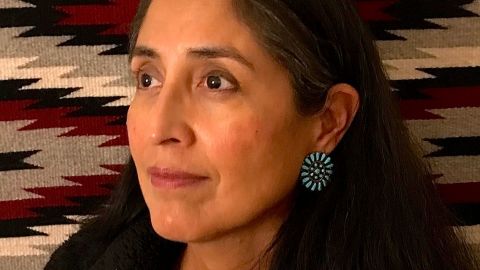
Hilary Tompkins

I’m like many Native Americans who were placed in White families under the Department of the Interior’s Indian Adoption Project in the 1960s and 1970s.

As with the placements of Indian children in boarding schools, this program removed Native children from their Tribes without justification and assimilated them into mainstream America. When I met my birth family as a young adult, one of my aunts held me and cried, saying the last time she held me I was a baby and she had told the hospital officials that she and my extended family would take care of me, but to no avail. I was taken away and put up for adoption anyway.

Recognizing that the continued existence of Tribal Nations was at stake because of the loss of up to 35% of their children, Congress outlawed this practice in 1978 with the passage of the Indian Child Welfare Act (ICWA). At the time, placement with White families was estimated to be at 90%.

Earlier this month, the US Supreme Court held oral arguments in a closely watched case, Haaland v. Brackeen, to decide whether the Indian Child Welfare Act is unconstitutional because it favors the adoption of Native children by Native families.

The states of Texas, Louisiana and Indiana, along with non-Native parents seeking to adopt Native children, say that ICWA amounts to racial discrimination because it has nothing to do with the “ability of Indians to govern themselves.” They argue that the states and non-Native parents should be able to decide the placement of Native children free of consideration of their tribal status because there is no political interest of the Tribes at stake.

And opponents of the Indian Child Welfare Act even go a step further, saying that the law goes against the best interests of Native children by imposing standards that make it harder for them to be adopted into stable, loving homes.

As a Native person who was adopted into a White family before the implementation of ICWA, that’s not the way I see it. I can attest firsthand, as a citizen of both the United States and the Navajo Nation, that ICWA is not about race.

I grew up in southern New Jersey, but I always knew I was Navajo. Born in Zuni Pueblo, New Mexico, I was separated from my family with only a few papers as evidence of my Tribal status.

By all outward appearances, my life today gives the impression that the Indian Adoption Project was a success. I was placed in a family that loved me. I received an exemplary education. I live a comfortable, middle class life. I have enjoyed professional success, having served as Solicitor of the Department of the Interior, the third ranking position in the department – the very federal agency that set my course in life. Yet despite these blessings, the Indian Adoption Project left me adrift, a foreigner in my own country.

Upon my return to the Navajo Nation almost 30 years ago, my sense of loss was overwhelming. The Navajo Nation is a different world: Navajo is frequently spoken there and the laws and way of living are based on Navajo traditions. There is no separation of Navajo spirituality from Navajo sovereignty. One foundational principle is ke’ – kinship – which is rooted in a vast clan system. I didn’t know my clan and couldn’t speak the language. Nor did I understand the complex and traditional laws of Navajo society. The loss of my culture was not just personal, but political.

I tried to make up for my losses, learning some of the language, attending our traditional ceremonies and working for the Navajo Nation Department of Justice. But despite my best efforts, I couldn’t catch up. I can vote in our elections but I don’t understand the stump speeches. I can’t run for office as I am not a fluent Navajo speaker. I reconnected with my birth family, but I have never felt fully integrated into Navajo society.

ICWA recognized that in order to have functioning tribal governments, you need the next generation of tribal citizens to be part of tribal political society. Taking away Native children threatens tribes’ future because the loss of their kids jeopardizes Tribes’ ability to be political sovereign entities. The law gives a preference for placing a Native child with extended family members, members of its Tribe or members of another Tribe – a priority that can make it harder for a White family to adopt. It requires state courts to notify the Tribe about the child, and to have them indicate the preferred placement – or to say placement with a particular non-Native family is okay.

During oral arguments earlier this month, two of the justices indicated that they understood how high the stakes are for Tribal Nations. Justice Neil Gorsuch observed during oral arguments that in passing the law, Congress understood that ICWA is “essential to [the] self-preservation of Indian tribes.” And Justice Kagan recognized that “the political entity is itself being threatened because of the way decisions on the placement of children are being made.”

If ICWA had been in place when I was adopted, my Tribe would have been involved in my adoption. Navajo tribal authorities would have had a say in my adoption had I been adopted under the provisions of the law. I could have maintained a connection with my relatives – even if I had ended up with White parents. I still could have been adopted by a non-Native family, but my adoptive family might have been able to connect with my extended family or others, fostering a connection with my Tribe. But because I was placed for adoption prior to the existence of ICWA, I had to reclaim my connection with my Tribe all on my own.

My family and I eventually found each other by serendipity when I was living on the Navajo reservation. In middle age, I have come to accept who I am – a Jersey girl born into the Salt Clan. I have overcome the pain and loss. But I wouldn’t wish my experience on the children of Tribal citizens today. We cannot fail Native children again as we have failed them in the past.

Native children deserve the opportunity to be citizens of both the United States and Tribal Nations. I pray that they will not be the subject of another social experiment based on the decisions of government officials who haven’t walked in the shoes of the First Americans.

Thursday, September 17, 2015

SOLITARY: An Observation from Within by Lakota adoptee Jesse Neubert

By Trace Hentz  (Third Mom)

The following essay was written by my nephew Jesse Fasthorse Neubert. I've adopted him into my family. He first wrote to me when my article "Generation after Generation We are Coming Home" was published in 2005 about adoptees called Lost Birds.  Since then we have been in constant contact by phone and letter. Jesse calls me his "third Mom" and I am proud of that.  Jesse is incarcerated in Arizona, found guilty of armed robbery when he belonged to a gang.  He is an adoptee like me. He's Lakota (Cheyenne River) and Dakota (Rosebud). He's a good writer and contributed to the two anthologies Two Worlds and Called Home (excerpt.)

Until August Jesse was held in solitary confinement.  He ate two meals a day, not three. He was very underweight. He was not allowed outside for sunlight and fresh air. I asked him to write about it so all of us would know what it feels like...  His words: An Observation from Within was written on Feb. 24, 2015.

“The use of solitary confinement contributes to untreated serious mental illness and high rates of suicide.”

By Jessup Fasthorse Neubert

“The degree of civilization in a society can be judged by entering its prisons.” -Dostoyevsky
I know why the caged man screams.

So that you may also come to know why he screams, take a few moments and imagine a windowless concrete room about the size of an average household bathroom. Like any other bathroom, this room has a sink and a toilet. However, in place of a bathtub or shower, there is instead a small bed and perhaps a tiny desk bolted to one of the walls. All of the walls are blank and gray and there is no mirror. The only view beyond this room is through slits or perforations in a steel door that faces nothing but another gray stark wall in an empty corridor. An oppressive white light constantly emanates from a ceiling fixture that can’t be controlled. It dims only slightly for a few hours each night. Natural sunlight or fresh air will never reach into this room. For all intents and purposes this room is nothing more than a box, a human cage. Can you imagine a room like this?

Now for a few moments longer, can you imagine being indefinitely confined to this room for months or even years on end? Imagine only being allowed out of this room of yours maybe three times each week for a limited recreation period and a brief shower. Basically only 8-10 hours of the 168 hours in each week might be spent beyond your room. Even your two daily meals will always be eaten alone at your tiny desk. An abrupt search of your room, a medical appointment or an emergency, or a two-hour visit from your loved ones once a week (typically separated by plexi-glass) might be the only other reasons that you will temporarily escape your soul-stifling room for the foreseeable future. Your desire and need to attend church or school won’t even be reason enough to leave your room since such services will almost entirely be denied to you during your confinement here. Essentially the vast majority of your daily existence has been reduced to this one room - this cage - of yours - for years, possibly decades to come. Imagine that for just a moment longer.
Imagine how being caged alone like this, for any prolonged amount of time might affect you? Could this perpetual mental, physical and spiritual separation make you scream too?
If you can imagine these dehumanizing conditions, then now you have an idea of what solitary confinement in prison is like - and now you know why a caged man screams out from within in such a place. Regrettably, solitary confinement is not some imaginary place, it’s real for those who have languished there before, or currently still are. For them solitary confinement isn’t something abstract or easily ignored - it is a suffocating reality that exists, albeit hidden, deep within the walls of variously-named isolation or control units throughout this nation’s prison system.

I am one of those unfortunate enough to know the reality of solitary confinement. Since July 2009, I’ve been indefinitely locked-down under such conditions here in Arizona’s Special Management Units (S.M.U.). (First at Eyman and now at Lewis). Whether known as an S.M.U., S.H.U., Ad.Seg. or by any other Max-Custody designation - these dark prisons within a prison all share similar or parallel details as the one I described for you.

Some may find themselves trapped in these modern dungeons for clear and easily articulated reasons - such as having committed a serious disciplinary infraction; while others may find themselves in here for less valid or speculative reasons - such as being classified as “a potential threat to security” based on groundless conjecture. Either way, both rationales will often perpetuate a prolonged or indefinite term of confinement to these units. With no serious disciplinary convictions since 2009, I remain caged in here according to the latter reasoning (speculation) by the prison administration.
During my time in this place I’ve experienced how mind-numbing and soul-wrenching it can be. I’ve observed the many forms of deterioration and madness that this place can drive men into, after years without meaningful social interaction or human contact. I’ve seen men, with and without documented Mental Health issues, decline and fall into pieces. It’s often discomforting to hear an otherwise rational man begin to mutter or talk to himself - but the screams of a man who has gone completely stir-crazy or insane in the SMU are always the most jarring. Worse still is when a man can no longer cope with this harsh reality and attempts suicide - sometimes even succeeding. Maybe the sorrow of losing a loved one while in here was too much to bear, or maybe he just could no longer endure the forced solitude - and so, feeling anguished and forsaken, he sought some desperately needed attention or an immediate end to his caged misery.
Sadly I’ve observed enough tragedy in here to know that most of it must be ascribed to solitary confinement itself. These tragedies are ongoing testament to the detrimental effects that this place will have on those subjected to these conditions. Although this crushing depravation won’t necessarily break everyone who enters it - none will emerge from it completely unaffected or unscathed. A dysfunctional behavior, a personality disorder, or a mental illness may develop or become exacerbated after years of isolation and being treated like a caged animal.
If prison is a microcosm of the problems with our society - a reflection of our degree of civilization - then the institution of solitary confinement should remind us of our most poignant failures. When institutions fail us, we as a civilized society have a moral obligation to abolish or reform those institutions. Experience compels me to argue for the former in regard to solving the problem posed by solitary confinement. We must stop living in a state of denial or ignorance about its existence, widespread use and the nature of solitary confinement. We must dispel our collective apathy or complacency towards this uncomfortable reality and instead confront this dilemma in order to address it. This is because a neglected problem will never just disappear or spontaneously solve itself - in fact, it will usually only worsen when ignored. Hence, we can no longer morally or fiscally afford the high cost of ignoring the discrepancies between the ideals we espouse and the actual practices we exhibit when it comes to the conditions in our prison systems. We must recognize that no good will ever come from the inhumane treatment of any member of our society.
For although we prisoners are currently the pariahs of society - most of us, including myself in 2016, will eventually reenter society for better or for worse.
Solitary confinement ensures the likelihood that a man will exit prison worse than when he went in because being caged alone hinders rehabilitation. As a society that claims to be civilized with a high standard of moral decency, we must then be guided by the moral discipline expressed by Goethe:
“Treat a man as he is and he will remain as is. Treat a man as he can and should be and he will become as he can and should be.”
Let’s finally put an end to solitary confinement. We need to imagine a better way.
Jessup is incarcerated in the Arizona State Prison Complex-Lewis in Arizona until 2016.  Please write him: Jesse F. Neubert, #186050, ASPC LEWIS, Buckley Unit, PO Box 3400, Buckeye, AZ 85326. He is now in general population and continuing his college degree.

Jesse and his sister Tashea were adopted together
Jesse and his sister Tashea were adopted together (All six children were adopted by Mormons)


MUST READ:
AEON / Twilight in the Box by Shruti Ravindran
“In 2005, there were an estimated 81,600 prisoners in solitary in the US; this month’s Senate Subcommittee Hearing puts the numbers at about the same. That’s 3.6 per cent of the 2.2 million presently incarcerated, many of whom, like King, were put in there for random acts of non-violent rule-breaking. Some, like him, shuttle in and out of solitary; others remain locked up for decades. Prison authorities in every state are running a massive uncontrolled experiment on all of them. And every day, the products of these trials trickle out on to the streets, with their prospects of rehabilitation professionally, socially, even physiologically diminished.”

Jesse wrote in great detail about his adoption experience and being raised by Mormons in my book Two Worlds [read more https://larahentz.wordpress.com/2012/11/18/ebook-two-worlds/.] And he also contributed to the new anthology CALLED HOME (available on Amazon.)

Wednesday, October 26, 2011

Part 1 of 3: NPR Investigation in ICWA Compliance

Key Findings Of This Investigation
* Each year, South Dakota removes an average of 700 Native American children from their homes. Indian children are less than 15 percent of state’s the child population, but make up more than half the children in foster care.
* Despite the Indian Child Welfare Act, which says Native American children must be placed with their family members, relatives, their tribes or other Native Americans, native children are more than twice as likely to be sent to foster care as children of other races, even in similar circumstances.
* Nearly 90 percent of Native American children sent to foster care in South Dakota are placed in non-native homes or group care.
* Less than 12 percent of Native American children in South Dakota foster care had been physically or sexually abused in their homes, below the national average. The state says parents have “neglected” their children, a subjective term. But tribe leaders tell NPR what social workers call neglect is often poverty; and sometimes native tradition.
* A close review of South Dakota’s budget shows that they receive almost $100 million a year to subsidize its foster care program.
Derrin Yellow Robe, 3, stands in his great-grandparents' back yard on the Crow Creek Reservation in South Dakota. Along with his twin sister and two older sisters, he was taken off the reservation by South Dakota's Department of Social Services in July of 2009 and spent a year and a half in foster care before being returned to his family.
John Poole/NPR
Derrin Yellow Robe, 3, stands in his great-grandparents’ back yard on the Crow Creek Reservation in South Dakota. Along with his twin sister and two older sisters, he was taken off the reservation by South Dakota’s Department of Social Services in July of 2009 and spent a year and a half in foster care before being returned to his family.

Read more here: http://www.npr.org/2011/10/25/141662357/incentives-and-cultural-bias-fuel-foster-system
and here:
http://turtletalk.wordpress.com/2011/10/25/part-one-of-three-part-npr-investigation-in-icwa-compliance/

This must end now, today, forever...Trace

Saturday, September 11, 2010

Living a mystery


          By Trace L Hentz (blog editor)

Grief grows when someone’s missing. My “someone” was Helen, the woman who grew me in her womb. Helen decided to sign me away to be raised by total strangers.
            What type of blind faith was that? What was required for her to decide to make me an orphan? How could she know I’d be safe? Someone must have told her.
            Maybe the Catholics convinced her. The Catholics arranged everything for her and for me.
             Why doesn’t America know being orphaned hurts the baby in a profound way? Prisons and psychiatric wards are filled with orphans and adoptees, some of the scariest and most violent offenders. Why haven’t we heard about this? 
            Losing Helen did hurt me in a profound way, but not enough to kill someone.
            Adoption was an experiment. Remember this. No one really knew how closed adoption would turn out. Our mothers never imagined how this could hurt us as much as it hurt them. Mothers were assured giving us up would be ok, and we'd be better off. 
             CUB Mothers are rewriting history and fighting to get us back and fighting adoption secrecy. (CUB means concerned united birthparents). An important essential book on America's unregulated adoption industry is Stork Market (there is a link on this blog). Riben's book will open your eyes in ways you cannot imagine.
            Then I find out our government forgets to count adoptees.  As a journalist, I was disappointed but not surprised to find out their U.S. figures are not recent, reliable or computed systematically. We’re not that important, I guess.
            Writing One Small Sacrifice, I was confronted with one reality then another. I woke up. I lived in a mystery novel. I can say now with certainty, it was an adventure solving the mystery.
             With obvious fear, I opened my adoption, even if it got me banished from my adoptive family or arrested for criminally trespassing in my own family tree!
            What lawmakers decide about unsealing adoption records in 2010, if they were not adopted and if they know their names, they may not get it. Expecting an adoptee to be ok with living a mystery is crazy.
            When you think about this, it’s obvious. The tree roots of trauma takes its hold in children. Orphans roots are scarred. My roots are scarred.
            I don’t think it should be so hard to find the woman who grew you in her womb. I don’t think an adoptee should be denied their name and their family tree and their relatives.
            I think about a lot of things but I pray that moms and dads across the planet can raise their own children and those children become strong and healthy moms and dads. 


** An adoptee wrote on Facebook: My sister and I have so many issues that a shrink wouldn't know where to start… Another wrote: I shut down my emotions at a very early age. Because I agreed with them, I wrote Ghost Shell and posted it on this blog on July 1.

Wednesday, October 21, 2009

Looking for more Lost Birds

If you are an American Indian adoptee or a birthparent of a child who was given up for adoption, please contact me.
Email me anytime for more info...
Please email me at: laratrace@outlook.com
Website: www.splitfeathers.blogspot.com

Lara Trace (Lost Bird/journalist)

click

Contact Trace

Name

Email *

Message *

NO MORE UPDATES

GO TO:  https://blog.americanindianadoptees.com/  for updates and news. THIS BLOG cannot be updated...