Gabriel Whiteduck has been sober for seven years, and credits
his passion for song and dance and traditional teachings for helping him
heal from addiction. Powwow culture was a means for positive
expression, at a time in his life when his outlook was dark.
"When I first came into powwow, I was suffering from addictions -
drugs and alcohol," said the 33-year old, in a recent interview with the
Cree Radio CBC.
"It was a way to put that down and take up something. I picked up the
drum and dancing, I was able to really apply myself positively."
Whiteduck is a powwow teacher, dancer, drummer and singer. Algonquin
and Plains Cree, he's originally from Prince Albert, Sask., and is now
based in the Algonquin First Nation of Kitigan Zibi, Que.
 |
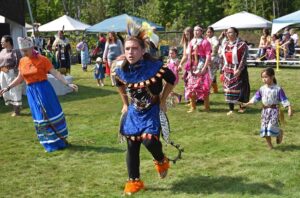
| Gabriel Whiteduck dances traditional men's style. (Supplied) |
For Whiteduck, powwow culture has been a powerful force of change
in his life. While becoming a father was a defining turning point in his
adult life, he credits powwow dancing and drumming as a source of
renewal.
He wants to share that personal experience with other First Nations youth, through his workshops and teachings.
"The odds are against our young Native men and women, unfortunately," he said.
"My story is a celebration. I really celebrate that gift that was
given to me, that was given to us, the gift of being able to move and
speak freely."
He started travelling in the James Bay area of Northern Quebec a few
years ago, visiting communities to lead powwow workshops and attend
gatherings. Last summer he took part in the first ever powwow in
Ouje-Bougoumou, a predominantly Christian Cree community that has in the
past resisted that kind of gathering.
Cultural identity
Powwows don't have the same long history in Eeyou Istchee as they do
for other First Nations, but the practise is spreading fast. Whiteduck
believes it's important for people to remember that they have a distinct
aboriginal cultural identity, whether or not they participate in
powwows.
As "intertribal events" they simply add another dimension to First
Nations cultural expression, he said. "It's a subculture underneath who
we already are."
Whiteduck says when he visits communities, he's not there to tell
people how to be Aboriginal. But he believes the powwow is a way to
express your culture.
"I was once a person like that, I was
very shy and nervous and I think about those people in the audience, so
when I dance I try to give some of my confidence off towards them as
much as I can,"
- Gabriel Whiteduck, powwow dancer
He dances and teaches traditional men's dancing, but says everyone's
style is very personal. What he keeps in mind in the powwow circle is to
connect and relate to his audience.
"I like to dance for the people that are watching, the people that
feel they have barriers, they want to dance but they have the confidence
or the courage to get up and dance," he said.
"I was once a person like that, I was very shy and nervous and I
think about those people in the audience, so when I dance I try to give
some of my confidence off towards them as much as I can."
Whiteduck says it's very important to encourage youth to find a way
to express themselves and tell their story, and he hopes powwow culture
is one means to do that.
He wants to meet more youth and encourage them to bring their own
songs and stories, of their lives and the land, to his workshops.
Listen to the interview: https://soundcloud.com/cree-radio-cbc/gabriel-whiteduck-turned-his-life-around-from-addiction-7-years-ago