BLOGGER changed, not allowing us to UPDATE this back-up blog

(UPDATED 726/2025) issues with blogger are preventing this
Showing posts with label Montana. Show all posts

Thursday, July 11, 2024

Happy Reunion

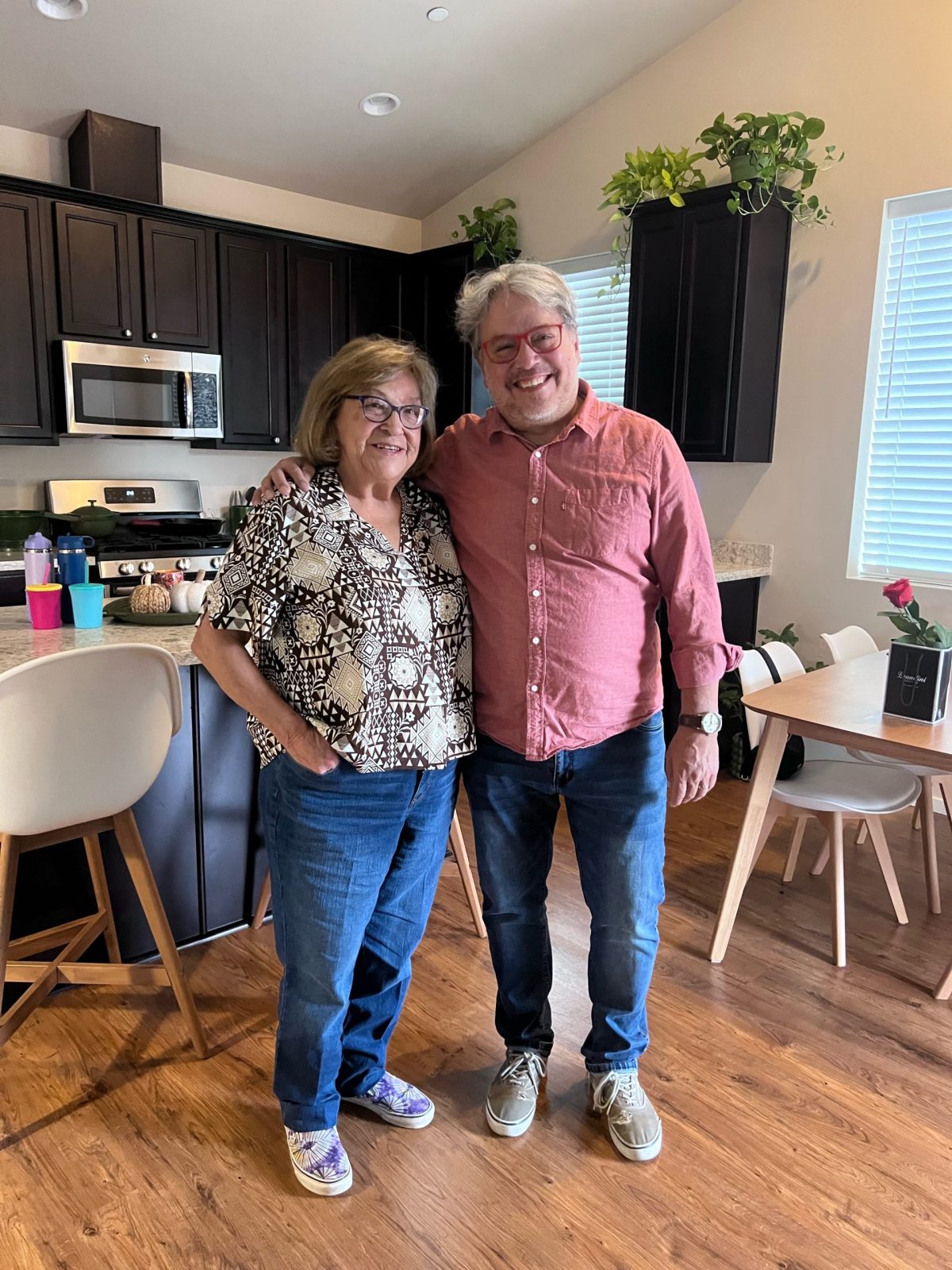
Selma Matte and Jerome Joseph Gentes during their September 2023 reunion.

After 59 years apart, Palm Springs resident Jerome Joseph Gentes has reunited with his birth mother Selma Matte.

Gentes, 60, was given up for adoption when he was about a year old by his mother, who was 20 at the time. He reunited with her in Seattle last year. 

Matte, now 80, was born and raised at the Fort Belknap Indian Reservation in Montana with four sisters and three brothers. She was 19, living in San Francisco and working at Bank of America, when she got pregnant. Jerome’s birth father promised to help after the baby was born, but instead returned to his Indian reservation in North Dakota before the birth, because his grandmother was ill. He never came back. 

(Gentes’ birth father died two months before the reunion with Matte.)  

 SOURCE: https://cvindependent.com/2024/07/happy-reunion-a-palm-springs-man-finds-his-birth-mother-59-years-after-being-put-up-for-adoption/ 

Saturday, April 20, 2024

He died in a police chase. Then the police vanished.

A high-speed police chase. A 17-year-old Crow boy, dead. The police report? Nowhere to be found. The entire police department? Vanished. The excruciating question that emerged: What happened to Braven Glenn?

The hunt for answers is at the heart of our searing new short film After the Crash, by reporter Samantha Michaels and filmmaker Mark Helenowski.

Blossom Old Bull was raising her son Braven, a diligent student and passionate basketballer, in the Crow Nation in Montana. On a dark, chilly night in November 2020, a police pursuit began while Braven was driving to meet his girlfriend. Blossom was told her son was speeding and collided with a train, but she had few other details. Despite his cries for help, witnesses say they didn’t see law enforcement offer him medical assistance. He didn’t survive.

Within days, the police department that pursued Braven shuttered, leaving behind no answers, only taped-up windows and locked doors. The force was formed to increase law enforcement presence on the reservation, but by the time of Braven’s death, after just five months in operation, it was still under-resourced. Its sudden disappearance soon after a deadly chase left Braven’s family and community desperately searching for answers—a familiar agony, since official silence after deaths and disappearances on Native reservations is painfully routine. And it speaks to the federal government’s more than century-long practice of grossly underfunding public safety and law enforcement on reservations, while also under-investing in tribal health care, education, housing, and infrastructure.

Read the full investigation—the cover story of our March+April 2024 print magazine—here.

Thursday, February 15, 2024

Montana Foster Care and #ICWA


Native American children make up more than a third of the foster care caseload in Montana, despite representing less than 10% of the state’s child population. While there’s a broad consensus among child welfare experts that this outsized representation is a problem, there exists no collective strategy to address it. The Montana Free Press series Keeping the Kids, supported by a data fellowship through the USC Annenberg Center for Health Journalism, explores the available data and highlights examples of local solutions around the state. This article focuses on MTFP’s analysis of the available data and some of the factors contributing to racial disproportionality in foster care. 

READ

If poverty exists, and it does in Indian Country, there will always be a problem... let's solve poverty... Trace

RELATED

How we calculated disproportionality in Montana foster care

In October of last year, Montana Free Press started investigating why Montana’s foster care caseload, which was at least 38% Native American in 2022, is so racially skewed. Here’s how data shaped our reporting.

Monday, January 8, 2024

SOLUTIONS: Lodge Grass Healing Center

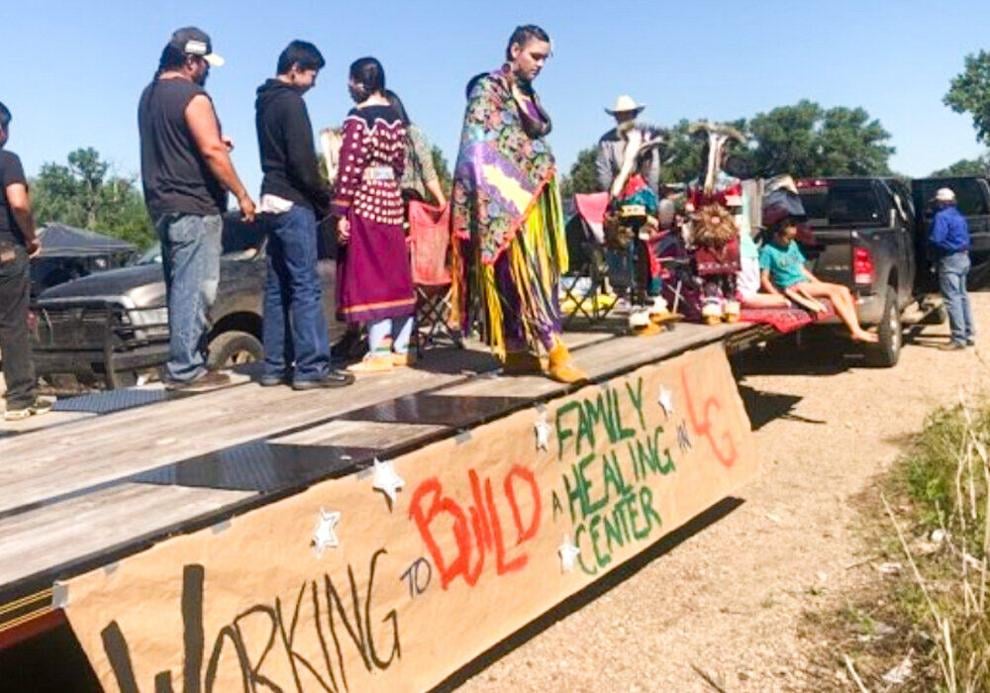
This 2019 photo shows Lodge Grass residents campaigning for the creation of a family healing center.  


Lodge Grass non-profit gets funding for family healing center: read

SEE : Historic photos from Montana's Native American boarding schools. 

A non-profit on the Crow Reservation just got a boon to its efforts to keep families in Lodge Grass intact and in good health. 

    The Mountain Shadow Association, based in Lodge Grass, received a six-figure grant toward the creation of a family healing center with the ambition of preventing trauma or addiction from leading to children being pulled from their homes and potentially off the reservation.

    “What we want is support for the whole family unit,” said Megkian Doyle, executive director for the Mountain Shadow Association. “What we want is for kids and their parents to be engaged in services for emotional and social support.”

    With a population of roughly 450, Lodge Grass is unique in being the only incorporated town on the reservation.  Located about 80 miles southeast of Billings, the Lodge Grass District of the Crow Reservation is home for about 2,000 people.  Over 90% of its population is Native American.

    Doyle, who earned a doctorate in education from Montana State University, came to Lodge Grass to teach at Lodge Grass High School.  She met her husband in town, a Crow man, and the two have since had five children.  After teaching for three years, she said, seeing the conditions in Lodge Grass inspired her to find a position to improve life for its residents.

    She moved to Bozeman with her family, where she and her husband got masters and doctorate degrees.  During that time, Doyle stayed in touch with her former students.  Talks with them evolved into discussions on how best to assist a town in which nearly half of the population lives beneath the poverty line.

    “I asked them, ‘If there’s anything you could do besides pray, what would you do?’” she said.

    In 2017, a coalition of Lodge Grass residents banded together to apply for a grant from the Raising Places Robert Wood Johnson Foundation, which gave them the resources to exhaustively study the factors contributing to the economic and health disparities in town.

    “It meant bringing in everyone, including people who are not normally asked for their opinion, like children,” Doyle said.

    The results were stark.  Nearly 90% of newborns in Lodge Grass are born to single mothers, roughly one in five of whom are teenagers, and about half of all children in Lodge Grass are raised by their grandparents.

    As recently as 2020, according to federal data, about 9% of the children in Montana were Native American. However, they made up 35% of the children in the state’s foster care system.

    Earlier this year, Gov. Greg Gianforte signed into law the Montana Indian Child Welfare Act, which gave Native American families legal preference in foster and adopting Indigenous children in the state.  The Montana legislation was modeled after the federal Indian Child Welfare Act of 1978, which was passed in response to Indigenous children being adopted and fostered outside of their respective tribes only to face physical and emotional abuse.

    Nationwide, Indigenous children are four times more likely to enter the foster care system than white children, according to the National Indian Child Welfare Association. Among the leading causes for Native American kids entering the foster care system in the respective states were allegations of neglect and substance abuse on the part of their parents.

    Separating a child from their family, Doyle said, can have long-term physiological effects, despite a child entering an ideal foster home. Per research published by the National Institute of Health, children separated from their families at an early age experienced higher rates of anxiety and depression and engaged in unhealthy coping behaviors like smoking and alcohol abuse.

    “We can have a great foster care system — we don’t — but even if we did it can still cause damage just by pulling a kid away from their home and their parents,” Doyle said.

    From that Lodge Grass coalition that applied from the Raising Places grant came the Mountain Shadow Association. Coming to the aid of children often means coming to the aid of parents, Doyle said. The non-profit currently assists parents in enrolling in treatment for addiction, but programs that allow them to bring their children along are a 19-hour drive away.

    The solution members of Mountain Shadow reached was the construction of a facility in Lodge Grass where whole families can get treatment without any separation. It’s called Káale’s Village; “káale” is the Crow word for grandmother.

    “We wanted to interrupt family separation on the spot before they would lose their kids,” Doyle said. “But we wanted to do it, obviously, in a safe and healthy way.”

    Mountain Shadow has the land for Káale’s Village, 13 acres in Lodge Grass. Now, thanks to a $750,000 grant from the Arthur M. Blank Family Foundation, the non-profit can start designing it. The center will be a single location for counseling and housing for two families. That space, Doyle said will be for children who need to be removed from their home in Lodge Grass to stay.

    “We want people to become functional in their own ecosystem,” Doyle said.

    Once the architectural designs are completed, Doyle said, the non-profit hopes to see Káale’s Village opened in two years.

Sunday, August 8, 2021

What's News? Tweets


(click links in tweets for access to stories)

Friday, November 22, 2019

Montana editorial: ICWA is working

Montana view: Child Welfare Act court making a difference
(Nov. 19, 2019)

Native American children accounted for 30% of the Montana children in foster care as of Sept. 30, including 472 children under tribal jurisdiction and 679 under state jurisdiction, according the the Montana Division of Child and Family Services.

In 2018, the Yellowstone County Attorney's Office filed civil cases to protect 209 Native American children, which was 42% of all neglect and abuse cases filed for the year. Considering that Native American children are less than 10% of the state's under-18 population, they are tremendously overrepresented in the foster care system.

Federal law requires states to make active efforts to keep Indian children in their parents' homes — if they can be kept safe with in-home support and supervision. If that isn't possible, the Indian Child Welfare Act requires states to try placing abused and neglected Native children with family members, then in homes of members of their tribe, or another tribe. Only as a last resort are Native American children allowed to be placed in nonnative foster homes.

There aren't enough Native foster homes for all the Montana kids removed because of neglect or abuse, so many are in licensed non-Native foster homes.

The Yellowstone County District Court is working to improve the outcome for Native children with the Indian Child Welfare Act Court launched 18 months ago with Judge Rod Souza presiding. It is one of only six ICWA courts in the nation.

The ICWA court team includes liaisons with the Crow, Northern Cheyenne and Fort Peck tribes. When a child is identified as enrolled or eligible for enrollment in one of those tribes, the case is assigned to Souza and a team of dedicated social workers and attorney collaborate to keep the child safe and to reunify him with his parents, if possible.

Members of the ICWA court team described their work last week to the Montana Legislature's Interim State-Tribal Relations Committee.

"Better communication and collaboration leads to better outcomes for children," Souza said.
The eight members of the ICWA team are dedicated to this program, Souza said, adding that stability is important to building and maintaining the relationships critical to finding the best solutions for each child's case.

Edie Adams, a Northern Cheyenne tribal member and retired social worker, serves on the court team. She has seen "major changes" on the Crow, Northern Cheyenne and Fort Peck reservations since the ICWA Court started. "Forms have changed, attitudes have changed and it's carrying over to other counties," Adams told the lawmakers.

Ingrid Firemoon, who supervises social workers at Fort Peck Reservation, said she has "a really good relationship" with the ICWA Court. "I really appreciate this ICWA court," Firemoon said. "We need more of them."
"The Indian Child Welfare Act truly is the gold standard when it comes to child protection," Souza said, explaining that ICWA requires states to make "active efforts" to reunite children with parents. That is a higher standard than the "reasonable efforts" law requires the state to make to reunify non-Native families.
Lawmakers got a look at what "active" efforts mean by attending an ICWA court session last week. The parents called before Souza were treated with respect and encouraged in their progress on addiction treatment and obtaining a safe home for their children. Grandparents were involved in caring for the children. In each case, the team had contacted the tribes that had reportedly enrolled the children. It is up to the tribal authorities to determine membership or eligibility for membership. Each tribe has a committee that decides whether to assume jurisdiction in cases involving children of that tribe.

During the State-Tribal Relations committee meeting and later last week during a meeting of the Interim Children, Families, Health and Human Services Committee, Native and non-Native speakers commended the ICWA court and called for its practices to be more widely adopted. The problems speakers identified included a broader lack of understanding special needs of Native families and lack of resources: not enough foster homes, challenges in getting kinship care providers licensed to receive reimbursement, too few social workers, support staff and attorneys to represent parents.
We commend both legislative committees for meeting in Billings to hear from people in the county with the state's largest foster care caseload. We call on lawmakers to remedy the shortages that slow help to vulnerable Native and non-Native children.

Tuesday, November 12, 2019

State-Tribal Relations Committee takes up treaty rights, voting barriers, land status in Billings meetings

Improved communication among tribes and Child Protective Services

In the first issue brought before the STRC, representatives from the state Department of Public Health and Human Services (DPHHS) and the Yellowstone County District Indian Child Welfare Act court spoke about challenges within and ways to improve Indigenous child welfare services.
Marti Vining, Children and Family Services Division (CFS) administrator for DPHHS, advocated for open and consistent communication between the state and tribes in child neglect cases.
“When the burden of addiction and violence and abuse becomes too hard for our families to carry for themselves, … families (must) know there is a system waiting for them, wanting them to succeed,” she said.
In an effort to improve relationships among the state and tribes, Vining said the CFS implemented a series of tribal consultation meetings, where representatives from CFS develop relationships with and receive feedback from members of tribal nations


Though Native Americans only make up about 7 percent of Montana’s population, Vining reported that as of Sept. 30, Indigenous children made up 30 percent of children in foster care in Montana.
Lesa Evers, tribal relations manager for DPHHS, urged the importance of keeping Indigenous children in the welfare system connected to family and culture. But Vining and Evers both cited the high staff turnover rate and limited housing options as challenges in these cases.
Representatives from the Yellowstone County District Indian Child Welfare Act (ICWA) court also spoke about child neglect cases.
“The concept of an ICWA court is simple,” said Judge Rod Souza of the 13th Judicial District Court. “It’s about relationships. We seek to improve relationships with our tribal partners. Improved relationships lead to better communication, which leads to collaboration, which leads to better outcomes for children.”
Souza and other ICWA court representatives spoke about the importance of family involvement, advocating that families be involved in their children’s cases from the beginning.
“Our goal is to make sure kids are connected to their extended family when not able to be safely reunited with their immediate family back home,” said Brooke Baracker-Taylor, an assistant attorney general.
Montana is one of a few states that does not require a hearing for parents within 48 or 72 hours of their child being taken into the system. As a result, families in Montana may wait up to 20 days to see a judge.
“Due to our own volume (of cases) and our schedules, I’m not sure we could accommodate the 72-hour hearing,” Souza said.
Dana Eaglefeathers, councilman for the Northern Cheyenne Nation, who addressed the Committee as a member of the public, warned legislators of abuse in foster care.
“I’ve been really concerned about our Indian children and our child services,” he said. “We need to make a bridge, so we can bring our Native kids home.”

Committee members and members of the public asked many questions of the ICWA and DPHHS representatives, including where to access more information, how tribes can get into ICWA court and which cases fall under state, county and tribal jurisdiction.
Due to the large amount of questions from the Committee and members of the public, STRC Chairman and State Senator Jason Small (R-Busby) said the Committee will keep track of the questions and find answers.
Friday, October 21, 2016

Tribal Court Judges and Montana Judges Connect #ICWA

Judges connect at conference in Polson

POLSON, MT — Montana District Court judges, water judges, workers’ compensation judges and Montana Supreme Court Justices met at Red Lion Inn in Polson last week for the bi-yearly meeting of the Montana Judges Association, where they exchanged ideas, learned new laws, and got to know each other face to face.

This year Tribal Court Judges from across Montana were invited to join the conference.

“We have the advantage of having a good relations with our tribal judges,” said Twentieth Judicial District Judge Deborah Kim Christopher, president of the Association. “It was really special.” The Association is a nonprofit organization that works to improve the quality of the judicial system, continue education, and provide a forum for the exchange of information and ideas, according to their website. The conference is educational in nature as judges must earn 15 continuing legal education credits per year.

“They were all here making an effort to coordinate and care about what we are doing within the context of what we can accomplish under the law,” Christopher said.

The National Judicial College presented information about the Indian Child Welfare Act, a federally-imposed mandatory regulation for how courts must treat tribal children. The conferences gave judges the opportunity to discuss issues, such as which court has jurisdiction over the cases and how to best maintain family relationships.

“That is why it’s really cool to have tribal judges here,” Christopher said. “Most of the other reservations are closed, but even courts not on reservations must follow the regulations, taking into account social and cultural backgrounds.”

Other larger issues focused on child pornography and how quickly kids can be made a victim in social media, plus what new changes to laws must be taken into account, and how secondary trauma is impacting judges and attorneys.

Polson businesses showed Montana hospitality to the visiting judges, museums opened their doors, and the Polson Chamber of Commerce provided informational bags. Rob and Halley Quist provided music, Polson Mayor Heather Knutson gave a tour of Country Pasta in Polson, Vine and Tap hosted a social time, and other local restaurants and business just treated the judges “really, really well,” Christopher said. “The judges were made to feel welcome, and they said so.”

Meeting face to face and just talking with each other was the highlight of the conference, Christopher said, which helps reach across cultural borders.

“People to people, Montanans can always get things done,” she said

click

Contact Trace

Name

Email *

Message *

NO MORE UPDATES

GO TO:  https://blog.americanindianadoptees.com/  for updates and news. THIS BLOG cannot be updated...