BLOGGER changed, not allowing us to UPDATE this back-up blog

(UPDATED 726/2025) issues with blogger are preventing this
Showing posts with label podcast. Show all posts

Sunday, March 9, 2025

The Ohio Country Podcast


By Trace Hentz, blog editor

As many of you know, written history has problems. Who wrote it is the biggest problem.

I travelled to Ohio to see the mounds years ago, and was truly disappointed to see the Shawnee and other tribes were not consulted in the visitor center for the Hopewell site. The Serpent Mound was not open to the public when I went to see it.

The State of Ohio has more than 70 Indian mounds, burial sites of the Adena and Hopewell tribes--the "mound builders"--who inhabited central and southern Ohio from roughly 3,000 BCE until the 16th century.  

Many mounds were destroyed, as we'd expect.  Some did survive.


Niagara66/Wikimedia Commons/GNU FDL

Above: The Hopewell Cultural National Historic Site is actually five separate sites, all located in Ross County, not far from Chillicothe.  The sites, which include the Mound City Group and the Seip Mound, include a variety of conical and loaf-shaped burial mounds dating from the Hopewell Civilization (200 to 500 AD).  There is a visitors center with information on the Hopewells and artifacts from the mound excavations. (I went through it and was shocked, with dismal theories of who the PEOPLE were, and actually are...)

Please listen to this 12-part podcast to understand the tribes who were removed and the history THEY tell...

"We'll put the experiences of Miami, Shawnee, Wyandotte, and other American Indian people at the center of a refreshed version of the state’s complicated past and undecided future."

https://www.wyso.org/podcast/the-ohio-country


** Episode 2

In this episode, we start in Xenia.

Shawnee history has often been riddled with harmful stereotypes and presented inaccurately in southwest Ohio, from the outdoor "Blue Jacket" and "Tecumseh" dramas to the historical fiction books by famous local author Alan Eckert.

In episode two, we unpack why it is important to question things you may have taken as fact if you grew up in Ohio.

We also look at initiatives like Great Council State Park and Caesar's Ford Theatre, which make it easier to learn Ohio's history from a more accurate perspective that includes Shawnee voices.

Dispelling the Blue Jacket myth

One of the persistent myths around the Shawnee leader Blue Jacket is the belief that he was a white man originally named Marmaduke Van Swearingen. Genetic testing at Wright State University in 2006 proved that Blue Jacket was Indigenous. However, Shawnee people always knew that BlueJacket wasn’t an adopted European settler because his descendants lived in their communities. The BlueJacket last name is still common among the federally recognized Shawnee tribes today.

Where was Tecumseh born?

There is a strong consensus among Shawnee scholars that the Shawnee leader Tecumseh was born near the site of modern-day George Rodgers Clark Park in Clark County, Ohio. According to multiple sources, that's where Tecumseh himself said he was born.

Letter from Duncan McArthur to historian Benjamin Drake, 1840, Xenia Library, from the Draper Manuscripts collection.
Xenia Library
Letter from Duncan McArthur to historian Benjamin Drake, 1840, Xenia Library, from the Draper Manuscripts collection.

For example, Duncan McArthur, a military officer and Federalist and National Republican politician from Ohio, shares in his account of traveling with Tecumseh, Blue Jacket, and Roundhead (Wyandotte) from Greenville to Chillicothe in 1807 that when passing the remnants of the Shawnee Village Pe'qa, along the Mad River, "the Tecumseh" noted that he had been born there, northwest of the Mad River.

Local legend has led to the myth that Tecumseh was born at Oldtown, near where the newly constructed Great Council State Park sits today.  Some Kentuckians also believe that Tecumseh was born somewhere in what is now their state.  Other non-Native historians have posited that Tecumseh was born near modern-day Chillicothe, Ohio.

Land of the Devil Wind

According to The Eastern Shawnee Tribe of Oklahoma and The Shawnee Tribe, the legend that the Shawnee call, or ever called, the area around modern-day Xenia, Ohio, the "land of the devil wind" is false.

Additionally, the idea of, and a word for, the judeo-Christian "devil" does not exist in the Shawnee language or traditional religion. 


When Ohio became a state in 1803, there were seven Indigenous tribes living within its borders. They were the Shawnee, Wyandot, Miami, Ottawa, Lenape or Delaware, Seneca, and Cayuga. But less than 50 years later, they were all gone. They'd been systematically removed. 

MORE ON OHIO MOUNDS:

https://www.tripsavvy.com/ohios-fascinating-indian-mounds-753018


Saturday, August 24, 2024

Corruption and Bribery? A Baby Adopted, A Family Divided


THIS WEEK’S PODCAST

A Baby Adopted, A Family Divided 


Reveal illustration; Charles Deluvio/Unsplash; Dukas/Universal/Getty

In 2017, David Leavitt drove to the Northern Cheyenne reservation in Montana to adopt a baby girl. A few years later, during an interview with a documentary filmmaker, Leavitt, a wealthy Utah politician, told a startling story about how he went about getting physical custody of that child.

He describes going to the tribe’s president and offering to use his connections to broker an international sale of the tribe’s buffalo. At the same time, he was asking the president for his blessing to adopt the child.

That video eventually leaked to a local TV station, and the adoption became the subject of a federal investigation into bribery. To others, the adoption story seemed to run afoul of a federal law meant to protect Native children from being removed from their tribes’ care in favor of non-Native families.

This week on Reveal, reporters Andrew Becker and Bernice Yeung dig into the story of this complicated and controversial adoption, how it circumvented the mission of the Indian Child Welfare Act, and why some of the baby’s Native family and tribe were left feeling that a child was taken from them.

Listen to the episode

🎧 Other places to listen: Apple Podcasts, Spotify, iHeartRadio, Pandora, or wherever you get your podcasts. 

Transcript


Dig Deeper

Read: ‘People Say, You Sold Your Baby’ (The Cut) 

Read: Forever Home (Mother Jones)

Listen: Adoptive Couple v. Baby Girl (Radiolab)

Listen: This Land podcast


Friday, May 17, 2024

Adoption: The Making of Me (podcast)


Podcast: Adoptees' Untold Stories: Voices from the Adoptee Perspective

Today, our guests are Sarah Reinhardt and Louise Browne, who host “Adoption: The Making of Me,” a podcast focused on adoptees’ perspectives, highlighting the often overlooked side of adoption narratives. Our conversation delves into how the adoption industry, driven by a multibillion-dollar market, prioritizes the narratives of adoptive parents, sidelining the voices and experiences of adoptees. We discuss the societal expectations placed on adoptees to feel grateful despite the complexities of their experiences, including feelings of loss, identity issues, and the challenges of connecting with their biological roots. Furthermore, the dialogue touches on systemic issues in adoption practices, such as the lack of access to original birth records for adoptees. Through their stories and insights, Sara and Louise stress the need for greater understanding, reform in adoption practices, and more inclusive conversations that give adoptees a platform to share their experiences and identities.

“I think you can do both. You can love your family. And you can also want to know your other family and your roots and who you are. It’s like an inherent right, I think, to know who you are because we strive for it. Like we may not know we’re searching, but we are always, because you have like this, this hole that’s missing. And you’re taken from your mother. It’s a strange scenario if you think about it, and you put somewhere else. No one talks to you about it, and you try to navigate the world. And so all these little subtle things growing up affect a lot of people.” ~Louise Browne

Sarah Reinhardt is a co-host of “Adoption: The Making of Me,” a podcast by and for adoptees. She is a writer, empty-nester, OCD dog parent, and works in Public Media in Kansas City, MO. Sarah hopes her voice will help resonate with other adoptees facing similar issues. Currently, she is working on a book of humorous essays that follow the theme of searching for identity.

Louise Browne is a co-host of “Adoption: The Making of Me,” a podcast by and for adoptees. Louise works for the executive leadership team in digital banking. She is working on a YA novel and has written two children’s books along and several poems. Louise lives along the Central Coast of California with her husband, Bill, and their dog, Gracie. She has a grown son who lives in Los Angeles. She is trying to change the narrative of adoption to include the voices of adoptees and to help change the way adoption is run as a business.


Tuesday, July 18, 2023

MAPPING THE DOCTRINE OF DISCOVERY (podcast)

My takeaway from this excellent podcast: The Supreme Court just makes up rules ... and it has all along...and IT'S CRAZY! And it's been going on since the invention of the DOCTRINE OF DISCOVERY. - Trace, Blog Editor


MAPPING THE DOCTRINE OF DISCOVERY: Johnson v. McIntosh and Federal Anti-Indian Law with Peter d’Errico

The goal of this Podcast is to help identify these systems of domination that have been sustained by greed and power, through the subjugation of human beings and the natural world.  

Philip P. Arnold and Sandra Bigtree, “S02E03 - Johnson v M’intosh and Federal Anti-Indian Law with Peter d’Errico,” Mapping the Doctrine of Discovery (Podcast), July 13, 2023. https://podcast.doctrineofdiscovery.org/season2/episode-03/.

⤓ Download a transcript of the Episode as a PDF // LISTEN


Wednesday, July 12, 2023

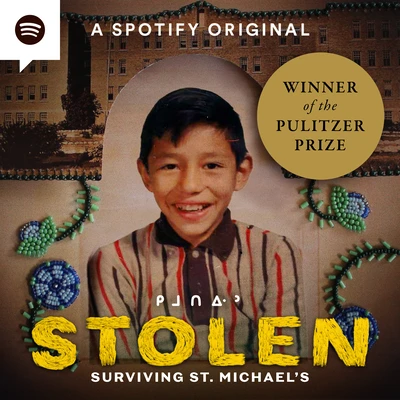
STOLEN (podcast)


About Stolen: Surviving St. Michael's (Season 2)

Last May, investigative journalist Connie Walker came upon a story about her late father she'd never heard before. One night back in the late 1970s while he was working as an officer in the Royal Canadian Mounted Police, he pulled over a suspected drunk driver. He walked up to the vehicle and came face-to-face with a ghost from his past—a residential school priest. What happened on the road that night set in motion an investigation that would send Connie deep into her own past, trying to uncover the secrets of her family and the legacy of trauma passed down through the generations.

In Stolen: Surviving St. Michael's, Connie unearths how her family's story fits into one of Canada's darkest chapters: the residential school system.

HERE 

About Stolen: The Search for Jermain (Season 1)

In 2018, a young Indigenous mother named Jermain Charlo left a bar in Missoula, Montana, and was never seen again.  After two years and thousands of hours of investigative work, police believe they are close to solving the mystery of what happened to her.  We go inside the investigation, tracking down leads and joining search parties through the dense mountains of the Flathead Reservation.  As we unravel this mystery, the show examines what it means to be an Indigenous woman in America.

Stolen is hosted by Connie Walker.

LISTEN

Wednesday, March 22, 2023

Buried Secrets Podcast

Chief James H. Red Cloud, grandson of the famous Chief Red Cloud who allowed the Jesuits to set up a school on Lakota land, addresses the 1958 graduating class of Holy Rosary Mission and a Jesuit father. Credit: Courtesy of the Red Cloud Indian School and Marquette University Holy Rosary Mission/Red Cloud Indian School records


Buried Secrets: America’s Indian Boarding Schools

This week on Reveal, we’re bringing back a two-part investigation with ICT (formerly Indian Country Today) about boarding schools for Native children and the United States’ effort to come to terms with an educational system that was designed to “kill the Indian and save the man.”

ICT reporter Mary Annette Pember has been reporting on these boarding schools for more than 20 years. Much of her work focuses on the role the Catholic Church played in shaping federal policy toward Native people. The church was given more than 10,000 acres of tribal land by the federal government, as well as access to money that had been given to tribes through treaties with the U.S. government to build and operate the schools.

In part one of this investigation, Pember takes us to the Catholic-run Red Cloud Indian School on the Pine Ridge Reservation in South Dakota, which is now trying to bring truth and healing to its community despite the open wound from the school’s history.


Listen to the episode

🎧 Other places to listen: Apple Podcasts, Spotify, Google Podcasts, Stitcher or wherever you get your podcasts. 


DIG DEEPER

📝 Buried Secrets: Red Cloud takes the lead in uncovering boarding school past. Read.

📝 Red Cloud Indian School will dig for graves. Read.

📝 The Catholic Church siphoned away $30M paid to Native people for stolen land. Read.

📝 Deaths at Chemawa. Read.

📝 ‘Sometimes we hear the voices of children playing there.’ Read.


Thursday, February 9, 2023

Podcast: How an Adoption Case Could Unravel Tribal Sovereignty

 The Supreme Court is hearing a case that could dismantle the Indian Child Welfare Act, also known as ICWA.  The law was passed in 1978 to combat a history of forced family separation in the United States and prevent the removal of Native children from their communities. But now, in Haaland v. Brackeen, ICWA could be completely overturned. 

In the third episode of Dissent, host Jordan Smith is joined by Rebecca Nagle, a journalist, citizen of the Cherokee Nation, and host of the podcast “This Land.” Smith and Nagle break down the case and its broad implications for laws based on tribes’ political relationship with the U.S. government. INTERCEPT

Tuesday, December 6, 2022

HISTORY: How the "free" state of California enslaved Native children

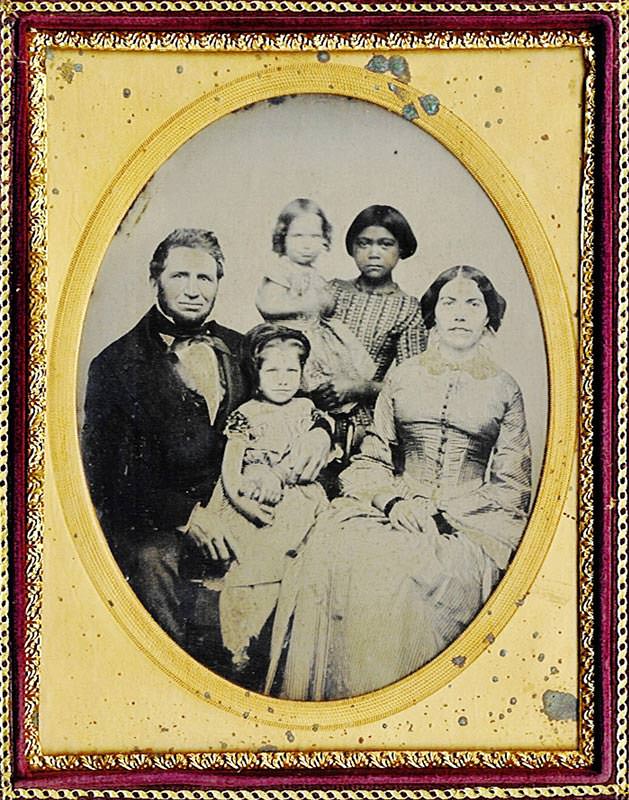
Photo of Kate Camden, a Native girl who at age 10 was forced into servitude for a white family living in Shasta County. Photo is one of few records that exist showing Native children entrapped by California's apprentice and guardianship laws // Credit: Camden Family Portrait, circa 1857-1859 courtesy of Whiskeytown National Recreation Area, WHIS 9066

 Kate Camden family portrait

New Episode of ACLU Gold Chains Podcast Examines Indigenous Child Slavery in 19th century California, Connects to Upcoming U.S. Supreme Court Case Brackeen v. Haaland

How the "free" state of California enslaved Native children

Media Contact: press@aclunc.org, (415) 621-2493

SAN FRANCISCO, CA – California came into the Union as a free state in 1850 with a constitution that banned slavery. So how did white settlers in the mid-19th century get away with enslaving Indigenous children, some of them as young as 2 years old? And why does this little known, terrible chapter of California history matter today?

Today, the ACLU of Northern California released the third episode of Gold Chains, our podcast about California’s hidden history of slavery. “Indigenous Injustice” examines a 19th century state law called the Act for the Government and Protection of Indians that effectively legalized Indigenous child slavery and encouraged kidnappers to snatch Native children from their tribal communities.

“The horror of what happened in California, the genocidal violence against Native people, and especially the enactment of that violence against children, is unfathomable,” said historian Stacey Smith, who appears as a guest on the show.

“Indigenous Injustice” isn’t just ancient history. Over time, the practice of forcibly separating Native children from their tribal communities has taken on many forms. There were the so- called Indian Boarding Schools. A variety of other government-sanctioned adoption schemes have funneled Indigenous children into Non-Native, mostly white households.

Currently, there’s a landmark case scheduled to be heard by the U.S. Supreme Court on Nov. 9 – Brackeen v. Haaland – that deals with the very same issue of the forced removal of Native children from their families, tribes and tribal culture. It threatens to dismantle the Indian Child Welfare Act (ICWA), which was passed to prevent Native children from being removed from their communities.

The American Civil Liberties Union, along with 12 ACLU affiliates ( including the ACLU of Northern California) have filed an amicus brief with the U.S. Supreme Court, urging the court to uphold the constitutionality of the Indian Child Welfare Act.

“Indigenous Injustice” is a timely story that connects the dots between Indigenous child slavery in California to the present.

Link to Episode Website


November 1, 2022

Episode 3:
Indigenous Injustice

California joined the Union as a so-called free state in 1850. So how did white settlers get away with enslaving Native children until they were young adults?

We explore a little-known California state law called the Act for the Government and Protection of Indians that unleashed genocidal violence against Indigenous children. And we connect the dots between that terrible past and a landmark upcoming U.S. Supreme Court case.


Episode Credits:

Produced by the ACLU of Northern California

Host and writer Tammerlin Drummond

Senior Producer and Editor Joanne Jennings

Mix and Original Score Renzo Gorrio

Executive Producer Candice Francis

We’d like to thank our wonderful guides Stacey L Smith, William Bauer and Tedde Simon.

Our associate producers are Lisa P. White and Carmen King.

A special thanks also to our voice actors Pauline Schindler, William Freeman, and Avi Frey.

Elize Manoukian provided fact-checking and production assistance.

Field recording was done by Julie Conquest, Ron George and Eric Gleske.

We’d also like to thank the following members of our Gold Chains team: Brady Hirsch, Gigi Harney and Eliza Wee. Thank you also to Abdi Soltani, executive director of the ACLU of Northern California.

A special thanks to World Affairs, Oregon State University and the University of Nevada, Las Vegas for providing us with recording studios.

Archival sound was provided courtesy of Periscope Films and Prelinger Archives.


Episode Guests:

William Bauer is a professor of history at the University of Nevada, Las Vegas and a citizen of the Round Valley Reservation. He is the author of California Through Native Eyes: Reclaiming History and We Were All Like Migrant Workers Here: Work, Community and Memory on California’s Round Valley Reservation.

Stacey Smith is an associate history professor at Oregon State University. She is the author of Freedom's Frontier: California and the Struggle over Unfree Labor, Emancipation and Reconstruction.

Tedde Simon is the Indigenous justice advocate at the ACLU of Northern California and a citizen of the Navajo Nation.


Additional Resources:

Gold Chains: The Hidden History of Slavery in California, ACLU of Northern California

Among the Diggers of 30 Years Ago, Helen M. Carpenter

Early California Laws and Polices Related to California Indians Kimberly Johnston-Dodds, California State Library

Federal Indian Boarding School Investigative Report U.S. Department of Indian Affairs

This Land, host Rebecca Nagle

At Liberty, host Kendall Ciesemier


Wednesday, August 31, 2022

Native American DNA with Roberta Estes

 SOURCE

Research Like a Pro Podcast

I love to see families working together. Nicole Dyer and Diana Elder are a lovely mother-daughter genealogy team and hostesses of Research Like a Pro, a podcast through their genealogy research company, Family Locket. Their Research Like a Pro podcasts help genealogists “take your research to the next level.”

I was so pleased to be invited to join them for a discussion about my book, DNA for Native American Genealogy.

For those of you who don’t normally listen to podcasts and don’t have a podcast app, you don’t need one. You can just click to listen online, or they have kindly transcribed the session. The transcription is automated, so not exact, but still a great tool.

Interviews are interesting because the back and forth is so revealing and includes information not found in the book. As it turns out, their family had a Native American story too – and it was very similar to mine. That oral history which was accepted as fact in my family is what launched my search many years ago.

They “cheated” and opened by asking me about what drives and inspires me. I’m not interviewed live very often, and don’t think I’ve ever been asked this question before. If you’d like to hear me talk about what motivates me and gets me out of bed every morning, aka, “life’s pennies,” click here.

Of course, most of the hour was spent discussing Native American records and resources, including DNA evidence. We discussed ethnicity and how to actually USE it (yes, you can), vendors, their products and resources, Y and mitochondrial DNA, third-party tools, and how to integrate these resources successfully.

As a bonus, let me give you one of the tips I talked about that’s not in the book. Declined enrollment applications for the Five Civilized Tribes. If your family wasn’t enrolled, they might be found in the declined applications, which often provide a HUGE amount of family information. Here is a list of those resources at FamilySearch. Don’t miss the Cherokee by Blood book series by Jerry Wright Jordan and the Extract of Rejected Applications of the Guion Miller Roll of the Eastern Cherokee series by Jo Ann Curls Page.

Also, as an aside, in some cases, DNA testing has proven using Y or mitochondrial DNA that the declined enrollment was in error and the family did, in fact, have Native ancestors. That’s both heartbreaking and validating.

This was such a fun and informative hour. I swear, we talked about everything. While this podcast is focused on finding Native American ancestors, the DNA tools, tips, and research techniques are certainly relevant and useful for everyone, so please join us and enjoy!

If you don’t have my book yet, you can purchase it here:

Monday, August 8, 2022

Podcast: Behind the Bastards (The Woman who invented adoption)

 Editor Note: Georgia Tann was well-connected, rich child trafficker. TLH


Friday, June 10, 2022

6 books on Canada's residential schools recommended by Duncan McCue and the Kuper Island podcast team


6 books on Canada's residential schools recommended by Duncan McCue and the Kuper Island podcast team

The new CBC Podcast series Kuper Island tells the story of four students: three who survived and one who didn't. They attended one of Canada's most notorious residential schools — where unsolved deaths, abuse and lies haunt the community and the survivors to this day.

Kuper Island is an eight-episode series hosted by journalist Duncan McCue. You can find it on CBC Listen or wherever you get your podcasts. 

To continue the conversation, Kuper Island host McCue and producers Martha Troian and Jodie Martinson connected with CBC Books to share some of the books that impacted them when reflecting on and researching the residential school system. 


LISTEN: Kuper Island

*

Missing Children and Unmarked Burials, vol. 4 by Truth and Reconciliation Commission of Canada

Missing Children and Unmarked Burials, vol. 4 document findings from The Final Report of the Truth and Reconciliation Commission of Canada. (McGill-Queen's University Press)


Indigenous-themed podcasts offer richness, diversity of First Nations, Inuit and Métis cultures

June is National Indigenous History Month and a time for learning about, appreciating and acknowledging the contributions of First Nations, Inuit and Métis peoples.CBC offers you a wide variety of Indigenous-themed podcasts, including the CBC Books podcast This Place, hosted by Rosanna Deerchild.


click

Contact Trace

Name

Email *

Message *

NO MORE UPDATES

GO TO:  https://blog.americanindianadoptees.com/  for updates and news. THIS BLOG cannot be updated...