BLOGGER changed, not allowing us to UPDATE this back-up blog

(UPDATED 726/2025) issues with blogger are preventing this
Showing posts with label Call to Action. Show all posts

Friday, November 15, 2024

Indian Boarding School Survivors and Their Loved Ones Have Responded to Biden’s Apology. Their Message: Now Take Action

Indian Boarding School Survivors and Their Loved Ones Have Responded to President Biden’s Apology. Their Message: Now Take Action
“The only thing we have left is the cemetery where a lot of our Quapaws are buried,” says Carrie Wilson, whose mother was forced to attend St. Mary of the Quapaws school in Oklahoma. Photo illustration by Julie Reynolds.

In its attempt to crush Native America through assimilation, the U.S. government created, operated, funded and perpetuated a network of hundreds of Indian boarding schools across the country. For centuries, the government forcibly severed Indigenous children from their families and tribal homes. Countless students were subjected to sexual, emotional and physical abuse. Nearly 1,000 schoolchildren died. Many were buried in unmarked graves.

Last month, over 200 years after the first school opened, outgoing President Joe Biden apologized.

How the apology landed for everyone is impossible to fully capture. But The Imprint reached out to boarding school survivors and their descendants, and compiled public statements made in recent weeks. 

For some, the apology rang hollow. Others described it as an important first step. But they all said more specific action must follow: more funding for education, the return of buried children’s remains, and adherence to reforms called for by the U.S. Interior Department, which is led by the nation’s first Indigenous cabinet-level secretary, Deb Haaland.

“The apology was a welcome statement to me that should result in solid action in terms of remedying harms to Tribal families and communities,” wrote legal scholar Angelique EagleWoman, chief justice on the Sisseton-Wahpeton Supreme Court and director of the Native American Law and Sovereignty Institute in Saint Paul, Minnesota.

President Biden’s apology is the latest in a short list of acknowledgements of historical harms caused by the U.S. government:

  • 1983: The U.S. apologized for shielding a former Gestapo officer known as the “Butcher of Lyon.”
  • 1988: President Ronald Reagan apologized to Japanese Americans for their forced removal to internment camps during World War II. The apology was accompanied by $20,000 in compensation to each person who was imprisoned.
  • 1993: Congress apologized for a 1893 coup staged against the Hawaiian Queen Lili’uokalani by American businessmen and sugar plantation owners.
  • 1997: President Bill Clinton formally recognized the U.S. role in the infamous 40-year Tuskegee experiment, involving doctors from the Tuskegee Institute in Alabama who withheld medical treatment to hundreds of Black men infected with syphilis in order to study the long-term progression of the disease. More than 100 men died. 
  • 2008: The second-most recent — and entirely symbolic — apology was issued by Congress, an acknowledgment of the U.S. government’s perpetuation of the Atlantic slave trade and Jim Crow laws. 
President Joe Biden after his apology in Arizona for the U.S. government’s boarding school policies. Photo still from C-SPAN livestream.

Biden acknowledged Indian boarding school survivors 16 years after the Canadian government apologized for its own network of such abusive institutions. Canada’s apology was followed by a $2 billion settlement with First Nations to compensate survivors for the schools’ acts of “cultural genocide.” 

Mental health experts interviewed for this piece emphasized restitution as critical for individual and collective healing from historical trauma. They pointed out that unlike Canada, the U.S. president did not announce his apology alongside any meaningful next steps beyond verbal acknowledgement.

Spero Manson, medical anthropologist and director of the Centers for American Indian and Alaska Native Health, said when answering the question of ‘what does an apology need to have in order to offer healing?’ that self-determination is key. Individuals on this recovery journey, he said, must have the opportunity to dictate their own course in navigating the consequences of their traumas. Boarding school survivors and their descendants are no exception.

“When we talk about treating patients who suffer from trauma — and the emotional and psychological consequences thereof — after that first acknowledging of the root causes, we begin to explore ways to reassert a sense of self-efficacy, of reacquiring the ability to interact positively with one’s environment,” Manson said. “We see this happening at community levels as well as individuals, or at least the prospects of that happening.

So what resources are necessary to enable people to continue on this recovery journey? There are many different resources. The problem is, from my point of view, with the changing nature of federal initiatives and priorities, there’s great uncertainty about the ability of the government to commit consistently, long term, to the provision of these resources and attendant support for tribal communities.”

The Association on American Indian Affairs has called for burial remains to be returned home to ancestral lands.

“Justice requires action, including the repatriation of children who were buried at these schools,” reads a public statement released after the apology. “We must ensure this work not only continues but expands in the next administration. Our next generations depend on it.”

Self-described Indigiqueer scholar and activist Autumn Asher BlackDeer was not impressed with Biden’s apology.

“Apologies without action are like the drive-by privilege checks or hollow readings of land acknowledgments,” said BlackDeer, who is Southern Cheyenne and an assistant professor in the Graduate School of Social Work at the University of Denver. “No imperialist is getting a pat on the back from me anytime soon.”

Below are responses to Biden’s apology to boarding school survivors and their descendants from around the country:

Judge Abby Abinanti. Provided photo

Abby Abinanti, chief judge of the Yurok Tribal Nation

Abinanti’s mother and her two sisters were sent to Sherman Indian High School in Riverside, California.

“The apology is an important starting point and must be followed up by substantive efforts to ‘make it right.’ That is where the major work must be done with the families, the descendants. Discussions must occur at the ground level, and plans must be created.”


Robert Ludgate, child welfare expert and Siksika Nation descendant

Although he is employed by the University of Washington as a development and facilitation specialist, his views do not reflect the views or positions of the university.

“Taking steps to remedy the effects of the boarding/residential school systems means focusing on contemporary child welfare system reform as they are inextricably intertwined. An apology without action to address what is happening now to Native families in the child welfare system means very little.

Any meaningful apology related to the boarding/residential school system needs to acknowledge both its context in the contemporary child welfare system and be followed with action for systemic changes within the contemporary child welfare system.”


Angelique EagleWoman, chief justice on the Sisseton-Wahpeton Supreme Court

EagleWoman’s father, grandparents and great-grandparents attended Indian boarding schools.

“U.S. President Biden spoke for a government that was engaged in genocidal acts toward Tribal Nations for over a hundred years when he gave the apology on Oct. 25, 2024. This was a long time in coming and absolutely necessary to acknowledge the intergenerational trauma stemming from deliberate U.S. policies towards Tribal children.

The suppression of this history must end. By understanding the harms from the U.S. Indian boarding school era, the need for contemporary responses such as the Indian Child Welfare Act to provide active efforts in unifying Tribal families and transferring child cases to Tribal courts is better understood. 

The apology was a welcome statement to me that should result in solid action in terms of remedying harms to Tribal families and communities.”


Sen. Mary Kunesh

Minnesota Sen. Mary Kunesh, a New Brighton, Minnesota lawmaker of Lakota heritage

“This recognition of past wrongdoings is an important step towards healing relationships between the United States and the sovereign nations affected by these past systems. This dark period of American history must be remembered and taught. 

The generational trauma caused by over a century of family separation and forced cultural assimilation still weighs on Indigenous communities to this day. In a time where we see a resurgence of white supremacist attitudes in this country, it is crucial that we reject these hateful ideas, in order to make sure we do not repeat these injustices of history. Furthermore, we must remain vigilant of acts of ethnic cleansing and prevent them from happening, both in our country and around the world.”

Minnesota Lt. Gov. Peggy Flanagan

Minnesota Lt. Gov. Peggy Flanagan of White Earth Band of Ojibwe

Flanagan is a descendant of boarding school survivors.

“There literally is no Native person who hasn’t been impacted by this,” she told The Minnesota Star Tribune. “I think he really said the things that people have been waiting to hear for generations, acknowledged just the horror and trauma of literally having our children stolen from our communities. It’s a powerful first step toward healing.”


Angelique Albert, CEO of Native Forward Scholars Fund and member of Confederated Salish and Kootenai Tribes

Albert is the granddaughter of boarding school survivors. 

“As we build upon this moment, I encourage President Biden and the next administration to execute the additional seven recommendations from the Interior Department’s report. This includes the responsibility to educate the American public on Native history, including the history of federal Indian boarding schools, and to invest in education for Native people.”


Ben Barnes, chief of the Shawnee Tribe

Barnes speaks often about boarding school survivors within his own tribe and how their needs should be uplifted. 

“I’m delighted that President Biden’s apology today has shed an unprecedented light on the evils perpetuated by the United States in Indian boarding schools and elevated the visibility of tribal nations and our fight to find justice for boarding school survivors and descendants. However, I am incredibly disappointed President Biden did not utilize this once-in-a-lifetime occasion to announce any meaningful new action that will bring us closer to those goals.

Until the U.S. Truth and Healing Commission bill is passed, and until American education systems tell the full history of this chapter in our shared history, we will still have a very long fight for justice ahead of us.”


SOURCE: https://imprintnews.org/top-stories/indian-boarding-school-survivors-respond-biden-apology/256088


Thursday, March 31, 2022

Editorial: Not Indigenous history, our history

'While B.C. is the first, hopefully, the other provinces will soon follow because we need to continue to put back these pages in the books of our collective library sooner rather than later.'
Paul BradburySquamish
Number 62 of the Truth and Reconciliation Commission’s Call to Action includes making age-appropriate curriculum about residential schools, treaties and Aboriginal peoples’ historical and contemporary contributions to Canada a mandatory education requirement for schools.

Soon, all Squamish high school grads who cross the stage will be going out into the world having completed Indigenous-focused learning.

On March 4, the provincial government announced that the Ministry of Education was implementing the new graduation requirement in collaboration with the First Nations Education Steering Committee (FNESC).

It is proposed that Grade 10 students will be the first to complete this new requirement, starting in September 2023.

The requirement applies to students in the province at public, independent and offshore schools.

B.C. is the first Canadian province to implement this requirement, which is disappointing.

This isn’t just a spontaneous altruistic decision. Number 62 of the Truth and Reconciliation Commission’s Call to Action includes making age-appropriate curriculum about residential schools, treaties and Aboriginal peoples’ historical and contemporary contributions to Canada a mandatory education requirement for schools.

The history of residential schools, treaties and Indigenous contributions to the country does not just belong to First Nations.

This is our collective history, our collective culture.

Previously, our education system was like a book with pages missing.

This created a deficit in our collective understanding that was evident in the reaction of many adults to an archaeologist’s discovery of bodies on the grounds of Kamloops Indian Residential School site in Tk’emlúps te Secwépemc last May.

Elders and knowledge keepers have talked of the atrocities and deaths at these institutions for years, but this knowledge didn’t reach the masses, thus the disbelief and shock of so many.

Of course, over the last few years, First Nations learning has been integrated into what our kids learn at school.

Students can meet the new grad requirement by taking new or existing courses.

“Building awareness and understanding of First Peoples’ perspectives, cultures and histories among all B.C. students will serve as an important step toward reconciliation and an effective strategy to combat racism within the province to the benefit of all British Columbians,” said Tyrone McNeil, president, FNESC in a news release.

An online public engagement period for feedback and further consultation with First Nations is underway.

There are still many questions from teachers and parents about this requirement, but those will be undoubtedly be ironed out.

While B.C. is the first, hopefully, the other provinces will soon follow because we need to continue to put back these pages in the books of our collective library sooner rather than later.

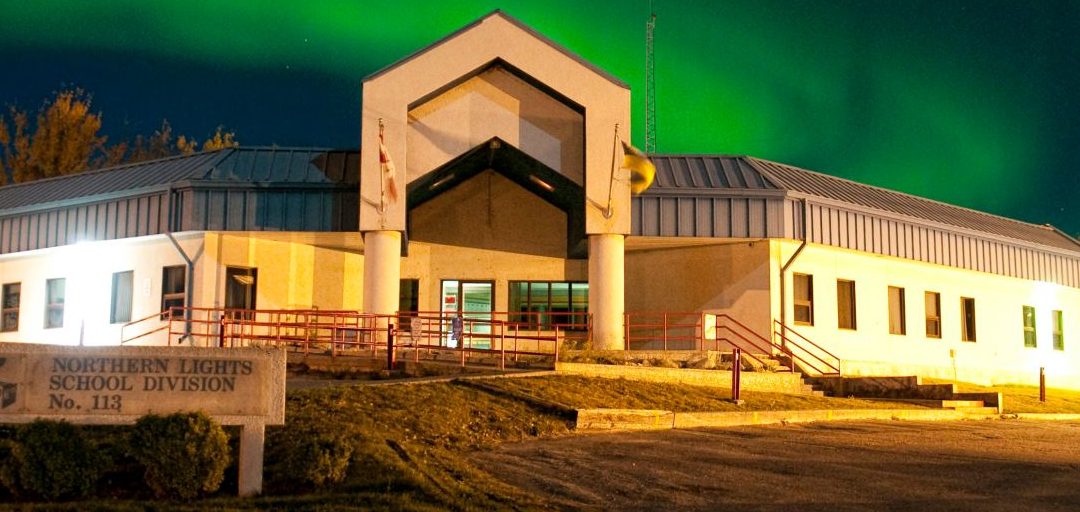
The Northern Lights School Division will be using a provincial grant geared towards truth and reconciliation education for language preservation.

Alexis McLeod, the school division’s First Nations and Métis education consultant, said she collaborated with her colleague to decide on a worthwhile way to use the funding.

“So I asked her what was done before and what needed to be done,” she said. “So we are going to make a video promoting the Indigenous languages within Northern Lights School Division.”

McLeod said the video will showcase Cree, Michif and Dene and the students will get to be a part of it.

“By doing this project, it will help (students) with their identity and promote a positive identity within their cultures and languages.”

The province made an announcement last week that division’s could receive up to $5,000 for truth and reconciliation education. McLeod explained the video is in response to call #13 in the Truth and Reconciliation Commission of Canada’s Calls to Action.

(PHOTO: The Northern Lights School Division in La Ronge. Photo by Kandis Riese. File photo.)


Saturday, June 5, 2021

How little done on Truth and Reconciliation #TRC

 Two TRC Calls to Action Are a Litmus Test for Governments. They’re Failing

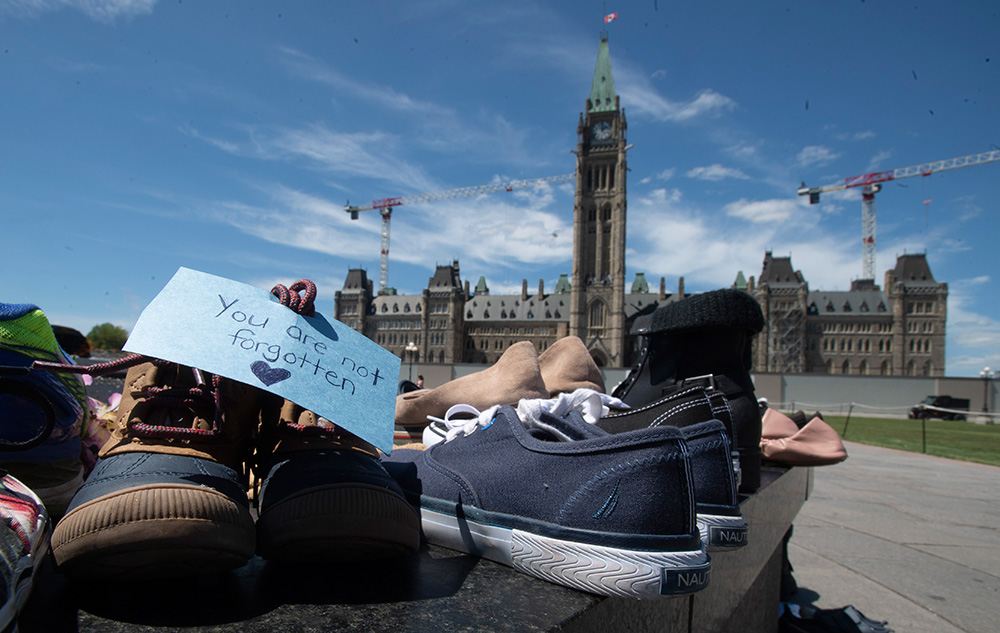
An abandoned Kamloops graveyard of children remind us of how little has been done even to begin the work on truth and reconciliation.

Tom McMahon 3 Jun 2021 | TheTyee.ca

Tom McMahon is former general counsel of the Truth and Reconciliation Commission, former executive secretary of the Manitoba Aboriginal Justice Inquiry and former senior counsel at Elections Canada.

As we all struggle with the news of 215 Indigenous children found in a Kamloops graveyard, many are demanding that the Canadian government finally implement the Truth and Reconciliation Commission’s 94 Calls to Action. I was general legal counsel to the TRC and previously executive secretary to the Manitoba Aboriginal Justice Inquiry, both under the direction of Murray Sinclair and the other commissioners.

Some media have noted that five of six Calls to Action relevant to these children have yet to be fulfilled. But there are other calls that matter, and failing to name them hurts our ability to hold the government to account. The media needs to get this right.

(And when the government says that some of these Calls to Action are “in progress,” do not believe it. It has been six years since the commission finished its work. When does “progress” become “completed”? Those of us who have worked in government and seen replies to various reports know that “in progress” means the government does not intend to implement the recommendation but is trying to figure out a way to get credit for having done so.)

I want to highlight two of the TRC Calls to Action in particular: 81 and 82. Every time there’s an article about missing children, about a John A. Macdonald statue, about a Hector-Louis Langevin place name, and every time I see an article about a new monument for Canada’s dead soldiers in Afghanistan or the victims of communism, or a new parliamentary statement about a foreign genocide, I look to see if the news articles mention those two Calls to Action about Indian Residential Schools.

They never do. Why is that?

81. We call upon the federal government, in collaboration with Survivors and their organizations, and other parties to the Settlement Agreement, to commission and install a publicly accessible, highly visible, Residential Schools National Monument in the city of Ottawa to honour Survivors and all the children who were lost to their families and communities.
82. We call upon provincial and territorial governments, in collaboration with Survivors and their organizations, and other parties to the Settlement Agreement, to commission and install a publicly accessible, highly visible, Residential Schools Monument in each capital city to honour Survivors and all the children who were lost to their families and communities.

Why do I care about TRC Calls to Action 81 and 82? It’s empty symbolism, right?

I care because I see them as being such an easy, inexpensive thing to do. I see 81 and 82 as a litmus test for our governments. If you’re not even willing to do this simple thing, what does it say about your sincerity, honour, goodwill and credibility on the other Calls to Action?

I care because our current monuments and place names and flags are such “in-your-face” and “rub-your-nose-in-it” strutting examples of colonialism and white supremacy. Canada desperately needs balance and diversity in our public symbols. We desperately need some historical accuracy.

I care because national and provincial public monuments would be a daily public statement that we remember, that we accept the truth of what we have heard and that we commit ourselves to be better.

I care because we create monuments to ourselves and our ancestors all the time. The lack of balance in monuments for other Canadians is a painful reminder of who we value and who we don’t value.

I care because the purpose of Calls to Action 81 and 82 is “to honour Survivors and all the children who were lost to their families and communities.” Who could be opposed to that?

Here are other Calls to Action that are relevant to the missing children.

67. We call upon the federal government to provide funding to the Canadian Museums Association to undertake, in collaboration with Aboriginal peoples, a national review of museum policies and best practices to determine the level of compliance with the United Nations Declaration on the Rights of Indigenous Peoples and to make recommendations.
68. We call upon the federal government, in collaboration with Aboriginal peoples and the Canadian Museums Association, to mark the 150th anniversary of Canadian Confederation in 2017, by establishing a dedicated national funding program for commemoration projects on the theme of reconciliation.
69. We call upon Library and Archives Canada to:

i) Fully adopt and implement the United Nations Declaration on the Rights of Indigenous Peoples and the United Nations Joinet-Orentlicher Principles, as related to Aboriginal peoples’ inalienable right to know the truth about what happened and why, with regard to human rights violations committed against them in residential schools.

ii) Ensure that its record holdings related to residential schools are accessible to the public.

iii) Commit more resources to its public education materials and programming on residential schools.

70. We call upon the federal government to provide funding to the Canadian Association of Archivists to undertake, in collaboration with Aboriginal peoples, a national review of archival policies and best practices to:

i) Determine the level of compliance with the United Nations Declaration on the Rights of Indigenous Peoples and the United Nations Joinet-Orentlicher Principles, as related to Aboriginal peoples’ inalienable right to know the truth about what happened and why, with regard to human rights violations committed against them in the residential schools.

ii) Produce a report with recommendations for full implementation of these international mechanisms as a reconciliation framework for Canadian archives.

77. We call upon provincial, territorial, municipal and community archives to work collaboratively with the National Centre for Truth and Reconciliation to identify and collect copies of all records relevant to the history and legacy of the residential school system, and to provide these to the National Centre for Truth and Reconciliation.
79. We call upon the federal government, in collaboration with Survivors, Aboriginal organizations and the arts community, to develop a reconciliation framework for Canadian heritage and commemoration. This would include, but not be limited to:

i) Amending the Historic Sites and Monuments Act to include First Nations, Inuit and Métis representation on the Historic Sites and Monuments Board of Canada and its Secretariat.

ii) Revising the policies, criteria and practices of the National Program of Historical Commemoration to integrate Indigenous history, heritage values, and memory practices into Canada’s national heritage and history.

iii) Developing and maintaining a national heritage plan and strategy for commemorating residential school sites, the history and legacy of residential schools and the contributions of Aboriginal Peoples to Canada’s history.

Here is what the media is reporting as being the only Calls to Action relevant to missing children.

71. We call upon all chief coroners and provincial vital statistics agencies that have not provided to the Truth and Reconciliation Commission of Canada their records on the deaths of Aboriginal children in the care of residential school authorities to make these documents available to the National Centre for Truth and Reconciliation.
72. We call upon the federal government to allocate sufficient resources to the National Centre for Truth and Reconciliation to allow it to develop and maintain the National Residential School Student Death Register established by the Truth and Reconciliation Commission of Canada.
73. We call upon the federal government to work with churches, Aboriginal communities, and former residential school students to establish and maintain an online registry of residential school cemeteries, including, where possible, plot maps showing the location of deceased residential school children.
74. We call upon the federal government to work with the churches and Aboriginal community leaders to inform the families of children who died at residential schools of the child’s burial location, and to respond to families’ wishes for appropriate commemoration ceremonies and markers, and reburial in home communities where requested.
75. We call upon the federal government to work with provincial, territorial, and municipal governments, churches, Aboriginal communities, former residential school students, and current landowners to develop and implement strategies and procedures for the ongoing identification, documentation, maintenance, commemoration, and protection of residential school cemeteries or other sites at which residential school children were buried. This is to include the provision of appropriate memorial ceremonies and commemorative markers to honour the deceased children.
76. We call upon the parties engaged in the work of documenting, maintaining, commemorating, and protecting residential school cemeteries to adopt strategies in accordance with the following principles:

1. The Aboriginal community most affected shall lead the development of such strategies.

2. Information shall be sought from residential school Survivors and other Knowledge Keepers in the development of such strategies.

3. Aboriginal protocols shall be respected before any potentially invasive technical inspection and investigation of a cemetery site.

It is not too much to expect our media and our politicians to actually read all of the TRC Calls to Action and to discuss them specifically.  [Tyee]


click

Contact Trace

Name

Email *

Message *

NO MORE UPDATES

GO TO:  https://blog.americanindianadoptees.com/  for updates and news. THIS BLOG cannot be updated...