BLOGGER changed, not allowing us to UPDATE this back-up blog

(UPDATED 726/2025) issues with blogger are preventing this
Showing posts with label First Nations. Show all posts

Thursday, September 29, 2022

Data shows number of Indigenous kids in foster care is going up

 NEWS VIDEO


‘The bond is broken’: StatCan

Indigenous population is on the rise, housing still an issue.

A Winnipeg mother says she was scarred for life when her first child was taken away at birth by social workers, who told her she was unfit to parent her newborn daughter because she was just 17 at the time.

“I don’t know how one could fully heal from that trauma,” said the woman, now 41, whom The Canadian Press has agreed not to identify because of her family’s involvement in the child welfare system. “Having a baby taken away from birth the bond is broken.”

Statistics Canada says 2021 census data shows Indigenous children accounted for 53.8 per cent of all children in foster care.

This has gone up slightly from the 2016 census, which found 52.2 per cent of children in care under the age of 14 were Indigenous.

At the time, only about eight per cent of kids that age in Canada were Indigenous.

More than three per cent of Indigenous children living in private households in 2021 were in foster care compared to the 0.2 per cent of non-Indigenous children. Nationally, Indigenous children accounted for 7.7 per cent of all children 14 years of age and younger.

Statistics Canada says because of difficulties in collecting census data on First Nations and other Indigenous communities, some caution should be exercised in comparing census years.

In recent years there has been a significant push from Indigenous leaders and child welfare advocates across the country to address the myriad systemic issues contributing to the overrepresentation of Indigenous children in care.

But experts say factors like colonialism, chronic underfunding of child welfare systems, discriminatory practices and poverty remain.

READ

Tuesday, January 18, 2022

Meet Indigenous podcasters who are decolonizing the airwaves

CBC Radio ·

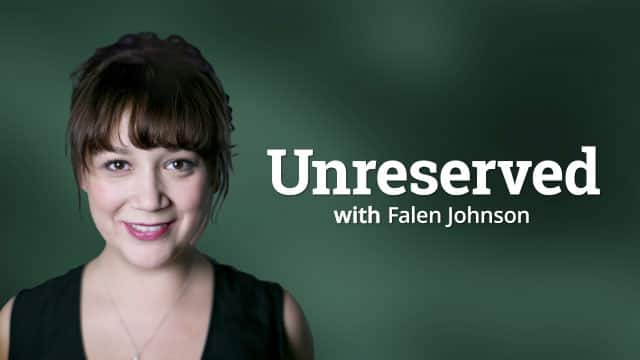
On Unreserved, Indigenous people are decolonizing our podcast feeds with four great projects. Host Falen Johnson's dog, Reg, enjoys each one equally. (Falen Johnson/CBC, podcast covers submitted)

More and more Indigenous creatives are turning to podcasting as a way to share stories. On Unreserved, we're talking with Indigenous podcasters who are decolonizing the airwaves. 

In 2021, former CBC host, Waubgeshig Rice, sent out a tweet.  It read, "So...who'd be interested in a podcast about Indigenous literature?"  That tweet got more than 8,000 likes, and was enough to support the creation of the Storykeepers Podcast.  The podcast, launched in March in 2021, is hosted by Waubgeshig Rice and writer Jennifer David and is all about Indigenous literature.

Connie Walker was on CBC's airwaves for more than 20 years. Her most recent work focused on telling the stories of Missing and Murdered Indigenous women. Her latest podcast, Stolen: The Search for Jermain, is available through Gimlet Media. 

Glenn Wheeler, a member of the Qalipu Mi'kmaq First Nation, serves as host for the podcast called Mi'kmaq Matters. The podcast was Wheeler's way of keeping in touch with his community despite living in Toronto.

Dene Talk is a brand-new podcast from Cassidy Villebrun-Buracas, who describes it as Indigenous people talking about a wide range of topics. Guests have included writers and burlesque dancers, to psychologists and birth workers.

Tuesday, October 5, 2021

Kina Gbezhgomi Child and Family Services celebrates 30 years serving First Nations

WIIKWEMKOONG – Many of the milestones that have passed over the past year-and-a-half would have been recognized by large gatherings of celebration, but were forced to move online due to COVID-19. The digital venue did not deter nearly 100 attendees of the 30th Kina Gbezhgomi Child and Family Services annual general meeting, however, as board members, staff and parents gathered to mark the organization’s transition 30 years ago from an ad hoc grassroots group of concerned parents and teachers into a major force in the care and protection of Indigenous youth and families.

The meeting was opened by Kina Gbezhgomi Child and Family Services chair Kevin Mossip who introduced the 86 attendees before turning the microphone over to elder Gerry Kaboni for an opening benediction in Anishinabemowin. Drum group Down to Earth then provided a welcoming song.

One of the founders of Kina Gbezhgomi Child and Family Services, elder and retired educator Marion Pitawanakwat recalled the beginnings of the organization and provided a window into what the world was like for Anishinaabe in the early ‘60s when she began her career.

“In 1962 the Indian agent approved me to supply teach,” she recalled. She spoke of her mother, who owned a store at the time and was one of the few employers available in Wiikwemkoong. Her mother would send some of the women who came seeking employment to Ms. Pitawanakwat. “I would write a note for them for what they needed from the store,” she said. It was usually Klik and bread. Ms. Pitawanakwat spoke of how the women coming to her were terrified that their children would be taken away from them. This was the time of the infamous ‘60s Scoop.

“The teachers in the provincial schools were always watching the Native kids,” she said. If the children came to school without a proper lunch or their clothes not clean and tidy, a visit from the child protection agency, Sudbury Family Alliance, would soon follow and the children whisked away, almost certainly to a white foster home. “Very few people in the community had jobs back then,” she said. “Many of the men only had seasonal jobs.”

Ms. Pitawanakwat recalled how, when a non-Native person would come into her classroom, the children would cower beneath her desk. “They had been taught to fear white people, they were always told to hide when they saw white people,” she recalled. Their terror was so real that she would not make the children come out until the white individual had left. That terror was not unfounded. 

“When the truant officer from Indian Affairs would come to the school, they were not interested in anything other than the registry book,” she said. If a child had missed too many days for being sick, notes were taken and soon after the children would be seized from the home.

Ms. Pitawanakwat went on to teacher’s college in 1974 and began teaching full-time. In 1975 she was promoted to principal.

She became involved in the Anishinabe Spiritual Centre at Anderson Lake (just outside Espanola). She recalled how the women would cook for the workers constructing the centre. “That was when I met women from other reserves, places like Cutler, Sagamok and Birch Island and other Island people—especially from Wiikwemkoong.”

In talking to women from other communities, Ms. Pitawanakwat soon learned that she was not alone in what she was seeing in child care and protection services.

“All of the women whose children were in the provincial schools were afraid of losing their children,” she recalled. “We got together and formed a committee. Leona Nahwegahbow was one of the women, she was teaching Kindergarten at the time. We decided we couldn’t keep losing our children like this.”

The group eventually became a formal institution, filing as a non-profit so that they could access funding sources. “We found we could get funding from INAC (Indian and Northern Affairs Canada),” she said. Despite some initial cynicism, the group was delighted when they heard the news. “We got it!” said Ms. Pitawanakwat.

That was just the start of the long battle for recognition and support.

“We asked the chiefs to come to a meeting,” she said. The initial meeting at the high school saw only two chiefs come. “Leona mentioned that maybe we should reach out to the Grand Chief of the Union of Ontario Indians (now the Anishinabek Nation).” With the grand chief on their side, the next meeting saw a much greater take-up. (That grand chief, she noted, went on to pass the bar exam and become a lawyer.) “We were his first job,” she laughed. “To this day I don’t know if we paid him enough.”

From there things took off, with the United Chiefs and Councils of Mnidoo Mnising later taking over the helm. Despite that support it still took many years before Kina secured the role of child protection agency for Northern Indigenous communities.

Receiving recognition for five years of service were Ginger Radey, Heather Corbiere, John Ferguson, Kendra Makitalo, Kora-Lyn Paulin, Mike McCormick, Wendy Debassige, Shanah Pitawanakwat, Dawna Lee Chartrand and Anita McGregor-Aelick.

Receiving recognition for 10 years of service were Denise Morrow, Scott Madahbee and Miranda Corbiere.

Retiring board member Maureen (Tish) Manitowabi was recognized for her 15 years of service to the organization and singled out for special acknowledgement. 

“Chi-miigwetch for letting me be with the board,” said Ms. Manitowabi in an emotional farewell. “It was hard,” she said of the challenges that were faced, but added she was “glad we supported each other.”

Whitefish River First Nation elder Leona Nahwegahbow was recognized for her years of service as a board member, since 1989, and the key role she played in ensuring the success of the organization and ongoing support. Mr. Mossip was cited for his 11 years as board chair and his key role in governance support.

The new community representative board members for Kina Gbezhgomi Child and Family Services are Ogimaa-kwe Patsy Corbiere for Aundeck Omni Kaning, Ogimaa-kwe Linda Debassige for M’Chigeeng, Chief Andrew Aguonie for Sheguiandah, Chief Dean Roy for Sheshegwaning, Chief Shining Turtle for Whitefish River, acting Chief Tom Ominika for Wiikwemkoong and Chief Irene Kells for Zhiibaahaasing.

The closing song was offered by Thunder Earth Drum Group.


Thursday, July 8, 2021

It’s long past time for our country to apologize publicly for what it did to Native people

 Ed. Note: It's time Native People correct the his-story, our-story, and that won't be easy. TL Hentz


A dozen long years ago, we led the congressional effort to issue an official apology by the U.S. government to Native peoples. Now it's time for the U.S. president to make good on that sentiment and say it publicly.

It’s time — long past time — to officially acknowledge what our country did and to speak an apology. Not only for taking children from Native families, but for the broken treaties and the carnage visited upon First Nations people by U.S. government policy. Without this necessary step, the healing process our community desperately needs cannot truly commence, and we cannot repair the resentment that stems from our troubled past.

GOOD READ: Opinion | It’s long past time for our country to apologize publicly for what it did to Native people - The Washington Post


Friday, May 28, 2021

Still a Problem, Finding Bodies and Unsolved Murders #adopteevoices


Remains of 215 children found buried at former B.C. residential school, First Nation says

The former Kamloops Indian Residential School is seen on Tk’emlups te Secwépemc First Nation in Kamloops, B.C., on May 27, 2021. The remains of 215 children have been found buried on the site, the First Nation said. (Andrew Snucins/The Canadian Press)


Sunday, May 16, 2021

Headlines: Indian Country Today #MMIWG

 Please support and read HIGH COUNTRY NEWS concerning Indian Country. It's fantastic!


In ‘Red Nation Rising,’ violence in the communities abutting reservations illuminates colonialism’s continued presence.
The Arrow Lakes Band is one of many Indigenous communities bisected and disrupted by a border about which they were never consulted.

The Confederated Salish and Kootenai Tribes worked with federal agencies to complete a first of its kind plan to address the crisis.

By Jessica Douglas

Two years ago, on a February evening, Ellie Bundy attended a tribal working group in Arlee, Montana, on the Flathead Indian Reservation. Surrounded by local and tribal law enforcement, tribal members and families, Bundy listened as people told stories about loved ones or community members who had gone missing. “What if that were my daughter?” Bundy said. “We say that a lot, but really, what if it were my daughter? What if it were my sister? What if it were my cousins? It is a visual you just can't get out of your head.” The meeting was one of four hosted by the Confederated Salish and Kootenai Tribes to encourage discussion and come up with local community responses to the epidemic of missing and murdered Indigenous people.

Bundy is now a councilwoman for the Salish and Kootenai, as well as the presiding officer of the Montana Missing Indigenous Persons Task Force. For the past five months, she and other tribal officials have participated in a series of working groups with federal, state and local law enforcement and community organizations. On April 1, at a press conference at the tribal headquarters in Pablo, Montana, the Salish and Kootenai joined the U.S. Attorney’s Office for the District of Montana and the Federal Bureau of Investigation in announcing the completion of the first Tribal Community Response Plan to the crisis of missing and murdered Indigenous people.

As the first plan of its kind to be developed, it will serve as a model that tribal governments across Indian Country can adapt to meet their own specific needs. It marks a critical milestone in the effort to resolve the crisis, something that advocates say must be led by tribal nations and supported by the federal government. The new plan comes at a unique time nationally, after the passage of federal legislation including Savanna’s Act and renewing the Violence Against Women Act, coupled with executive-branch initiatives, such as Interior Secretary Deb Haaland’s new unit in the Bureau of Indian Affairs, which was created specifically to investigate crimes involving missing and murdered Indigenous people.

Read more

Wednesday, January 6, 2021

Where is my buffalo robe? #60sScoop

 As I see theft of Indigenous identity, I'm left to forge myself from scraps

When I see the cultural appropriation and identity theft of Indigenous people — the Latimer situation and others like it — it stirs something ancient in me, that resonates deep like the heartbeat of Mother Earth herself.

I was part of the Sixties Scoop. For those of you unfamiliar with that term, it refers to the tens of thousands of Indigenous children apprehended by the government to be assimilated and raised in non-Indigenous homes. In my case, the AIM (Adopt Indian and Métis) program of Saskatchewan from the 1960s and 1970s placed me permanently in a white family in small-town Saskatchewan.

I am part of the national Sixties Scoop settlement which seeks to compensate those wronged by the erasure of our cultural identity and birthright.

Now, five decades later, that loss echoes in all that I am and do. I make my home in Témiscaming, Quebec on the beautiful Ottawa River. I remain an activist on Indigenous issues, but the recent spotlight on Indigenous identity, race shifting and cultural appropriation tears at the core of me. I find myself sitting wondering, where is my buffalo robe?

The buffalo robe I speak of is my Indigenous identity (Plains Cree) and I am one of hundreds of thousands of Indigenous people displaced by centuries of Canadian government policy, left to forge my Indigenous self from scraps left by politicians, capitalism and exploitation. That's why these issues strike so deeply for Indigenous people.

My buffalo robe is my identity. It is my jingle dress on the pow wow trail. When I dance, the spirits move me and I dance without tiring, without shame and with great pride. Pow wow is a ceremony: flying ribbons, eagle feathers, all the colours of the rainbow moved by the resilience and humility of my people — a glimpse of that sacred buffalo robe on my shoulders.

I've never worn a buffalo robe. I imagine it must be warm, robust, loving, beautiful. I picture being able to wear it like I've been wearing it forever, like those hearty Cree who weathered the harshest winters of our Canada — long before mechanical things heaved their way across the landscape — traversing rivers, landscapes, herds of the wild ones, carving what we see today.

'If you're going to pose in that buffalo robe, well then. Pick up that glass of murky brown water deemed undrinkable that so many Indigenous people live with every day, too.' (Submitted by Crystal Semaganis)

I see you posing in a buffalo robe. Trailblazers, heroes and heroines, forging the Indigenous path for us to follow. Now, that sacred path is tainted.

Were they who they said they were? I see them in their finery, at film festivals, book signings, news articles, magazines, all while proclaiming an Indigenous identity not theirs.

This is trauma. Forging an identity is no light thing. It is resilience flowing in our veins, the whispers of thousands before us and those yet to come. This is what it means to be Indigenous. How can such a precious, sacred thing be taken from us now? Stolen buffalo robes!

I search for my buffalo robe. I feel exploited. We are living artifacts of the Indigenous nations across this country from shore to shore, and we fight to reclaim our language, culture and all things sacred. We search for connection! To have a settler reap such vast rewards wearing a buffalo robe that was meant for others, that's a hurt felt by so many.

Residential school survivors, Sixties Scoop survivors, fledgling talents in the entertainment industry and Indigenous people passed over by the deception of those in stolen buffalo robes, that's a hurt that won't go away anytime soon.

Please, look beyond the romantic ideals of dreamcatchers, inukshuks, mukluks and war bonnets and see everything. Not just the accolades and commodification of all things Indigenous (let's face it, there was much money to be gained by proclaiming to be Indigenous) – but really see.

If you're going to pose in that buffalo robe, well then. Pick up that glass of murky brown water deemed undrinkable that so many Indigenous people live with every day, too. Join us in the search for the missing, lament the loss of land, language, wild things, the trauma, the displacement, the crumbling abandoned schools. Take it all in — and not just the pretty stuff.

**Crystal Semaganis is an Indigenous activist living in Témiscaming, Que., with a focus on advocacy for the Sixties Scoop, residential school survivors and environmental issues. She is a mother of four, grandmother of one, an artist and a jingle dress dancer. She is on Twitter @Lil_Cree777, Instagram @seven_wolves and TikTok @sevenwolves1971.

That buffalo robe is a sacred thing. I say now, we are coming for our buffalo robes.

Reconciliation is not taking our buffalo robes – it's giving them back.

I wear a size, immortal.

Dedicated to my sister,

Cleo Semaganis-Nicotine

May 7, 1965 - Dec. 22, 1978


FINDING CLEO podcast

Saturday, October 8, 2016

Traditional Knowledge

SOURCE: MFNERC’s blog

I first heard the term Traditional Knowledge when I lived up in the Northwest Territories. I lived in a small community of about 500 people called Fort Good Hope. The majority of people are Dene, and probably about a third of them speak their traditional language, Slavey.
Elders are keepers of much Traditional Knowledge

A friend of mine, who worked for a land use planning board, told me about Traditional Knowledge and gave me some literature to read when I asked her for more information. While I was reading I became frustrated because I still couldn’t really figure out what it was. This is mostly because, as I came to learn, it is not something that is easy to specify or categorize. Yet, in today’s world most people like things to be definable. Modern influences compel us to put labels on everything. But reading about Traditional Knowledge, this wasn’t the case and I ended up with many more questions.
I was very lucky to be actually living in a place where I could ask people about Traditional Knowledge, people who lived it in their day-to-day lives. So I didn’t really need a dictionary definition to further understand it, I could just walk down the road. I visited with community members who were living off the land. One Elder took me on many boat rides down the Mackenzie River and hikes in the nearby rocks to teach and tell me stories about the history and geography of the area. Another friend, the Chief of Fort Good Hope at the time, was a very gracious man who was so willing to share much information with me – particularly regarding the seasons of the river, and the importance of the drum. He was also a residential school survivor who practiced compassion and took part in ceremonies in order to heal, and was not afraid to speak about it to those who were eager to listen. Through these different experiences and interactions I came to learn that Traditional Knowledge is something one does, rather than simply something one knows. It is a process, and a way of living that is deeply connected with the land. It is a personal relationship with Creation and the natural world. It isn’t linear, but should be viewed as a circle.

As Deborah McGregor says in her 2015 article from American Indian Quarterly entitled “Coming Full Circle”:
IMG_6754
Traditional Knowledge cannot be separated from the land

Building on prior learning and traditions is never a direct or linear path. Instead, Indigenous science pursues a rather meandering path around things and over obstacles, a roundabout way. In the Western mindset, getting from point A to B is a linear process, and in the Indigenous mindset, arrival at B occurs through fields of relationships and establishment of meaning, a sense of territory, a sense of breadth of the context.

Relationships are key when it comes to Traditional Knowledge, relationships with the Creator, the land, and other people. For those who are interested in learning more about it, the question should not be, What is Traditional Knowledge? It should be, Am I ready to receive Traditional Knowledge?

[please visit their blog for more, including books on this topic]

**

Coming to Manitoba

(Courtesy of bandwidth digital releasing ltd.) Movies! Movies! Movies! Created by Hollywood actor Adam Beach, bandwidth is a mobile movie house releasing Aboriginal and mainstream ‘first-run’ Hollywood feature films in Canada and the United States. And three communities in Manitoba will soon be experiencing bandwidth first hand: Norway House, Brokenhead and Sandy Bay First Nations.

Wednesday, May 25, 2016

How do we heal trauma suffered by Native communities?

BY GABOR MATE’ SOURCE
It is not enough that the Attawapiskat First Nation has declared a state of emergency over the epidemic of suicides and suicide attempts among its youth. Our entire country should declare a state of emergency about the appalling health status, physical and mental, of First Nations and Inuit communities. Would we not have already if, instead of Nunavut or Attawapiskat, it was, say, the teens of Westmount, Forest Hill or Kitsilano who were killing themselves at 10 times the national rate?

I am often asked to visit First Nations communities across Canada to speak about addiction, stress-related illness and child development. The ordinary Canadian citizen simply has no idea, cannot even begin to imagine, what misfortunes, tragedies and other kinds of adversity many native young people experience by the time they reach adolescence – how many deaths of loved ones they witness, what abuse they endure, what despair they feel, what self-loathing plagues them, what barriers to a life of freedom and meaning they face.

At the core of the suicide pandemic is unresolved trauma, passed almost inexorably from one generation to the next, along with social conditions that induce further hopelessness. The source of that multi-generational trauma is this country’s colonial past and its residue in the present. The march of the history and progress Canada celebrates, from which we derive much pride and national identity, meant catastrophe for natives: the loss of lands and livelihood and of freedom of movement, the mockery and invalidation of their spiritual ways, the near-extirpation of their culture, the corruption of their intra-familial and intra-communal relationships, and finally, for nearly a hundred years, the state-sanctioned abduction, rape, physical abuse and mental torture of their children.

The questions we must ask ourselves nationally are very simple. How do we as a country move to heal the trauma that drives the misery of many native communities? What can be done to undo the dynamics our past has dictated? Some may balk at such inquiry, fearing the discomfort that comes with guilt. However, this is not a matter of communal guilt, but of communal responsibility. It is not about the past. It is about the present. And it is about all of us: When some among us suffer, ultimately we all do.

To begin, native history must be taught fully and in unsparing detail in our schools. All Canadians should know, for example, that 50 years ago it was not unheard of for a four-year-old girl to have a pin stuck in her tongue for the crime of speaking her mother language and later endure serial rape by teachers, religious mentors. Such were the antecedents of today’s drug use and suicidal anguish. The resonant values, brilliant art, stories and wisdom culture of First Nations people should be introduced in Canadian schools. Canadians must be helped to see their First Nations peers in their fullness, which includes their humanity, grandeur, unspeakable suffering and strength.

We must renounce any political, economic or social policy that reinforces the colonial trauma of disempowerment, loss and dispossession. Not another square centimetre of native land must be disturbed, not a blade of grass cut, not one more drop of water diverted, not a millimetre of pipeline laid without First Nations agreement.

Institutions and individuals interacting with native people must become deeply trauma-informed. Judges, teachers, law-enforcement personnel, nurses, doctors, psychiatrists, social workers, public employees, policy-makers all must understand what trauma is, its multiple impacts on human mentality and behavior, and how to address it. Without such information, as I have witnessed repeatedly, the best-meaning people can unwittingly re-traumatize those who can least bear further pain and loss. Practices that devastate families must be stopped, such as the frequent apprehension of children without restorative and compassionate family-building support.

Alternative forms of justice must be developed, aligned with native traditions and in consultation with First Nations. The implicit racism in our law-enforcement institutions must be openly acknowledged and cleansed. Powerfully beneficial traditional healing practices must be researched, taught, encouraged. We need to celebrate the First Nations cultural renaissance, a tribute to human resilience, now taking place.

Economic and social conditions that engender despair must be addressed, with the utmost urgency. If we could spend more than $15-billion on our self-declared mission to help the people of Afghanistan, surely we can find the resources in our rich land to help redeem people whom our history continues to victimize.

(Gabor Maté is a retired B.C. physician who specializes in addiction.)

Monday, September 28, 2015

Truth and Reconciliation Commission BIG STRIDES to #TEACHTRUTH

Commission chairman Justice Murray Sinclair, centre, and fellow commissioners Marie Wilson, right, and Wilton Littlechild discuss the commission's report on Canada's residential school system at the Truth and Reconciliation Commission in Ottawa on Tuesday, June 2, 2015. (Adrian Wyld/Canadian Press)

TRC findings on residential schools to be used in Yukon classrooms

'This is Canadian public history,' says TRC commissioner about making materials public domain

CBC News Posted: Sep 27, 2015 

Students in Yukon will be learning more about residential schools this year.

Yukon schools will be using material prepared by the Truth and Reconciliation Commission.

Commissioner Marie Wilson said the recordings made by the TRC  belong to all Canadians, which is why the TRC is putting its material online and in the public domain.

"This is Canadian public history and is really essential," she said.  

Anyone can reproduce the material, make physical copies of books or create publications with survivors' stories.

Different publishing houses are already adapting the TRC's material

"I think the point of it all is that there's no one publication that tells the whole story," Wilson said.

Making the material available for free also saves money, Wilson said. "In Ottawa we had 500 copies of things that we prioritized in sharing out with survivors who were there," she said.

"We can't say that we've provided enough copies for the 70,000 survivors that are alive today, not for all the schools."

In Yukon, the department of education has already worked with the Tr'ondëk Hwëch'in First Nation to produce a hard copy book called Finding Our Way Home.

MORE:

The Department of Education says it will use TRC materials in classrooms this year. The department established a Grade 10 Social Studies unit on residential schools last year.

The book Survivors Speak and other titles can be downloaded for free from the TRC website.

A sense of relief and a sense of accomplishment is how Dene National Chief Bill Erasmus described the mood in Ottawa as the Truth and Reconciliation Commission released its 94 recommendations on how the country can move forward after residential schools.
Judy Gingell
Judy Gingell, an executive elder for Kwanlin Dün First Nation and a former Commissioner of Yukon, says she agrees with the TRC panel's recommendations and says education is essential to true reconciliation. (CBC)


Now that the truth is out, it's up to Canadians to take on the role of reconciliation.
"All Canadians have a personal responsibility to learn about this time in Canadian history," she said in a statement. "Before reconciliation can truly move ahead, we all need to know the truth of what happened."

It's estimated between 3,000 and 4,000 Inuit from Nunavut attended residential schools.
Therese Ukaliannuk
Therese Ukaliannuk of Igloolik, Nunavut, says her 6-year-old daughter was taken to residential school while she was in the south with tuberculosis. She never saw her daughter again, or learned where she was buried. (CBC)

"We still have much grieving to do for this time in our lives and our families and our history, and must continue to work to find ways to heal and move on to healthier futures," Towtongie said.  

In a news release, the Makivik Corporation said it is pleased with the TRC's work and its final report and recommendations.

"Now we have been given the whole story and a blueprint to recovery. Let's do it," said Jobie Tukkiapik, Makivik Corporation president, in the release.

Therese Ukaliannuk, an elder from Igloolik, Nunavut, who now lives in Iqaluit, told her story to Igalaaq host Madeleine Allakariallak in Inuktitut.

Ukaliannuk's six-year-old daughter was sent south to residential school while she herself was in the south receiving treatment for tuberculosis. The little girl never returned.
Her mother never learned where she is buried.


Related Stories


Tuesday, December 23, 2014

Debby Poitras: First Nations Siblings Unite

Debby's photo
My friend Debby Poitras-Precius from Toronto contributed to the book TWO WORLDS and CALLED HOME, two ground-breaking anthologies of Native adoptee narratives.

Please read about Debby's remarkable reunion with her siblings.


Tuesday, October 2, 2012

Victory for First Nations could cost Ottawa billions

Ottawa spends $3 million to battle First Nations child welfare case

 
OTTAWA - The federal government has been billed more than $3 million for its unsuccessful attempts to keep a high-stakes battle over First Nations child welfare out of the courts.
Invoices obtained through Access to Information show the Justice Department, acting on behalf of Aboriginal Affairs, paid out at least $3.1 million for legal services between 2007 and June 2012.
Government lawyers were trying to quash claims from First Nations child rights advocates that Ottawa is short-changing native communities by funding child welfare services at 22 per cent below provincial levels.
The First Nations Child and Family Caring Society and the Assembly of First Nations launched a human rights challenge that dates back to 2007.
They say the federal government is discriminating by not providing the same level of child welfare support to First Nations children as other children in Canada receive from provincial governments.
Ottawa has challenged the advocates with legal technicalities at every step along the way, arguing that the case does not belong in the court system.
After much back and forth, and more than $3 million later, the Federal Court rejected the government's arguments, ordering a full hearing at the Canadian Human Rights Tribunal.
"They've spent that trying to avoid this hearing on the truth," said Cindy Blackstock, the society's executive director.
"That really raises the question of what they're trying to hide. All we've wanted from the get-go is a factual hearing on whether they're discriminating or not."
Indeed, last week, the tribunal decided to set aside several weeks of hearings on the issue in February and March.
"I'm expecting Canada to really drag it out and use about any tactic they can to drag it out," said Blackstock.
Blackstock obtained the federal invoices through an Access to Information request and provided the documents to The Canadian Press.
At stake is far more than federal funding for child welfare.
If the First Nations advocates win the day, the case will put pressure on Ottawa to increase child welfare funding, as well as to match provincial funding in other areas of First Nations services, such as schooling, special education, policing and health.
Already, First Nations have started legal action on special education and policing in Ontario, using similar arguments to the child welfare case.
Victory for the First Nations could cost Ottawa billions.
"We think that after these cases go through, the federal government's programs for First Nations people will need a drastic overhaul in order to deliver services equal to what other Canadians receive," said Kent Elson, a Toronto lawyer who is involved in the policing and special education challenges.
But if the government wins, recently won powers for First Nations to launch human rights complaints would be severely restricted, the acting head of the Canadian Human Rights Commission has said.
"We think this is one of the most important human rights issues this decade," Elson added.
Aboriginal Affairs officials said Monday they don't intend to speculate on how much the case will cost at the end of the day, but spokeswoman Genevieve Guibert said in an email that the government hopes the tribunal will dismiss the complaint, putting an end to litigation.
The government has increased the funding from $449.5 million a year in 2006-07 to its current level of $580 million, Guibert said.
A spokesman for Aboriginal Affairs Minister John Duncan said last week that the federal government does not believe the courts are the proper forum for differences over child welfare.
"We believe that the best way to ensure First Nations children and families get the supports and services they need is by working together — with First Nations, provinces and territories — and not through the Canadian Human Rights Tribunal," Jan O'Driscoll wrote in an email.
"Our commitment to supporting First Nations children and families is clear."
O'Driscoll said funding for family services has "significantly increased" and the quality of such services has improved to focus on preventing the problems that jeopardize the welfare of native children.
"As this matter is before the courts, it would be inappropriate to comment further."
But Blackstock said she and the AFN worked for 10 years behind the scenes to negotiate a compromise with the government, before turning to legal action.
"The bigger question is, do we want to be a country where racial discrimination is a way that we save the government money? This case is fundamentally about the type of Canada we want," she said.
"It's not a legitimate fiscal restraint measure."
First Nations children are dramatically over-represented in the child welfare system, mainly because of poverty, overcrowded housing and poor parenting linked to substance abuse and neglect, research shows.
Recent census data shows there were nearly 30,000 children in foster care in Canada on a given day. Other research suggests about 70,000 children pass through foster homes at some point in a given year.
Up to 40 per cent of those children are First Nations kids, Blackstock said.
Last week, the United Nations committee on the Convention of the Rights of the Child took Canada to task over its treatment of aboriginal, immigrant and disabled children.
When asked about the criticism in the House of Commons, Conservative parliamentary secretary Bob Dechert lashed out at the UN committee rather than address the child welfare matter.
"The sad reality is that Syria is a member of this committee," Dechert said.
"Syria, a country whose rulers are stealing the innocence of an entire generation of its children, is criticizing Canada. Imagine that. This is no doubt to distract from the atrocities that Syrian children are currently facing every day."


Read it on Global News: Global News | Ottawa spends $3 million to battle First Nations child welfare case

Thursday, April 19, 2012

Court victory for First Nations child welfare

Thursday, February 2, 2012

Toronto Birthmother story

I had to share this. A birthmother wrote in response to this: http://splitfeathers.blogspot.com/2011/04/red-road-documentary-from-canada-60s_11.html

I am so happy that this lost spirit has found his roots after living a life of not knowing where he fit in! I have never given up the hope that one day my son who was taken from me at birth will somehow find his true family. I just hope that it isn't too late for us to join each other. I have always believed that my son is out there someplace and he will come home soon. He was taken from me on October 17,1976 from Toronto General Hospital. I was told that he died at birth. I never was asked if I wanted to see or hold him. To tell him how much his mommy loves him. I was just a young mother with a child of 11 months at home and a baby that I so wanted to bring home. I never was told where or when he was buried never laid eyes on him ever. I felt that something wasn't right but I was to with drawn from the loss that I just couldn't bare the loss. To this day the thoughts of it burns at my insides. I never knew about the 60's or 70's scoop until just with-in the last few years. That is when I got my answers to what happen. I believed that my baby boy was more then likely one of the native children that was scooped that day. I hope that this man isn't bitter towards his true Mom for what he went through. May the Creator bless him with true happiness in his life now that he has found his true identity as a Proud Native Man. From this story of this man it gives me the added hope that my son to will find me some day.
Signed BM (which means birthmom)

Remember this adoptees - closed adoption was used as a weapon! First Nations Families, please start your search now...If you need my help, email me... Trace (tracedemeyer@yahoo.com)


Friday, October 7, 2011

First Nations adoptees/Split Feathers

Eric, his brother Chris and his sister Marlene were adopted to New Orleans after their parents were killed. Marlene and her siblings were born in Northern Manitoba near Swan River. Their parents died in an automobile accident. After the accident, Marlene and her two brothers were adopted to an American family in New Orleans, La.  Their biological relatives were told nothing.  Marlene and her siblings were adopted by a family that subjected them to physical and emotional abuse.  No one from Canada ever came to check on them.  Her brother Eric is currently in a LA prison.  Her other other brother Chris is still in the U.S.   Marlene made her way back to Canada and still lives here with her two daughters.   Approximately 3,000 Canadian Aboriginal children were adopted to non-aboriginal homes in the 60s, 70s and early 80s.  The impacts are still being felt today. ARENA WAS RESPONSIBLE FOR MANY FIRST NATIONS ADOPTEES TO BE RELOCATED FROM CANADA TO THE USA.  Eric is now serving a sentence for manslaughter. The family want Eric back in Canada to serve the remainder of his sentence (at the very least!) to be close to his family and friends.
WATCH HERE:  http://youtu.be/f4remiJWC8w  and http://youtu.be/7YH_XrMBWgE

And another Split Feathers video "OUR STORIES: OUR IDENTITIES: Bernice and Me" (By Theresa Archer, Residential School issues and Identity) on youtube.
Watch here:  http://youtu.be/MyDCottufPU

Monday, September 5, 2011

First Nation in danger of losing a generation (Ontario)

archival photo

By Linda Nguyen, Postmedia News (September 3, 2011)

The federal and provincial governments need to urgently improve basic living conditions for an impoverished, remote northern Ontario First Nations community if it wants to put an end to a "extraordinary rate" of teen suicides there, according to a yearlong review by the provincial coroner's office.
The 215-page report released Friday by the Ontario Office of the Chief Coroner identified a number of factors that it says contributed to the 16 child and youth suicides that have occurred on the Pikangikum First Nation reserve over a two-year old period.
The review found that the fly-in community of 2,400 in northwestern Ontario lacks basic infrastructure, such as easy access to clean drinking water, a sewage system, a school, recreational facilities, and health services, including substance abuse programs.
This has led to a sense of hopelessness among the younger generation in the community, concluded the report, which outlined more than 100 recommendations.
"What we require right now is action," says Assembly of First Nations Chief Shawn Atleo.
Atleo says the problems plaguing Pikangikum are not unique. Many Aboriginal communities feel like they are being "left behind" by the government.
"Canada stands for human rights around the world but the backdrop here is a deep and growing gap between First Nations and the rest of Canada," he said.
During 2006-08, 16 children and youth from 10 to 19 years old committed suicide. The majority of the deaths were hangings.
In the last two months alone, five young people have committed suicide. The latest death was of a 26-yearold on Aug. 29.
The Pikangikum First Nation has a suicide rate of 470 deaths per 100,000 people, which is 36 times the national average and one of the highest in the world, according to a 2004 article in the Canadian Journal of Native Studies.
One of the major recommendations calls on the federal government to fulfil a promise to rebuild a school in Pikangikum after the old one burnt down four years ago. Since then, classes have been held in 17 portables.
A building, says the report, would give students a sense of permanence in their community. Currently only 520 students are enrolled this year, with an estimated 300500 school-age children not attending classes at all.
Improving education prospects also would entice students to finish high school and pursue post-secondary education. None of the nine students who graduated from his school in 2009 went on to college or university.
None of those who died sought medical help in the month before their suicides. Almost all had a history of mental-health problems.
One of the most "troubling findings" was the rampant substance abuse among children in the community. The latest statistics show that 27 per cent of girls in Grades 3 and 4 self-reported sniffing gasoline to get intoxicated.
© Copyright (c) The Regina Leader-Post
Source: http://www.leaderpost.com/news/First+Nation+danger+losing+generation/5349336/story.html


Read more: http://www.leaderpost.com/news/First+Nation+danger+losing+generation/5349336/story.html#ixzz1X5C31NTP

Friday, September 2, 2011

NEW REPORT: Child welfare statistics eye-opening (Canada)

Windspeaker photo
Windspeaker
By Jennifer Ashawasegai Birchbark Writer  - TORONTO
Volume:  29  Issue:  6  Year:  2011

Ontario wants to improve its child welfare services for Aboriginal children. So, the Ontario Ministry of Children and Youth Services hired former Anishinabek Nation Grand Council John Beaucage as Aboriginal advisor to the minister of children and youth.
In his capacity as advisor, Beaucage wrote a report on Aboriginal child welfare in the province.
Beaucage said that through his research he found “more and more money is being spent on child and family services, but the success is not growing at all, and it really begs a different way of looking at things.”
He said his report addresses that and also serves as a tool to provide different ideas for the ministry and in respect to Aboriginal children.

The report is entitled: Children First, The Aboriginal Advisor’s Report on the status of Aboriginal Child Welfare in Ontario. Beaucage spent a lot of time speaking with community members, frontline workers and officials involved in child welfare in the province.
In the introduction of the report, Beaucage notes his surprise at the issues he came across during his research.
“I knew there were issues, but some of the data was eye opening: for one, there are a disproportionate number of Aboriginal children in the child welfare system.”
Data from the Statistics Canada 2006 Census indicates Aboriginal people make up about two per cent of the provincial population. But, Beaucage says, in the child welfare system, it’s estimated Aboriginal children make up 10 per cent of those in care, and some estimates are even higher at 20 per cent.
The system has many effects on Aboriginal children who end up in foster care.
“Children are being fostered out and in many instances to non-Native homes, and being taken out of their community, and so they’re losing touch with their family, culture, language and once again, it’s a process of assimilation, to assimilate a Native child into the greater society,” Beaucage said.
"That leaves holes in a person’s psyche. Young people are just losing touch.
“We saw it with the 60’s scoop, and also with residential schools that when the children are being taken away from their home environment, having their language torn away from them, and their culture torn away, there’s something that’s missing and they spend the rest of their lives looking for it.”
Because of that, Beacage said social issues arise from those situations, such as addictions.
The report includes a long list of recommendations to try to prevent social issues and loss of culture.
Beaucage strongly recommends culture as a base for Aboriginal children in care, and he says, “we should start seeing more Native people on the boards of Children’s Aid Societies and look at ways for Aboriginal organizations to take control of the child protection asset within their regions.”
There are 14 major recommendations in the report, from implementing Jordan’s Principle, to prevention strategies, to First Nation jurisdiction over child welfare matters and implementing customary care practices.
Laurel Broten, minster for Children and Youth Services in Ontario, has committed herself to bettering service to Aboriginal children and families. Broten supports the report from Beaucage, saying that the ministry has already made investments over the past year.
“In the child welfare sector, we’ve been ensuring that we are able to support the unique needs of Aboriginal children. We’ve provided $124 million to the six Aboriginal child welfare agencies in the province each year.”
To address the rate of Aboriginal children going into non-Native homes, Beaucage recommends that CAS use a different system of rating to utilize extended family customary care practices. “The rating system currently rates a household based upon an urban non-Native way of doing things, and it messes up the way things are done culturally. In the report, I suggest there be a totally different way of looking at a household and doing it by way of culture.”
Also included among the recommendations is a call for government to re-institute the band representative program to ensure families have a liaison between the courts and the CAS.
Urban families are not forgotten. Beaucage recommends that a task force for urban Aboriginal children be created to “review the state of Aboriginal children in care and off reserve and make specific recommendations on their best interests.”
It’s hoped the report will continue to gather steam, as an election is around the bend. Broten is also hoping for re-election in her Etobicoke-Lakeshore riding.
“The ministry is examining all of the recommendations and how it can build upon many of the inter-ministerial collaborations that we have in place as we seek to move forward. It’s certainly an active file and folks are very much absorbing the very thoughtful recommendations from the report and we’ll be asking Ontarians on Oct. 6 to be able to continue this important work.”

SOURCE: http://www.ammsa.com/publications/windspeaker/child-welfare-statistic-eye-opening-says-beaucage

Saturday, August 20, 2011

Solid Victory for 600 residential school survivors in Ontario

By Leith Dunick, tbnewswatch.com (August 18, 2011)


Nishnawbe Aski Nation  - 

Nishnawbe Aski Nation Deputy Grand Chief Mike Metatwabin said that adding Cristal Lake Residential High School and Stirland Lake Residential High School to the official list of residential schools paves the way for similar decisions to be made elsewhere in Canada.

About 600 former Aboriginal students at a pair of Northern Ontario residential schools are now eligible to seek compensation for being ripped from their homes and forced to attend the institutions.
The decision, rendered by Chief Justice Warren Winkler of the Ontario Superior Court of Justice, adds Cristal Lake Residential High School and Stirland Lake Residential High School to the Indian Residential School Settlement Agreement, in what Native officials are calling a precedent-setting case that will outline the parameters to add further schools to the list.
The two schools had earlier been rejected by the federal government.
Students who attended the remotely located schools will now be permitted to apply for reparations for the time they spent at them, under the Common Experience Payout program.
The program pays $10,000 to each student for their first year of attendance at the school, and $3,000 for each additional year. Former students also receive an official apology from the institution.
Nishnawbe Aski Nation Deputy Grand Chief Mike Metatawabin on Thursday called it a solid victory for both the students who attended Stirland Lake and Cristal Lake residential high schools, as well as First Nations across Canada.
“This landmark decision paves the way for other First Nations people who have been institutionalized to be included in this national settlement and we hope they too will continue to fight for justice,” he said in a release issued through NAN’s communications department.
Several other schools have yet to have a decision rendered about their residential school status. The two Ontario schools are the first in Canada to be added to the IRSSA.
Stirland Lake High School, also known as the Wahbon Bay Academy, was opened in 1971 by Northern Youth Programs Inc., a Mennonite-based organization, in the tiny community, located about 275 kilometres north of Sioux Lookout.
It was funded by Indian Affairs, and could house and educate up to 20 boys at one time. Students lived at the school for 10 months of the year.
Cristal Lake opened five years later, in an equally remote area, and was built to house Aboriginal girls.
The two schools merged in 1986, and the joint operation closed its doors in 1991.
Windigo formally requested the two schools be added to the list of recognized residential schools in October 2007, after a unanimous endorsement by NAN chiefs. The request was rejected the following spring, sending their quest to the Superior Court of Justice of Ontario.
The decision is welcome news for the council chairman of Windigo First Nations council, who spearheaded the court challenge.
“The former students of Stirland Lake and Cristal Lake Residential High Schools will now be able to begin their healing journey through the Common Experience and Independent Assessment processes offered by the IRSSA,” said Frank McKay, Council Chair of Windigo First Nations Council, who spearheaded this court challenge.
Students who were physically or sexually abused may also seek further compensation under the independent assessment process.
Susan Vella the legal counsel for both WIndigo and NAN, said they will help applicants anyway they can.
“We are ready to assist these former students with pursuing their legal rights under the IRSSA. We are grateful to the Court for rectifying the oversight in the IRSSA’s failure to include these schools in the original schedule of Indian residential schools.”


Wednesday, August 3, 2011

First Nations Children Still Taken from Parents (CANADA 2011)

powwows.com photo contest
John Beaucage has given the heartbreak he sees around him a name: the Millennium Scoop.

The First Nations leader was recently hired by the Ontario government to look into aboriginal child welfare and what he found -- not just in Ontario, but across the country -- was despair.

After decades of wrestling with the impact of the residential school system -- and then with the "Sixties Scoop" that placed so many aboriginal children in non-aboriginal homes -- First Nations are now facing another tragedy of lost children in the new millennium.

There are more First Nations children in care right now than at the height of the residential school system. That system was a national disgrace that prompted Prime Minister Stephen Harper to apologize for its catastrophic impact on natives.

Instead of being at home with their parents, brothers and sisters, tens of thousands of First Nations children are in foster homes, staying with distant relatives or living in institutions.

"It's a culmination of decades worth of social ills," Beaucage says.

A disheartening mix of poverty, addiction, history and politics has conspired to separate First Nations children from their parents.

Researchers aren't certain how many native kids are no longer living with their parents. A major study in 2005 pegged the number at 27,500. Since then, provincial and federal data as well as empirical reports suggest the numbers have risen.

That's easily double the size of the cohort forced away from their homes and into residential schools during the late 1940s and 50s -- a brutal period of Canada's history that still haunts First Nations families.

There's no question native children dominate the child welfare system.

Former auditor general Sheila Fraser estimated First Nations children were eight times more likely to be in care than other Canadian kids. She pointed out that in British Columbia, of all the children in care, about half are aboriginal -- even though aboriginals are only about eight per cent of the population.

Beaucage's report says aboriginal people make up about two per cent of the population, but between 10 to 20 per cent of the children in care.

"Given the data I've had a chance to see, if anything, it's an underestimation," said Nico Trocme, director of McGill University's Centre for Research on Children and Families.

"It's getting harder to be a parent in these communities."

Jeremy Meawasige is on the cusp of becoming the next child in that pile of statistics.

The 16-year-old Mi'kmaq from the Pictou Landing First Nation in Nova Scotia has myriad challenges: autism, cerebral palsy, hydrocephalus and a tendency to hurt himself.

But his latest affliction comes courtesy of inter-jurisdictional squabbling.

Ever since his mother had a double stroke last year and was no longer able to give her son the support he needed, she has had to rely on government funded social services.

But with each level of government pointing to the other for support, and his mother turning to band generosity in the meantime, Jeremy is now poised to be sent to an institution far from the only home he has ever known.

"They did an assessment on us, and say Jeremy is at the level where he should be institutionalized. I told them, over my dead body," said mother Maurina Beadle.

"I'm the only person he will eat for. If you put him in an institution, that's it."

But with no one willing to provide long-term funding that would cover the costs of supporting Beadle and Jeremy on reserve, authorities want to send him to an institution outside the province.

His supporters say it's a classic case of what has become known as Jordan's Principle.

"Jordan" was Jordan River Anderson, a Cree boy from Manitoba who died in hospital at the age of five as he waited for federal and provincial governments to agree how to pay for his care.

Ottawa and provincial governments have vowed not to let such a thing happen again. They say a child in need of services will receive the services immediately, and the governments will work out the payment scheme later.

But Jeremy's mother argues that if her son were off-reserve, he would be entitled to far more funding and services than he is receiving now -- funding and services that would enable her to keep Jeremy at home where he belongs.

"I've decided I'm going to fight for that," she says.

She has launched a formal court challenge, one that echoes a broader dispute taking place at the Federal Court of Canada.

In that case, the First Nations Child and Family Caring Society of Canada, along with the Assembly of First Nations and the Canadian Human Rights Commission, are arguing the discrepancy in funding for child welfare services on reserves versus off reserves constitutes discrimination.

Ottawa contends it's not fair to compare the two.

Cindy Blackstock, executive director of the caring society, says she sees case after case of First Nations children in trouble being sent routinely into care because that's where the funding is instead of trying to help families deal with their problems.

As the lawyers duke it out, laments Beadle, "Jeremy regresses."

It would be myopic, however, to blame only jurisdictional wrangling and funding discrepancies for the high rates of First Nations children in care.

Expert after expert recognizes that family dysfunction is more broadly rooted in poverty, poor health and the oppressive legacy of the residential school system that robbed the parents of first-hand knowledge of how to raise a family.

"The simplest reason why, the most important reason why, is that these children are living in communities where families are facing enormous hardships," says McGill's Trocme. "The supports to bring up kids just aren't there."

A child at risk often comes from a home that is over-crowded, with up to four people to a sparse room. The home may not have clean drinking water. It may have mould or boarded-up windows as the house falls into disrepair.

The parents are often not there, or not paying attention.

Instead, they're in their own cycle of trouble, often related to addictions. Or they have not developed the social skills or parenting skills they need to deal with a precarious situation.

In the fridge, there might be some pop or processed food, but little fresh produce.

At school, there would be reading and writing. But not much in the way of library books or gym equipment or things to do after school.

In remote communities, the volunteer network that the urban poor rely on, such as the Salvation Army, shelters or food banks, is virtually non-existent.

In some cases, the child at risk is the victim of violence or abuse. More often than not, when the child welfare system steps in, it's because of neglect.

Neglect, however, "is not trivial," Trocme warns. Studies have shown that neglected children have the hardest time moving beyond their troubles, as their cognitive development becomes impaired.

"They have the absolute worst outcomes," Trocme says.

Still, the Millennium Scoop is not the Sixties Scoop, when children were removed from their homes and adopted by families far from the reserve. There was little discussion then about what would happen to a child once he or she was taken into care.

There is now a recognition that assimilation is not an option, says Beaucage, and there is some attempt to plan for family reunification.

Troubled children are increasingly being removed from their homes, but about half the time, they are placed in other First Nations homes, says Trocme. About 90 per cent of them eventually wind up back home at some point, perhaps as an adult, he says. So the family ties are not being broken as in the past.

"Families don't disappear when you remove a child," he says.

The number of First Nations children in the child welfare system is rising. But slowly funding is also on the rise and so is discussion and innovation about how to help them, he said.

In mainstream society, the number of children in care dropped suddenly in the 1970s. That's when child welfare agencies switched their focus. Instead of removing children from their home as a first resort, they devoted resources to prevention and help for troubled families.

The same approach wasn't applied toward First Nations, Trocme says, but that is changing.

The federal government has added a new layer of child-welfare funding directed toward prevention. It is also funding a growing number of child welfare agencies run by First Nations themselves.

Many First Nations complain that their other child services are so broke that the prevention dollars are sucked away by other more immediate needs.

But Ottawa points to some success in Alberta, where it invested $98 million over five years for its new approach.

The number of children in the care of First Nations agencies in that province has now stabilized, or even edged down slightly, federal documents show.

Not every province has such a program quite yet, although Ottawa hopes to achieve that by next year.

The federal numbers don't take into account the children who are in the hands of provincial agencies. And there are pervasive reports of widespread disillusionment and despair at the local level, says Beaucage.

But there are signs at senior levels of government of creative thinking and a willingness to allow First Nations a stronger hand in child welfare, he says.

"There's a fair bit of flexibility and open-mindedness at the top level," he said.

"We're going to have to measure our success in decades and generations."

http://www.cbc.ca/news/politics/story/2011/08/02/pol-first-nations-kids.html

From the cause: First Nations & Aboriginal Rights

America has its own story which you will read in the new anthology "Two Worlds'...the book is available on every e-reader and at amazon.com.. Trace


click

Contact Trace

Name

Email *

Message *

NO MORE UPDATES

GO TO:  https://blog.americanindianadoptees.com/  for updates and news. THIS BLOG cannot be updated...