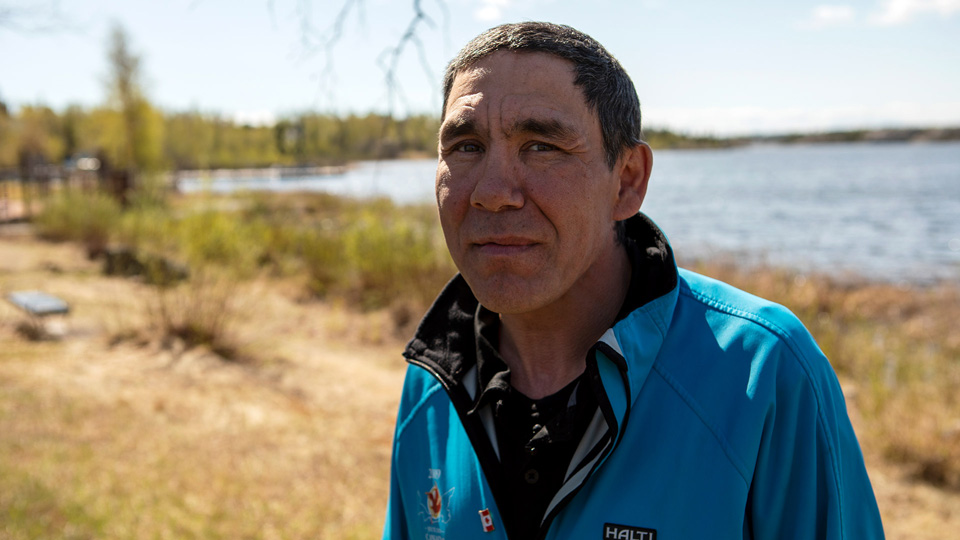
The film captures Fiddler's journey as he navigates between two worlds.
Native Identity, Lakota Family Ties Drive PBS Documentary 'Without Arrows'
Without Arrows will air on PBS stations nationwide at 10 p.m. on January 13 and will stream on the PBS app and website through April 2025. The film received support from Vision Maker Media and ITVS's Open Call initiative.
Without Arrows | Directors: Jonathan Olshefski; Elizabeth Day (Ojibwe) | Running Time: 1h 25m | Genre: Documentary
American public broadcaster PBS
has announced the premiere of Canadian drama Little Bird, which follows
the life of a First Nation woman who was forcefully removed from her
family as a child during Canada’s Sixties Scoop.
The six-part, one-hour limited series, created by Canadian First
Nations filmmaker Jennifer Podemski and playwright Hannah Moscovitch,
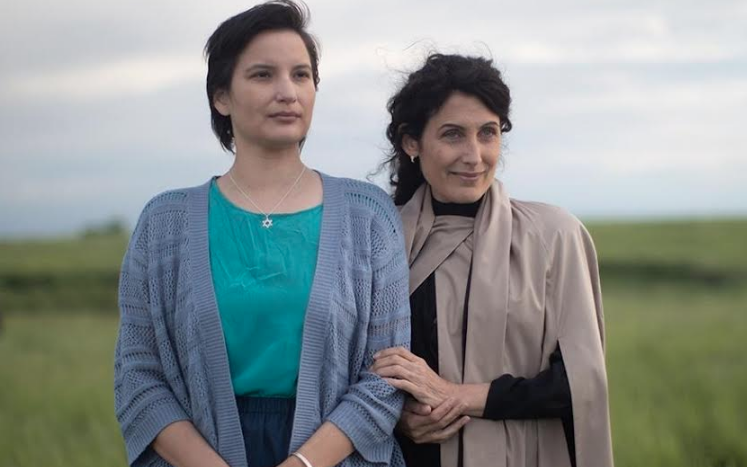
stars Darla Contois and Lisa Edelstein and follows the life of Bezhig
Little Bird, a victim of the Sixties Scoop in Saskatchewan during which
indigenous children were taken from their families and adopted by white
families.
Removed from her home in Long Pine Reservation, Bezhig Little Bird is
adopted into a Montreal Jewish family at age five. Now in her 20s,
Bezhig longs for the family she lost and is willing to sacrifice
everything to find them. Her search lands her in the Canadian Prairies. As she begins to track down her siblings, she unravels the mystery
behind her adoption and discovers that her apprehension is connected to a
racist government policy.
“It is a powerful narrative that not only engages and pulls on your
heartstrings but also educates on a profoundly disturbing time in North
American history that is rarely portrayed,” Germaine Sweet, Managing
Director, Content Acquisitions at PBS Distribution, said in a press
release.. “In addition to the creative brilliance of Jennifer Podemski
and Hannah Moscovitch, this series was delivered by a wealth of
Indigenous talent both in front of and behind the camera.”
The character-driven drama features Indigenous actors, including
Ellyn Jade, Osawa Muskwaa, and Joshua Odjick. Rounding out the cast is
award-winning actress Lisa Edelstein, playing Esther’s adoptive mother,
Golda Rosenblum.
PBS will also broadcast Coming Home, which is a 90-minute companion
documentary directed by Erica Daniels, which explores the connections
between the movement for Indigenous narrative sovereignty and the impact
of the child welfare system.
Little Bird and Coming Home will be available for streaming on
October 12, 9:00 E.T., on all station-branded PBS platforms, including
PBS.org and the PBS app, and on Apple T.V., Android T.V., Amazon Fire
T.V., Samsung Smart T.V., Chromecast, and VIZIO.
Daughter of a Lost Bird | Trailer | Season 10 Episode 4
Here are some of the other resources I suggest to learn more about Native American adoption in the U.S.:
The documentary Blood Memory, featuring my friend and amazing advocate, Sandy Whitehawk. Sandy is the founder of First Nations Repatriation Institute and created Welcoming Home ceremonies for adoptees and former fosterees (and generously included non-Native adoptees)
Eric Wardell, an Indigenous man from Canada’s Northwest Territories, was
taken from his parents at just three weeks old, in what is known in
Canada as the “sixties scoop.” In this first-person story, Wardell
explores his identity — what it means to discover who you are, and how
your past can shape your future. This story is part of the ‘Turning
Points’ series: stories told by Indigenous people from Yellowknife,
Canada in partnership with the Global Reporting Centre.TranscriptAudio
Native communities in the U.S. have suffered disproportionately from COVID-19, with higher rates of infection and death. The Navajo Nation has implemented a series of strict lockdown measures in an effort to protect its population, but health care facilities have still been overwhelmed. In fact, tribes across the country see the pandemic as representing an existential threat. Stephanie Sy reports.
Back in New Mexico, there are significant clusters of cases in the
state's Pueblos. By one estimate, 11 percent of the Zia Reservation of
only 646 members were infected. At that rate, leaders are concerned
about the risk of extinction.
For more information on reports, helpful prevention tips, and more
resources, please visit the Navajo Department of Health’s COVID-19
website at http://www.ndoh.navajo-nsn.gov/COVID-19.
To contact the Navajo Health Command Operations Center, please call (928) 871-7014.
For the latest news from the Office of the President and Vice President, please visit http://www.opvp.navajo-nsn.gov/ or find us on Facebook, Twitter, and Instagram
"We are village people. We have
village values. And those values compel us to take care of each other, our
families and our country," says Abby Abinanti, chief judge of the Yurok
Tribal Court and the first Native American woman admitted to the State Bar of
California. Tribal Justice spotlights tribal courts that incorporate indigenous
customs and beliefs into their justice systems. The film follows Abby Abinanti
and Claudette White, chief judges in two of the more than 300 tribal courts
across the country, as they navigate cross-jurisdictional issues in their
courts and communities.
Tribal Justice has its national broadcast premiere on the PBS documentary series POV (Point of View) on
Monday, August 21, 2017. POV is American television's longest-running
independent documentary series, now in its 30th season.
White is the chief judge of the Quechan Tribal Court in the Southern California
desert. She says the affiliated tribe has been "vastly diminished,"
but never removed from its homeland. "We have a lot of social ills in our
community based on our location and the limitation to services," she says.
"In my capacity as chief judge, what I'm fighting for is our people, our
independence, our sovereignty, our existence."
White sees Abinanti as a mentor, and both women are focused on restoring their
communities rather than punishing offenders. The Yurok and Quechan tribes are
the two largest in California. Each faces its own unique issues, but Abinanti
and White share the goal of increasing safety and decreasing incarceration in
an effort to dismantle the school-to-prison pipeline. Both judges are
passionate about preserving their cultures and creating new pathways to justice
for families dealing with historical trauma and intergenerational addiction.
"You guys could be leaders in our community or you could help destroy our
community," White tells two teenage boys in her court.
Studies show that rural areas and American Indian reservations are plagued by
the manufacturing, trafficking and use of crystal methamphetamine. Reservations
are targeted by non-Native drug cartels. Native Americans have the highest meth
usage of any ethnic group in the nation, resulting in extremely high crime and
incarceration rates. Abinanti remarks, "The state has a lot of
responsibility for all the people. I have responsibility to one set of
people-6,000 Yuroks and their families. And that's what I'm responsible for:
for that and for this land."
Viewers first meet Taos Proctor, a large and gregarious young man, in
Abinanti's tribal court in 2013. While out on parole from San Quentin State
Prison, Proctor was arrested with methamphetamine on his person; he is facing a
third-strike conviction and 25 years to life in prison. Over two years, the
film follows Abinanti and her staff as they take on Proctor's case and help him
to complete court programs and rebuild his life.
A thousand miles to the south, White invokes the Indian Child Welfare Act of
1978 to reunite an autistic and epileptic 9-year-old boy with his family. She
also takes on a more personal case when she becomes the legal guardian to her
troubled teenage nephew, Isaac Palone. Palone has recently left a group home
and faces two felony charges for breaking into cars; his case is in state court
rather than tribal court, and he is at risk of beginning a life shuttling in
and out of prison.
Tribal Justice contradicts the entrenched mainstream narrative that depicts
Native Americans as locked in hopeless circumstances as their tribes vanish.
Abinanti and White's struggles and triumphs tell a different story, one of
strong female leaders working alongside their people to affirm tribal
sovereignty and break free of the systems of poverty and inequality confronting
Native Americans today.
Director Anne Makepeace says that she was immediately moved by the two judges
upon meeting them in 2013 and felt that audiences needed to know about their
work. "I realized the film would educate a broad audience about something
few Americans know about-tribal courts-and that it could have a tremendous
positive impact on our criminal justice system."
"Tribal Justice challenges viewers to reexamine the current definition of
justice in America," says POV executive producer Justine Nagan.
"Through the often personal experiences of two powerful women striving to
elevate their people through the tribal court process, Anne Makepeace gives us
the opportunity to watch a rarely seen justice system effectively at
work."
I think of this important documentary LOST SPARROW all the time and wanted to share the links with you again. The earlier review I wrote is on this blog here and I've included it in the new book TWO WORLDS: Lost Children of the Indian Adoption Projects.
Four Native American children adopted by the Billing family
On
November
16, 2010, the documentary “Lost Sparrow” premiered on PBS
Independent Lens. Based on a true incident in 1978, two Crow Indian brothers
(both adoptees) ran away from home and were found dead on railroad tracks the
next day.
Chris Billing’s film takes a closer look at what killed
these two boys and what truth shattered his entire family.
The
filmmaker is one of four biological children. His parents adopted six, with four
of them from the Crow tribe. Billing was 16 when the boys died. The family
buries them in New
York and moves on with their lives. His parents eventually
divorce.
The filmmaker narrates how his little brothers Bobby (13)
and Tyler (11) were trying to help their sister Lana (also Crow). Lana
told her brothers she was being sexually molested by their adoptive father.