BLOGGER changed, not allowing us to UPDATE this back-up blog

(UPDATED 726/2025) issues with blogger are preventing this
Showing posts with label Birthmothers. Show all posts

Thursday, February 13, 2025

‘Ambiguous Loss’ — A Team of Researchers is Learning From Indigenous Women Whose Children Were Adopted

Illustration by Christine Ongjoco.

Hoping to offer a rare in-depth look into how placing children for adoption impacts the lives of Indigenous birth mothers, a group of researchers is continuing efforts to document the experiences of American Indian and Alaska Native women. 

Their study, believed to be the first of its kind, focuses on mental health and grief. The research is being carried out in stages and has already surfaced several themes, including “ambiguous loss” — “a stressful and traumatizing’’ event that occurs when there is “no verification, closure, rituals for support, or resolution.’’

A small sample of Indigenous birth mothers informed the study’s initial findings, originally published in a 2022 peer-reviewed article in the Family Process journal. Now, researchers intend to expand their work by surveying a larger number of Indigenous mothers and further examining the roles of culture and history. Participants are being recruited online, and through word of mouth and flyers being distributed throughout rural and urban Indigenous communities. 

Understanding the systemic challenges that lead to Indigenous women’s children being placed for adoption might ultimately help inform future child welfare and adoption practices, said Sicangu Lakota elder Sandy White Hawk, lead investigator. Such insights might also lead to a better understanding of the specific support Native birth mothers need during and after an adoption, researchers said. 

 “It is my hope that it will motivate policy change on child removal — that child welfare will begin to focus on family healing rather than child removal,” White Hawk said.
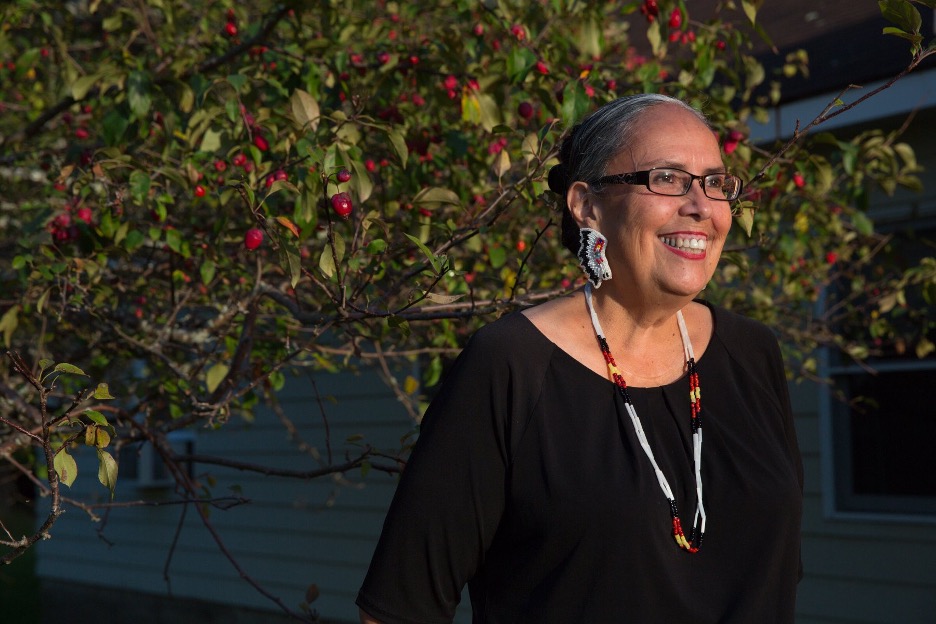
Sandy White Hawk. Provided photo.

White Hawk’s interest comes from a personal place — she was adopted at 18 months old.  She is the founder and director of the Minnetonka-based First Nations Repatriation Institute, which helps Indigenous people impacted by adoption or foster care reconnect with their families and identities. 

For the study’s initial phase, her team interviewed eight women from Minnesota, Washington, New Mexico, North Dakota, Alaska, Oregon and Wisconsin. Researchers acknowledged the small sample size but said the interviews yielded “rich data’’ nonetheless.

Researcher Ashley Landers said previous studies involving the impact of foster care and adoption on birth mothers have mainly centered on the lives of white mothers.

“I don’t think it’s by chance that no Native birth mothers were included in birth parent research prior to this,” said Landers, an associate professor in the Department of Human Sciences at Ohio State University. “Their part of the story has been largely omitted — Native birth fathers have also been omitted, and the larger Native family impact is oftentimes not part of adoption research.”

History weighs heavily on the experiences of Indigenous birth mothers, making them “distinct from other races as they have been disproportionately exposed to systemic practices of forced child removal,’’ White Hawk’s team posited in the 2022 published article.  Culprits include U.S. policies that coerced parents into relinquishing their children to boarding schools, and the Indian Adoption Project — a federally funded effort in the mid-20th century to force the assimilation of Native American children into white families. 

Also harmful, they wrote, is the ongoing disproportionate removal of Native children from their parents through the country’s child welfare systems.

Taking this broader cultural context into account is crucial to understanding how adoption impacts the well-being of Native women, whose grief may be complicated by intergenerational trauma, researchers wrote. Two of the original study participants grew up in foster care, and one is a descendant of boarding school survivors.

Ashley Landers. Provided photo.

In all, the eight study participants were between the ages of 33 and 77 at the time of the survey.  Each had experienced separation from a child through adoption or foster care between 1959 and 2010.

Birth moms bear witness

The eight birth mothers lost a combined 10 babies under age 1 to adoption. Most of the children were placed in adoptive homes at birth. Only two children grew up in a Native adoptive home.

A majority of those interviewed were 23 years old and younger when they gave birth. A Washington state birth mother was 13 years old and in foster care when she became pregnant.  Her foster mother put her into a home for “unwed mothers,” the woman reported. 

Some tried to hide their pregnancies out of a sense of shame or fear of repercussions.  They lacked essential resources, such as income and family support. Some had struggled with homelessness. 

Many women said they “felt expected” to give up their babies and reported being pressured by parents or partners, according to the published study.  Others were afraid to keep their infants because they were in an abusive relationship

In terms of the events that contributed to a sense of ambiguous loss’ among the women, several recalled being denied the opportunity to say goodbye.  A lack of closure also occurred in cases in which mothers said they were told the adoption would be “open,’’ but those agreements were not upheld. Some reported being confused. It didn’t occur to them that their time after giving birth would be the final moments they would see their babies. 

Researchers also queried the women about their mental health and well-being following the adoptions. Feelings expressed included guilt and unresolved grief that lasted years. A Minnesota woman shared how her experience led to a lifetime of self-imposed isolation.

“I don’t have a lot of people close to me — from that fear of losing family and fear of losing my daughter, and I don’t have the best relationship with my kids,” she said.

Depression and anxiety were common, and some reported substance abuse challenges that were either pre-existing and exacerbated by the adoptions, or began afterwards. 

“I wasn’t a drug user or an alcohol user until that happened,” a birth mother from Oregon said. “This was drinking to get so drunk that you fall asleep or getting high and just throwing yourself into really bad situations because you don’t want to deal with what you’ve been through.”

Not every experience reported was negative. Some mothers said the schools, social services agencies or churches facilitating their child’s adoption were helpful. A woman from New Mexico said in her case, they “made all the arrangements.” 

And a few birth mothers reported feeling “relief” after the adoption, and that they had done “the right thing.’’

“I was so young, and I was like, can I really be a parent…I think adoption might be the best route,’’ one woman said. “I think about it now, and how brave I was to do that.’’

Five women voiced a common belief that “culture as medicine” allowed them to assuage the pain of giving up their children and was a key component of their resilience.

“As an adult I got back into my culture and, fortunately, when I got back into my culture was when I started speaking candidly about my past,” the Minnesota mother said. “So, I think it’s helped.” 

Next steps in the research

Landers said the next phase of research will document additional instances of perceived coercion and examine how birth mothers navigated their lives over time. The goal is to recruit at least 20 participants for the new survey, but researchers have the capacity to include up to 50 women, she said. 

Opinions from birth mothers about how best to facilitate healing will also be solicited. “Talking circles,” which are built around women with shared experiences, was one example mentioned in the 2022 article.

Landers said, researchers want to know how to help Indigenous birth mothers recover from ambiguous loss.  This information will be presented to tribal leaders and the larger Native community, through national conferences and other forums.

“We forget about our birthmothers,” Landers said. “They carry tremendous guilt and shame, many of them for being in the wrong place at the wrong time, when they were targeted by institutions and professionals disguised as helpers.

“I am not sure there is a way to right the wrongs that have been done to Indigenous birth mothers and their children,’’ she continued, “but acknowledging their suffering is a step in the right direction.”

LINK: https://imprintnews.org/top-stories/ambiguous-loss-a-team-of-researchers-is-learning-from-indigenous-women-whose-children-were-adopted/258290

Tuesday, March 26, 2024

[Birth Mother] First Mother Forum: Link between Adoption and Suicide is Real

[Birth Mother] First Mother Forum: Link between Adoption and Suicide is Real: photo: Daughter Jane and Lorraine 

Link between Adoption and Suicide is Real

Daughter Jane and Lorraine
It was a bracing morning being brought back to reality about how the world see the woman who gave up a child for adoption. Not nicely is the short answer. 

A ten-minute morning interview for drive-to-work radio show in the New York/New Jersey area led to be being mentally whacked for having a relationship with a married man, which I did, and his having an Irish Catholic background was another reason to pile on the  criticism.  She gave the listeners advice--don't have an affair with a married man, look where that led for this stupid person I'm interviewing.

We did cover that I found her, that her adoptive parents had already tried to find me, that her epilepsy was almost certainly caused by the birth-control pills I took when I was pregnant but did not know...and then she asked how my relationship with my daughter was today.

I had to say that she died.  Since the next question was going to be about that--I told the truth.  She died by suicide.  Mincing words is not my style.  I was able to say some more but since people listening today might come to the blog to read about suicide, 

I'm excerpting a small section of Hole In My Heart below: 

    While there are no good statistics on adoptees who actually commit suicide, research on adopted populations shows that a disproportionate number are likely to. No matter how you slice the numbers, adoption increases the probability of suicide, no matter how many adoptees never have a thought of it, no matter how many adoptees are successful, smart, and may one day end up on the Supreme Court. It is unlikely there will ever be good statistics on how many adoptees commit suicide because “adopted” is not noted on death certificates. 

    What we do know is that more adoptees than non-adoptees think about suicide quite often.  Google “suicide and adoption” and what pops up is an entry from the medical journal Pediatrics, “Adoption as a Risk Factor for Attempted Suicide during Adolescence.”  That study unequivocally states, “Attempted suicide is more common among adolescents who live with adoptive parents than among adolescents who live with biological parents.” The connection between adoption and suicide persisted even after the researchers adjusted for depression, aggression, and impulsive behavior.  Not surprisingly, “family connectedness,” whether among the adopted or non-adopted, did decrease the likelihood of suicide attempts. 

    Researchers at the University of Minnesota reported that adopted teens were almost four times more likely to attempt suicide than those who lived with their natural parents, even after adjustment for factors associated with suicidal behavior, such as psychiatric disorder symptoms, personality traits, family environment, and academic disengagement.  Girls were more likely than boys to attempt suicide.  About 75 percent of the adopted teens in the study (more than 1,200, all living in Minnesota) were adopted before the age of two and were foreign born—mostly from South Korea.

    This deep dive into suicide and adoption followed a study by the lead researcher and others who concluded that being adopted approximately doubled the odds of having a disruptive behavior disorder and having contact with a mental health professional. Interestingly, international adoptees were less likely to exhibit behavior disorders.

B. J. Lifton wrote that at a seminar for adoptive parents when she brought up the fact that the percentage of adoptee suicide was statistically high, a prominent psychiatrist asked if that nasty bit could be deleted from the tape, which was to be later sold as a record of the talk.  Lifton agreed but later wrote she was sorry she had. --from Hole In My Heart.

Thursday, November 21, 2019

HISTORIC: Gov. Cuomo signs bill giving adopted people in NY their original birth certificates #NAAM2019

November 14: Gov. Cuomo signs bill giving adopted people in NY their original birth certificates

My daughter (center) with her daughter, my mother
and me. My family. 
As on January 2020 individuals born and adopted in New York will be able to have a copy of their original birth certificates with the names of their biological parents, if so listed.

What a simple statement of fact.

How long it has taken to write those words. For me, nearly a half century.

Many of you already know this because it's been all over Facebook and Twitter and even the eleven o'clock news last night. Yesterday evening when I got the news from my husband--Florence called  and she told him--when I was out having tea with a friend not related to this issue. At first, sitting on the couch in our living room, I hardly reacted to his words. I had been assured the signature was coming even though the wait was driving us all nuts, and so now, I thought, Oh, thank god, Cuomo's finally signed the bill.

keep reading

Saturday, April 4, 2015

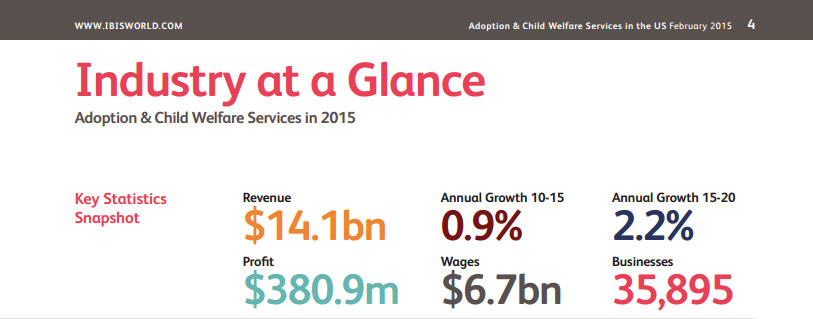
AAC, SEO, Adoption Industry Profits? Read this

By Trace Hentz (blogger-author-adoptee)

I was very fortunate to attend the American Adoption Congress annual gathering in Cambridge, Massachusetts one week ago today... I sat on the Lost Daughters panel made up of unique and passionate adoptees who like me have been blogging on Lost Daughters and writing on their own blogs. It was my first time meeting them in person and they are all honest outspoken activists who care deeply about adoptee rights and finding our voices. You might recall last November seeing a trend of tweets about #FLIP THE SCRIPT and #VALID VOICES - those hashtags (#s) originated at Lost Daughters BLOG, created by Lost Daughter blogger Rosita!

One big thing I felt about AAC was the unity.  The first moms and adoptees had their voice respected and heard.  My friend Lindy was with me and she is a first mom.  Lindy is working on a book interviewing 15 birth moms and she blogs "Telling Our Stories for the Sake of Truth" here.  We are still talking about what we learned, who we met, and the conference itself.

The morning workshop we attended was on SEO (search engine optimization) and blog tips that help readers find blogs and websites, taught by savvy first mom Claudia Corrigan DArcy. (Claud is in reunion with her son Max who was there!)

SEO is critical in the age of social media to help readers find relevant writing and new thinking on adoption by searching Google, Bing and other search engines. I learned so much from Claud and will put it to work on this blog. (I am doing some things correctly as I do share these posts on Facebook and Twitter.) (You can share these posts too!)

Claudia blogged recently about Adoption Industry Profits. I wrote on this blog that billions are earned each year and it's alarming as well as profit-driven.

Please take a look and read the stats:
http://www.adoptionbirthmothers.com/adoption-industry-profit-data-2015/

I want to thank you all for reading this blog. It's truly appreciated.

Please read Lost Daughters blog and subscribe!

The more we learn and share, and help each other, the greater the impact!

xox Trace

[I am getting a brand new second edition of TWO WORLDS ready for publication. I will post more when it's all done...]

Sunday, December 30, 2012

Haunted by Loss: My friend's adoption story

My book reading at the Pequot Museum
At lunch with a friend, as we ate our enchiladas, our discussion veered to my collecting stories for the new anthology "Two Worlds."  I was just starting to say something about birth psychology and the impact trauma on a newborn when my friend started to tell me how she lost a baby to adoption when she was a young woman.  I never knew this; suddenly I could not stop my eyes from filling with tears.
Even with our friends, we might not realize what are or were their defining moments. As she spoke, I could see how her loss defined her entire 50+ years.  (I know every story has the power to heal the person who tells it and the one who hears it.)

I was so very glad she told me about an adoption conference in Boston she attended years ago and how the women broke off into groups. She chose the group discussing women who relinquished. The facilitator closed the door and asked the women to raise their hands if they had lost a child to adoption. All hands went up.  Some of the women had never told a living soul what had happened. (Shame can silence you this way.)
One woman in her 70s was so overcome with grief, she wept in my friend's arms.  One young woman, a college student who was truly stunning, described herself as useless and ugly; she shared her deep remorse over her decision to give up her baby. (She didn't see it was threatening her future.) 
It was like this group gave the women the chance to see how their loss was deeply affecting their self-esteem. They had been shamed and even isolated by their decision. (Many were forced by their family or society pressure.) This group offered each woman time to share her experience, which turned out to be very healing for my friend.  (Support groups are essential but sadly, not everyone knows this.)

I've heard adoptees describe their isolation, too. I know adoption is an isolating experience for both mother and child; adoption separates us from each other. (With sealed records, our isolation was meant to be permanent, made by laws and expected by the adoption industry.)
As my friend was recalling this experience, I felt I was in the room as these women told of their unspeakable pain. I imagined my own mother Helen not being able to share her loss with anyone. (I wish I had had the chance to tell her I forgave her years ago.)

Finally my friend shared with me how she'd found her daughter. I was expecting a happy ending and a good reunion story. Sadly this didn't happen for them. My friend wrote her daughter a letter and hoped she was doing well. Her daughter wrote back she was doing fine but didn't open any door for a reunion. It ended before it began. (My friend sent a few birthday cards over the years but there was no response.)
As stunned as I was to hear this, I do know some adoptees are still in fear of meeting their first mothers. It could be the adoptees don't see the point of meeting birth parents or they don't want to hurt or disappoint their adoptive parents. (I encourage everyone to have reunion, to meet as many family members as soon as it's possible.)
My friend told me she read my memoir One Small Sacrifice to get an understanding of what an adoptee goes through.  If she never meets her daughter, at least she knows its possible to get through it and she knows I survived my own low self-esteem, slowly over years.
Weeks later, I am still haunted by my friend's loss of her daughter and the loss of their reunion.
My friend never had another child. 
I still feel her pain.

Thursday, February 2, 2012

Toronto Birthmother story

I had to share this. A birthmother wrote in response to this: http://splitfeathers.blogspot.com/2011/04/red-road-documentary-from-canada-60s_11.html

I am so happy that this lost spirit has found his roots after living a life of not knowing where he fit in! I have never given up the hope that one day my son who was taken from me at birth will somehow find his true family. I just hope that it isn't too late for us to join each other. I have always believed that my son is out there someplace and he will come home soon. He was taken from me on October 17,1976 from Toronto General Hospital. I was told that he died at birth. I never was asked if I wanted to see or hold him. To tell him how much his mommy loves him. I was just a young mother with a child of 11 months at home and a baby that I so wanted to bring home. I never was told where or when he was buried never laid eyes on him ever. I felt that something wasn't right but I was to with drawn from the loss that I just couldn't bare the loss. To this day the thoughts of it burns at my insides. I never knew about the 60's or 70's scoop until just with-in the last few years. That is when I got my answers to what happen. I believed that my baby boy was more then likely one of the native children that was scooped that day. I hope that this man isn't bitter towards his true Mom for what he went through. May the Creator bless him with true happiness in his life now that he has found his true identity as a Proud Native Man. From this story of this man it gives me the added hope that my son to will find me some day.
Signed BM (which means birthmom)

Remember this adoptees - closed adoption was used as a weapon! First Nations Families, please start your search now...If you need my help, email me... Trace (tracedemeyer@yahoo.com)


click

Contact Trace

Name

Email *

Message *

NO MORE UPDATES

GO TO:  https://blog.americanindianadoptees.com/  for updates and news. THIS BLOG cannot be updated...