BLOGGER changed, not allowing us to UPDATE this back-up blog

(UPDATED 726/2025) issues with blogger are preventing this
Showing posts with label Susan Harness. Show all posts

Monday, October 16, 2023

How PBS Indigenous Drama ‘Little Bird’ Relates to Today’s ‘Very Profound’ Real-World Conflicts


“There’s something about understanding each other’s trauma and trying to be human beings,” star Lisa Edelstein tells TheWrap

Without directly addressing the harrowing Hamas attacks on Israel this week, she added, “Even in this horrific time period that we’re in right now, there’s something about storytelling and understanding each other’s trauma and trying to be human beings. This is very profound right now.”

In the series, Esther Rosenblum (Darla Contois), who was cruelly ripped away from her mother, father and siblings when she was 5 years old, begins searching for her birth family in her 20s. Her adoptive mother Golda (Edelstein) has always discouraged her from finding out more about her past, having been told that Esther, whose given name was Bezhig Little Bird, had been rescued from a “neglectful” family.

READ: https://www.thewrap.com/lisa-edelstein-pbs-indigenous-drama-little-bird-interview/ 


***


Read Next
“You want to have more Natives writing Native stories,” Gladstone said in an interview with Vulture. “You also want the masters to pay attention to what’s going on.  American history is not history without Native history.”
'Killers of the Flower Moon' Star Lily Gladstone Calls Film a 'Double-Edged Sword' With Script Written by Non-Natives


**
See Susan Devan Harness, “The goal is to take away our kids, dismantle our cultures and traditions, Reflections on a life given, a life removed,” Indian Country Today, 9 October 2018. In the conclusion she writes:

They are still trying to dismantle American Indian culture and traditions through the removal of our children. They have cunning arguments which, with their large and boisterous words and white privilege, carefully shadow the fact that they just aren’t seeking our children, but ethnic annihilation. Through court cases, such as Baby Veronica, A.D. vs Washburn, and Texas v. Zinke powerful groups are working at a frantic pace to undo the Indian Child Welfare Act of 1978, which was put into place to stop the wholesale removal of children who were flying off the reservation by the early 1970s.

Recently, I spoke to a friend who follows these legal battles. ‘Why do they want to undo ICWA,’ I asked, perplexed because I don’t believe any of those litigators care one whit about what happens to American Indian children or American Indian families. My friend replied, ‘If they can get rid of ICWA, they can begin to work to disassemble all the laws and protections that have been put into place by American Indian treaty rights.’

The bottom line, economic interests want the land, and the resources beneath that land. They always have. They are hiring legal experts to take away our kids to achieve that goal, like they always have. I’m fighting to keep that from happening. And that fight starts with keeping our children.

See also United States Settler Colonialism: Erasing Indigenous Identity – A Policy of Cultural Genocide.  


Tuesday, December 6, 2022

 Indigenous transracial adoptee shares her personal struggle amid US Supreme Court case

NEWS VIDEO


If the Indian Child Welfare Act is overturned, it would make it easier for non-indigenous families to adopt indigenous children.

FORT COLLINS, Colo. — When Susan Devan Harness, an indigenous transracial adoptee, was removed from her home as a child, she was placed with a white family, and the resulting experience was a lifetime of otherness.

“You cannot take a child from a colonized race and place them in the midst of the colonizers and think everything’s going to go great,” said Harness, a Fort Collins author who said she is Salish Kootenai, of Western Montana.

The U.S. Supreme Court is considering a challenge to the Indian Child Welfare Act, also known as ICWA, enacted in 1978 to put in place adoption protections for Native American and Alaska Native children. If those protections are overturned, it would make it easier for non-native families to adopt a native child.

Before ICWA, indigenous children were removed from their homes at high rates. Studies showed 25% to 35% of indigenous children were being removed from their homes. Of that group, 85% were placed outside of their family and reservation community.

As someone who was removed from her home, Harness said she struggled to connect with American Indian peers in school and she also faced incredible difficulties trying to reconnect with her tribe.

There are complications to living in between those two worlds. The first, Harness said, is the historic violence and conflict that indigenous communities have faced at the hands of white communities.

“They’ve declared wars on us," she said. "Over a thousand wars, they’ve declared on us, the U.S. Army. They’ve objectified us and moved us when they didn’t want us. They’ve educated us in schools whose motto was ‘kill the Indian, save the man.’ ”

To understand who she was, she went to school to study anthropology. Eventually, she found others like her. They didn’t fit into white mainstream culture but didn’t necessarily have a place amongst American Indian peers, either.

“You can't be funny enough. You can't be scholarly enough. You can't be talented enough,” Harness said. “You're always going to be this person, this American Indian, living in white America.”

Harness wrote a book about her experience, aptly titled “Bitterroot,” named after a medicinal plant that grows near her tribe.

“It has the ability where if it goes through a lot of drought, it doesn’t bloom, but the first time it gets rain, it blooms in amazing ways,” she said.

Her book brought in rain. Harness reconnected with her tribe and even has an honor song. Now Harness knows her biological family, intimately, but that did not happen without a lifetime of emotional struggle.

“I don’t want to see other kids come out the same way I did, the same way a lot of people in my generation did, trying to figure out what happened to us when we’re in our 40s and 50s,” she said.

The U.S. Supreme Court has taken up challenges to ICWA three times — in 1989, 2013 and 2022. The current case is the most significant because it raises questions of equal protection under the Constitution.

The justices heard three hours of arguments Nov. 9. The high court wasn’t expected to rule in the case until next summer. Lower courts split on the case.

As the Supreme Court challenge goes on, Harness has a message: Anyone involved in a transracial adoption has an immediate responsibility to help the child find their place of belonging.

“They better be able to take that kid to the reservation every single year,” she said. “They better make friends with people in the tribe to ensure that child is given a proper education of who they are and where they came from.”

HER FANTASTIC WEBSITE: HERE 

Interview – The Archibald Project – American Indian Transracial Adoption


MORE ADOPTEE STORIES


Friday, July 29, 2022

Susan Harness: We were not supposed to ‘be’ Indian (UPDATED)

(reblog) AMERICAN INDIAN ADOPTEES: We were not supposed to ‘be’ Indian


Adoptee Susan Harness with her younger brother James Allen in 2012. An anthropological search for belonging and identity ...

"We were not supposed to ‘be’ Indian, we were supposed to become members of the dominant society, with full and complete access to the American Dream."
– Susan Harness ( Bitterroot: A Salish Memoir of Transracial Adoption, University of Nebraska Press.)

 keep reading

Susan contributed a story to the anthology STOLEN GENERATIONS: SURVIVORS OF THE INDIAN ADOPTION PROJECTS AND 60S SCOOP   


HER WRITING


ARCHIBALD PROJECT (Podcast interview)

Thursday, October 15, 2020

American Indian Children Still Removed From Homes at High Rates


 repost from 11/9/2015

By LEX TALAMO
 

Almost 40 years after the Indian Child Welfare Act (ICWA) passed, American Indian children are still being removed from their homes in highly disproportionate numbers– at a rate almost three times higher than any other ethnicity, excepting African American children.

Minnesota leads the list of states with the worst rates of disproportionate removal– where American Indian children are overly represented in the foster care system– according to a June 2015 report from the National Council of Juvenile and Family Court Judges.  Other states with high numbers of disproportionate removal include Nebraska, Iowa, Idaho, Wisconsin, Washington, South Dakota and Oregon.

Even in states without dramatic removal rates– like Arizona and New Mexico– many American Indian children find themselves removed from their families and placed in group homes, treatment centers or foster care.

In McKinley County, New Mexico,  American Indian children make up 73 percent of all children in foster care, according to a 2015  third quarter report from the New Mexico Children, Youth and Families Department (CYFD).  And in Arizona, over 1,300 American Indian children were in the foster care system as of March 31, 2015, according to a Department of Child Safety Child Welfare Report.

The Indian Child Welfare Act of 1978 applies to any child of American Indian descent who is an enrolled member or eligible for enrollment in any federally recognized tribe. When an American Indian child enters state custody, the state must contact the child’s tribe, and the tribe has the right to transfer the case to tribal court or to participate in court proceedings.

In order to help American Indian children stay connected to their tribal cultures and identities, ICWA also established a placement preference that starts with the child’s extended family and clan relatives and then progresses to enrolled members of the child’s tribe and enrolled members from any tribe– with placement of the child in a non-Indian family as a last resort.

“Any child who might be Native American, they have a [cultural] identity,” said Regina Yazzie, Program Director of the Navajo Nation Division of Social Services.  “It’s a benefit.”

Yazzie added that across the country, state agencies struggle to find American Indian foster families for children.  Finding placement families on reservation land can prove equally challenging.

Data from the Children, Youth and Families Department of New Mexico shows there are currently 43 American Indian foster care providers who have 79 placements available– nowhere near enough for the 262 American Indian children in New Mexico’s foster care system.  Melissa Otero from AdoptUsKids.org also said through an email correspondence that less than 1 percent of all AdoptUsKids placement families identify as American Indian.

When speaking with the Navajo Post, several tribal members mentioned hardships on reservations that negatively impacted families’ ability to foster– including poverty, poor housing, poor mental health care, suicide, and addiction.

“Part of what’s going on [is] drug and alcohol numbers are sky high,” said one tribal member, who wished to remain anonymous in order to be able to speak freely. “There are not a lot of healthy families. There are tons of families that care, but it takes structure, it takes money [to foster], and so many families are overwhelmed with the day to day living, how could they bring another child into their home?”

For the San Carlos Apache Tribe, methamphetamine poses a particular devastating problem.   Social services Director Terry Ross said that the reservation currently has an “epidemic of mothers with meth-exposed babies.”

“We try to work with the family, but when mothers are addicted to meth… it’s hard,” Ross said. “We can’t make people do anything. They have to want to change for their child.”

Many tribes offer social services like counseling, parenting classes, detox centers and emergency supplies to American Indian families in need. But representatives from several tribes mentioned that funding is limited and resources are stretched thin, so that American Indian children continue to find themselves in foster care– where many undergo significant trauma and loss of identity when growing up separated from their tribes, communities, and cultures.


A Sense of Belonging

Sandra White Hawk, an enrolled member of the Sicangu Lakota of the Rosebud Sioux Tribe,  was adopted into a white missionary family when she was 18 months old in the days before ICWA. The only Indian girl in her community, she grew up with a sense of being “different.”

“My adoptive mother constantly reminded me that no matter what I did, I came from a pagan race whose only hope for redemption was to assimilate to white culture,” wrote White Hawk, now executive director of the First Nations Repatriation Institute, on her website.

White Hawk added that people in her community were ignorant of her culture when she was growing up; they would ask her to do rain dances or give war whoops.  Susan Devan Harness, a member of the Confederated Salish and Kootenai Tribes, was also adopted into a non-Indian family at 18 months. Harness said she was called “Squaw Girl” growing up and that she had trouble finding dates in high school because her male classmates’ mothers believed stereotypes that American Indian women were promiscuous– and that dating one would get their sons in trouble.

“I have had privileges,” said Harness of her adoption. “Living in a nice neighborhood, going to college, I have a Master’s Degree…a place at the table. But I have paid a huge price for those privileges."

As part of that price, Harness said she was always fighting for a place of belonging, and that many adoptees exist in an “in between place” between their tribal communities and their adoptive families. White Hawk’s website states that many adult adoptees also show traits of survivors of trauma: anxiety, impulsivity, nightmares, guilt, and unresolved guilt– and that much healing of these issues takes place for adoptees when they reconnect with their tribal identities or “come home.”

“In the beginning I didn’t see the importance of why anyone would want to know my story as an adoptee because I didn’t understand the prevalence,” said White Hawk. “I get it now.”

White Hawk added that reconnecting with her biological family and tribe later in life allowed a “whole new part” of herself to awaken.  She sees similar transformations in the adoptees she works with – as does Karen Vigneault, a librarian who uses her research skills to search genealogy records and connect adoptees with their families.

Vigneault said that adoptees face many obstacles back-peddling through their pasts: opening sealed court documents, misspellings in their ancestors’ names or lack of names which makes tracing families difficult, and apprehension at returning to their communities and families decades later. Despite the challenges, Vigneault provides her help to adoptees free from charge.

“If Creator has people asking me for help, I can’t charge them for that,” Vigneault said. “To help them come home… it should be a free ride.”


A 2009 report published by the Annie E Casey Foundation found that resilience– the ability to bounce back after a traumatic or difficult experience– increases dramatically for American Indian individuals who have seven protective factors in their lives, including: 

a sense of belonging to a culture, spirituality, connections to the tribal language and extended family, a sense of humor, a mindset of forward thinking or “moving forward to the seventh generation,” and what authors Charlotte Goodluck and Angela Willeto describe as “responses from the culture”– which could include beadwork, drumming, sweat lodge, talking circles, smudging, pow wows and other ceremonies.

The association between resilience and strong rootedness in tribal culture have significant implications for American Indian children within the foster care and adoption systems today.

Tania Valdez, associate director of the voluntary treatment foster care program La Familia-Namaste, Inc in New Mexico, described the change she saw occur in a young woman in care when an ICWA worker sent her music and books from her Oklahoma tribe.

“I think it plays a tremendous role in her cultural identity. It’s part of who she is,” Valdez said. “She’s removed from her community, but it gave her a piece of her culture, and she embraced that.”

Nikki Kull, executive vice president of The Ranches in New Mexico, said that children in care struggle to transition from one culture to another, regardless of their race.

“We had some siblings from the Yuni tribe who were very connected to their culture… and it was hard for them to be separated from their culture. It’s heart-breaking to see,” Kull said. “I desperately understand the need for kids to stay within their culture, but the fact remains there aren’t enough homes.”

The Indian Child Welfare Act Today
Several judges who spoke with the Navajo Post said that ICWA was meant to be a gold standard for family law cases– that active efforts to work with families before removing children from their homes would be in the best interest of all children regardless of their race.

But lawsuits in several states– Minnesota, Arizona, Oklahoma and Virginia– challenge the constitutionality of ICWA. Common arguments include that the Act’s language discriminates against American Indian children on race alone and that the Act violates due process and privacy rights guaranteed by the Tenth and Fourteenth Amendments.

Judge Tim Connors, who teaches at the University of Michigan Law School and helps train new judges in handling ICWA cases, said that family law is mainly an issue for state courts, so that applying  ICWA– a federal law– to American Indian family cases is a “foreign concept” for many judges.  But he added that American Indian children are particularly harmed when removed from their families.

“Data shows the trauma when we separate children from their communities and their culture and their lineages,” Connors said. “And it is particularly harmful for Native American children.”

Judge William Thorne, vice-president of the National Indian Justice Center and a former member of the Board of Trustees for the National Council of Juvenile and Family Court Judges, said that while some judges and lawyers see ICWA as a violation of their code of ethics regarding fairness, ICWA was created with American Indian children’s best interest in mind.

“In tribal communities, if you cut a child off from their family, grandparents, aunts and uncles, cousins, that really is almost active abuse against that child, because in Indian communities things happen based on relationships,” Thorne said in a video produced by the Mississippi Administrative Office of Courts.

Judge Leonard Edwards, a retired judge who served for 26 years as a Superior Court Judge and six years as Judge-in-Residence at the Center for Families, Children & the Courts, stated that the adversarial processes prevalent in courts– where two or more sides argue their cases and then a “winner” is declared– go against traditional American Indian practices of resolving conflict.  Edwards said that the intention behind ICWA was to help make sure that all of an American Indian child’s resources were being considered.

“Social workers can be creative,” Edwards said. “It’s not mum and dad, it’s the extended family and community. It’s different [in tribal communities] and that can be difficult for our judges to understand.”

While ICWA has been acknowledged by many judges as a difficult law to understand and implement, tribes across the country insist keeping American Indian children connected to their tribes is of utmost importance.

“[If not] They lose the language, the culture, the integrity of what it is to be Native American and the values system,” said Doris Bailon, director of Social Services of the Santo Domingo Pueblo.

Sandra White Hawk and Susan Devan Harness had a suggestion to reduce the number of American Indian children entering the foster care system: providing “front end services.”

“Instead of the money going to clothe and feed kids in foster care, have that money going to strengthen Native families and communities,” Harness said.

SOURCE (broken)


Monday, November 18, 2019

Bitterroot: finalist in Colorado Book Awards #NAAM2019


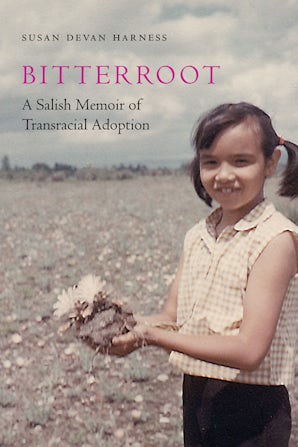
Bitterroot: A Salish Memoir of Transracial Adoption,
University of Nebraska Press
Winner of the High Plains Book Award in 2 categories: Indigenous Writer and Creative Nonfiction
Finalist in the Colorado Book Awards


Note from Susan:

I've had the honor of adding my voice to the voices of others who are part of the complex structure of adoption.  RG Adoption Consulting asked me to be a part of their programming for this month, and asked great questions for adoptees, adoptive parents, birth parents and others involved in this process.

The question I chose to answer was "What was the most challenging for you as an adoptee?"  Please click on the link to listen to the interview, labeled "Through the Eyes of an Adoptee".  
As an American Indian transracial adooptee, this question allowed for a lot of discussion of history, policy and the clash when American Indian children are placed in non-Native families. If you are interested in sharing this video, please do!

All my best for your interest in this story.
Susan

Today is Part II, with great and honest information for adoptive parents of racial children.  Please like and share.

https://youtu.be/1yflu8qqOx4

Wednesday, April 24, 2019

In "Bitterroot," a Native transracial adoptee explores identity, race, and belonging

Apr 23, 2019 

On this edition of Your Call, we’ll speak with oral historian Susan Devan Harness about her book Bitterroot: A Salish Memoir of Transracial Adoption.
The memoir explores her search for answers to difficult questions about race, identity and family as an American Indian woman adopted by a white couple. She also chronicles her reconnection with her biological family and conversations with other transracial adoptees.

Guest:
Susan Devan Harness, writer, lecturer and oral historian, and author of Bitterroot: A Salish Memoir of Transracial Adoption

Web Resources:
Hippocampus Magazine: Review: Bitterroot: A Salish Memoir of Transracial Adoption (American Indian Lives) by Susan Devan Harness

Wednesday, January 9, 2019

BITTERROOT: Adoption Didn't Solve the Indian Problem


Adoption didn’t solve the “Indian Problem.” Its weight simply shifted to our small shoulders. No one told us “we” represented “them.” We had to find that out for ourselves. Some of us are still looking. Bitterroot is a roadmap. - Susan Harness
An author recounts how 1960s policies ripped apart families and communities, including her own.

MUST READ: Adoption didn’t solve the ‘Indian Problem’ — High Country News

See her other posts on this blog... HERE
 HERE

Susan Devan Harness, author of Bitterroot: A Salish Memoir of Transracial Adoption is a member of the Confederated Salish Kootenai Tribes, a writer lecturer and cultural anthropologist living in Fort Collins, Colorado.
10-16-2019
This past weekend Bitterroot: A Salish Memoir of Transracial Adoption took home two awards at the High Plains Book Festival:  Creative Nonfiction and Indigenous Writer.  I am so honored to be among so many really great authors.

Thank you goes to the readers and staff of the High Plains Book Festival, the University of Nebraska Press for their seeing the value of this project, my advisers Kate Browne and John Calderazzo, the overwhelming support from friends and family and the many voices who contributed to this work.

It is humbling.

All my best,
Susan
Susan Harness, M.A.

STOLEN GENERATIONS

Tuesday, December 18, 2018

Stunning and Beautiful: Bitterroot : A Salish Memoir of Transracial Adoption

Bitterroot : A Salish Memoir of Transracial Adoption

Author Susan Devan Harness, American Indian Lives Series

Her website: www.susanharness.com


About the Book

In Bitterroot Susan Devan Harness traces her journey to understand the complexities and struggles of being an American Indian child adopted by a white couple and living in the rural American West. When Harness was fifteen years old, she questioned her adoptive father about her “real” parents. He replied that they had died in a car accident not long after she was born—except they hadn’t, as Harness would learn in a conversation with a social worker a few years later.

Harness’s search for answers revolved around her need to ascertain why she was the target of racist remarks and why she seemed always to be on the outside looking in. New questions followed her through college and into her twenties when she started her own family. Meeting her biological family in her early thirties generated even more questions. In her forties Harness decided to get serious about finding answers when, conducting oral histories, she talked with other transracial adoptees. In her fifties she realized that the concept of “home” she had attributed to the reservation existed only in her imagination.

Making sense of her family, the American Indian history of assimilation, and the very real—but culturally constructed—concept of race helped Harness answer the often puzzling questions of stereotypes, a sense of nonbelonging, the meaning of family, and the importance of forgiveness and self-acceptance. In the process Bitterroot also provides a deep and rich context in which to experience life.

NEW INTERVIEW: When Native American Children Are Adopted By White Families, It Isn't Always A Happy Ending

Author Bio

Susan Devan Harness (Confederated Salish Kootenai Tribes) is a writer, lecturer, and oral historian, and has been a research associate for the Tri-Ethnic Center for Prevention Research at Colorado State University. She is the author of Mixing Cultural Identities Through Transracial Adoption: Outcomes of the Indian Adoption Project (1958–1967).

Praise

"What does it mean to be Native when you weren't raised Native? What does it mean when the members of your birth family who remained on the reservation tell you that you were lucky to be raised elsewhere, but you don’t feel lucky? Harness brings us right into the middle of these questions and shows how emotionally fraught they can be. . . . It's time everyone learned about the many ways there are of being Native."—Carter Meland, Star Tribune

Bitterroot is an inspiration—one woman’s quest to find herself among the racial, cultural, economic, and historical fault lines of the American West. A compelling, important memoir, as tenaciously beautiful as the flower for which it’s named.”—Harrison Candelaria Fletcher, author of Presentimiento: A Life in Dreams

“One Salish-Kootenai woman’s journey, this memoir is a heart-wrenching story of finding family and herself, and of a particularly horrific time in Native history. It is a strong and well-told narrative of adoption, survival, resilience, and is truthfully revealed.”—Luana Ross (Bitterroot Salish), codirector of Native Voices Documentary Film at the University of Washington and author of Inventing the Savage

“A page-turner of a memoir that illuminates a great historical injustice. With wit and a sturdy heart, Susan Harness plumbs her own and the American West’s uneasy past to shed the burden of living ‘in between’ and find wholeness. A compelling and moving story.”—John Calderazzo, author of Rising Fire: Volcanoes and Our Inner Lives

LINK TO BUY 

Review for Bitterroot - Star Tribune
http://www.startribune.com/review-bitterroot-a-salish-memoir-of-transracial-adoption-by-susan-devan-harness/497042611/

Susan also contributed to the anthology Stolen Generations, book three in the Lost Children Book Series

Saturday, December 9, 2017

We were not supposed to ‘be’ Indian

Adoptee Susan Harness with her younger brother James Allen in 2012.

An anthropological search for belonging and identity


At eighteen months old, Susan Harness (M.A. cultural anthropology ’06, M.A. creative nonfiction ’16) was removed from her home because of neglect. Notes from the social worker document a hungry infant with infected and bleeding mosquito bites and a diaper that hadn’t been changed in days. Harness and two of her siblings had been left in the care of their six-year-old sister by a mother who regularly disappeared for extended periods of time.

Family and community members on Flathead Indian Reservation in Montana were unable to help since they did not have the economic resources. As a result, in 1960, like over 30 percent of American Indian children in that time period, Harness was adopted into a non-American Indian home.

Transracial adoption

The Indian Adoption Project was a small study interested in understanding the impact of transracial adoption on American Indian children. From 1958 through 1967, researchers spoke with a small subset of American Indian children who were adopted by white families. Proponents of this practice argued that this was an improvement over previous policies which resulted in difficulties placing American Indian children into homes. Harness’ experience and later academic research document a unique perspective on this subject – that of the child adoptee.

“The primary purpose of placing over a third of American Indian children with white families was assimilation,” said Harness. “My adoption, like nearly every other transracial adoption, was a closed adoption. This means our names were changed; our families, our tribes and nation, erased. Our entire identity was kept locked away in files that could be opened only by court order, trusting you could find a sympathetic judge. Therefore, finding our way home would be almost impossible. That’s how it was meant to be. We were not supposed to ‘be’ Indian, we were supposed to become members of the dominant society, with full and complete access to the American Dream.”

"We were not supposed to ‘be’ Indian, we were supposed to become members of the dominant society, with full and complete access to the American Dream."
– Susan Harness (upcoming book Bitterroot: A Salish Memoir of Transracial Adoption, out fall 2018 from University of Nebraska Press.)
keep reading

Susan contributed a story to the anthology STOLEN GENERATIONS: SURVIVORS OF THE INDIAN ADOPTION PROJECTS AND 60S SCOOP   

Wednesday, April 26, 2017

In Other Words: Susan Harness and Sandy White Hawk

REBLOG: listen at links

Recently, I was interviewed for a radio program in Missoula, Montana regarding my research on American Indian transracial adoption. It originally aired on Montana Public Radio (MTPR.org) Tuesday, December 11th 2012, on the program In Other Words, which explores experiences through a feminist perspective. The interview looks at American Indian transracial adoption and its intersection with race, history and class. If you weren’t able to catch it live, click on the link below to listen now.

http://www.susandevanharness.com/in-other-words-montana-public-radio/#comments

Sandy White Hawk’s Response to Susan Harness


Below is our friend Sandy White Hawk’s response to the podcast we did with our friend Susan Harness. Enjoy.
_______________
Dear Kevin, (Land of Gazillion Adoptees)
I wanted to respond to Susan Harness’ reference to the Southeast Asian tradition the Gifting of a child as an alternative to standard adoption.
In Indian Country a traditional alternative to standard adoption practice is now developing.  It is called Customary Adoption or Custom Adoption. Long before first European contact Indian nations had a custom that kept and maintained balance with their communities; adoption was one of those customs.
Tribes are beginning to reclaim their traditional ways of maintaining family connections for those who would otherwise be separated from their families and communities if the family was struggling in taking care of their children.
The White Earth Tribe Band of Ojibwe of Minnesota has been the leader in developing this practice in its tribal court. Adoption money, SSI and other benefits follow the child in the process just as in a standard adoption. The major difference is parental rights are not terminated. In White Earth they use the term “suspended.”

Termination of parental rights is not a tribal belief. One cannot severe the familial connection. The termination of parental rights adds to the pain of a struggling parent, family and community. Children need to be protected if their parents who are not able to keep their children safe but terminating parental rights do not have to happen to protect the child or help the struggling parent.
Suspension of parental rights allows the mother and or father to re-enter the child’s life if they get on a good path, as a full custodial parent if that is in the original agreement. The adoptive family is often a tribal member and or approved by the tribe. They do their own home studies and adoptions through their tribal court.
Customary Adoption in White Earth has been very successful. In 2009 they had done about 250 adoptions where only 2 have disrupted. I believe this is due to the tribes Home Study Program they developed. The fact that parental rights are not terminated more relatives come forward to help because they will not have to be part termination hearings, which has to be exceptionally painful for families.
In White Earth Customary Adoption the birth mother or father can have a voice in the placement of their children and the adoptee can come get any information in his/her file anytime they wish.
Since parental rights are not terminated, only suspended, (or whatever term a particular tribe chooses) the mother can re-enter the child’s life, if they get on a good path, as full custody parent if that is the agreement.
Tribes from across the country are starting to develop Customary Adoption. Customary Adoption was passed into California law in 2009, http://www.calindian.org/alerts/62-2010-alert/99-tribal-customary-adoption.
Customary Adoption is based in Native thought – life ways. For the Lakota people it is one of our Seven Sacred Rites, called Hunka (Making Relatives) Ceremony. It is when a child (or adult) is adopted into a family, without severing their original family ties so families expand.
The Making of Relatives binds the adoption through ceremony and is honored until death.
The elders tell us that Hunka happened in many different ways. If a child was lost to disease early in life a family may Hunka another child offered by another family. Adults would make relatives maybe after their family member died so the family would Hunka a young man or young woman to take his place. This helped in a couple ways. The young man or young woman who was adopted would assume the role of the missing family member. That meant contributing by hunting, preparing food, taking care of the children or the old ones; it preserved the family system and strengthened the extended family.  The Lakota people have never stopped Making Relatives in the traditional Hunka Ceremony. It is very common to hear someon say, “This is my Hunka Uncle or Hunka Sister.”
I was honored to witness a monthly White Earth Adoption Day in 2007. Relatives from both the birth family and the adoptive family attended along with community members and the spiritual leader. There were approximately twenty-five people gathered. Words of encouragement were shared by the spiritual leader and then all participated in a traditional pipe ceremony before they went into courtroom. The court room filled up with everyone even the young ones. Both birth mother and adoptive mother are wrapped in star quilts and pictures are taken.  After the formality of law is done everyone gathers for a feast. Another honor song is sung and blessing said. It was beautiful to witness.
I interviewed the young birth mother afterwards and she said that she had five children. The oldest three were placed in stranger adoption (my words) but her two youngest daughters she got to help to choose the parents and visitation was arranged through Customary Adoption.
She admitted that she was not in a place to take care of her babies because she is addicted (as was her mother). Grandmother was a boarding school survivor, distant but tried to be there for her family. She said that she felt good about this adoption.
I know that while she knew she did the right thing for the safety of her children it was still sad for her. When the feast was over she leaned on the large glass window forehead pressed to the glass watching her two young girls walk away with the parents she agreed to let raise her babies.
As a Native American adoptee who was adopted in during the time of systematic removal of tribal children, secrecy and during the time that adopted children were adopted to “have a better life” my heart rested knowing that these Ojibwe children will know who they are, where they come from which will help them understand what they are going to do in life and where they are going to go. The four essential questions in life our elders tell us we have to be able to answer to have balance. Most importantly this generation of White Earth adoptees will remember the drum, the song sung in their honor, the prayers said in Ojibwe, the food, running and playing while the adults visited; a memory of being cared for by a community; no shame, no guilt, only a community of relatives there to support them and their mother.
Another source of information on Customary Adoption can be found at:  http://www.nicwa.org/adoption/.
Sandy White Hawk 2012

Editor's Note: Both Susan and Sandy (Native adoptees) are writing memoirs. Susan's website: http://www.susanharness.com/about/

Monday, February 25, 2013

An interview with Susan Harness on MPR

In Other Words (Montana Public Radio)
Recently, I was interviewed for a radio program in Missoula, Montana regarding my research on American Indian transracial adoption. It originally aired on Montana Public Radio (MTPR.org) Tuesday, December 11th 2012, on the program In Other Words, which explores experiences through a feminist perspective. The interview looks at American Indian transracial adoption and its intersection with race, history and class. If you weren’t able to catch it live, click on the link below to listen now.

http://www.susandevanharness.com/in-other-words-montana-public-radio/#comments

Susan and I are good friends and both transracially adopted. Please listen to this podcast. It's important. Her important book is listed in the reference section on this blog.

Wednesday, May 2, 2012

Author Susan Devan Harness - on Lost Birds/adoptees!

The Land of Gazillion Adoptees Podcast Conversation with Susan Harness, author of Mixing Cultural Identities through Transracial Adoption: Outcomes of the Indian Adoption Project

by kostvollmers

I have known Susan since 2008 when we gave a talk on Stolen Generations in Wisconsin. She is brilliant, her book is excellent and this podcast about American Indian Adoptees is so important  - please click on headline and listen and share with other adoptees and parents of adoptees ... Trace

AND: this posted today _ May 3, 2012:

Sandy White Hawk’s Response to Susan Harness

by kostvollmers

click

Contact Trace

Name

Email *

Message *

NO MORE UPDATES

GO TO:  https://blog.americanindianadoptees.com/  for updates and news. THIS BLOG cannot be updated...