Legacy of Native American Boarding Schools
by David "Katya" Ketchum | LA Progressive

It’s not a secret that I love studying history; I believe it is a vital discipline for understanding and transforming the world. And as shocking and terrifying as human cruelty has been throughout recorded history, it’s also heartening to observe, time and time again, the movements opposing oppression that have always existed. This is also important to remember if you are tempted to excuse the complicity of people in the past by insisting that they were just products of their time. By studying history, we also become more aware of our own responsibilities and possibilities in the present.
A Legacy of Failure, Cruelty, and War
One of these important historical moments in US history, when there were multiple and large movements to either oppose or work for social justice, followed the American Civil War.
Optimism that Reconstruction would bring about true and lasting healing and change in a nation ravaged and traumatized by the horrors of slavery and war, were combined with optimism that there could be a change in the government’s policies regarding Native peoples.
President Ulysses S. Grant and the events that took place in his administration are a good example of these trends. The Enforcement Acts of 1870 and 1871, for example, were aimed at providing federal support to protect the rights of Black Americans and oppose the Ku Klux Klan. Under the direction of Attorney General Amos Ackerman, hundreds of Klansmen were tried, often by Black juries, and imprisoned. Thousands more received fines or warnings, or even fled to escape prosecution. As a result, the KKK as a formal organization was in wreckage by 1872.
Optimism that Reconstruction would bring about healing were combined with optimism that there could be a change in the government’s policies regarding Native peoples.
At the same time, Grant wanted to find a different approach to US relations with Native peoples. He worked closely with his longtime friend and colleague, Ely S. Parker, and made Parker his Commissioner of Indian Affairs. Parker, whose Native name was Donehogawa, was a member of the Seneca nation and the first Indigenous person to hold the post of Commissioner. Together, they developed policies that included providing federal troops to protect reservation borders from settlers and that ultimately would have provided a pathway to citizenship for Indigenous people.
These plans were vehemently opposed and undermined, and opponents eventually falsely accused Parker of embezzling money. He was exonerated, but Congress stripped power from the office of Commissioner of Indian Affairs, and Parker resigned in 1871.
Plans and relationships fell apart, and Grant ended up waging war against the very people he had thought he would protect, including “the Modoc War in 1873, the Red River War in 1874, and the Great Sioux War in 1876.”
By 1885, the year Grant died, Donehogawa, once Grant’s enthusiastic colleague, described the fate of Indigenous peoples in North America. Resisting the racist idea that blamed Indigenous people for their troubles, he wrote:
“The disabilities, disadvantages and wrongs do not result, however, either primarily, consequently or ultimately from their tribal condition and native inheritances, but solely, wholly and absolutely from the unchristian treatment they have always received from Christian white people … . The tenacity with which the remnants of this people have adhered to their tribal organizations and religious traditions is all that has saved them thus far from inevitable extinguishment.”
Grant’s campaign slogan had been “Let us have peace,” and he seemed sincere in his vision to reform federal Indian policies. So how did it happen that, as Alysa Landry pointed out, “some of the worst massacres and grossest injustices in history [occurred] while Ulysses S. Grant was in office”? This is an important question to ask, if we want to avoid the kind of pitfalls that kept others’ from true healing and change.
In Grant’s case, central to his failures was “the development of millions of acres of federal public lands” and “the private acquisition of land by pioneers, spectators and railroad and mining companies,” made possible by Grant’s approval of the Timber Culture, General Mining, and Desert Lands Acts, which all expanded the land available to homesteaders and settlers – at the expense of Native peoples. In the end, Grant’s hopeful slogan, “Let us have peace,” was no match for the reality of expansionism. In Landry’s words,
“Grant realized that his expansionist goals required the removal of Indians from desirable land. His Indian Peace Policy, designed to reform the Indian Bureau and remove corrupt agents, also called for rigorous agricultural training on reservations and established schools and churches that would transform Indians into Christian citizens.”
Cultural Genocide by Another Name
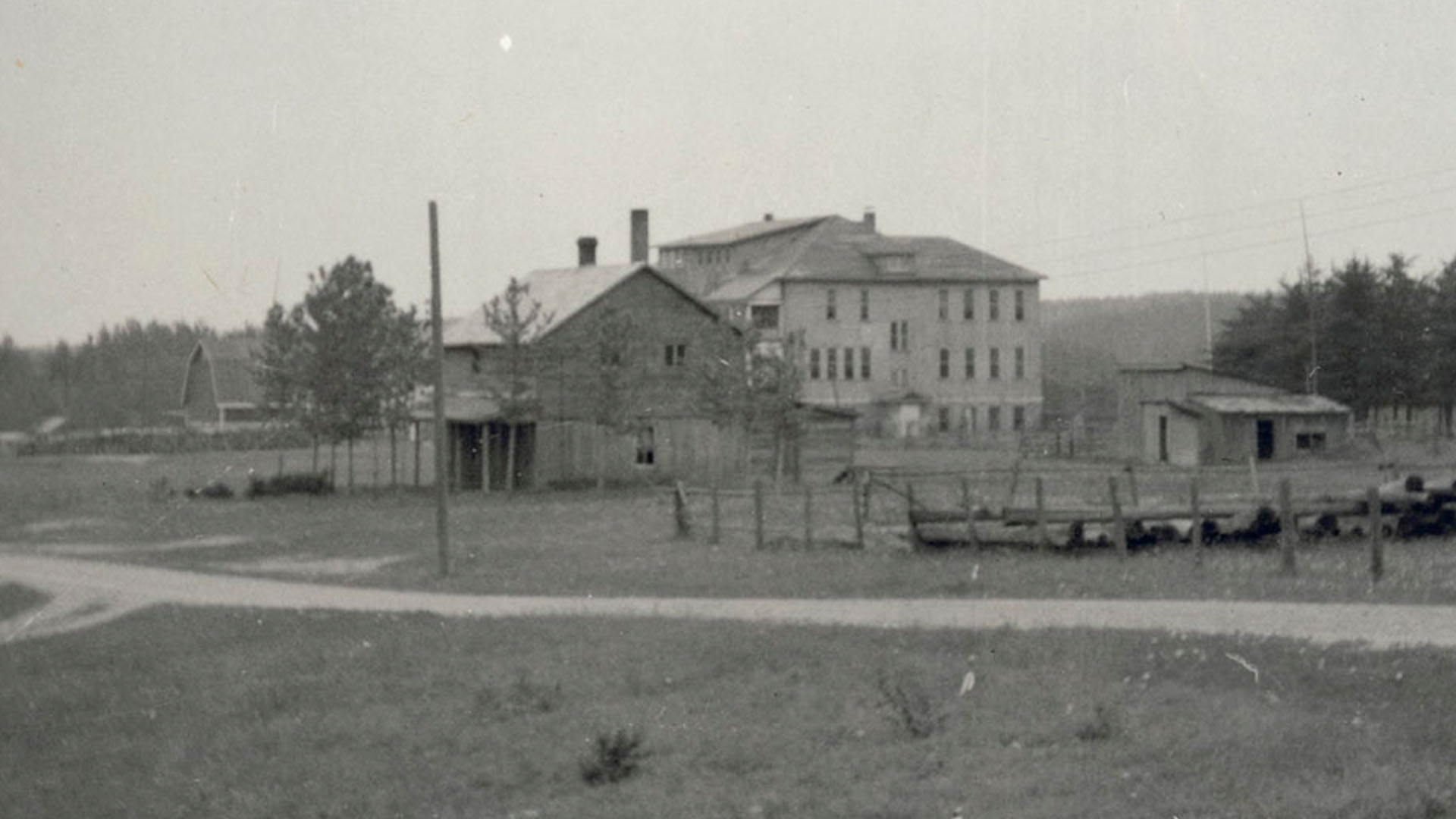
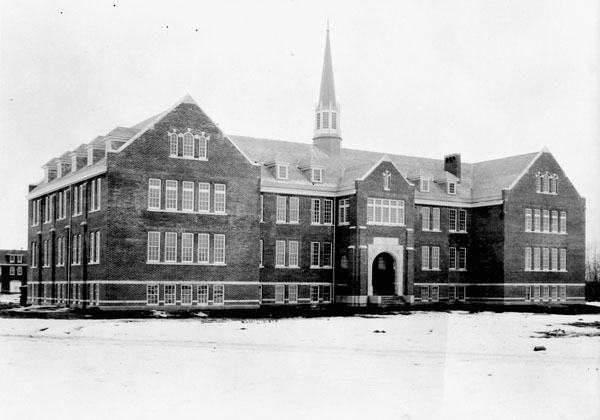
This tension is the US setting for residential schools. Even though some people, like Grant and Donehogawa, wanted to promote and protect the rights of the Original Nations, that hope was always in second place to the relentless westward push of land-grabbing and violent displacement.
A cluster of ideas have especially supported and justified this kind of colonization. First, the dominating power believes in its own superiority. Members of this society, then, are entitled to rule and profit from that superiority, even if it comes at the expense of others.
This is especially the case when the people harmed are categorized as inferior. Moreover, because the dominating power believes in its superiority, it can reframe the harm it causes to others as ultimately in their best interest.
Those that survive will reap the benefits of being assimilated into the superior culture. It’s a tidy system that excused hundreds of years of oppression and continues to do so today.
The residential school emphasis on agricultural training, education, and conversion fits this pattern. But forced assimilation could only be viewed as moral and good from the vantage point of superiority.
Unfortunately, the settlers of North America never lacked that character trait. Captain Richard H. Pratt, who was a founder and superintendent of the infamous Carlisle Indian Industrial School in Pennsylvania, gave a speech in 1892 that showed how a person could justify even the most cruel actions under the guise of racist and paternalistic generosity and care. He began by stating that:
“A great general has said that the only good Indian is a dead one, and that high sanction of his destruction has been an enormous factor in promoting Indian massacres. In a sense, I agree with the sentiment, but only in this: that all the Indian there is in the race should be dead. Kill the Indian in him, and save the man.”
Amazingly and horrifyingly, Pratt would then use the enslavement of Africans as a positive example of how assimilation could work. Rather than recognize the courage, persistence, creativity, and love that marked Black resistance to slavery and its descendants, such as Jim Crow and mass incarceration, Pratt gave all the credit to the White people who enslaved them. In Pratt’s view, “the care and authority of individuals of the higher race” was a blessing in disguise.
“Horrible as were the experiences … of slavery itself, there was concealed in them the greatest blessing that ever came to the Negro race—seven millions of blacks from cannibalism in darkest Africa to citizenship in free and enlightened America … .” (ibid)
In contrast, Pratt saw the wars fought against Native peoples and concluded that forced assimilation was more effective. “We have never made any attempt to civilize them with the idea of taking them into the nation,” Pratt wrote, “and all of our policies have been against citizenizing and absorbing them.” Boarding schools were Pratt’s answer:
“It is a great mistake to think that the Indian is born an inevitable savage. He is born a blank, like all the rest of us. … Transfer the infant white to the savage surroundings, he will grow to possess a savage language, superstition, and habit. Transfer the savage-born infant to the surroundings of civilization, and he will grow to possess a civilized language and habit.” (ibid)
This is what White supremacy looks like, dressed up in schoolmaster’s robes. The unmistakable goal was to eliminate Indigenous nations, communities, customs, languages, and life.