Andrew Balfour, a Cree composer and a ’60s Scoop survivor, has spent nearly two decades developing the ideas behind Polyphony Meets the Prairies.
The concert tells the story of a young Cree girl, Chepi, who is guided by a trickster through time and place, encountering prophetic music from figures such as Hildegard von Bingen, Portuguese composer Alonso Lobo, and Mexican Indigenous composer Manuel de Zumaya.
The music, both old and new, serves as a bridge between past and present, Indigenous and European traditions, and storytelling and song.
Andrew Balfour is a Cree composer and conductor from Winnipeg, Manitoba. He is the artistic director of the vocal ensemble Dead of Winter.
Balfour was nominated for the 2023 Juno Award for Classical Album of the Year (Small Ensemble) for Nagamo, recorded with Musica Intima vocal ensemble.[1][2]
Early life
Balfour was born in the Fisher River Cree Nation, located north of Winnipeg, in 1967.[3] He was taken from his birth mother at six months old as part of the Sixties Scoop and adopted by a White settler family of Scottish descent.[4]
Balfour's adoptive father was a minister at All Saints’ Anglican Church
in Winnipeg and his mother was a violinist. His adoptive family would
encourage his interest in music which developed through choral singing and playing trumpet and trombone.[4]
Balfour would go on to attend Brandon University, later dropping out. During this period he would develop a dependence on alcohol. Balfour was arrested in 1992 for vandalism and was then placed in Milner Ridge Correctional Centre.[4]
Following his time in prison, he would begin singing in an informal
choir with a group of singers which would later become Camerata Nova
(now Dead of Winter), of which Balfour is artistic director.[4][5][6]
‘Night
Raiders,’ the sci-fi thriller film, invites the viewers on an adventure in a
dystopian future that parallels the cruelties of the past. In a world where the
government mandates for children to be taken away from their families and
raised as military, the narrative
follows Niska, a single mother, and her young
daughter, Waseese. Despite Niska’s best attempts, she loses her daughter to the
authorities. Yet after discovering a secretive vigilante rebellion group on a
mission to save as many children as possible, hope rekindles for Niska, who
might just rescue her daughter from a brutal regime.
Cree storyline is excellent
The
film maintains an engaging storyline that focuses on the raw emotional dynamic
between Niska and Waseese and their unfortunate predicaments. Consequently,
viewers must be curious to know how the tale ends for the mother-daughter duo. REVIEW: https://thecinemaholic.com/native-american-movies-on-netflix/
Night Raiders is on NETFLIX and I watched - it's REALLY good and reminded me of the dystopian books I've read by Cherie Dimaline. ... Trace👇
The Marrow Thieves is a young adult dystopian novel by MétisCanadian writer Cherie Dimaline, published on September 1, 2017, by Cormorant Books through its Dancing Cat Books imprint.[3] HUNTING BY STARS is a continuation of Marrow Thieves...
Dimaline won the award for Fiction Book of the Year at the Anskohk Aboriginal Literature Festival for her first novel, Red Rooms. She has since published the short story "Seven Gifts for Cedar", the novel The Girl Who Grew a Galaxy, and the short story collection A Gentle Habit.
Cree singer-songwriter Jessa Sky 2024 album, Sky's the Limit, shares her
very raw thoughts and emotions about MMIWG, mental health and addiction
recovery by sharing her own personal battles.
She hopes her story can inspire others to find healing.
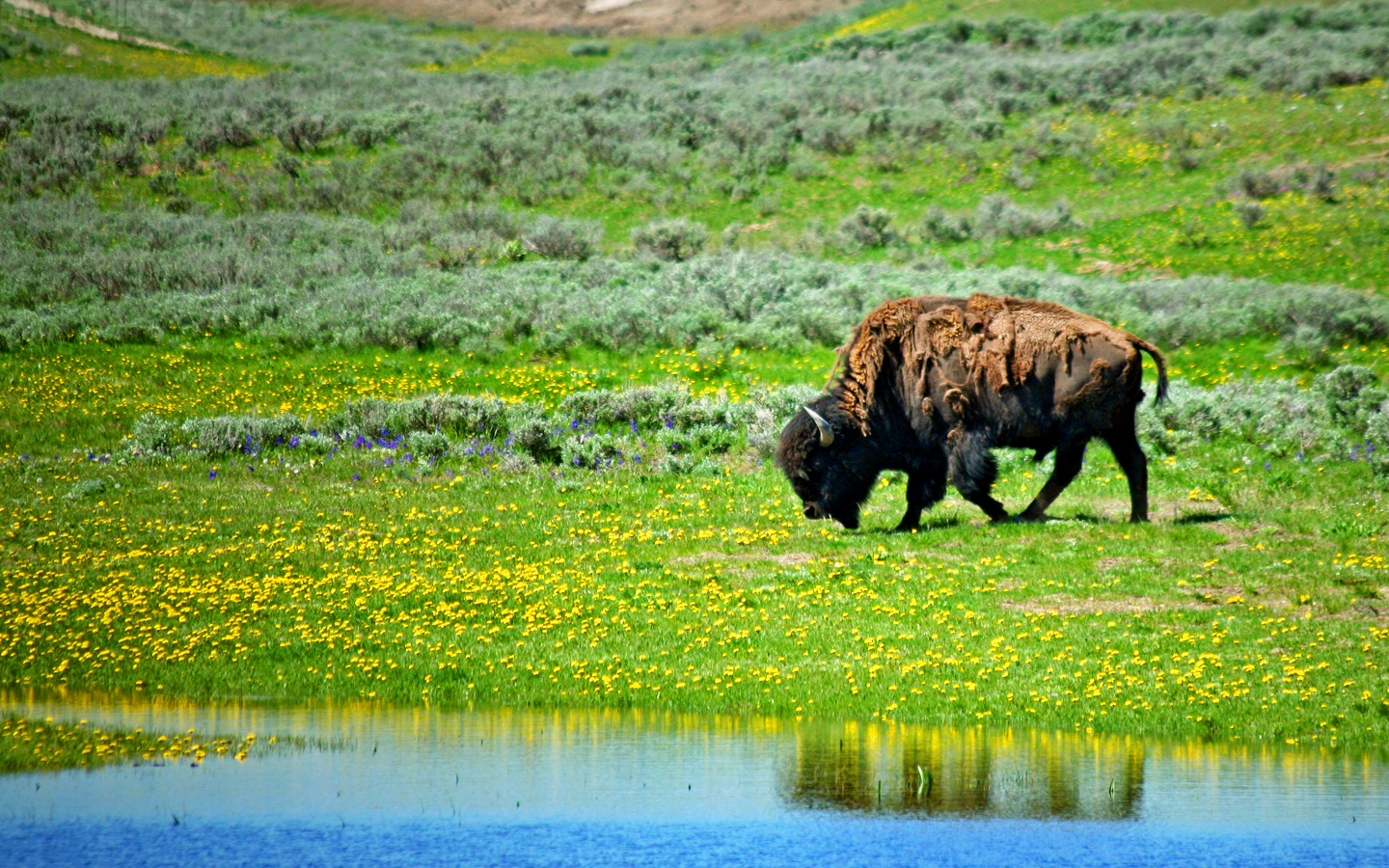
Buffalo have deep cultural significance to members of the Cree Nation. // Matt Hinsta via Flickr
By Bob Covey |November 7, 2024
To members of the Cree Nation, the buffalo has deep and significant spiritual meaning.
“At a core level, the Cree people in Alberta were buffalo
people,” says Jasper’s Matricia Bauer. “Buffalo was their food, their
celebrations, their instruments, their tools, their way of life.”
But even though her own life as a knowledge keeper and storyteller is
centred around connections to Cree culture, until she took up residency
at the Banff Centre recently, Bauer hadn’t spent any time considering what the buffalo represents to her.
“The government has done a pretty good job of colonizing us,”
she said when asked to consider that particular crevice between her
ancestors. “And I guess I’ve done a good job of colonizing myself.”
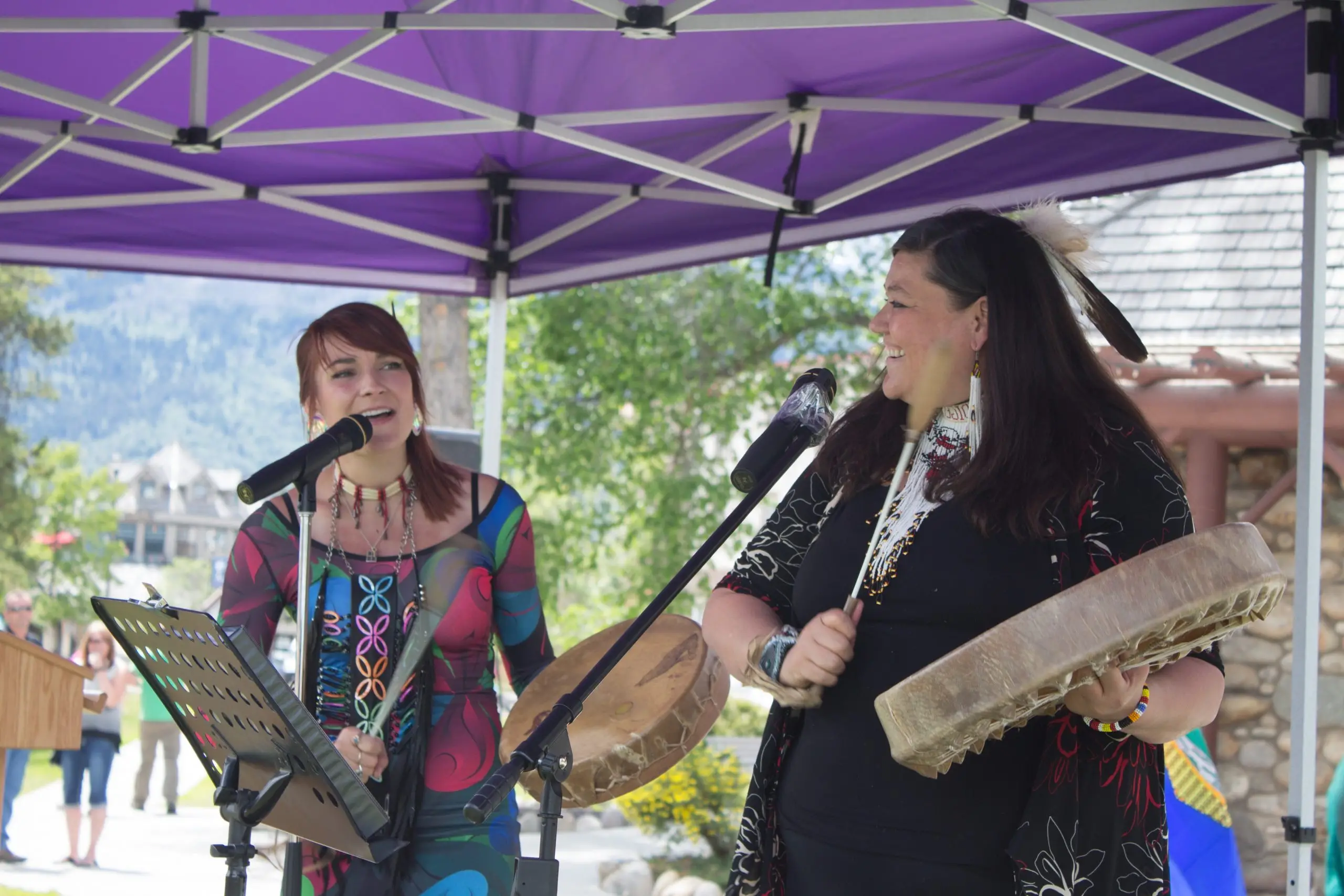
Jasper’s Matricia Bauer (right) with her daughter Mackenzie, performing as Warrior Women in 2016. // M McFarlane
Bauer is a Sixties Scoop
survivor. She was one of thousands of Indigenous children in Canada
removed from their families to be raised by non-Indigenous families. As
an adult, Bauer has reconnected to her heritage, and today as an
Indigenous educator operates Warrior Women, an organization which aims to “Indigenize the world” through workshops, performances and plant walks.
“It was nice to be back in the boots of a student,“ she added.
The conduits which allowed her do that inner reset were twofold:
Firstly, as one of seven other Indigenous artists at the Banff Centre
residency, she was able to tap into a shared community, and exchange
traditional knowledge and skills. And secondly, she tapped into the
power of paskwâwi-mostos: the buffalo.
“I thought [the residency] would be more about traditional
practices and processes, but it was more about the relationship with the
buffalo,” she said.
Despite
its importance to her ancestors, until her residency at the Banff
Centre, the buffalo was not part of Cree educator Matricia Bauer’s
connection to her culture. // Matt Hinsta via Flickr
Navigating that relationship was neither easy nor expected. When she
first saw the buffalo hide that she and the group were slated to tan,
Bauer was instantly overwhelmed.
“When they rolled it out I just thought ‘oh no, that’s so big,’” she laughed.
Bauer had experience tanning hides, but she still couldn’t fathom the
amount of physical work which would be required to scrape the buffalo
hide clean of its membranes and hair. For hours each day, Bauer scraped.
By the end of each session, she could barely lift her arms. Her back
ached and her hands were cramped. And the pitiful progress made from her
monumental efforts simply ticked her off.
“I would get mad,” she said. “You would stand there scraping
for four to eight straight hours. It breaks you down mentally,
physically, emotionally.”
Hitting a low point, suddenly, one day, Bauer noticed the Banff
Centre was abuzz with activity. The reason for the heightened energy was
a visit from a group of Indigenous seniors—elders from the Bow Valley
community of Mini Thni were being toured around campus. When they saw
the hide, Bauer said, the elders were immediately drawn to it. By turn,
the aunties and uncles picked up unclaimed scraping tools, helping to
dress the hide. It was a revelatory moment for Bauer.
“I realized it’s not something meant to be done alone,” Bauer said. “It’s meant to be done together, with community.”
The shared experience buoyed Bauer and her fellow artists in
residency. They soon completed the scraping and tanning process, and
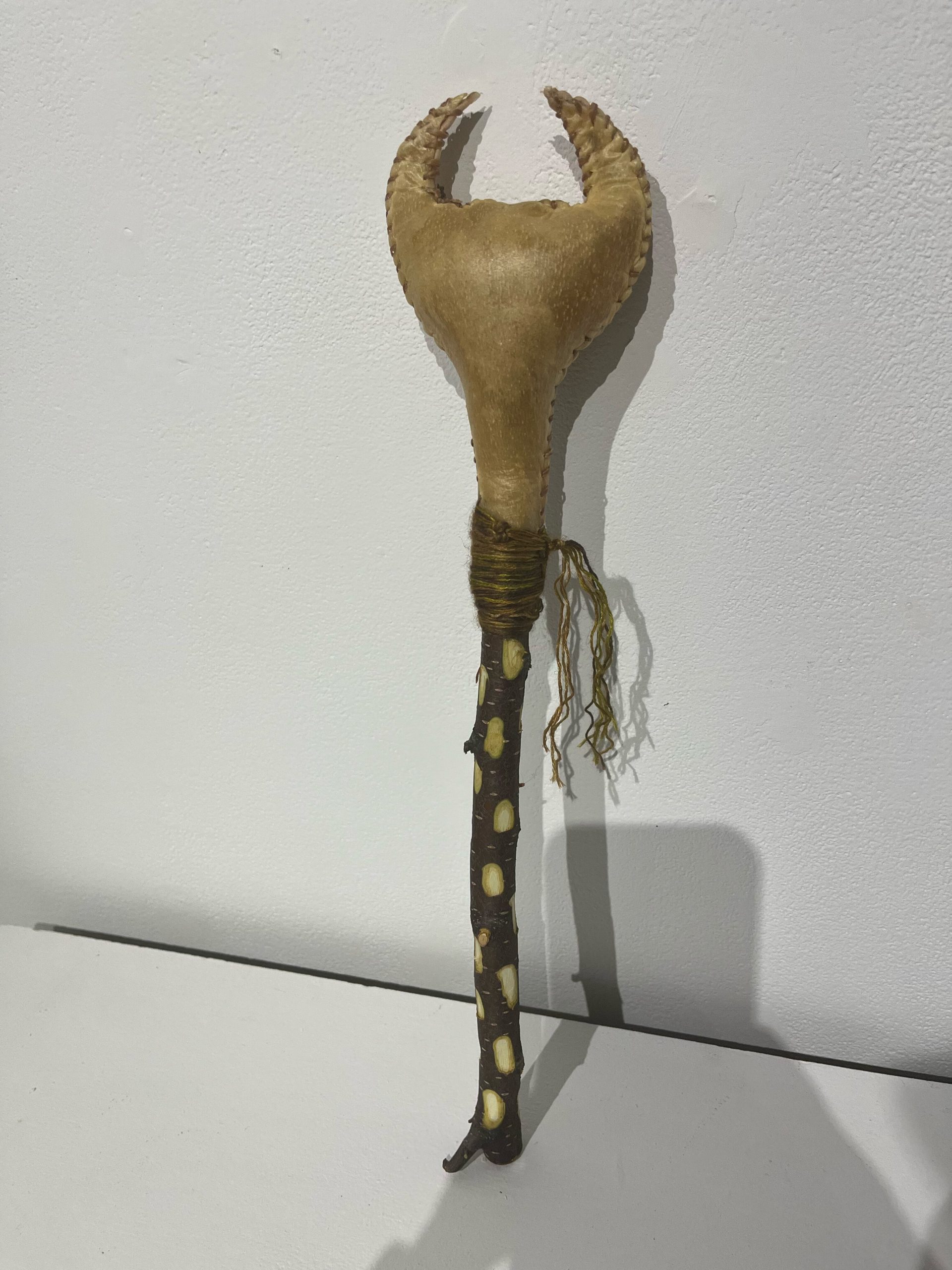
from the hide created drums, rattles, parfleches and other tools.
Buffalo hide rattle made by Bauer during her residency at the Banff Centre. // Supplied
A secondary exchange of knowledge came when the artists—whose
collective mosaic included representation from the Māori people, the Ute
from Colorado, the Lakota, and several other First Nations across
Canada—shared their traditional forms.
Bauer demonstrated fish scale jewelry-making and caribou hair
tufting. In exchange, she was taught horse hair wrapping, porcupine
quilling, moose hair embroidery, and making leather from fish skin.
“I learned how to carve tools out of moose bone,” she said. “That blew my mind.”
Ten weeks after wildfire destroyed parts of her community, Bauer’s
mind welcomed the outside stimulation. Because the fire torched any fall
performances and workshops she had booked, a freed-up schedule allowed
her to go into the residency with necessary focus. But like many of her
friends and neighbours, she was also feeling very vulnerable.
“I went into it like a lot of Jasperites after the fire—fractured, confused and beat down,” she said.
The physically-demanding hide tanning process broke her body down
even further, but by the end of the three weeks, she had not only had
stronger arms and shoulders, but a clearer head and a fuller heart.
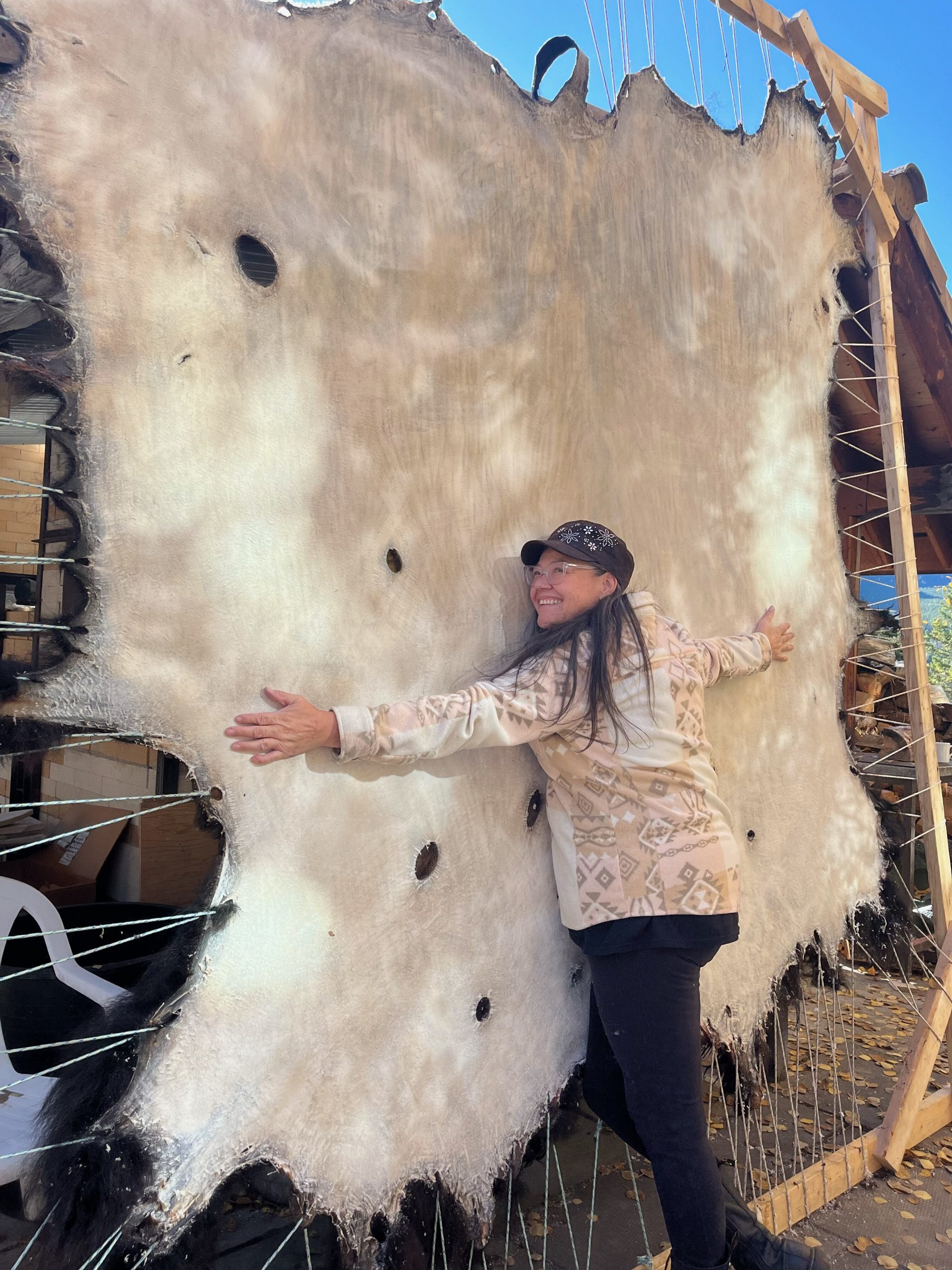
Perspective
is everything: Bauer with the enormous buffalo hide she and her fellow
artists in residence at the Banff Centre scraped and tanned. // Supplied
The biggest lesson she learned? To be open to the teaching in the first place.
“It reminded me that as much as I share my culture, I still
have a massive amount to learn, and other people have a lot of gifts to
share,” she said.
Foster care has become a crisis on Manitoba's aboriginal
reserves, where many children removed from their homes are also removed
from their communities, winding up in urban centres like Winnipeg. But
the northern Misipawistik Cree Nation is trying a radical new solution —
let the kids stay and make the parents leave.
"Ours is one
approach and not a complete one, but a step towards reducing the number
of children taken into custody," Misipawistik councillor Heidi Cook
tells the Huffington Post Canada, noting the additional need for housing
and poverty reduction programs. "Our policy is not to place blame on
the parents because we recognize that our community and our people are
still dealing with the intergenerational impacts of colonization,
residential schools, and hydro development. We want to give parents the
opportunity to seek help and to make families stronger in the end."
Derek Nepinak, grand chief of the Assembly of Manitoba Chiefs, has compared the current system to residential schools,
telling CBC that "[Child and Family Services (CFS)] carries on the
tradition of taking children away from their network, from their parents
and their community network, and imposing a different way of thinking."
According to the Globe and Mail,
"nearly 90 per cent of the more than 10,000 children in care are
native." However, due to living conditions on many reserves, it's a
challenge to license foster homes while meeting provincial standards.
"One
thing that makes foster care difficult is the housing requirements,
i.e. separate bedrooms, when adequate housing is a crisis on nearly
every reserve in the country," Cook says. "Census data will show you how
many of our houses have multiple families or generations living
together, are overcrowded or in need of major repairs."
The result
is vulnerable children being shipped to the city and placed with foster
families, group homes or even hotels. This became an even greater
concern last week when a 15-year-old aboriginal girl was violently
sexually assaulted in downtown Winnipeg. Both the girl and her alleged teenage attacker were staying at the Best Western Charter House under CFS care. It was the same hotel where Sagkeeng teen Tina Fontaine had been placed by CFS before she was found murdered last August.
The Manitoba government pledged to remove all foster children from hotels
within two months, while Nepinak announced the Assembly of Manitoba
Chiefs is hiring a family and child advocate and demanded "fundamental
changes to the system."
"Certainly the sad incident that happened
in Winnipeg with the kids being put up in the hotel proves that
alternative approaches are needed and it feels timely for us to try
this," Cook says.
In March 2015, the Misipawistik chief and council
passed a resolution declaring that parents from the 1,100-person
northern reserve will be asked to leave when child services become
involved due to reports of abuse or neglect. A care worker will be sent
to the homes to look after the children.
"The disruption and
trauma felt by children who may be removed from their homes, separated
from their siblings or removed from the community altogether is not an
acceptable practice, when the child has done nothing wrong," the
resolution read in endorsing "a policy of parent removal in family
interventions" effective immediately. The parents or guardians will only
be allowed to return once all child-welfare conditions have been met.
"The
reasoning is to prevent undue disruption in children's lives but also
to focus on prevention," Cook explains. "Our CFS workers can place
support workers in the home to temporarily alleviate a situation rather
than being forced to apprehend. It makes it easier for families to be
reunited quicker. Parents can seek help or otherwise do what they have
to without worrying about where their kids are or what's happening with
their home. That is the intention anyway."
Cindy Blackstock, of First Nations Child and Family Caring Society of Canada, told APTN
she agrees this could be a helpful change. "Child removal at the best
of times is really disruptive, so the more you can keep things normal
for a child in their own family home with their brothers and sisters,
access to extended family members, the same school and having even
access to your pets, the better it is for the child."
Removing
problem parents from their own home is possible because the Indian Act
legislates that reserve land is held collectively, giving Misipawistik
council "the authority to determine the occupancy of [band-owned]
homes." The council will not be responsible for finding accommodations
for the removed parents or guardians, but are working on support systems
for them which will be key to making this new approach work.
But Misipawistik isn't the first band to try this. The Winnipeg Free Press reported
that another northern Manitoba First Nation, the Nisichawaysihk near
Nelson House, instituted this policy back in 2002, reducing child
apprehensions. Their success prompted the CFS to bring the idea forward
to the Misipawistik council, and who knows where it might go next?
"I
posted our resolution on Facebook to share with our community and it
kind of took off, lots of people made positive comments and suggested
that it could be done in other places so I'm sure there will be more who
will try it," Cook says.
[Solutions like this will change the world...Children must be our top priority always... Trace]