Q&A: One year after Kamloops, push for answers continues
Al Jazeera speaks to Stephanie Scott about search for ‘full truth’ of unmarked graves at Canada’s residential schools.
Flowers
and tributes are left at the Kamloops Indian Residential School, where
the remains of 215 Indigenous children were discovered in May of last
year [File: Nicholas Rausch/AFP]
Warning:
The story below contains details of residential schools that may be
upsetting. Canada’s Indian Residential School Survivors and Family
Crisis Line is available 24 hours a day at 1-866-925-4419.
Canada – A year ago this week, Tk’emlups te Secwepemc First Nation announced that “an unthinkable loss that was spoken about but never documented” had been confirmed.
Students and staff from a Mi'kmaw high school in Nova Scotia are honouring the stories of missing and murdered Indigenous people in Canada with a song and music video. https://t.co/o8hDChP90Apic.twitter.com/PyyPLpJf70
WARNING: This story has disturbing details about residential and boarding schools. If you are feeling triggered, here is a resource list for trauma responses
from the National Native American Boarding School Healing Coalition in
the US. The National Indian Residential School Crisis Hotline in Canada
can be reached at 1-866-925-4419. If you're in Treaty 4 territory, call
306-522-7494.
Another
First Nation is reporting the discovery of unmarked graves near the
site of a former residential school, St. Eugene’s Mission School.
It
follows two other reports of similar massive findings at two other such
church-run schools, one of more than 600 unmarked graves at the former
Marieval Indian Residential School and another of 215 bodies at the
former Kamloops Indian Residential School.
The community of
ʔaq’am, also known as St. Mary’s band, situated within the traditional
territory of the Ktunaxa Nation near Cranbrook, British Columbia,
located 182 unmarked graves in 2020 using ground penetrating radar. It
is close to the former St. Eugene’s Mission School, which was operated
by the Catholic Church from 1912 until the early 1970s.
But it only recently notified the nearby Lower Kootenay First Nation about the find.
Cranbrook is 524 miles east of Vancouver
“In
the ground search conducted by the community of ʔaq’am, the findings
revealed 182 human remains in unmarked graves,” said a news release from
Lower Kootenay shared with APTN News Wednesday. Some unmarked graves were about 3 feet deep, it said.
“It
is believed that the remains of these 182 souls are from the member
Bands of the Ktunaxa nation, neighbouring First Nations communities,
& the community of aqam.”
Chief Jason Louie of the Lower
Kootenay Band, which is also a member of the Ktunaxa Nation, called the
discovery “deeply personal” since he had relatives attend the school.
“Let’s call this for what it is,” Louie told CBC radio in an interview. “It’s a mass murder of Indigenous people."
“The
Nazis were held accountable for their war crimes. I see no difference
in locating the priests and nuns and the brothers who are responsible
for this mass murder to be held accountable for their part in this
attempt of genocide of an Indigenous people.” KEEP READING
Brace yourself, says Splatsin and Secwépemc Tribal Chief Wayne Christian.
In the wake of the grisly discoveries of 215-plus unmarked graves in
Kamloops and another 751 in Saskatchewan, the ’60s Scoop survivor said
it’s important for the public — both Indigenous and non-Indigenous — to
be prepared for more discoveries.
“It’s such a shock and I feel so horrific for all of us,” Christian said.
“For those of you who attended the residential schools or were
connected to it in some way, I want to ask you to think about the
support you may need,” he said. “If you didn’t attend a residential
school yourself, I want you to reach out to people in your community who
did attend or might be impacted by it, and check-in with them.”
Christian said people can support each other by learning Canada’s history and listening to survivors’ stories.
“A lot of people still won’t talk about the horrors that took place
in these so-called schools,” he said. “A lot of people will not believe
that there are unmarked burials at these sites. There are many, many
stories that our people heard and knew – these recent discoveries
confirm what our oral histories taught us.”
REGINA, Saskatchewan (AP) — A First Nation in southern Saskatchewan said Wednesday that it has discovered hundreds of unmarked graves at the site of another former residential school for Indigenous children. A statement from the Cowessess First Nation and the Federation of Sovereign Indigenous First Nations, which represents Saskatchewan's First Nations, said that "the number of unmarked graves will be the most significantly substantial to date in Canada.
OPINION: White violence not a historical truth: it’s a reality with a history
Although
slavery was abolished and much progress has been made for the First
Nations and all minority groups in these countries, the ideology of
white supremacy and the danger of white violence are still very much
with us today
News Service |
Just
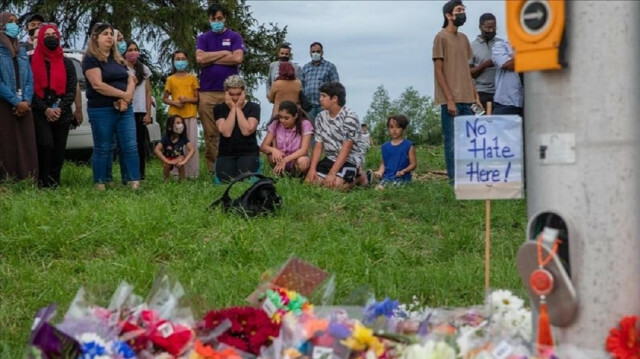
a few days ago, a white man killed a Muslim family in Ontario Canada.
Though widely reported as a singular incident not connected to any other
recent or historical acts of violence, it was in fact the latest in a
long series of ideologically-driven white supremacist violence. The most
immediate connection that springs to mind, also from Canada, is the
horrifying discovery of an unmarked mass grave in which are buried at
least 215 indigenous children who had perished at the hands of white
supremacists.
The remains of these 215 children were discovered at
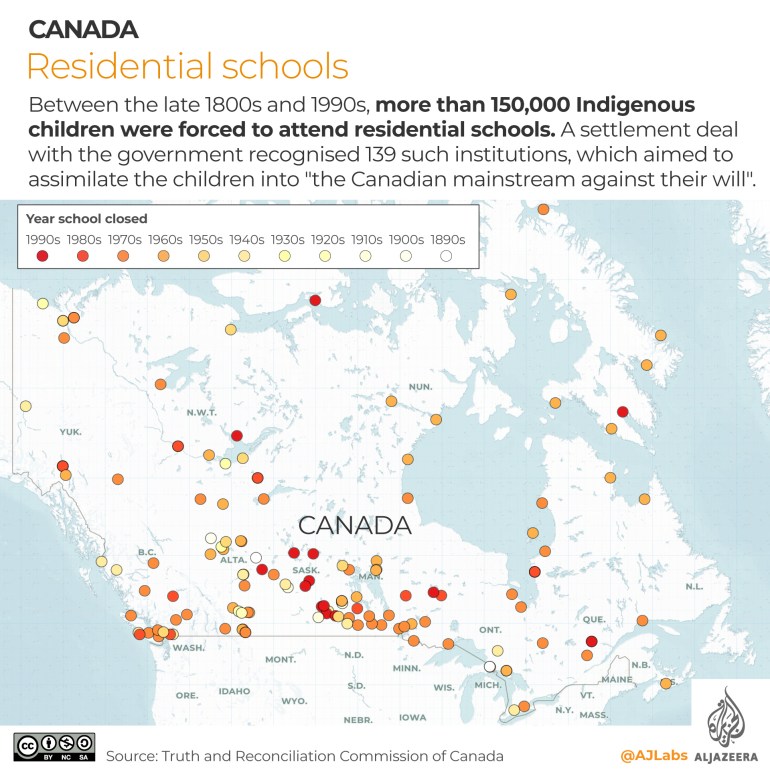
a site that used to house Canada’s biggest residential school for
indigenous children. It was run by the Catholic Church from the 1890s
through the 1970s, until the federal government shut it down. These
latest reports on the mass graves are part of a twenty-year effort by
Tk’emlups te Secwepemc First Nations people in order to find the missing
children in many of the unmarked mass graves at former school sites
such as Kamloops. Between 1883 and 1996, around 150,000 children passed
through the Canadian version of this system, which was eventually
abolished. Thousands of unaccounted-for children have yet to be found.
They were never seen again by their families. When pressed for answers,
the schools would tell families that their children had died, run away
or simply disappeared, and they would generally refuse to return the
body in case of death.
The brand of hatred that has motivated
white people to assault Muslims in New Zealand, the United Kingdom, the
United States, and Europe is intimately connected to the ideology that
created the “Indian boarding school system” in the US and Canada. Indian
boarding schools were part of America’s and Canada’s so-called
“civilizing mission”. They were the quintessential example of how white
supremacy had been at the heart of both of these countries since the
earliest days of their founding, rather than being a marginal, radical,
and fringe ideology. European settlers wanted to civilize these
“savages”, seeing their own Anglo-Saxon Christian culture as vastly
superior to the many different tribal languages and cultural practices
that the indigenous peoples had.
Richard Henry Pratt, an American
general, had captured a group of indigenous men as prisoners of war. He
taught them how to speak, read and write English, dressed them in
military uniforms and trained them to do labor. He photographed the
results of this assimilation experiment and presented them to the
federal government. This is how he was able to secure funding for the
first Indian American boarding school, set up to “kill the Indian and
save the man,” as Pratt called it. The schools quickly spread across the
US and other colonial countries like Australia, New Zealand, and, of
course, Canada.
With the aid of Christian missionaries, the
Canadian and American governments forcibly removed thousands of
indigenous children from their families and made them attend these
schools, where speaking indigenous languages and their cultural
traditions and spiritual practices were prohibited. Children who did not
comply with the rules were subjected to physical, emotional and sexual
abuse, as well as violence. According to some eyewitness accounts,
priests, for example, would rape students, and when they got pregnant
and gave birth, the babies would be killed, in some cases brutally by
being burned in furnaces.
Indigenous children were forced to cut
their braids, a very important part of their culture. Their names were
changed. As punishment for speaking in their native language, some were
forced to wash their mouths with soap, as if to imply that their mother
tongues were dirty.
In his account of the incidents, a survivor of
one of these schools said [1] that braids were a token of mourning in
his tribal culture, and they were cut only when a relative died; the
closer the relative, the closer the cut to the head. When the
missionaries cut almost all of his hair, he was left wondering whether
his mother had died.
Boarding schools proved to be a very
effective strategy in harming native family networks, culture, and way
of life, by targeting the most valuable members of these communities:
the children. Many children forgot their mother tongues almost
completely, so they were unable to communicate with their families.
While assimilating children, governments continued to steal land from
the First Nations. If a native family refused to send their children to
these schools, they were threatened with imprisonment or the loss of
much-needed food rations. Some families were seen camping outside these
schools just to be closer to their children. Many children were reported
trying to run away, but even if they succeeded, their families and
tribes were located too far away from these schools, making it
practically impossible for them to reunite.
The National Truth and
Reconciliation Commission, set up by the Canadian government, heard
thousands of witness testimonies over the course of six years. The
commission released a report in 2015 with the conclusion that the Indian
residential school system was a form of cultural genocide. They also
requested the Pope to issue a formal apology, which he did not do.
The
indigenous activism that peaked in the 1960s and 1970s, along with the
civil rights movement in the US, campaigned for the closure of these
schools in the US. During the same time period, most of the Canadian
boarding schools also closed.
As the boarding school era came to
an end, white supremacy morphed into a new systematic form of
oppression: the Indian adoption project [2], a government program that
promoted the adoption of native American children by white families.
This was a cheaper way to assimilate indigenous people than running
boarding schools. It was claimed that these indigenous children, dubbed
“the forgotten children”, were not wanted by their own families. The
truth, however, was far from that. These children were ripped apart from
their families based on shady reports prepared by the social services
about child neglect, unfit parenting, or even a household with too many
people. The last one was particularly strange because extended family
was a big part of many indigenous cultures. As a result, hundreds of
children were placed with white families, and some of them later in life
reported that they had been physically, verbally and sexually abused by
these adoptive and foster families. After many years of activism, the
Indian Child Welfare Act was passed in the US in 1977, finally
preventing the removal of Indian children from their families unless
absolutely necessary, and when such a case arises, the child is placed
with their extended family if possible or another indigenous family. To
this day, some conservative white families oppose this act.
When
the mass grave was discovered earlier this month, Canadian Prime
Minister Justin Trudeau tweeted that it was a chapter in a dark history
of his country. One of the biggest lies about violence against
indigenous people in Canada and the US is that it is a historical truth,
while, in actuality, it is a present reality with a history. These
kinds of statements just serve to reinforce the false notion that white
violence is a thing of the past, if at all acknowledged.
White
supremacy and white violence are neither from the past, nor are they
marginal. The US and Canada were both built by slave labor on stolen
indigenous lands. Although slavery was abolished and much progress has
been made for the First Nations and all minority groups in these
countries, the ideology of white supremacy and the danger of white
violence are still very much with us today, as evidenced by recent
events such as the murder of a Muslim family and the discovery of a mass
grave.
By Didem Kaya-Bayram
* The author received her BA in
American Studies from Yale University and her MA in Science Technology
Society Studies from Istanbul Technical University. She has spent the
last five years with TRT as a digital content and strategy specialist.
* Opinions expressed in this article are the author’s own and do not necessarily reflect the editorial policy of Anadolu Agency.
Stephen Bronstein was suspended for one month and fined $4,000 after admitting to mishandling the cases of Sixties Scoop survivors. A
First Nation in B.C.’s Cariboo region is condemning the B.C. Law
Society’s handling of a Vancouver lawyer’s mishandling of residential
school survivor cases.
Bronstein was fined $4,000 after admitting
to mishandling the cases of residential school survivors. He was also
barred from acting as counsel for any ’60s Scoop claimants in the
future.
The
’60s Scoop was a large-scale program that allowed child welfare
organizations to remove Indigenous children from their families and
place them in the foster care system and allow them to be adopted by
white families.
The
Tŝilhqot’in Nation on Wednesday condemned the law society for not
adequately punishing Bronstein, noting that many of his clients were
from the First Nation.
The bill codifies provisions from the federal Indian Child Welfare Act in state law and will ensure that Oregon's practices better serve Indian children, ...
Phyllis Webstad was 6 years old when the new orange shirt she chose for
her 1st day of school was stripped off her back. It was the early 70s
& she was the 3rd generation to attend St. Joseph’s Residential
School in Williams Lake, BC.
While the suggestion is daunting, the 53-year-old member of the
Stswecem’c Xgat’tem First Nation said she cannot help but think about a
picture of a bridge hanging on her living room wall that her Aunt Agnes
Jack purchased at a yard sale.
“The bridge is woven together with rope and tree roots,” she said.
“It’s not pretty, it’s not perfect, but it’s enough that you could walk
across it.”
Webstad said she keeps thinking about that.
“That’s been my life it seems because I grew up on the reserve, I’m
half Secwepemc, I’m half white and I have lighter skin so I’ve been more
readily accepted in the non-Indigenous community and I’ve been able to
be a bridge builder or gap person.”
She described the time period since the announcement confirming the
remains of 215 children buried at the former Kamloops Indian Residential
School as a whirlwind.
Webstad’s mom Rose Wilson gave birth to her in July 1967 at her grandmother Lena Jack’s home in Dog Creek. She found her birth father in Kamloops a few years ago. “I have eight other siblings, one passed away, so there are seven. They all live in Kamloops.”