LEARN MORE: https://www.firstcontactcanada.ca/
The full series is available to stream on APTN’s website here: http://aptn.ca/firstcontact/
SEASON 2:
LEARN MORE: https://www.firstcontactcanada.ca/
The full series is available to stream on APTN’s website here: http://aptn.ca/firstcontact/
SEASON 2:
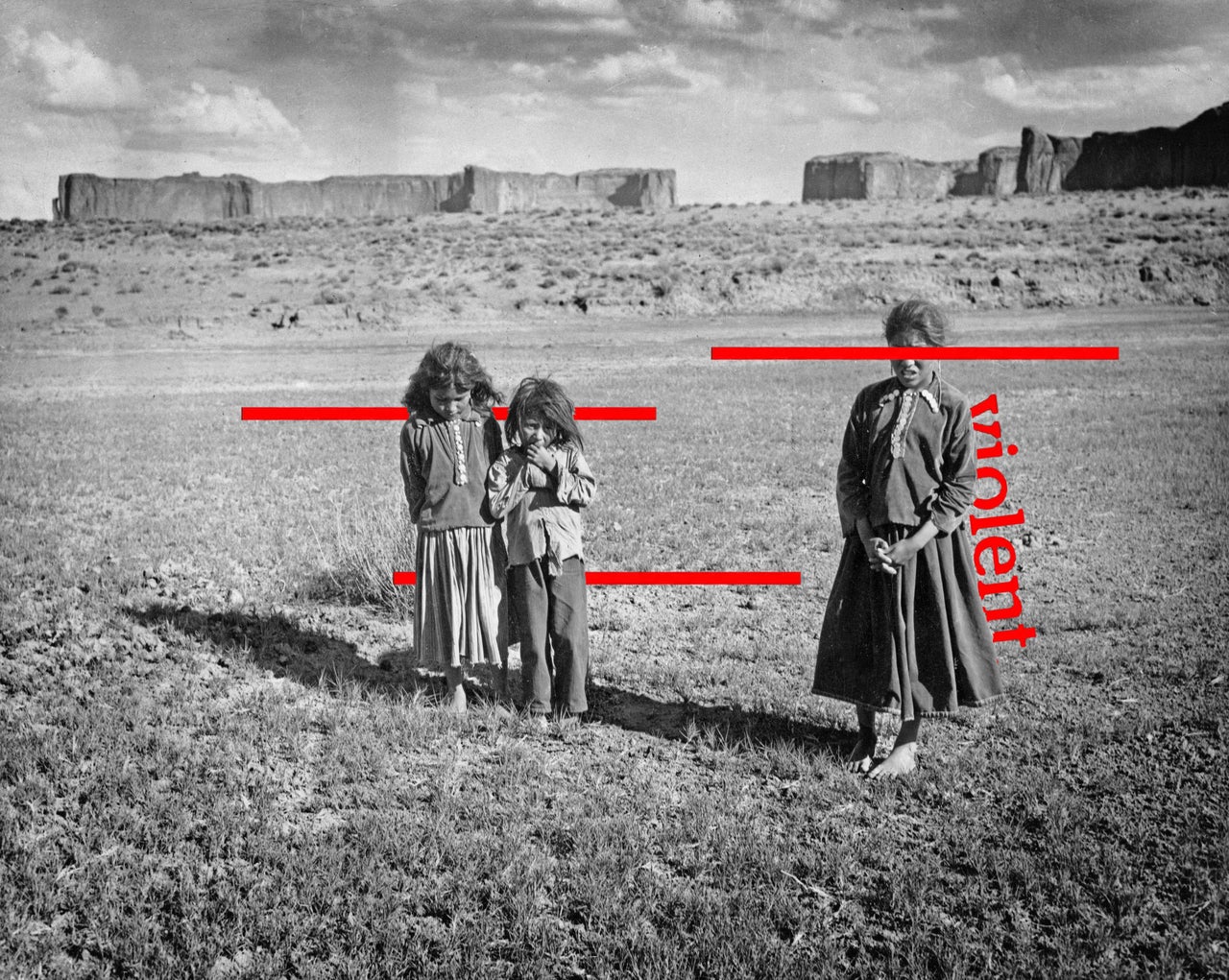
In order to keep us from building power to be free and liberated, the strategy is simple: Keep us poor, keep us ignorant, keep us divided and keep us sick.
This game plan likely sounds familiar to many of you, because it is the living legacy of the white supremacy and oppression baked into the social, economic and political systems of the United States. The same strategy used on Native people has been used on Black, brown, Asian and Pacific Islander communities, immigrants, refugees and undocumented folks, and other intersectional identities who, like us, remain targets.
There have been many state-sanctioned forms of violence against Native people. The list includes educational institutions that killed a still-unknown number of our children, soldiers who targeted and slaughtered our ancestors at religious ceremonies, and, more recently, state agencies and nonprofits that practiced enforced sterilization. These have all been part of policy murder against Native people, elements in a centuries-old, calculated and proven political strategy.
In the highest court of the land, the Indian Child Welfare Act is expected to be debated later this year in Brackeen v. Haaland, in what many in the field of federal Indian law are describing as the largest threat to Indian Country and sovereignty in centuries.
When it was passed in 1978, ICWA was landmark legislation, setting unprecedented protections to address the assimilationist policies that led to state child welfare and private adoption agencies systematically removing almost a third of all American Indian and Alaska Native children from their homes. (Yes, almost a third; you read that correctly.) Eighty-five percent of those children were placed in non-Indian homes. ICWA’s constitutionality is now being challenged in a lawsuit brought by Texas, Indiana, Louisiana and various individual plaintiffs. It is the first time a state has sued the federal government over ICWA’s constitutionality.
If ICWA is overturned, a “slew of laws that rest on a centuries-long precedent of tribal sovereignty could be in jeopardy,” as a recent Politico piece put it. Those who support the attack on ICWA would love for all of us to believe that the debate in the Supreme Court over Indian identity is about the protection of Native children. They’d like us to believe that they have the best interests of Indian children at heart. Just like boarding schools were a tactic to demolish the foundation of tribes, assimilate us and destroy any obligation the federal government had to us, the push to overturn ICWA has the same aim ― except this time, the mission is much more insidious.
Scholars and journalists investigating the issues have made it clear that this is part of a plan to build and reclaim conservative power across the United States. All of our futures are at stake, because at the heart of this case are Gibson Dunn, the Goldwater Institute and the Bradley Foundation ― the same set of political players and funders that have brought forward policies that attack our democracy, LGBTQ rights, and the teaching of Juneteenth, Black history and critical race theory, and are among those who defended the Keystone XL pipeline.

Letter to the Editor
Following the overturning of Roe v. Wade, the U.S. Supreme Court has decided to further strip us of our rights — this absolutely must stop.
One of the acts on their chopping block is the Indian Child Welfare Act (1978). This act protects indigenous children from being taken away, such as they were during the Sixties Scoop, and helps maintain tribal sovereignty (which is the law of the land and codified in the Constitution).
According to the Genocide Convention, the forced removal of children from one group to another group is an act of genocide. The Sixties Scoop was genocide.
To not protect the ICWA would be a continuation of the genocide it was (at least) intended to stop.
Maggie Dimock, North Mankato
As a Diné child, I relished the time spent traveling to lectures that my dad delivered to museums and universities about his work as a photographer. The old Kodak projector slides dropped into focus with the rhythm of his lessons: Navajo people are the land, Navajo culture is Navajo survival. Native culture is Native survival.
His talks would share what it meant to be Navajo. As he shared about his work he would illustrate the legacy of Federal Indian Policy and its treatment of Native people. I still couldn’t imagine at that age what the U.S. government boarding schools had done to attack the very essence of my identity and pride in my culture I held so dear. Each time he delivered a talk, he asked a simple question that rings in my head to this day: “how many schools do you know that have graveyards next to them?”
That question rings in my head again today, and the past several weeks as multiple First Nations and Indigenous communities have uncovered mass graveyards of people— many of them children— at the sites of former residential schools in Canada.
For most Americans, the idea of a boarding school might invoke images of affluent college prep schools, or repositories for disobedient students. For Indigenous people in the US and Canada, the term brings forth terror. Indigenous boarding schools were a tactical experiment, supported by the US War Department and the Department of Interior. After hundreds of years of attempted ethnic genocide, Indigenous people maintained their hard-fought connection to land and culture. The U.S. government made the strategic decision to wage a new kind of war. Alongside the implementation of the Dawes Act of 1887, the Carlisle Indian Industrial School was a targeted effort to obliterate the ties children had between their culture and land before they were fully developed.
The continuing slogan of the first boarding school, Carlisle Indian School was “kill the Indian, save the man.” A phrase illustrative of the genocidal agenda at the center of these institutions. The school opened in 1879 and swiftly became a “success” by white supremacist standards as the children were taught Euro-centric education and were severely punished for practicing any part of their culture, language or Indigenous way of knowings.
In Canada, from the 1800s to 1996 over 150,000 children were removed from their families and communities. Regardless of which side of the colonial border, Indigenous children were sent away from everything they knew and forced to assimilate into the settler culture. For countless Indigenous children, this meant pervasive abuse, psychological torment, cultural erasure and, as the recent headlines illustrate, murder.
In times like these I think of my dad, the photographer, how
do you photograph the invisible? How do you document the erased? The
Indian Boarding School Project created ghost generations. I
have never wanted to become accepting of this horrific legacy in the
U.S. education system. Children “graduated” from these hellish places to
find a country that regarded them as subhuman, no matter how hard
they’d had the culture beaten out of them. Many tried to return home and
found they could no longer communicate with their own families, or
practice their most sacred rites. Many lay in graveyards next to these
schools, waiting to be found. We see now that the ghosts of this trauma
want to be seen.
So how can we begin to be in right relationship? Here are some first steps:
Push for action to fund the U.S. efforts to investigate what happened to the thousands of children who didn’t return home: a call that Secretary of the Interior Deb Haaland declared. Contact your representatives and let them know you support this call to action.
Incorporate and specifically name the violence of boarding schools into the land acknowledgements you are already giving. Be explicit about the history necessary for truth-telling. (Check out the USDAC Native Land page if you don’t know how to get started)
Research the location of boarding schools near you. Since Carlisle proved to be “successful,” the U.S. and Canadian governments funded the opening of these schools across both countries, many times partnering with churches like the Catholic Church to operate these schools. For these reasons there are hundreds of schools that were opened across the U.S. and Canada.
You can access the curriculum of the National Indian Boarding School Healing Coalition to learn more about the history of the boarding school here.
You can teach the children in your life about the boarding school experience. There is a very poignant, child-appropriate episode of Molly of Denali here from PBS. You can read and access questions to help have a generative conversation with the children in your life here.
You can participate in Orange Shirt Day, a legacy project meant to build awareness of the residential school project and its harmful events.
Indigenous Nations and communities have long carried the living history and trauma of the boarding school era. It is time for allies to help in fighting for justice and truth. Without truth we will never reach the hope of reconciliation.
Yours in solidarity,
Jaclyn Roessel, Director of Decolonized Futures & Radical Dreams
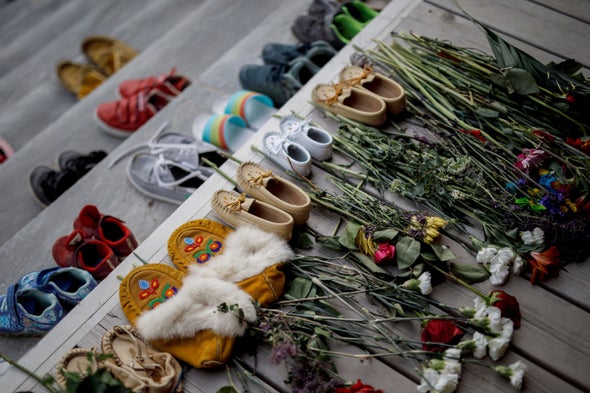
The recent discoveries of more than 1,300 unmarked graves at the sites of four former residential schools in western Canada have shocked and horrified Canadians. Indigenous peoples, whose families and lives have been haunted by the legacy of Canada’s Indian residential school system, have long expected such revelations. But the news has still reopened painful wounds.
Residential school survivor testimony has long been filled with stories of students digging graves for their classmates, of unmarked burials on school grounds, and of children who disappeared in suspicious circumstances. Many of these stories were heard by the Truth and Reconciliation Commission of Canada (TRC), which was formed in 2008 and collected testimonies from over 6,750 survivors. The TRC’s 2015 Final Report made it quite clear that further recoveries of unmarked graves at the schools were inevitable.
The goal of Canada’s Indian residential school system, after all, shared that of its U.S. Indian boarding school counterpart: “Kill the Indian, and save the man.” More than 150,000 children were taken from their homes between 1883 and 1997, often forcibly, and placed in distant boarding schools where the focus was on manual labour, religious instruction and cultural assimilation. The TRC Final Report concluded that the Indian Residential School system was an attempted “cultural genocide,” but the escalating number of recovered unmarked graves points to something even darker. Given that more than 1,300 graves have been identified using ground-penetrating radar at only four of the 139 federally run residential schools, the current official number of 4,120 students known to have died in the schools will end up being only a fraction of the actual total.
Apologists for the residential school system have argued in recent weeks that the children buried at these schools largely died of diseases like tuberculosis (TB) and that the schools did the best they could to provide education and medical care to First Nations, Inuit and Métis children during a time when their communities were being devastated by similar diseases. But even a cursory reading of the historical literature on residential schools shows just how wrong this line of thinking is.
The reality is that the conditions in the schools themselves were the leading contributor to the often-shocking death rates among the students. In 1907, Indian Affairs chief medical officer Peter Bryce reported some truly disturbing findings to his superiors. After having visited 35 government funded schools in western Canada, Bryce reported that 25 percent of all children who had attended these schools had died; at one school, the number was 69 percent. While Bryce reported that “the almost invariable cause of death given is tuberculosis,” he by no means saw this as natural or inevitable. Bryce, instead, placed the blame for these appalling death rates on the schools themselves, which were poorly constructed, lacked proper ventilation and frequently housed sick students in the dormitories alongside their healthy classmates.
Bryce wasn’t alone in sounding the warnings about the schools. Throughout the system’s 100-plus-year history, school inspectors, school principals, medical officials and Indian agents repeatedly issued warnings about the unhealthy conditions in the schools. This archival record details the schools’ inadequate medical facilities, nonexistent isolation rooms and lack of school nurses. It also documents perennially overcrowded and dilapidated buildings with poor ventilation and insufficient heating as well as the woefully inadequate nutrition provided to students.
The issue of food and nutrition, in particular, speaks to the ways in which the poor conditions in the schools undermined student health. As residential school historian J.R. Miller has written, “‘We were always hungry’ could serve as the slogan for any organization of former residential school students.” The TRC collected haunting testimony from survivors, including Andrew Paul, who described his time at the Aklavik Roman Catholic Residential School in the Northwest Territories: “We cried to have something good to eat before we sleep. A lot of the times the food we had was rancid, full of maggots, stink.”
Malnutrition, of course, compromised children’s immune systems, making them more vulnerable to TB and other infectious diseases. In the case of TB, studies have consistently shown that malnutrition of the type commonly described by Paul and other survivors leads to significantly higher mortality among infected individuals. And, as our own research has shown, it would also have led to a much higher lifetime risk of a whole range of chronic conditions including obesity, type 2 diabetes and hypertension.
Government and church authorities were well aware of the extent of hunger and malnutrition in the schools, both before and after Bryce’s damning report. In the 1940s, for instance, a series of school inspections by the federal Nutrition Division found almost universally poor food service in the schools and widespread malnutrition. After attempts to improve the training for school cooks ended in failure, the head of the Nutrition Division, L.B. Pett, chose to use the poor health of the children as an opportunity to study the effectiveness of a variety of experimental nutrition interventions (and noninterventions, as it turned out) into the diets of malnourished children.
The result was a series of nutrition experiments conducted on nearly 1,000 children in six residential schools between 1948 and 1952. These included a double-blind, randomized experiment examining of the effects of nutrition supplements on children showing clinical signs of vitamin C deficiency, with half of the students receiving placebos and the other half receiving vitamin tablets; an examination of the impact of an experimental fortified flour mixture that included ground bonemeal, among other things, at St. Mary’s School in Kenora, Ontario; and an examination of the effects of both inadequate and adequate milk consumption on a population of children with clinical signs of riboflavin deficiency at the Alberni School in British Columbia.
None of these experiments did anything to address the underlying causes of malnutrition at the schools, which was simply that the food being provided to the students was insufficient in both quantity and quality. By Pett’s own calculations, after all, the per capita federal grant provided for food in most schools was often half that required to maintain a balanced diet. And the same was true for nearly every aspect of the residential school system, which, from its inception to the closure of the last school in 1997, was structurally underfunded. In comparison with provincially funded public and boarding schools, residential schools received sparse funding. In Manitoba, Indian Affairs paid $180 per year for students in residential school in 1938, while boarding schools like the Manitoba School for the Deaf and the Manitoba Home for Boys received $642 and $550 per annum, respectively, from the provincial government. American Indian boarding schools, by comparison, were funded at a per capita rate of $350.
A similar picture emerges when we look at the kind of health care provided to residential school students who were diagnosed with TB—a disease with effects that were made worse by the conditions within residential schools. By the 1940s, students with TB were sent from residential schools to racially segregated Indian Hospitals or TB sanatoria—typically without their parents’ knowledge or consent—where they often remained for years at a time. Indian hospitals and sanatoriums, like residential schools, were funded at a much lower rate—often just 50 percent of the per capita cost for non-Indigenous patients in provincial and municipal hospitals and sanatoria—meaning that the health care provided to Indigenous child patients with TB was substandard.
Indigenous patients, some as young as newborns, were also more likely to receive permanently debilitating surgeries and were kept in hospital for much longer than non-Indigenous patients. This was partly a result of the belief that Indigenous patients could not be “trusted” to follow a drug regime at home, and partly because the hospitals were an arm of the federal government’s program of assimilation for Indigenous peoples. The longer patients, and particularly child patients, remained in the Indian hospital, the more likely they were to lose their Indigenous languages and connections to their home communities.
Similar to common practice in residential schools, hospital and sanatoria administrators were lax in informing families about the conditions of a child’s death, where they were buried or, disturbingly, that the child patient had passed away at all. Many families still have no idea what happened to loved ones who left for these institutions and never returned.
It’s clear, then, that the claim of residential school apologists that these children “only” died of TB is, ultimately, an attempt to whitewash what many residential school survivors and a growing number of scholars—ourselves included—have characterized as genocide, full stop. Many children did die of TB as well as epidemics of measles, influenza and other infectious diseases. But it is clear that these chronically and intentionally underfunded institutions actually caused the high death rates among students. What is also indisputable, based on the government’s own records, is that generations of federal government officials and politicians knew that the subpar conditions in the schools were killing children and chose to do nothing.
This is an opinion and analysis article; the views expressed by the author or authors are not necessarily those of Scientific American.
OPINION: White violence not a historical truth: it’s a reality with a history
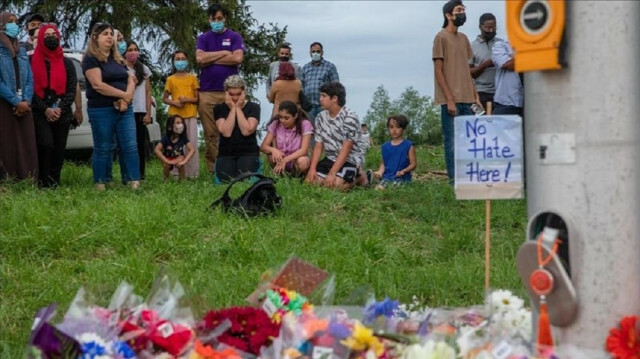
Just a few days ago, a white man killed a Muslim family in Ontario Canada. Though widely reported as a singular incident not connected to any other recent or historical acts of violence, it was in fact the latest in a long series of ideologically-driven white supremacist violence. The most immediate connection that springs to mind, also from Canada, is the horrifying discovery of an unmarked mass grave in which are buried at least 215 indigenous children who had perished at the hands of white supremacists.
The remains of these 215 children were discovered at a site that used to house Canada’s biggest residential school for indigenous children. It was run by the Catholic Church from the 1890s through the 1970s, until the federal government shut it down. These latest reports on the mass graves are part of a twenty-year effort by Tk’emlups te Secwepemc First Nations people in order to find the missing children in many of the unmarked mass graves at former school sites such as Kamloops. Between 1883 and 1996, around 150,000 children passed through the Canadian version of this system, which was eventually abolished. Thousands of unaccounted-for children have yet to be found. They were never seen again by their families. When pressed for answers, the schools would tell families that their children had died, run away or simply disappeared, and they would generally refuse to return the body in case of death.
The brand of hatred that has motivated white people to assault Muslims in New Zealand, the United Kingdom, the United States, and Europe is intimately connected to the ideology that created the “Indian boarding school system” in the US and Canada. Indian boarding schools were part of America’s and Canada’s so-called “civilizing mission”. They were the quintessential example of how white supremacy had been at the heart of both of these countries since the earliest days of their founding, rather than being a marginal, radical, and fringe ideology. European settlers wanted to civilize these “savages”, seeing their own Anglo-Saxon Christian culture as vastly superior to the many different tribal languages and cultural practices that the indigenous peoples had.
Richard Henry Pratt, an American general, had captured a group of indigenous men as prisoners of war. He taught them how to speak, read and write English, dressed them in military uniforms and trained them to do labor. He photographed the results of this assimilation experiment and presented them to the federal government. This is how he was able to secure funding for the first Indian American boarding school, set up to “kill the Indian and save the man,” as Pratt called it. The schools quickly spread across the US and other colonial countries like Australia, New Zealand, and, of course, Canada.
With the aid of Christian missionaries, the Canadian and American governments forcibly removed thousands of indigenous children from their families and made them attend these schools, where speaking indigenous languages and their cultural traditions and spiritual practices were prohibited. Children who did not comply with the rules were subjected to physical, emotional and sexual abuse, as well as violence. According to some eyewitness accounts, priests, for example, would rape students, and when they got pregnant and gave birth, the babies would be killed, in some cases brutally by being burned in furnaces.
Indigenous children were forced to cut their braids, a very important part of their culture. Their names were changed. As punishment for speaking in their native language, some were forced to wash their mouths with soap, as if to imply that their mother tongues were dirty.
In his account of the incidents, a survivor of one of these schools said [1] that braids were a token of mourning in his tribal culture, and they were cut only when a relative died; the closer the relative, the closer the cut to the head. When the missionaries cut almost all of his hair, he was left wondering whether his mother had died.
Boarding schools proved to be a very effective strategy in harming native family networks, culture, and way of life, by targeting the most valuable members of these communities: the children. Many children forgot their mother tongues almost completely, so they were unable to communicate with their families. While assimilating children, governments continued to steal land from the First Nations. If a native family refused to send their children to these schools, they were threatened with imprisonment or the loss of much-needed food rations. Some families were seen camping outside these schools just to be closer to their children. Many children were reported trying to run away, but even if they succeeded, their families and tribes were located too far away from these schools, making it practically impossible for them to reunite.
The National Truth and Reconciliation Commission, set up by the Canadian government, heard thousands of witness testimonies over the course of six years. The commission released a report in 2015 with the conclusion that the Indian residential school system was a form of cultural genocide. They also requested the Pope to issue a formal apology, which he did not do.
The indigenous activism that peaked in the 1960s and 1970s, along with the civil rights movement in the US, campaigned for the closure of these schools in the US. During the same time period, most of the Canadian boarding schools also closed.
As the boarding school era came to an end, white supremacy morphed into a new systematic form of oppression: the Indian adoption project [2], a government program that promoted the adoption of native American children by white families. This was a cheaper way to assimilate indigenous people than running boarding schools. It was claimed that these indigenous children, dubbed “the forgotten children”, were not wanted by their own families. The truth, however, was far from that. These children were ripped apart from their families based on shady reports prepared by the social services about child neglect, unfit parenting, or even a household with too many people. The last one was particularly strange because extended family was a big part of many indigenous cultures. As a result, hundreds of children were placed with white families, and some of them later in life reported that they had been physically, verbally and sexually abused by these adoptive and foster families. After many years of activism, the Indian Child Welfare Act was passed in the US in 1977, finally preventing the removal of Indian children from their families unless absolutely necessary, and when such a case arises, the child is placed with their extended family if possible or another indigenous family. To this day, some conservative white families oppose this act.
When the mass grave was discovered earlier this month, Canadian Prime Minister Justin Trudeau tweeted that it was a chapter in a dark history of his country. One of the biggest lies about violence against indigenous people in Canada and the US is that it is a historical truth, while, in actuality, it is a present reality with a history. These kinds of statements just serve to reinforce the false notion that white violence is a thing of the past, if at all acknowledged.
White supremacy and white violence are neither from the past, nor are they marginal. The US and Canada were both built by slave labor on stolen indigenous lands. Although slavery was abolished and much progress has been made for the First Nations and all minority groups in these countries, the ideology of white supremacy and the danger of white violence are still very much with us today, as evidenced by recent events such as the murder of a Muslim family and the discovery of a mass grave.
By Didem Kaya-Bayram
* The author received her BA in American Studies from Yale University and her MA in Science Technology Society Studies from Istanbul Technical University. She has spent the last five years with TRT as a digital content and strategy specialist.
* Opinions expressed in this article are the author’s own and do not necessarily reflect the editorial policy of Anadolu Agency.


