BLOGGER changed, not allowing us to UPDATE this back-up blog

(UPDATED 726/2025) issues with blogger are preventing this
Showing posts with label Adoptee Rights. Show all posts

Tuesday, November 5, 2024

Adoption Awareness Month

A child who looks a little lonely and sad sits on a couch hugging a stuffed animal and looking off into the distance.
(Photo via fizkes/Shutterstock.com)


OPINION | Why Media Representation Matters for Adoptees

Editor |

by Angela Tucker

Many people can instantly remember a movie they saw as a teenager that became a part of their identity. My husband still talks about The Matrix (1999), and the way it deeply impacted his questions about free will and technology in daily life. Some of my adult friends still dress up like the characters in Clueless (1995) for Halloween; clearly, its exploration of self-perception, fashion, and social status resonated with many people. As a Black adoptee, I remember when I first saw Antwone Fisher (2002) and related to how he grapples with questions about his origins, wondering who he is without knowing where he came from. His search for his biological mother and family symbolizes a desire for self-understanding and a connection to his roots, which was my experience, too. I also saw pieces of that conversation in Losing Isaiah (1995) and Matilda (1996), but they were sensational, rags-to-riches, zero-to-hero stories that fell short of capturing the nuance that most adoptees like me face daily. I ached for shows that reflected the wholeness of the adoptee experience on the silver screen.

The popular representations of adoption do not capture the range and complexity of adoptee experiences with real-life consequences. Adoption comes with trauma; being adopted doubles the odds of having contact with a mental health professional and increases the risk of developing a substance abuse disorder, and adoptees are four times more likely to attempt suicide. Those adopted by parents of a different race, like me, face additional challenges in forming our identity. If we want to provide lasting, happy lives for adoptees, we must transform how we support them throughout every stage of life.

While working as a caseworker at an adoption agency, I didn’t have many pop culture examples to show adoptive parents to provide a blueprint for how to help their adopted child form a healthy identity. The media was full of tidy, feel-good adoption stories that minimized the reality. Every day, I spoke to well-meaning prospective adoptive parents, listening as they struggled to understand practices that could benefit their adoptee, like an open adoption that would allow their child to maintain a relationship with their biological family. These ideas felt foreign and frightening to many, leading to questions like, “Will the child become confused about who their ‘real’ parents are?”

At the same time, I was going through my own search for my biological parents.

I had a positive upbringing in my adoptive family, but I also felt a hole in my heart that was left from growing up not knowing my birth parents. One evening, after listening to my struggles to communicate with the parents I work with, my husband said, “Why don’t we use the home video footage we have of you meeting your birth mom for the first time and turn it into something you can show your clients?” Our reunion had been captured on camera, though at the time it was just for us, just for the memory.

What began as a casual passion project with our home footage quickly evolved. Film had just been a hobby for my husband, but soon, he started renting professional cameras and lights. He conducted interviews with my parents, my siblings, and others involved in my life and my journey. Friends of ours even offered to compose a soundtrack.

The result was Closure (2013), a documentary that transformed from private family footage into a film that found its way to Netflix.  While on the screening tour, I had countless conversations with adoptees who would share their stories with me. Suddenly, they had a real, lived experience that could serve as a blueprint for grappling with the complexities of adoption openly with their parents.  Adoptees who were of a different race than their adoptive parents shared that they didn’t get the racial self-identity support they needed and felt alone. 

At the same time, my parents, who often traveled with me to screenings, were having a different kind of encounter. Adoptive parents would praise them for allowing me to meet my birth mother. They believed that because their child didn’t bring up their adoption, it wasn’t weighing on them.

When my parents and I compared notes after these events, we realized something important. Many adoptees didn’t have safe spaces to share their feelings about being adopted — not because their adoptive parents were unkind or indifferent, but because adoption itself wasn’t a normalized topic in their homes. It simply wasn’t discussed. Adoption became a quiet shadow — present but unspoken. The adoptees I spoke to longed for connection, for answers to questions that had been with them their whole lives, but did not want to fracture their relationship with their parents. They needed more ways to share their experiences without fear and to have pathways to deeper understanding and healing along the journey to find their identity and a sense of belonging.

Even though many adoption agencies understand adoption is a lifelong journey, very few can offer the kind of lifelong support adoptees need.

Action and Evolution 

I knew I had to create a space where adoptees could say the things aloud that otherwise were filed away in the “not now/not safe” folder in their brain. These conversations transformed into mentoring hundreds of adoptees via Zoom. The strength, comfort, and mental well-being that came from these conversations inspired me to found the Adoptee Mentoring Society to reach more adoptees. We provide virtual one-on-one and group mentorship facilitated by trained adoptee mentors. Our model serves as an example of the power of offering post-adoption services by adoptees for adoptees. Adoptees need a community and opportunities for individual growth. Spending time with others who just get it by having mentors or talking to other adoptees whose experiences reflect our lives fosters the sense of well-being that is the foundation for a happy, successful life.

We need to make room for these raw, unfiltered truths in public discourse. Only then can we foster real understanding and change for adoptees. I loved working with the writers of NBC’s show This Is Us to ensure Randall’s character was as true to the transracial adoptee experience as possible. Adoptee and screenwriter ​​Marissa Jo Cerar infuses her experience as an adoptee into nearly everything she touches, including the episode she wrote for The Handmaid’s Tale and her television adaptation of Charmaine Wilkerson’s novel Black Cake.

This National Adoption Month, support the healing work that we’re doing at the Adoptee Mentoring Society by centering adoptees and ensuring our voices are included in mainstream media and public discourse. This will help support the basic needs and joys that lead to a healthy identity formation for adoptees.

SOURCE: https://southseattleemerald.org/voices/2024/11/01/opinion-why-media-representation-matters-for-adoptees 


READ MY EARLIER POST: (2010)

https://blog.americanindianadoptees.com/2010/03/my-adoption-archives-and-144-billion-in.html


WHAT WE HAVE KNOWN A LONG TIME: (2013)

https://blog.americanindianadoptees.com/2013/01/what-weve-known-long-time.html 


2024:

A Proclamation on National Adoption Month - The White House 

Thursday, October 13, 2022

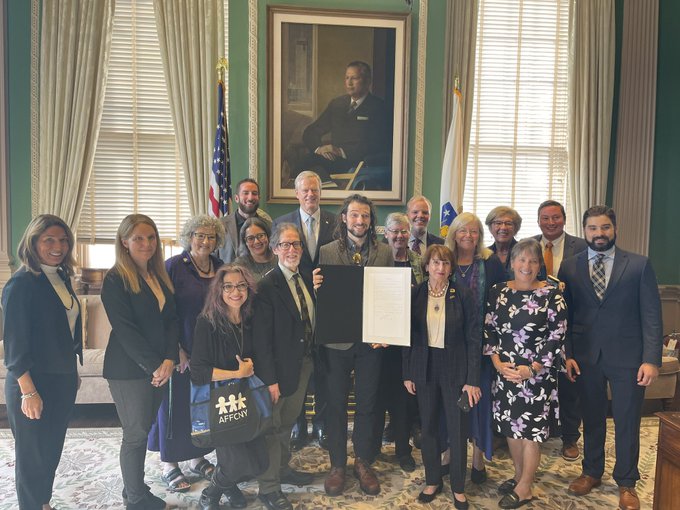
HUGE NEWS! Massachusetts OBC ACCESS begins November 3, 2022


Tuesday, February 22, 2022

The Adoptee Rights Podcast

 GO LISTEN


Welcome to What Next:The Adoptee Rights Podcast. Each week we’ll talk about the state of adoptee rights and all that it is—or isn’t. We’ll feature state and federal legislative updates, interviews, and legal developments, plus we’ll discuss the frequent absurdities and complications of being an adopted person.

Join AU’s Gregory Luce and his guests each week as they discuss the state of adoptee rights. Fun and informative, with a constant bottom line of equality for all adopted people.

Latest Episode: Ireland

Greg talks with Claire McGettrick and Mari Steed about Ireland’s history of adoption and original birth records—which have always been public records—and the decades-long fight for Irish-born adopted people to secure the right to obtain all records related to their own identities and history.

You can read more about this issue and Claire and Mari’s work at Adoption Rights Alliance, which is also a partner in the rights-based research work of the CLANN Project.

And check out Claire and Mari’s (and others’) recent book, Ireland and the Magdalene Laundries: A Campaign for Justice, which provides “an overview of the social, cultural and political contexts of institutional survivor activism, the Irish State’s response culminating in the McAleese Report, and the formation of the Justice for Magdalenes campaign, a volunteer-run survivor advocacy group.”

Previous Episode: Omelette

Greg travels to Wisconsin for a legislative hearing and meets Diana Higgenbottom Anagnostopoulos, as well as other advocates, legislative staffers, and legislators.

Diana’s remarkable story is highlighted in this week’s episode, and we talk about the documentary film being produced about her life, the hard work of showing up for adoptee rights advocacy, and what it takes to keep moving forward in the face of adversity. Plus, what she means by the three-egg omelette of adoption.

Follow/Subscribe/Rate and all that on SpotifyAppleGoogle PodcastsPocket Casts

Monday, November 1, 2021

Adoptees United Inc. Upcoming Events

 Join Us for Two Upcoming Events

We're excited to announce two upcoming events in November:

The November 9 event will review what legislatively developments around adoptee rights in 2021, what bills still remain active, and what you can do now and in the coming year to help move the legislative needle toward equality for all adopted people.

https://adopteesunited.org/adoptee-rights-legislative-overview/

Registration: Legislative Overview

Wednesday, September 16, 2020

Washington Supreme Court says Indian Child Welfare Act should be more broadly applied #ICWA

source

A Washington Supreme Court decision saying the Indian Child Welfare Act should be more broadly applied is being called a big win for Native American rights.

Congress passed the Act in 1978. Washington state has its own version as well, called the Washington Indian Child Welfare Act. What the welfare acts do is require that tribes be notified and allowed to intercede in child custody or loss of parental rights cases if the family has any tribal relationships.

The unanimous opinion was written by Washington’s first Native American justice Raquel Montoya-Lewis, who cited the long history of Native American children being taken from their communities.

The case before the court involved the removal of two toddlers from their Kent home in June 2018. Police cited "neglect and unsanitary conditions" as the reason for placing them in protective custody. During the hearing to see if they would be returned to their parents pending review of the case, both parents mentioned they had tribal heritage. The mother indicated she had a grandmother who was a Tlingit-Haida and the father said he had connections to the Umatilla band in Oregon. 

But the judge determined there was not enough evidence presented of those connections and decided the Indian Child Welfare Act did not apply. King County Public Defender Tara Urs says not applying the act at that point was harmful, as the children ended up being placed in foster care.

“It actually made a difference in the lives of these children, the failure to apply the law,” Urs said.

Eventually, the 2-year-old and 21-month-old did go live with a Tlingit-Haida relative in Alaska. 

In overturning the lower court, the state Supreme Court said the Child Welfare Act should have been applied early on in the case, saying the bar for applying it needs to be very low when determining a family’s relationship to a tribe. Justice Raquel  Montoya-Lewis began the opinion by harking back to the past. She wrote:

"In Native American communities across the country, many families tell stories of family members they have lost to the systems of child welfare, adoption, boarding schools, and other institutions that separated Native children from their families and tribes. This history is a living part of tribal communities, with scars that stretch from the earliest days of this country to its most recent ones."

This history is a living part of tribal communities, with scars that stretch from the earliest days of this country to its most recent ones.

In her conclusion, Montoya-Lewis wrote:

“Decisions to remove children from the care of their parents are some of the most consequential decisions judicial officers make. When those decisions impact a Native American tribe, those decisions reach beyond the individual family, affecting the continuation of a culture. We recognize that our rulings addressing dependency cases have far-reaching effects on children, their parents, the out-of-home placements in which dependent children reside, and the manner in which courts and judicial officers manage these complex cases. But, as the United States Supreme Court stated recently, ‘[T]he magnitude of a legal wrong is no reason to perpetuate it.’”

Decisions to remove children from the care of their parents are some of the most consequential decisions judicial officers make. When those decisions impact a Native American tribe, those decisions reach beyond the individual family, affecting the continuation of a culture.

Tara Urs, who argued that the trial court and Court of Appeals’ decision should be overturned by the Supreme Court, was pleased by the ruling. Not only did she prevail, she said, but the framing of the opinion by Montoya-Lewis made it “one of the most persuasive cases of judicial writing I’ve ever read.”

For too long, Urs said, the spirit of the Indian Child Welfare Act has been ignored by the courts. As recently as 2015, American Indian and Alaskan Native children in Washington were represented in foster care at a rate 3.6 times greater than in the general child population.

Sunday, August 20, 2017

Minnesota law thwarts adoptees' quest to know their roots


A national movement led by adoptees has improved access to adoption records in 19 states since 1997. This year, thousands of people in New Jersey and Pennsylvania will see their original birth certificates for the first time. Adoptees in Missouri and Arkansas will get that chance starting next year.
When children are adopted in Minnesota, the state creates a new birth certificate with the child’s adopted name. Adoptees who have requested original birth certificates from the state Department of Health are often surprised to get a call back from the private agency that handled their adoption.
That’s because Minnesota law requires that agencies try to find the birth parents before honoring an adoptee’s request for original birth certificates. About 5 percent of birth parents have notified the state ahead of time about their preferences. Ninety percent of them said they welcome their names being known.


What the hell is wrong with you Minnesota?

Source: Minnesota law is thwarting adoptees' quest to learn roots - StarTribune.com

Saturday, June 11, 2016

Interior Secretary Says Changes To Indian Child Welfare Act 'Close Loopholes'

A day after tribal leaders and governors in all 50 states received a letter from the Bureau of Indian Affairs, U.S. Interior Secretary Sally Jewell paid a visit to the Spokane Indian Tribe.
Jewell said Thursday, changes under the Indian Child Welfare Act, or ICWA, close some long-standing loopholes in the law.
During her visit, Jewell said a disproportionate number of tribal youth are being placed in the non-tribal foster care system “without any credible effort being made by the states to place those children in a family structure and a community structure that honors their heritage and their culture.”
The new rules require state courts to ask all participants at the beginning of custody proceedings about a child’s heritage. As well, only tribes can determine if a child is Indian.
A spokeswoman from the National Indian Child Welfare Association said no organizations or agencies at the state or federal level track the number of kids placed under ICWA. The group’s most recent estimates say one-third of the Northwest’s native population was under the age of 19.
High ranking government officials don’t come to Wellpinit, Washington, often. Jason Campbell, CEO of Sovereign Power, the Spokane Indian Tribe’s energy company, aid tribal leaders usually have to go to Washington, D.C., for this kind of conversation.
The Spokane Tribe is a sovereign nation and you could say Wellpinit is the capital. There’s a clinic, a public safety building and the cars even have their own black and green license plates.
Campbell was among leaders who offered Jewell a tour. They discussed many needs as an excited group of women gathered nearby.
“The Spokane Tribe is being recognized and it’s about time. We need this,” said Nancy Raymond, who has lived on the Spokane Indian Reservation her whole life.
Wellpinit resident Clarissa Thatcher added, “There’s a long list of stuff that can be improved on here.”
The tribe was selected to participate in a federal initiative meant to boost economic prosperity. Secretary Jewell said that effort will continue despite the outgoing Obama administration.
“That doesn’t matter,” Jewell said. “It’s the programs and the structure and the career staff that facilitates moving this forward.”
Two federal staff members will be dedicated to helping the tribe with long term projects.

****
The Indian Child Welfare Act descends from a history of human rights abuses of Native Americans and subjugation of their culture, as the Christian Science Monitor's Bamzi Banchir explained in March:
The act was passed to amend historical practices that saw native American children taken from their families and communities and placed in boarding schools in an attempt to 'solve the Indian Problem' – native Americans were depicted as 'savage heathens' – by assimilating them into mainstream American society....

http://launch.newsinc.com/share.html?trackingGroup=90962&siteSection=csmonitor_nws_non_sty_dynamic&videoId=28688128 


***
AND from the Christian group who is seeking to destroy ICWA: [Christian Newswire 2016. All Rights Reserved. | 2020 Pennsylvania Ave. NW - Washington - DC - 20006 | 202-546-0054] Elizabeth Morris is Chair of the Christian Alliance for Indian Child Welfare and author of "Dying in Indian Country." CAICW, a ministry and advocacy, has assisted families judicially, educationally, and as a prayer resource since 2004.  
If you thought Elizabeth Morris is gone after the Baby V case, she's not. Look at this

***
NARF statement about frivolous lawsuits: Since our founding 45 years ago, NARF has worked to protect the rights of Native children, families, and communities. We stand hand in hand with our allies against these recent attacks on ICWA and we will fight these meritless lawsuits. 

Wednesday, October 29, 2014

Adoptee Rights Coalition: #OBC ACCESS #ADOPTION

SOURCE: Adoptee Rights Coalition: 

Thank you for visiting this site to learn more about the issue of sealed original birth certificates (OBC) in the United States.

Please view or download our Comprehensive Lobby Packet for Adoptee Rights Legislation here.


Every person who is born in the United States receives a birth
certificate that recorded the historical event of their birth.  Birth
certificates have become increasingly used in to verify identity in our country.  When a child is adopted, which could be months or years after their birth, their original birth certificate is sealed and an amended one is issued that lists the adoptive parents as though they are the biological parents.
Although all 50 States have some law on the books allowing adult adoptees to access the original birth certificate, adult adoptees in all but six States encounter systemic barriers in accessing this record.
 This discrimination occurs for no other reason than the fact that the individual was legally adopted as a child.  The Adoptee Rights Coalition opposes policies that treat adopted persons differently than all other citizens born within a given State.  We believe that this institutionalized discrimination sends a negative message about being adopted.
We urge legislators to speak with their peers in Kansas and Alaska,
two states that have never sealed birth certificates of adopted persons. We also ask legislators to speak with their peers in Oregon, Alabama, New Hampshire and Maine, the four states that have passed legislation that gives adopted adults unconditional access to their birth certificates without any
restrictions upon reaching the age of 18. 
Adoptee Rights legislation has no fiscal impact.  It simply  acknowledges that adopted persons access their original birth certificate the same way those who are not adopted do.


The Adoptee Rights Coalition officially endorses Maine LD 1084 as model legislation for all other States in the U.S.  LD 1084 gave
adopted persons born in Maine equal access to their original birth certificates while allowing original parents to state their boundaries in a non-legally binding Contact Preference Form.
*******************
OHIO Update
On December 19, 2013, Ohio Governor John Kasich signed Substitute Senate Bill 23 into law, granting 400,000 adoptees born January 1, 1964 through September 18, 1996 access to their original birth certificates. The law has two key dates.
Between today, March 20, 2014, and March 19, 2015, birth parents may file a “Contact Preference” form or a “Birth Parent Name Redaction” form.  The redaction form allows a birth parent to have his or her name removed from the original birth certificate prior to its requested release. If a birth parent chooses to submit the form, a complete social/medical history form must also be submitted. All forms are voluntary, and if the handful of states that have enacted similar legislation are an indicator, a very small percentage of birth parents choose to redact.


Once this waiting period is complete, adoptees can apply for their original birth certificates beginning March 20, 2015.


*******************

Restored OBC Access States

The following states have restored the right for an adoptee to legally obtain his or her original birth certificate (OBC).


Alaska:

OBC’s Never Sealed


Kansas:

OBC’s Never Sealed


Alabama:

OBC’s Sealed 1991

Access Restored 2000


Delaware:

Access Restored 1999


Illinois:  

OBC’s Sealed 1946

Access Restored 2010


Maine:  

OBC’s Sealed 1953

Access Restored 2009


New Hampshire:  

OBC’s Sealed 1973

Access Restored 2005


Oregon:  

OBC’s Sealed 1957

Access Restored 2000


Ohio:  

OBC’s Sealed 1964

Access In Process 2014


Rhode Island:  

OBC’s Sealed 1944

Access Restored 2012


Tennessee:

OBC’s Sealed 1951

Access Restored 1999


We'll be posting more about which states are opening OBC access soon...Trace

Saturday, July 27, 2013

Solomon's Child: Baby Veronica

adoptees tell their stories in Two Worlds
From the website: Justia.com: The Verdict
 

Solomon’s Child: How Baby Veronica Came to Be Returned Home After a Long Legal Battle


The legal complications surrounding Baby Veronica’s custody arose from an apparent conflict between the federal Indian Child Welfare Act (ICWA), a 1978 law designed to reduce improper removals of Indian children from their parents and their placement with non-Indian families, and South Carolina’s rules regarding the rights of unwed fathers.  The U.S. Supreme Court ruled, in Adoptive Couple v. Baby Girl, that the ICWA did not apply to Veronica’s case, a holding which paved the way for the South Carolina Supreme Court to terminate the parental rights of her birth father, and order her immediate return to her adoptive parents.
 
Read her opinion: http://verdict.justia.com/2013/07/23/solomons-child


My thoughts:
Returned home? What? This is a story about a little girl who is now living with her dad Dusten. Writers are discussing how the courts are working to protect the adoptive parents rights...
Native American Adoptees have been ignored far too long.  Our trauma and hurt is never mentioned (in articles and news coverage) and what we endure after being removed from our natural parents and what we feel living in an adoption with strangers.  Even if our first parents are unfit or unable, we should be raised by relatives to minimize the impact of removal, so we can retain our culture and traditions as Native Americans.  Add the pain we go through trying to open sealed adoption records is also hard on us...
Our adoptee voices must be heard in this Baby Veronica case.
In The Verdict opinion, its about the rights of everyone else but not the child Veronica. This is an ongoing tragedy and one fact the media ignores: Veronica has rights as a Cherokee child and citizen. Protecting future generations is why ICWA was written.
If someone had asked me if I wanted to be adopted, I would say no. I would never wish that lifelong pain on anyone...Trace

Thursday, March 7, 2013

Tribes line up support as Supreme Court takes up ICWA dispute


The National Congress of American Indians and the Native American Rights Fund are lining up some major support as the U.S. Supreme Court prepares to hear Adoptive Couple v. Baby Girl, an Indian Child Welfare Act case.
At least a dozen briefs will be filed in support of Dusten Brown, a member of the Cherokee Nation whose rights are at issue in the case. Briefs are coming from individual tribes, national tribal organizations, adult Indian adoptees, several states, national child welfare organizations, law professors, religious groups, psychologists' associations, current and former members of Congress, military and veterans organizations and even the American Civil Liberties Union.

"We have brought our A-team to this case," NARF attorney Richard Guest said at NCAI's 2013 executive council winter session in Washington, D.C., on Tuesday.

Read it here: http://www.indianz.com/News/2013/008782.asp

Wednesday, July 18, 2012

Adoption headlines

Adopted from China: Finding identity through heritage
CNN
When Maia Stack returned to the pagoda, or tower, where she had been abandoned as a baby she was overwhelmed by what had happened there 11 years earlier.
See all stories on this topic »
Mixed Roots Foundation Shoots for the Stars in Public Service Announcement ...
San Francisco Chronicle (press release)
Michael Reagan, adopted son of former president Ronald Reagan and actress Jane Wyman will make a call to action for the public to help identify positive role models and streamline more post adoption resources for adoptees and their families. [.
See all stories on this topic »

San Francisco Chronicle (press release)

Web1 new result for adoptees
A Push to Open Connecticut Birth Records to Adult Adoptees - News ...
Old secrets, new fears and emotional highs and lows — they all come into play when you talk about adoptees finding the truth about their roots. And the feelings ...
countytimes.com/articles/.../doc5004200f8a199566323240.txt

Wednesday, June 6, 2012

Kansas adoptees are in luck!

Paula Alwin embraces her son, David Hattaway of Shawnee, who recently tracked her down -- 45 years after she gave him up for adoption. Alwin, who lives in Gatesville, Texas, has visited Hattaway and his family twice during the past few weeks, and he paid her a surprise Mother’s Day visit in Texas. See link: happy reunion

Kansas agencies aid in searches

For Kansas-born adult adoptees wishing to learn a birth parent’s identity and, perhaps, establish contact, the journey begins at the state’s Office of Vital Statistics.
To obtain a pre-adoption birth certificate, adoptees 18 and older can go to www.kdheks.gov/vital, click on the “adoption” link, then click “Obtaining a Before Adoption Birth Certificate.”
The next step is the Kansas Department of Social and Rehabilitation Services, which can be contacted online at www.srs.ks.gov. To obtain a form titled Adult Adoptee Searching for Birth Parents, click on the “Services” tab, click “Adoption Services,” then click the “Children and Family Services” link. That will open a page allowing the user to select “Adoption Records and Search,” which leads to online forms for adult adoptees seeking birth parents or siblings. A form for birth parents requesting contact with adult adoptees is also available.
Patricia Long, an SRS program administrator, said her office processes the forms, searches for adoption records and provides them to the adult adoptees requesting them. The agency also will conduct free searches for birth parents and for adult birth siblings the adoptee had an established relationship with prior to the adoption.
With approval of the birth parents and siblings, the agency also will provide current contact information to the adoptee. It also facilitates reunions when requested.

Read this happy reunion story: http://www.shawneedispatch.com/news/2012/jun/05/search-birth-mother-has-happy-ending/

Saturday, June 2, 2012

Supreme Court won't hear case

archival photo
Supreme Court rejects adoption case involving Cherokee Nation
— The U.S. Supreme Court on Monday (May 21) declined to hear an unusual adoption case from Utah involving the Cherokee Nation and the question of when a person becomes an Indian.
Without comment, the high court let stand a decision by the 10th U.S. Circuit Court of Appeals that a child's natural mother could not regain her parental rights by claiming that the child she gave up for adoption was an Indian who was subject to the federal Indian Child Welfare Act.
The mother of the child terminated her parental rights in court the day after the child was born in 2007. However, a month after the adoption was finalized in 2008, the mother filed a federal court petition seeking to nullify her voluntary termination of parental rights because the Indian Child Welfare Act required a 10-day waiting period in cases involving American Indian children.
The Cherokee Nation intervened for the mother, arguing that because the child's ancestors could be traced to the original tribal rolls, the child was automatically given temporary tribal citizenship at birth and that the Indian Child Welfare Act prohibited the mother from terminating her parental rights within 10 days.
A federal judge agreed. But the 10th U.S. Circuit Court of Appeals ruled that the question wasn't the Cherokee Nation's citizenship laws, but the federal law. The court said the law applied only to children eligible for tribal membership because their parent was a member and the child's mother was not a Cherokee citizen.
Utah attorney James B. Hanks, who represented the couple that adopted the child, said in an email response on Monday that the Supreme Court decision on Monday ended the case.
The Cherokee Nation declined comment on Monday.


Read more: http://newsok.com/washington-briefs-supreme-court-rejects-adoption-case-involving-cherokee-nation-majority-of-oklahoma-congressional-delegation-speaks-at-level-above-congressional-average/article/3677448#ixzz1wdyz6700

It's sad these news stories never mention the child as sacred or worthy of protection. It becomes the colonial mindset of who is Indian enough to be protected by federal law - which speaks volumes about court cases involving Indian children.... Trace

Monday, May 7, 2012

Kansas Supreme Court strongly supports ICWA #NDN

In re T.S.W., Kansas ICWA Case on Finality for Appeal and Placement in Private Adoptions

by Kate Fort via Turtle Talk
Here.
The Kansas Supreme Court again comes out with strong language in support of ICWA. In addition, the case, which has a complicated procedural history given the actions of the private adoption agency, provides an interesting analysis of what is a "final order" in an ICWA case and a discussion of the collateral order doctrine:
Under the circumstances presented here, we conclude the district court's order permitting a deviation from ICWA's placement preferences did not dispose of the entire merits of the case and left open the possibility of future action by the district court with respect to T.S.W.'s placement. Thus, the Tribe has not appealed from a "final order, judgment or decree" under K.S.A. 2011 Supp. 59-2401a(b)(1), and we lack statutory authority to hear this appeal.
But that holding does not end our analysis. Alternatively, the Tribe urges us to exercise jurisdiction under the collateral order doctrine. That doctrine, which we sparingly apply, provides a narrow exception to the final order requirement. It "allows appellate courts to reach 'not only judgments that "terminate an action," but also a "small class" of collateral rulings that, although they do not end the litigation, are appropriately deemed "final." [Citation omitted.]'" Kansas Medical Mut. Ins. Co., 291 Kan. at 611-12 (quoting Mohawk Industries, Inc. v. Carpenter, 558 U.S. ___, 130 S. Ct. 599, 605, 175 L. Ed. 2d 458 [2009]).
This case is also an illustration of the difficulties of ICWA and private adoptions. The adoption agency initially refused to consider any placements provided by the Cherokee Nation if the families couldn't pay the $27,500 fee:
In this case, we need not extensively consider whether the Agency followed the placement preferences before seeking a deviation from those preferences. It did not. While the Agency made some effort to satisfy the second placement preference when it requested the Tribe provide available adoptive family profiles, the Agency impermissibly qualified its request in at least two ways. First, the Agency provided the Tribe with Mother's extensive "criteria" for any prospective adoptive family. Second, the Agency specified that prospective adoptive families be able to pay the Agency's $27,500 fee requirement. And while the Agency eventually indicated a willingness to modify its fee based on an unspecified sliding scale, the parties never agreed as to the parameters of that scale because Mother chose a non-Indian family based on profiles presented to her from the Agency.
Essentially, the Agency grafted its substantial fee requirement as well as Mother's placement criteria (which ironically specified that the adoptive parents be Caucasian) onto ICWA's placement preferences. Common sense dictates that ICWA's placement preferences cannot be undermined in this manner. In fact, the Agency's actions appear to fly in the face of Congress' intent in enacting ICWA. See Holyfield, 490 U.S. at 37 (ICWA "'seeks to protect the rights of the Indian child as an Indian and the rights of the Indian community and tribe in retaining its children in its society' . . . by establishing 'a Federal policy that, where possible, an Indian child should remain in the Indian community'" and ensuring that Indian child welfare determinations are not based on a white, middle-class standard that often forecloses placement with an Indian family).
The Court found that the agency and the lower court did not follow the placement preferences of ICWA, even after the Nation provided 17-20 (!) potential adoptive families for the child, and reversed the decision.

Friday, April 27, 2012

Using the Indian Child Welfare Act to petition court

National Child Welfare Association

A friend sent this and I wanted to share!  If you are thinking of opening your adoption and know the state you were born, the INDIAN CHILD WELFARE ACT can be used to petition the courts and judge to get your tribal information:

Excerpt:

One section of the ICWA is of particular interest to adoptees. Section 1951b states "Upon the request of the adopted Indian child over the age of eighteen, the adoptive or foster parents of an Indian child, or an Indian tribe, the Secretary shall disclose such information as may be necessary for the enrollment of an Indian child in the tribe in which the child may be eligible for enrollment or for determining any rights or benefits associated with that membership. Where the documents relating to such child contain an affidavit from the biological parent or parents requesting anonymity, the Secretary shall certify to the Indian child's tribe, where the information warrants, that the child's parentage and other circumstances of birth entitle the child to enrollment under the criteria established by such tribe."

Essentially this section directs the State to give adult adoptees of Native American heritage who request it, their birth information, so that they may enroll in their tribes. The section does allow for birthparents to file a veto, but even then the adoptee is entitled to tribal notification so that they may process their tribal rights and privileges. You can read the entire ICWA on the Web (use google search).

There are a few problem areas with using the ICWA.  Many adoptees are of enough Native American blood to qualify for enrollment in their tribes, but there is nothing documented that verifies that information.  Before a judge will open a file under ICWA s/he will often demand some sort of proof that the adoptee is NA at all, proof that most adoptees will simply not have. But in other instances, the agency that handled the adoption, or the court file itself, will contain notations that you, the adoptee, do have NA ancestry.

If you have received non-ID from a source that states this, include a copy with your court petition. You will also need to include a copy of the ICWA in order to make the judge's work easier and predispose him/her to wanting to help you. If you have any information at all that you are even the smallest bit Native American, you should use the ICWA in your petition. Include affidavits from family members (adoptive and birth) who have told you that you have Native American blood, as well as any 'official' agency or other documents to support your claims. Remember that most tribes have small blood quantum requirements, and you should not feel guilty about using the ICWA. The intent of this law is to ensure that those of us who are entitled to tribal membership by birthright, have the *choice* to join our Native American communities.


[ADOPTEES: please contact the adoption agency, if you know who it was, or ask your adoptive parents what they were told and ask them to request the entire adoption record in the state you were adopted. WHY?? Since your adoptive parents signed papers to adopt you - they have a right to request a copy of your file and adoption records.  If you are 18, you are an adult and can petition the courts. The Indian Adoption Projects was a secretive measure to assimilate children and change us - but it doesn't work - you are still Indian, no matter where you were raised... Indian Blood is loud... Contact me if you need to know the laws in your state and contact NICWA and request all the information they have to help adoptees... Trace]

National Indian Child Welfare Association (NICWA)

5100 SW Macadam Avenue, Suite 300
Portland, Oregon 97239
Telephone: (503) 222-4044
Fax: (503) 222-4007
Hours: Monday—Friday, 9 a.m.–5 p.m.

Wednesday, March 21, 2012

The Fight to obtain our Original Birth Certificates: Unsealed Initiative: NY's Adoptee Rights Bill

Adoptee Rights Coalition - the Fight to obtain our Original Birth Certificates: Unsealed Initiative: NY's Adoptee Rights Bill: Google+ Tweet This page was updated in March 2012; please refer to Unsealed Initiative for more information.

As some of you know, many Native adoptees were placed with Lois Wyse and Spence Chapin Adoption Agencies, who were part of the Indian Adoption Projects.  New York needs to open their adoption records - let the secrets and lies be exposed and made truth... Trace

Tuesday, February 28, 2012

Blog Week: Who you need to read!

Participating in the unofficial "What Annoys you about the Adoption Establishment" Week - here are links to blogs who will be posting:
adoptionechoes.com/2012/02/27/why-the-adoption-establishment-annoys-me/

Now is the time to share these posts with your friends AND sign up and subscribe to these blogs (via email) - and the greatest thing you can do is retweet, share on Facebook and comment - every blogger LOVES that!
I love my readers very much - and you adoptees teach me every day and I appreciate you all! ...Trace

" QUOTE"
“My problem is secrecy. I believe that perpetually secret adoptions assure un-accountability and lack of transparency. And secret adoptions are only the tip of the iceberg. The secrecy permeates the process: secret identities, secret parents, secret records, secret foster care providers, secret social workers, secret judges and lawyers (all their identities are sealed, typically), secret physicians, secret statistics and, in the case of some adoption-oriented organizations, secret budgets and secret boards of directors. In any social practice, when people in positions of power hide behind masks, one can be pretty sure that they have something to hide.”
             -Albert S. Wei, Special Advisor to the Bastard Nation Executive Committee

Sunday, February 26, 2012

BLOG WEEK: MY TOP 5

Kevin Ost-Vollmers and Shelise Gieseke at Land of Gazillion Adoptees Blog said Feb. 26th begins BLOG WEEK to answer this question: “Why does the adoption establishment annoy the heck out of us (adoptees)?” http://landofgazillionadoptees.com/2012/02/22/secret-message-for-other-bloggers-about-the-week-of-february-26th-aka-why-the-adoption-establishment-annoys-the-heck-out-of-us-blog-week/

MY MISSION today is to answer that question!  Ok, so why does the adoption establishment bug the heck out of me?

Here is my Top 5.

1- (Lack of) Disclosure - Old archaic laws are on the books in many states and it seems every state is having some kind of major meltdown or fiscal crisis. Adoptees who are fighting to gain access to our birth records can’t seem to grab their attention or warrant the lawmaker’s time or serious consideration - unless maybe the lawmaker is an adoptee.  

Yup, we know adoptees are low on the totem pole and status meter and that annoys me.

What are “they” thinking? Oh, it’s obvious - the status quo - let’s not rock the boat, just leave the law as is and let's not disclose information every adoptee needs and deserves, and definitely let’s not disturb the Adoption Industry who lobbies Wash. DC with fancy dinners and big campaign contributions. (Lack of medical history is a huge problem for many adoptees, including me)

I can hear the lobbyist pounding on their tables, “adoptees should be grateful they were adopted.” The adoption industry is a billion dollar business and they don’t want to lose a single dollar in profits. It’s about money. Even now, the adoption industry does not appreciate adoptees or ask how we feel or acknowledge what we endured. We are not invited to sit at their table or join in discussions. That really bugs me!

2- Secrecy - Over and over and over “they” claim our natural mothers demanded secrecy yet many mothers who lost children after closed adoptions are saying, “damn the secrecy, damn the laws, where are my children?”

Uniting all these mothers with all the adoptees on the same stage, fighting the discrimination, shame, secrecy and old laws would be powerful!

Sadly it seems both are on their own warpath to be heard.  Uniting our voices on this issue - especially natural mothers and adoptees who have been silenced for too long - is what is urgently needed. Big crowds marching on Washington DC would get "their" attention.  

Blogs (my favorites are listed in the right column) are enlightening the world to our plight. Using our voices, activism and blogging for change is good.

3- Identity - Adoptees are denied our basic human rights to the truth of our ancestry, our tribe(s), our birth name, our family names, our background (which is our identity), our medical history, our original birth certificate (OBC) and information about both our natural parents.

I noticed writing my memoir how adoptees will say they are looking for their mothers -- but we do have a dad somewhere and possibly siblings - and we do need to know who they are and where they are! Adoptees need to add “dad and siblings” to their list of needs when facing adoption industry discrimination and current adoption laws.

The bias in the adoption industry is to protect the adoptive parents and seal our identity so no one will ever find out the truth. That deeply annoys me.

If you are Native American, you cannot be enrolled without documentation and proof. If you are a Split Feather/adoptee, you not only lose your identity but your treaty rights and all that goes along with being an enrolled tribal member. Just remember your identity is Native American with or without tribal enrollment.  We must unite and form a national organization to teach about the government’s use of closed adoption to hurt and destroy American Indian families and cripple future generations.

4- New Identification Cards? Yup, as of 2005 more states will implement this new country-wide identification card. And guess what? Adoptees who cannot produce a real birth certificate (OBC) may (let me stress “MAY”) not be able to renew a driver’s license, vote, or apply for or renew a passport. That scares me and bugs me equally! Those ignorant lawmakers who wrote the Real ID Act of 2005 (and passed it) didn’t consider adoptees or how this would affect us? We pay them big salaries because they represent us. What were they thinking? They were not thinking of adoptees, perhaps 10 million of us in the USA.

5 - Gratitude - Over and over I hear adoptees say - almost by script - how grateful they were to be adopted by their parents. I call this our gratitude attitude. We get stuck there mentally and it’s hard to move on to empowering ourselves to regain our birth rights and identity. I know my gratitude silenced me. Gratitude meant I could not talk to my adoptive parents about anything - how I felt, what I planned to do, or even ask them questions about my adoption file. Laws prevented me from knowing anything about myself and my first family.

AND I found out my new parents were not really informed when they adopted me in 1957. They had basic information like I was illegitimate, how my mom was unmarried.

AND my adoption file didn’t include medical history. Really. Apparently the adoption industry didn’t think about the child at all when compiling information for the adoption hearing. It was about convenience and expedience for adoptive parents. Really.
Looking back the adoption industry should be so embarrassed and horrified they didn’t get our medical history when they “sold” us to our new parents.

So, what about the Adoption Establishment annoys you? Please leave a comment.

click

Contact Trace

Name

Email *

Message *

NO MORE UPDATES

GO TO:  https://blog.americanindianadoptees.com/  for updates and news. THIS BLOG cannot be updated...