BLOGGER changed, not allowing us to UPDATE this back-up blog

(UPDATED 726/2025) issues with blogger are preventing this
Showing posts with label #NativeLivesMatter. Show all posts

Wednesday, April 20, 2022

Warning Signs that Someone Has Experienced Sexual Violence


From the StrongHearts Native Helpline

Sexual violence is a far too common thing throughout Native communities. According to the National Resource Center on Domestic Violence, Native Americans are 2.5 times more likely to experience sexual violence in their lifetime. As we know, this may be even higher due to the lack of reporting common in Native communities. Sexual violence is any type of sexual activity done without consent. We often don't know when someone is struggling with something. Sexual violence is no exception.

If you believe someone you know and love has experienced sexual violence, here are some warning signs:

Pulling out of their favorite activities or hobbies

            Your relative may be showing little or no interest in their favorite activities.

Small signs of loss of trust

            Your relative might stop trusting you or your family members with small or large things. 

Isolation

You may notice that your loved one is absent or turning down more invitations. They may have secluded themselves in their homes or workplaces or finding reasons to spend more time alone or with very few people.

Signs of depression or energy fatigue

Your relative may be starting to show signs of depression. This can include changes in appetite and weight, conversations that include hopelessness or lack of outlook on life, and either uncontrollable emotions or numbing of emotions.

Loss of interest in conversations or seeming spaced out

Your relative might be experiencing zone out or feelings of disconnection while in the middle of a conversation. This could look like slow responses to questions, looks of lost in thoughts or slower speech when talking.

Seeming to be uncomfortable when talking about sex or topics related to sex

This can be a little hard to detect if you don't already know how comfortable someone is with talking about the topic of sex. But if you see a dramatic change in the comfortability of one's expression and opinions of sex this could be a sign of sexual violence. 

If your partner has a change in interest in sex or being touched

If you are concerned that your partner may have experienced sexual violence, one warning sign may be that they no longer show interest in sex and pull away when you try to approach or touch them. The main component here is that they seem to have lost trust or interest in sexual touch, but not necessarily in your relationship. 

While not every sexual assault or rape leaves physical injuries, here are a few to look out for:

      Bruising

      Vaginal or anal bleeding

      Broken or dislocated bones

      Difficulty walking

It can be difficult to talk with someone who has experienced something as traumatic as sexual violence. But as a relative, your support can mean a lot to a victim-survivor. StrongHearts Native Helpline is here to chat about ways that you can support a relative experiencing the effects of sexual violence. 

Call or text 1-844-7NATIVE or chat here on strongheartshelpline.org, advocates are available 24/7 for free, safe and confidential support. If you would like more information about how you can help someone in an unhealthy or abusive relationship visit our Help a Friend or Relative page.

Your body. Your sovereignty. Your decision.

Thursday, December 2, 2021

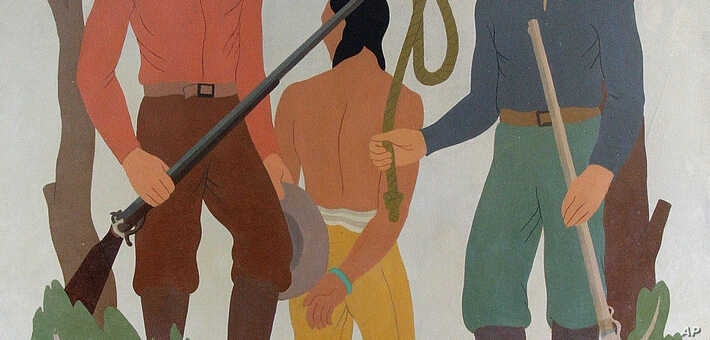
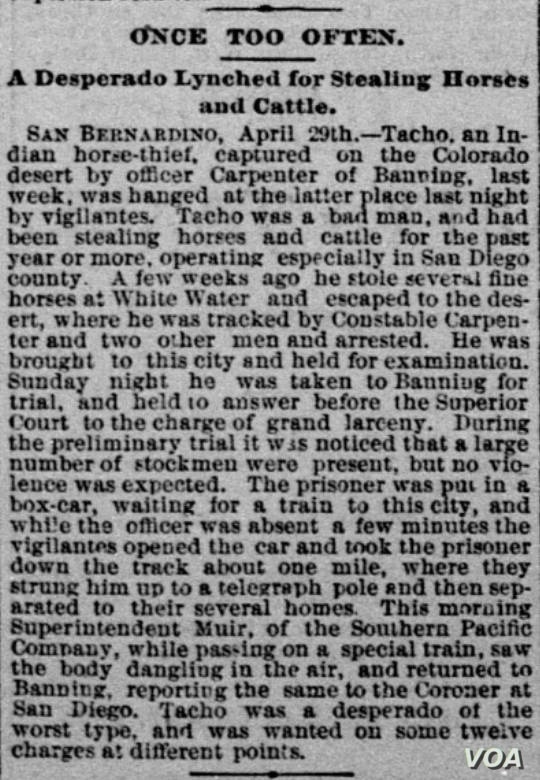
Remembering Native American Lynching Victims

 By Cecily Hilleary | April 25, 2018

Editor's note: This story contains images some readers may find disturbing.

In 2018, the National Memorial for Peace and Justice in Montgomery, Alabama, opened to the public, paying tribute to thousands of African Americans who were lynched by white mobs from the close of the 19th century Civil War through the 1960s. While lynching is most commonly associated with blacks in the southern United States, little attention has been paid to the lynching of other minorities, among them, Native Americans.

In his 2011 book, the Roots of Rough Justice: Origins of American Lynching, Michael J. Pfeifer, history professor at the City University of New York’s (CUNY) John Jay College of Criminal Justice, describes lynching as “informal group murder.”

“The definition that I and many scholars have used stipulates that there has to be an illegally-obtained death perpetrated by a mob -- three or more persons -- and that the collected killing must be in service to justice, race or tradition,” he said.

GRIM READ: Remembering Native American Lynching Victims

Tuesday, May 4, 2021

BIG FLAP: Santorum’s Native History on CNN


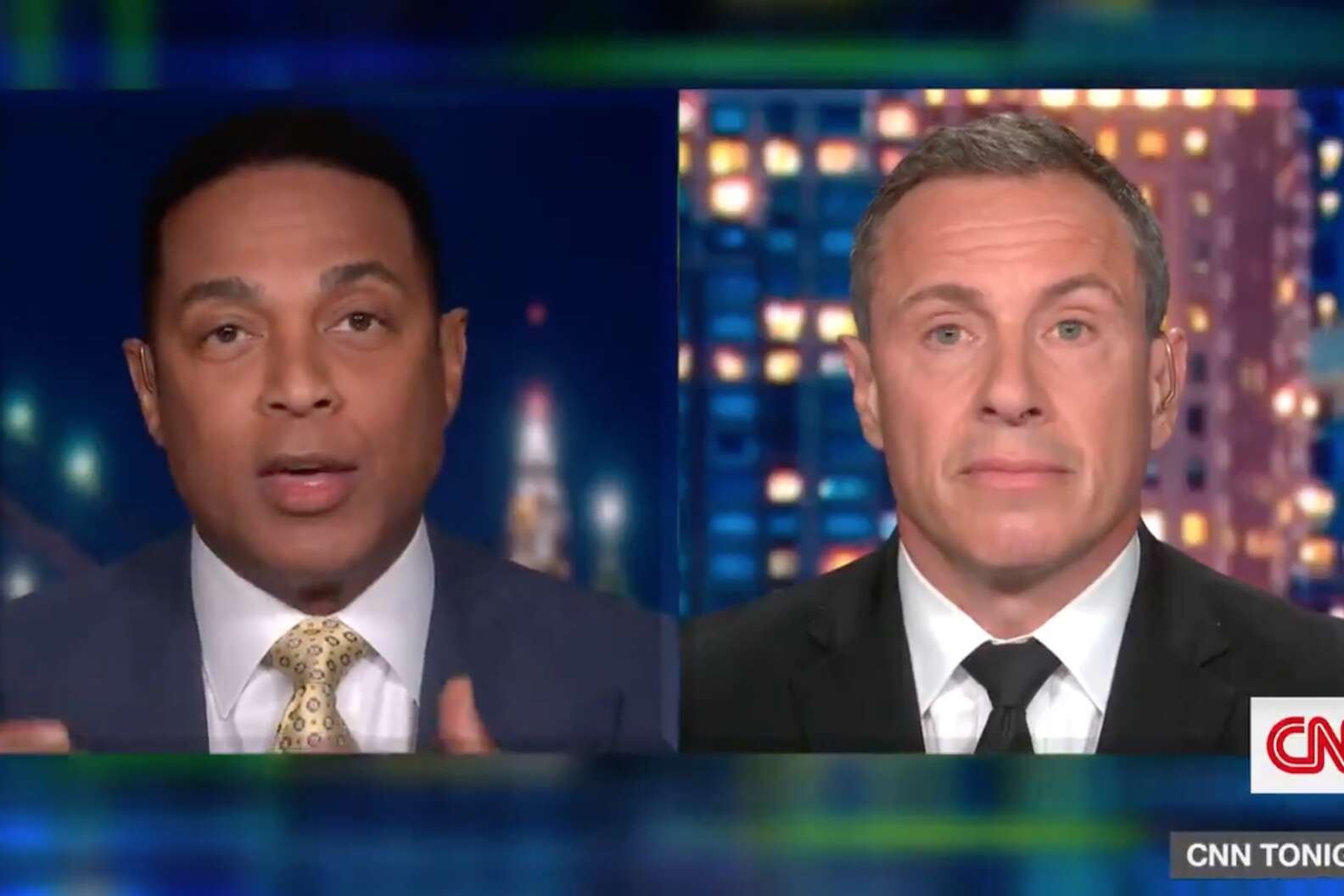
Don Lemon Wasn’t Having Any Of Rick Santorum’s Comments About Native History on CNN

“Did he actually think it was a good idea for him to come on television and whitewash the whitewash that he whitewashed?”

CNN anchor Don Lemon discusses his reaction to Rick Santorum's May 3, 2021, appearance on "Cuomo Prime Time." | CNN

CNN anchor Don Lemon apologized to viewers after former Republican lawmaker Rick Santorum discussed his recent controversial comments about the nation’s founding on Chris Cuomo’s show. Lemon called the appearance “horrible and insulting.”

“Europeans did not found this country,” Lemon said after Cuomo interviewed Santorum on Wednesday night. “It was here. The Native Americans had this country before the Europeans came.”

Santorum, a Republican politician and CNN commentator, made historically inaccurate and racist comments during a speech in April to Young America’s Foundation, a conservative youth group. During his speech, Santorum said he doesn’t “know of any country in the world that was settled predominantly by people who are coming to practice their faith.”

“They came here mostly from Europe and they set up a country that was based on Judeo-Christian principles,” the former U.S. senator and Republican presidential candidate continued during the speech. He went on to say that European colonizers “birthed a nation from nothing,” and that even though Native Americans already inhabited the land,“there isn’t much Native American culture in American culture.”

On May 3, during “Cuomo Prime Time,” the CNN anchor pressed Santorum about his comments. 

“This seemed like you were trying to erase diversity in the interest of some white Christian right,” Cuomo said. 

Santorum attempted to correct his statements but offered no apology. 

"Just to be clear, what I was not saying is that Native American culture — I misspoke,” Santorum said, stumbling over his words.

Santorum said he was trying to articulate that U.S. founding documents, including the Constitution and Declaration of Independence, were “created anew.” 

“I was not trying to dismiss Native Americans,” Santorum said to Cuomo. “The way we treated Native Americans was horrific. It goes against everything I ever fought for.”

The Native American Journalists Association put out a statement following Rick Santorum’s initial speech, calling on CNN “to immediately dismiss” him. It also urged its members to “avoid working” with CNN and implored advertisers to stop supporting the network. 

Fawn Sharp, president of the National Congress of American Indians, echoed NAJA’s calls for Santorum’s dismissal and enumerated the reasons that Santorum’s comments were factually incorrect. 

"What European colonizers found in the Americas were thousands of complex, sophisticated, and sovereign Tribal Nations, each with millennia of distinct cultural, spiritual and technological development,” Sharp wrote in a piece for Native News Online.

The contributions of Native Americans are plenty and consequential, Sharp wrote. They cultivated plants, like cotton, rubber, and tobacco, and developed the concept of environmentalism. 

"No idea is more fundamentally Native American and more explicitly spread by Native American peoples,” Sharp wrote. “There would be no National Park system without Native American influence.”

via

Monday, November 9, 2020

Now what? Truth and reconciliation | Biden Victory #TRC #NativeLivesMatter #NCAI

news from around Indian Country

As the Biden-Harris administration prepares to take power, Crosscut asked six opinion writers to share early thoughts on what comes next.

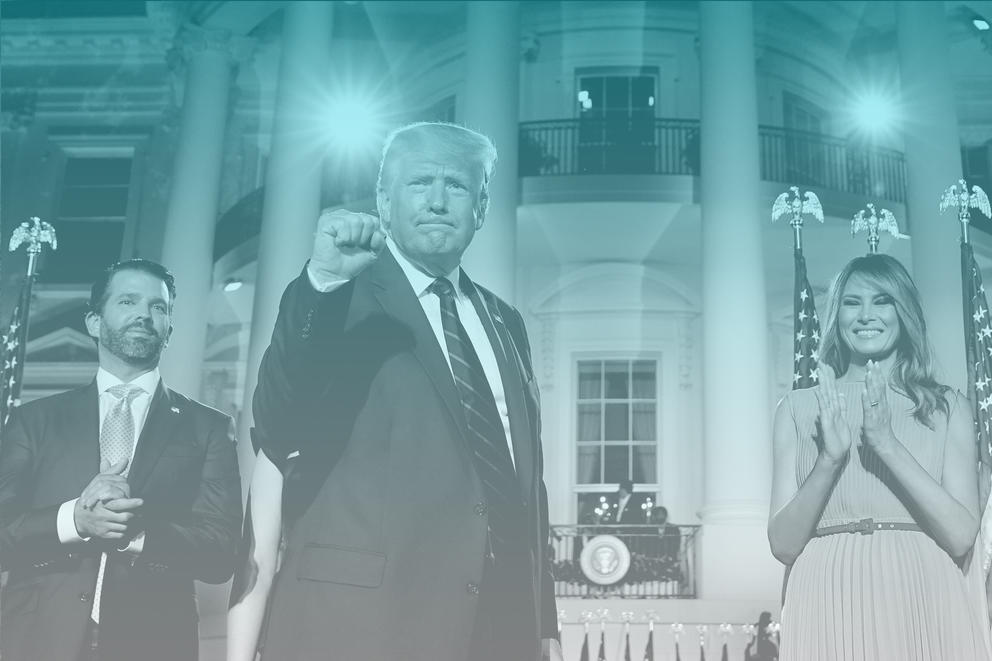
don jr, donald trump and melania trump

caption: Healing our past wrongs must begin with a thorough accounting of transgressions committed by the Trump administration, write Fawn Sharp and Mathew Randazzo V. (Evan Vucci/AP)


It is an existential necessity that America finally face its darkest truths and reconcile ourselves to our core values. 

As Donald Trump’s handling of the COVID-19 pandemic amply proved, we cannot treat a disease we refuse to acknowledge. Through a reckless disregard for the truth, we become complicit in its spread.

The 574 Tribal Nations that have experienced four centuries of trauma, genocide, rape and pillage will no longer accept lip service. Likewise, we must relieve Black Americans of the trauma of living in a hostile civic society defined by arbitrary state violence, mass imprisonment, systematic voter disenfranchisement and the multigenerational deprivation of resources from their communities.

America must draw the line with this generation to finally confront and remediate past and present wrongs — starting with a thorough and honest accounting of the Trump administration’s transgressions. 

We can’t let this essential work be sabotaged or shortchanged by the Washington D.C. establishment’s self-immunization from accountability. We either establish a precedent for accountability that was lacking after Watergate, Iran-Contra, the Iraq War and the 2008 economic crisis, or risk inviting a more authoritarian and lawless counter-attack.

The Biden-Harris administration must take a full-court press approach and utilize every investigatory and disciplinary tool available to the federal government to reveal the truth, devise effective solutions, bring the corrupt to justice and restore the constitutional balance between the three branches of government.

We need presidential truth and reconciliation commissions on the systemic abuses that Native Americans, African Americans and Latin American migrants all face; congressional select committees to provide a comprehensive overhaul of the laws restraining executive overreach, police violence and carbon pollution; and gloves-off inspector general and criminal investigations into the flagrant abuses of the Trump administration and its corporate accomplices.

Truth and reconciliation is not simply a racial matter. Working-class white families are also economically and politically disenfranchised by the inhuman corporate machinery that controls our institutions and toxifies our lands and food, preventing vastly popular reforms like Medicare for All, drug decriminalization, law enforcement violence de-escalation strategies and action on climate change from gaining national momentum.

The Biden-Harris administration offers hope that the executive branch will at least consider bold reforms. But passing the type of drastic legislation necessary to put this republic on a sustainable path will require the mass organization and activation of the public at large. 

Our society and governments can no longer serve the Dow Jones Industrial Average instead of the life, liberty and happiness of its citizens or the indispensable health of our ecosystems.

We are the ancestors of future generations.

We cannot leave them a sick, fatally flawed society.

To heal our country we must be courageous, and boldly confront generations of injustice and exploitation.

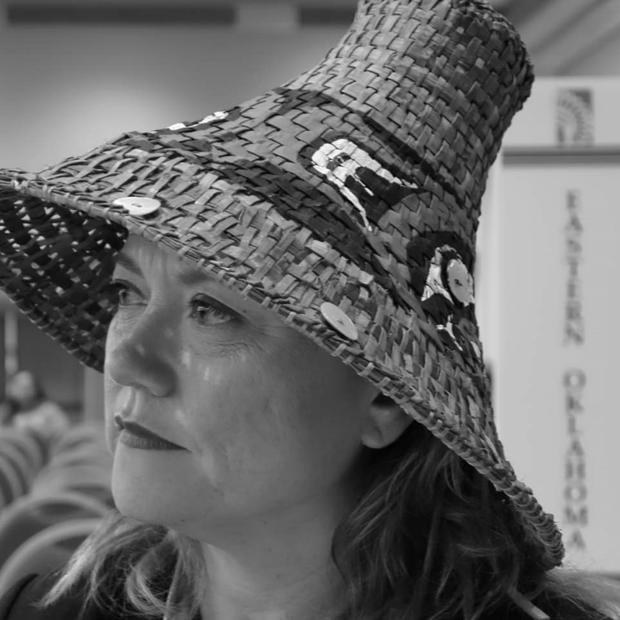
Fawn Sharp

Fawn Sharp

Fawn Sharp is President of the Quinault Indian Nation and the President of the National Congress of American Indians.

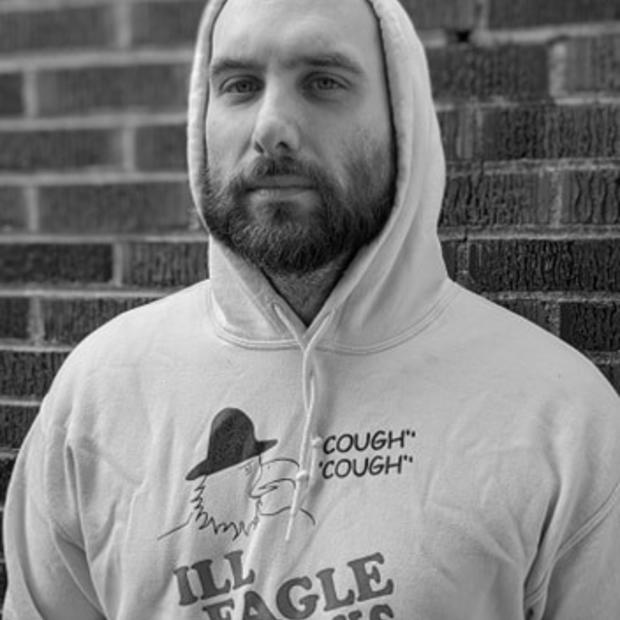
Matthew Randazzo V

Matthew Randazzo V

Matthew Randazzo V is a former government executive who advises Tribal Nations.


READ MORE: 

Indian Country reacts to Biden victory 


**


**

"I don't like hope. Hope was the last thing to come out of Pandora's box. It's a sedative word. If we want something to happen, it's better to pray; that way we're activating our intelligence."- John Trudell (Santee Sioux)


Thursday, October 1, 2020

Elders Can Experience Domestic Violence #ViolenceAwarenessMonth


StrongHearts Native Helpline: 
October is Domestic Violence Awareness Month


Native American Elders

A Native American is usually considered an elder when they are above the age of 60 to 65, although it varies from tribe to tribe.

In our Native communities, we are taught to respect our elders. We honor them at ceremony, community gatherings, and pow wows. Their presence is considered to be an honor. We depend on them for wisdom and guidance gleaned from their years of experience. They are invaluable to us. Yet, they can still be victims of domestic violence.

Abuse can happen to anyone. It is not limited to a specific age, class, religion, gender or sexual orientation. Abuse can happen in relationships where couples are married, living together, dating or have children together. Violent behavior can appear at any time in a relationship, though possessive, controlling and other alarming behavior often reveals itself as the relationship becomes more serious.

Domestic violence happens when an intimate partner uses a repetitive pattern of abuse to maintain power and control over their partner. The abuse can physically harm, intimidate, prevent a person from acting freely, or force them to behave in ways they do not want.

Types of Abuse

What can domestic violence look like in elder relationships? Domestic violence can look similar in elder relationships as it does in their younger counterparts, but some elders may be more vulnerable to the impacts of abuse and less able to get support. 

      Physical abuse includes inflicting physical pain or injury upon the victim like pushing, holding or pinching. It can also include prohibiting one to get medical help, withholding medicine, or not allowing one time to heal after illness or surgery. 

      Emotional abuse includes verbal assaults, threats of abuse, and intimidation. It also includes isolation, where the abusive partner will not let the victim visit with their relatives. Isolation can be particularly harmful to elders as they may already have limited mobility or relationships.   

      Gaslighting is also a form of emotional abuse. This can occur when the abusive partner blames the victim for their behavior in such a way that the victim begins to question their own version of events or reality. In this situation, it can be very difficult for the victim to recognize that abuse is happening. 

      Spiritual and cultural abuse happens when the abusive partners uses hurtful stereotypes to criticize the victim, uses tribal membership against them, won’t allow them to participate in traditions, or restricts them from honoring their beliefs.

      Sexual abuse includes grabbing and hurting the sexual parts of the victim’s body, pressuring the victim for sex and becoming angry or violent when refused sex.

      Financial abuse happens when an abusive partner keeps money, accounts or financial information hidden from the victim. The abusive partner may also give an allowance to the victim or keep the victim’s social security or per capita checks. They may also use gaslighting as a tactic of control here. They may say things like, “I’ve always controlled the money.” or “You aren’t good with money.”; or “You have everything you need, don’t you?”

      Digital abuse happens when the abusive partner takes away phones, iPads, or computers in a bid to control who the victim can contact. 

A Stay Together Era

Elders can be more traditional. They came of age when families stayed together even during abuse. Some elders have endured a lifetime of domestic violence. To understand why elder-survivors of domestic violence stay, consider the following.

      Love: They have a long history of loving their partner and believe the abuse will someday end.

      Family: They want to maintain harmony within the family.

      Normalization: Elders may feel they have lived through the violence their whole life and there is no need or way to change it now. 

      Community: They fear having to leave the community in order to escape the abuse or are embarrassed about what other members of the community would think about the abuse.

      Manipulation and Low Self-Esteem: They blame themselves for the abuse, or feel hopeless. 

      No Money/Resources: They don’t have the resources to leave their situation, or feel a responsibility to financially support their abusive partner.

      Denial/Shame: Denial or shame happens when a survivor is embarrassed and wants to protect themselves, their children and/or families from being associated with the stigma of abuse.

Help is Available

At StrongHearts Native Helpline, we know that Native American elders are humble and it can be difficult for them to ask for help. Native Americans and Alaska Natives experience domestic violence at higher rates than any other ethnic group and that elders still suffer intimate partner violence.

 Domestic violence and dating violence are not Native American traditions, and neither is ever okay. 

StrongHearts Native Helpline is a free, culturally-appropriate, and anonymous helpline for Native Americans and Alaska Natives impacted by domestic violence and dating violence. We acknowledge and support all victims regardless of age, gender, sexual orientation or relationship status. If you or someone you love is experiencing domestic violence, help is available.

Contact StrongHearts at 1-844-7NATIVE or click on the Chat Now icon to connect one-on-one with and advocate daily from 7 a.m. to 10 p.m. CT. As a collaborative effort of the National Domestic Violence Hotline (The Hotline) and the National Indigenous Women’s Resource Center, after-hour callers can connect with The Hotline by choosing option one.

Wednesday, June 3, 2020

I Can't Breathe

 Charles (left) and an actor playing Abe Lincoln.
By Trace L Hentz (taking a break/blog hiatus)
I can't breathe. That is the way I feel.

JUNE 2020: We have multiple pandemics: The 2020 Depression, Covid-19 and the murder of George Floyd, an unarmed man, shown on live TV.
Then I find out my cousin has died.  Dr. Charles Bland, a film scholar historian and genealogist, was almost 80 and he and I had been working on a Native history project for the better part of seven years. I have mentioned him many times on my wordpress blog.

For over a year Charles was suffering with Myasthenia Gravis.  The day before he died (on April 25), I texted and said I wanted to kidnap him and bring him here to western MA and break him out of that New York nursing home. (There were Covid-19 cases but he never caught the virus.)

He texted back, calling me Bonnie and my husband Clyde.
Sadly our rescue didn't succeed. Charlie stopped breathing.
I am raw. I can't breathe.


Everything we are seeing globally is seeding a new future. What kind of future? My husband is African-American and he is dealing with the murder of George Floyd in ways I am not. The violence, injustice, racism, what has been happening with the protests, has filled my husband's reality his entire life.  He can't breathe.
The scene in Minneapolis, where I lived for years, is beyond words.  I lived on James Avenue South near Lake Calhoun, or Bde Maka Ska, off West Lake St. I don't think I'd recognize it anymore.
James Avenue
I walked around the lake daily in good weather.  Recently the MN Supreme Court ruled that "Lake Calhoun" in Minneapolis will officially now be known as "Bde Maka Ska." Lake Calhoun was named after John C. Calhoun, the South Carolina senator who became vice president in 1825. Supporters of the change wanted to distance the lake from Calhoun, a documented supporter of slavery.  In 1837, Calhoun gave a speech on "the positive good" of slavery.   He also authored the Indian Removal Act
Bde Maka Ska is pronounced "b-day ma-kha skah" (translates to "White Earth Lake" in Dakota)

Mourning takes time. Protests take time. Changing the world takes time.


Headlines:

Migizi Communication burns in Minneapolis protests

NBC News| 5 days ago
Democrats on Friday slammed President Donald Trump for what they said was inciting violence against protesters who were demonstrating in Minneapolis over the death of George Floyd while he was in police custody.

Riots, arson leave Minnesota communities of color devastated

StarTribune|10 hours ago
When the nonprofit's executive director, Kelly Drummer, returned to the scene a few hours later and saw the destruction, she said, "I knelt down and I just cried." The riots and arson that followed protests of George Floyd's death have devastated organizations and businesses that serve communities of color.


The anger behind the protests, explained in 4 charts

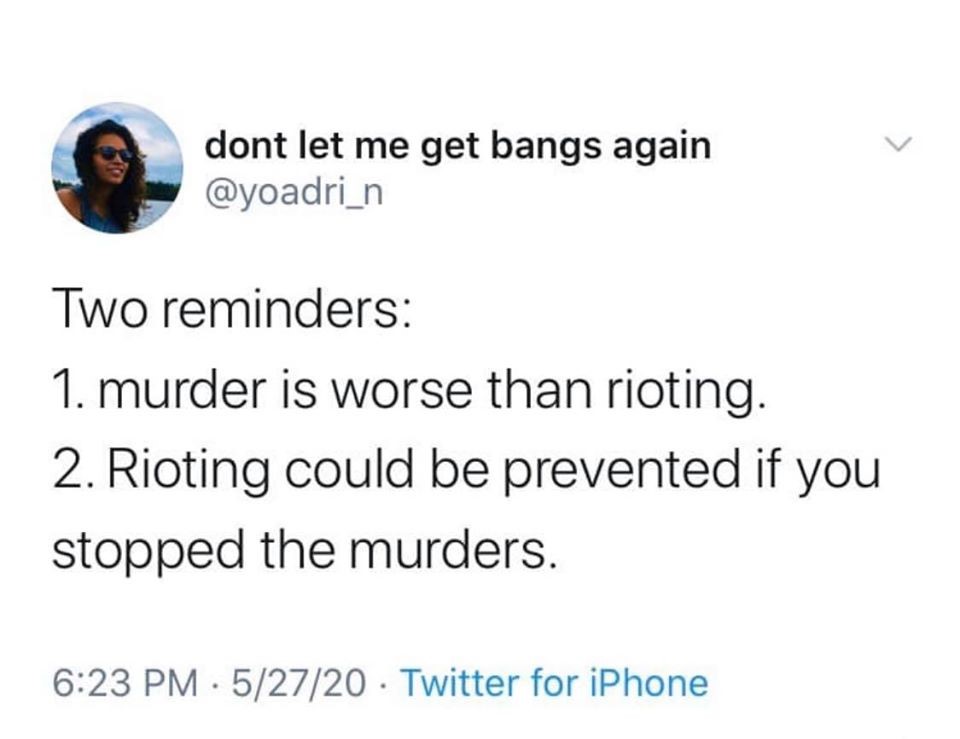
murder vs riot
Icantbreathe

Wednesday, December 11, 2019

50th annual National Day of Mourning


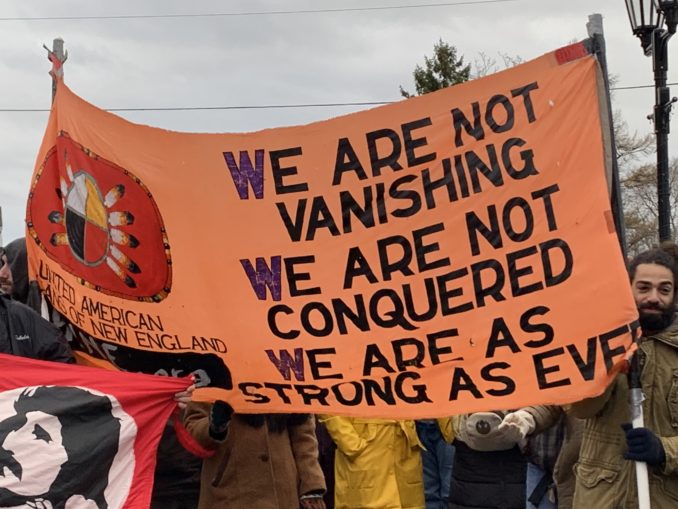
Indigenous people and supporters gathered on a windy, rainy cold day at Plymouth, Mass., on Nov. 28 for the 50th National Day of Mourning. 

The undaunted crowd included Indigenous peoples of the nations the Pilgrims menaced and murdered — Mashpee and Aquinnah and other bands of the Wampanoag, Massachusett, Narragansett, Nipmuc, Pequot, and other Native Nations from the immediate region, and Native peoples from across Great Turtle Island and the Land of the Condor — in a vibrant show of Indigenous resilience despite the genocide begun by those colonial settlers.
The banner of the United American Indians of New England, Nov. 28, Plymouth, Mass.

Moonanum James, Wampanoag, co-leader of United American Indians of New England, opened the rally on Cole’s Hill: “The first National Day of Mourning was held in 1970 in response to the refusal to let an Aquinnah Wampanoag man, Wamsutta Frank James, speak the truth at a fancy Commonwealth of Massachusetts banquet celebrating the 350th anniversary of the landing of the Pilgrims. Wamsutta and hundreds of Indigenous people and supporters gathered in Plymouth and observed the first National Day of Mourning, which UAINE has continued every year since.”
James said, “Over the years we repeatedly disrupted the ‘Pilgrims’ Progress’ parade, a tradition we continued until 1996. In 1997 we were blocked … and arrested for simply trying to march. The resulting defense of the Plymouth 25 led to the plaque you see over here on Cole’s Hill and the Metacom plaque we will visit when we march.” The English settlers killed the historic Wampanoag leader Metacom, also known as King Philip, and displayed his head on a spike for 25 years.
James pointed out: “The Pilgrims are glorified and mythologized because the circumstances of the first English colony in North America, Jamestown, were too ugly to hold up as an effective national myth.” School children now learn about the African slaves kept at Jamestown, and those first white settlers there actually turned to cannibalism to survive. 

James went on to take apart the official, untrue story of the Pilgrims seeking religious freedom, which they already had in the Netherlands. He noted they came as partners of a commercial venture, seeking profits —  “nothing more than a group of white men wanting to ensure they would get a return on their investments.”

The first actual thanksgiving dinner was proclaimed in 1637 by Governor Winthrop to celebrate the massacre at Mystic of hundreds of Pequot women, children and men by men from the Massachusetts colony. James recounted the words of Winthrop, who gloatingly described the Pequot people being run through with swords and burned alive. 

James called for support for the Mashpee Wampanoags’ petition and pending legislation in their current battle against the U.S. Department of the Interior, which ruled that their nation should not be able to take their own ancestral territory into trust. This is a direct attack on the self-determination and sovereignty of all Native Nations throughout the country. 

Wampanoag elder Bert Waters, 89, read the annual National Day of Mourning statement from long-standing Native political prisoner Leonard Peltier. American Indian Movement leader, father and artist Peltier has been imprisoned since 1976. (whoisleonardpeltier.info)

UAINE co-leader Mahtowin Munro spoke to those present: “We acknowledge the many struggles that you have carried with you today on your backs, from the many efforts to stop pipelines to protect the waters, to the ongoing work to free Puerto Rico from U.S. colonialism, to the attempted desecration of Mauna Kea by scientists who lack respect for Indigenous sacred places, and to occupied Palestine. Defending tribal sovereignty is as much an issue today as it was at the original National Day of Mourning in 1970.” 

Both of the federally recognized tribes in Massachusetts, the Penobscot and the Aquinnah Wampanoag, have had their tribal sovereignty restricted and been denied the use of their own lands by settler governments. Massachusett, Nipmuc and others continue to fight for their sovereignty without recognition. 

Munro spoke of attacks on Indigenous people from Bolivia to Brazil, Australia, Honduras, Chile and Nova Scotia, everywhere Indigenous people continue to struggle to protect their lands: “We are all united in our fight against settler colonialism. And we must remember that what happens to one of us, happens to all of us.”

Munro also raised the ongoing attack on the 1978 Indian Child Welfare Act. Before the ICWA was passed, about one-third of Indigenous children were removed from their families and adopted into white families. Right-wing forces want to return Native nations to that genocidal practice. And as Munro noted, over 70,000 children were detained and caged at the U.S. border this year alone, but “no one is illegal on stolen land!” 

Munro gave details on the struggle around Missing and Murdered Indigenous Women, Girls and Two Spirits. Indigenous Nations are fighting against pipelines, fracking, mining and the “man camps,” which are connected to the murders of Indigenous women: “Attacking the Earth and attacking Indigenous people are intertwined, following centuries of murder of Native and African people by European invaders. Sixty percent of the world’s land animals have been wiped out since 1970. … 
“Only by listening to Indigenous people and dismantling the capitalist system, which allows climate collapse to happen in the first place, will we be able to save the planet. Indigenous peoples have always been the caretakers of the lands, waters and the life there, despite the efforts of settler governments to stop us from doing so. ‘We are not vanishing. We are not conquered. We are as strong as ever.’”

Indigenous struggles against corporate and settler government assaults on clean water, air and lands were addressed by speakers from throughout the hemisphere, from the fight against the mega hydrodam that threatens Labrador and Newfoundland lands and homes to the recent attacks on Indigenous peoples of Brazil in the Amazon. 

Many speakers spoke about Bolivia, where a U.S.-supported fascist coup forced the first Indigenous president, Evo Morales, from office following his popular election. Fascist elements have carried out attacks on and murders of Indigenous people, who are 65 percent to 70 percent of the Bolivian population.

The gathering marched to Plymouth’s formerly named Post Office Square to hear some words at the plaque commemorating the history of Metacom. This plaque and that on Cole’s Hill were won in the 1998 UAINE settlement on the dropping of the charges against the Plymouth 25, along with the right to march without a permit every year on National Day of Mourning and some small reparations for educational purposes. 

Then marchers continued down to the pebble called “Plymouth Rock” for final words before adjourning for the post-rally potluck social 2 miles away at a Lutheran church. The ruling-class Mayflower Association had bought the former Unitarian church, where marchers usually gather, and forced UAINE out this year.

As James said to the crowd on Cole’s Hill, “We will continue to gather on this hill till corporations and the U.S. military stop polluting the Earth. Until we dismantle the brutal apparatus of mass incarceration. We will not stop until the oppression of our Two-Spirit siblings is a thing of the past. 
When the homeless have homes. When children are no longer taken from their parents and locked in cages. When the Palestinians reclaim the homeland and the autonomy Israel has denied them for the past 70 years. When no person goes hungry or is left to die because they have little or no access to quality health care. When insulin is free. When union-busting is a thing of the past. Until then, the struggle will continue.”

Tromblay’s heritage is Huron nonstatus and mixed Southeast nations undocumented.

Thursday, September 5, 2019

Tribal voices matter : Native adoptee Hilary C. Tompkins

The Native American Presidential Forum: Tribal voices matter


(Photo: Hilary C. Tompkins)


A new president could bring about positive change by understanding that they may be the commander-in-chief of the United States, but not for tribes says Hilary C. Tompkins
As an enrolled member of an Indian nation in America, you often get a feeling that you are a foreigner in your land. I am one of those Indians who were separated from their tribe and adopted by a non-Native family before the passage of the Indian Child Welfare Act in 1978, uprooted from my Native culture and language and forced into a new identity. The great truth was that I could never let go of my Native roots, even if I tried to blend into mainstream America. My Native roots were strong, deep, and unyielding. I’m American, but I am a dual citizen with membership in my tribe, the Navajo Nation. I bounce between two worlds, like many of my Native sisters and brothers.
Native Americans are treated as mythological creatures in America, and our modern-day voices are often not heard in today’s world, let alone in the political arena. An excellent example of how Native Americans can feel left out of the conversation is the current criticism of tribalism in our politics. From the Native perspective, tribalism is a source of pride and foundation in one’s identity that doesn’t create harmful divisions. Attend a Pueblo feast day where neighboring members of other tribes partake in a bowl of stew, and you’ll see firsthand how tribalism can be a good thing.
I can count on one hand the times I felt American politicians understood me as a Native American voter. One was when I served under former President Obama with countless other Native American appointees, working together as public servants to restore and rebuild the broken trust relationship between over 500 Indian nations and the United States. More recently, I felt that our voices mattered at the Frank LaMere Native American Presidential Forum in Iowa a few weeks ago. To hear multiple presidential candidates, speak about treaty rights, the fulfillment of trust responsibilities, and the moral duty to address our plight felt like a new chapter in the fabric of American politics.

The key will be to not become a short soundbite in a campaign cycle. My sense is the candidates at the Forum are committed in heart and mind to the mission of addressing our issues (and by the way, Joe Biden’s absence was unfortunate as I have seen him in action on Native American issues and we have side-barred on the topic, and he says all the right things). The candidates hit all the top issues: public safety, healthcare, education, and economic development, to name a few. Many of these changes and reforms will require significant funding and legislating specialized treatment of Native Americans, which likely means that the Senate will need to flip to make them a viable reality. But it’s a good start with candidates speaking our language for once.

The challenge will be finding the political will to implement these reforms. We had that political will under the Obama administration where we made significant gains with the annual White House summit, the historic settlement of many tribal trust lawsuits including Cobell, and the recognition of tribal inherent authority to prosecute non-Native domestic violence offenders, among many others. A new president will provide an opportunity to build upon the Obama platform. I recommend that any new administration not only address the social ills and injustices that we face but also focus on reforms that will strengthen and protect tribal self-governance. It is easy to get caught up in the parade of horribles inflicted upon Native Americans in campaign rhetoric, but tribal nations are also emblematic of high strength and resilience that should be celebrated by the candidates.

One area the candidates should add to their list is that a president should walk the walk of being a good trustee by protecting tribal sovereignty in the courts. This commitment starts with appointing an Attorney General at the U.S. Department of Justice that will file litigation affirmatively with the Tribes in support of tribal sovereign authority, such as to protect treaties, tribal lands, and tribal jurisdictional authority. During my stint as Interior’s Solicitor, a large part of my job was educating my federal colleagues about why the official U.S. litigation position was not consistent with the federal government’s role as trustee. I had some successful outcomes, but countless other losses where I remained the minority view (literally and figuratively) that the U.S. litigation position should be on the right side of tribal sovereignty.

Another area that the incoming president should address is the appointment of Native Americans to the federal bench. He or she should be developing a list of potential candidates as we speak to align with upcoming vacancies. Given the magnitude of federal cases that impact Indian nations, we must have judges that possess a basic understanding of federal Indian law. There are over 800 seats in the federal court system with only three Native American judges appointed. The lack of Native American representation in our federal judiciary perpetuates the disenfranchisement and dispossession of tribal authority.

A final example of where a new president could bring about positive change is by understanding that he or she may be the commander-in-chief of the United States, but not for the Tribes. The future of Indian Country should be defined by tribal leaders with the federal government in an ancillary but supportive role. The candidates are rightly focused on the dire conditions in Indian Country. It is unacceptable that: some reservation communities still lack running water and electrical services; Indian Country is often hardest hit by the impacts of climate change from drought, wildfires, and sea-level rise; and energy projects shouldn’t be forced upon tribes. But in the same breath, the candidates need to acknowledge that the Tribes are the ones which are best suited to determine how to address these and many other pressing challenges.

A president has great power to make a change for the better in Indian Country, but it is ultimately the Tribes that must determine their future path. We saw that dynamic when former President Obama used his presidential power under the Antiquities Act to designate the Bears Ears National Monument based on tribes’ cultural knowledge and identification of this sacred landscape. Together, the Tribes and a new president could make more great history, if our voices are heard not as another voting constituency, but as dual citizens with a perpetual trust relationship with the United States unlike any other entity in the American body politic.

Hilary C. Tompkins, Navajo, served as the first Native American Solicitor for the U.S. Department of the Interior under the Obama administration and currently is a partner at Hogan Lovells in Washington, D.C., practicing Indian law.
Source

Sunday, August 25, 2019

The children are our future

Navajo Nation Council Delegate Charlaine Tso, left, and Division of Social Services Executive Director Deannah Neswood-Gishie, middle, gave input at the Office on Violence Against Women 2019 Government-to-Government Tribal Consultation in New Buffalo, MI on Aug. 21-22, 2019.
Published August 25, 2019
NEW BUFFALO, Mich. — Navajo Nation Council Delegate Charlaine Tso provided testimony to the United States Department of Justice Office on Violence Against Women at the Government-to-Government Tribal Consultation on Wednesday, Aug. 21, 2019. The consultation included two days of written and oral input from tribal leaders and representatives of over 100 tribal nations.
“We state unequivocally our support for HR 1585, An Act to Reauthorize the Violence Against Women Act, passed by the United States House of Representatives. We implore the United States Senate to act and reauthorize the Violence Against Women Act,” said Delegate Tso.
Joining the Department of Justice at the consultation was the U.S. Departments of Health and Human Services and the Interior. The departments hosted the consultation to receive Violence Against Women Act input and recommendations to help improve the federal response to domestic violence, dating violence, sexual assault, stalking, and sex trafficking crimes against American Indian and Alaska Native women.
Delegate Tso shared testimony about rates of violent crimes against women, children and members of the LGBTQI and Two Spirit community in and around the Navajo Nation on behalf of the Health, Education and Human Services Committee of the Navajo Nation Council.
The U.S. Department of Justice Office on Violence Against Women held the 2019 Government-to-Government Tribal Consultation in New Buffalo, MI Aug. 21-22, 2019. Council Delegate Charlaine Tso gave testimony from the Health, Education and Human Services Committee.
“The testimony that will forever stay with me is an eight-year-old boy coming to me, ‘Miss Council Delegate Tso, do you know when my mom’s going to come back?’,” said Delegate Tso.
“His mother will not be present at his college graduation. That child will not be able to introduce his children to their grandmother,” said Delegate Tso.
“The women in our tribe are held sacred. We protect them, we love them, we cherish them,” said Delegate Tso.
The Navajo Nation Council has been leading the Navajo Nation’s efforts to address the issue of violence against women and the issue of missing and murdered indigenous women and girls. Council Delegates Amber Kanazbah Crotty, Nathaniel Brown and Charlaine Tso have continuously reported that data and information on violence in Navajo and Native American communities is under-supported or nonexistent.
“This consultation is a venue for change,” said Delegate Tso.
“I have Utah relatives in Salt Lake Area that go missing and there’s no way that we can track them or help them. There’s no data available,” said Delegate Tso.
“The Navajo Nation recommends funding for data collection systems, to hire expert personnel who can collect, analyze and maintain and use data for improving and for enhancing victim services,” said Delegate Tso.
Delegate Tso’s testimony also included information on violence against LGBTQI and Two Spirit members of the Navajo Nation and statistics on federal criminal and prosecution rates.
“A 2016 Diné College study on LGBTQI found one in five experienced physical violence or sexual assault at least once in the last six months. 38 percent have experienced threats of physical violence,” said Delegate Tso.
“In 2017, the Navajo police received a total of 13,636 calls for various offenses, including domestic violence, sexual assault, rape and homicide,” said Delegate Tso.
“Statistics nationwide indicate a lack of prosecution by the FBI of domestic violence cases, including domestic violence and rape. In 2017, the U.S. Department of Justice declined to prosecute more than a third of cases referred to them from Indian Country,” said Delegate Tso.
“In 2014, it was reported that 6,630 forceful rapes occurred resulting only in 33 arrests. However, rapists were accountable at a rate of less than 0.5 percent. Those who were incarcerated were never held for more than 12 months,” said Delegate Tso.
Delegate Tso went on to recommend, on behalf of the Navajo Nation, that the U.S. DOJ increase funds for capacity building and to implement the Tribal Law and Order Act in Navajo Nation courts.
Delegate Tso’s testimony concluded with incidents of violence against Navajo LGBTQI, girls and women.
“23-year-old Ryan Shey Hoskie, 42-year-old Terri Benally, and 32-year-old Frederick Watson were three transgender Navajo Nation members who were found beaten to death in Albuquerque, New Mexico in January 2005, July 2009, and June 2009, respectively. The details of each of their deaths remain unknown and no suspects were detained in their slayings,” said Delegate Tso.
“11-year-old Ashlynn Mike was kidnapped with her nine-year-old brother in Shiprock, New Mexico in May 2016. After a couple found Ashlynn’s brother scared, walking along the side of the road, he was taken to the Navajo Nation police department. Hours later, when the Farmington police department was notified of the missing child, it was clear no information had been shared. Eight hours after Ashlynn went missing, an Amber Alert was finally issued at 2:30 AM,” said Delegate Tso.
“26-year-old Amber Webster, a married mother of three, was murdered in Florence, Kentucky in December 2018. Amber was employed as a construction worker that had traveled out of state to provide income to her family on the Navajo Nation. 32-year-old non-native Jesse James brutally stabbed her to death while staying at the same hotel as she was. The two had no prior interactions,” said Delegate Tso.
“We have to look out for each and every one of these individuals. They are our children. They are our future. They need to be protected to the fullest extent,” said Delegate Tso.

Delegate Tso thanked the tribal representatives, and federal agencies and programs in attendance at the tribal consultation hearing.
The Navajo Nation Division of Social Services Executive Director Deannah Neswood-Gishie also provided comments on behalf of the Office of President and Vice President.
“Protecting Navajo women and children is critical to the future of the Navajo Nation and to the health and wellbeing of Navajo families and communities. On behalf of the Navajo Nation …, I formally invite you to come to the Navajo Nation and conduct true government-to-government consultation with the largest land-based federally recognized tribe,” said Director Gishie.
Council Delegate Charlaine Tso is the Vice Chairperson of the Health, Education and Human Services Committee of the 24th Navajo Nation Council. Delegate Tso represents the Navajo chapters of Mexican Water, Tółikan, Teesnospos, Aneth and Red Mesa.

Navajo Nation Delegate Tso Delivers Violence Against Women Act Testimony

by Native News Online Staff

Tuesday, August 18, 2015

And so it goes: Research on Orphan Asylums

not available anymore


 By Trace Hentz (author of One Small Sacrifice)


I know it’s a sign when a couple of my friends mention “Orphan Asylums” to me in a single day. How children were called “inmates.”

I have no recollection of my time as an inmate in a Minnesota orphanage – this happened after I was born in St. Paul, MN and was shifted from The Catholic Infant Home (where unwed mothers wait out their pregnancy) to the St. Joseph’s Home for Children (Orphanage) then to a Catholic foster care (a house on Harrison St.) in Superior, Wisconsin. Apparently Catholic Charities moved infants/children across state lines without any scrutiny or trouble at all.  And all the paperwork they created on me was sealed. (I phoned back when I was 21 and they refused my request for my file.) And I have two Catholic baptismal certificates – one with my mother Helen Thrall and a later one with the adopters Everett and Edith DeMeyer who are listed on my birth certificate as my biological parents. (Best to hide proof and evidence of a stranger adoption brokered by Catholic Charities.)

The Catholic Church (and others) created a charity and an industry with maternity homes, orphanages, churches, hospitals, big brick buildings to house priests, nuns and medical staff, all to handle the baby inmates that became their big business. Pretty clever those pontiffs denounce birth control of any kind so a steady stream of illegitimate children can be sold through their channels. And they are a non-profit so they get to keep their income. And devoted parishioners keep pumping them donations to this day.

Here is the photo of the orphanage where I was:


I was there in 1956.

This is Catholic Charities current description:
When land was bought for the Minneapolis Catholic Boys’ Home in 1885, the intersection of 46th Street and Chicago Avenue was a half-day’s ride from the city. The green countryside that stretched south to Minnehaha Creek promised a pastoral experience for children. Both the Minneapolis Catholic Boys’ Home and St. Joseph’s Home for Children in St. Paul were founded to address a critical need of the late 19th century: children left parentless by epidemics and other hardships of pioneer life. The nuns who staffed the homes offered motherly care to hundreds of children well into the 20th century.  The 1960s saw two important shifts. First, society turned to favor foster placement over orphanage care. The Minneapolis Catholic Boys’ Home and St. Joseph’s Home for Children were consolidated on the Boys’ Home property under St. Joe’s name.  Today, St. Joe’s continues to serve the community as a part of Catholic Charities. Several programs for children, including an emergency shelter, health clinic and mental health services, operate at St. Joe’s. SOURCE  (I want to note there are Orphan Cemeteries, too.) (How clever of them to leave out the adoptions they did. Really!)

(My thanks to my Librarian friend Karen Vigneault-MLIS for sending me sources on these asylums. Karen is a member of the Iipay Nation of Santa Ysabel in California.)

For any one looking to find an ancestor at an asylum, some have individual websites with census that has names and dates and even parents names on many of these young inmates.

A few friends have told me what their adoptive parents paid for them. I don’t know what I cost mine.
And I thought about the many Catholic-run Boarding Schools for American Indian children who were also made inmates, imprisoned to be assimilated and educated, all to KILL THE INDIAN.

My mother Helen had to pay to stay at the Catholic Maternity Home in Minnesota – can you believe it? She made arrangements to pay THEM?

Wasn’t giving them me enough payment?

Friday, March 6, 2015

1928 Meriam Report: The Affairs of Indians in the US

Archive Photo
By Trace Hentz

My friend and scholar Dr. Carol A. Hand (Ojibwe) shared this comment on my latest post at my Lara Blog: "AND SO IT GOES" #Orphan Asylums #Native Lives Matter - read it here.
Even more heartbreaking are the documented consequences for most of the institutional settings on child development. These consequences were even cited in the 1928 Meriam Report (The Problem of Indian Administration) - http://en.wikipedia.org/wiki/Meriam_Report.


EXCERPT: Authorized by the Institute for Government Research on June 12, 1926 at the request of the Secretary of the Interior, the Meriam Commission was charged with investigating the affairs of Indians in the United States. To maintain unbiased standards for the survey, it was financed by the Rockefeller Foundation, not by any government agency or agent.[7] “The investigation would cover nearly all reservations and would deal with educational, industrial, social, and medical activities of the BIA [Bureau of Indian Affairs], as well as with Indian property rights and economic conditions.”[8]
The team conducted seven months of field work to gather its information. They conducted field work in 23 states, selected based on a report by the Bureau of Indian Affairs that arranged states in order of number of Native American inhabitants. The report showed 23 states having more than 1,000 Native American inhabitants, the top three being Oklahoma, Arizona, and South Dakota.[9] The team visited a total of 95 reservations, agencies, hospitals, and schools.[10] At least one member of the survey team visited each of these 95 locations; often members of the team were forced to work independently in order to complete the required work in the shortest possible amount of time. “[Interior Secretary] Work insisted that the survey be completed within one year, so that he might effect changes before a new administration took office in Washington.”[11] This field work produced a report of 847 pages consisting of the following eight sections:
  1. A General Policy for Indian Affairs
  2. Health
  3. Education
  4. General Economic Conditions
  5. Family and Community Life & the Activities of Women
  6. The Migrated Indians
  7. The Legal Aspects of the Indian Problem
  8. The Missionary Activities among the Indians
The report is concise and unbiased in its analysis: it states the facts of Indian conditions of the 1920s. The conclusion of the report reflects the opinions of the survey team. For example, the report states that “any policy for Indians based on the notion that they can or should be kept permanently isolated from other Americans is bound to fail.”[12] In the report, the survey team included extensive recommendations for the correction of deficiencies, notably in health, education, and government cooperation for legal and social issues.

Health

The report states, “the health of the Indians compared with that of the general population is bad.”[13] It said that the general death rate and the infant mortality rate were high. Serious diseases, such as tuberculosis and trachoma, were very widespread both on reservations in general and specifically at off-reservation boarding schools. In its section on health care services provided by the government to Native Americans, the report states: “The hospitals, sanatoria, and sanatorium schools maintained by the [Indian Health] Service, despite a few exceptions, must generally be characterized as lacking in personnel, equipment, management, and design.”[14] The government, although it had numerous on- and off-reservation health care institutions, did not provide sufficient care for Indian patients. The report noted, “the most important single item affecting health is probably the food supply.”[15] A further setback facing healthcare on Indian reservations was a general lack of knowledge of the Indian languages by healthcare providers.[16]

Economy

The report concluded that “The income of the typical Indian family is low and the earned income extremely low.”[17] The report addressed the poverty thought to have resulted from the individual allotment policy of the Dawes Act. It found: “In justice to the Indians it should be said that many of them are living on lands from which a trained and experienced white man could scarcely wrest a reasonable living.”[18] Not only was loss of land a factor in reservation poverty found on reservations, but the land they held was largely unsuitable for family farming and agriculture. The survey found that “the economic basis of the primitive culture of the Indians has been largely destroyed by the encroachment of white civilization.”[19] A culture that previously had depended on its environment as a sustainable economy was losing the very land on which they survived. The report identified the problems with changing political appointees under elected presidential administrations. Elections tended to bring about a change in top political appointees and changes in economic development programs; thus, the BIA supported no long-term development on reservations. The report also states: “Little attempt has been made to formulate a broad constructive program for the service as a whole, extending over a long term of years, and having for its goal the general improvement of economic conditions.”[20]

Education

The Meriam Report emphasized the need for education but it suggested that such education should be based on integration of Indian children into the majority culture, rather than educating Indian children in separate institutions, as previous education policies had stressed. The first line in the education section states, “The most fundamental need in Indian education is a change in point of view.”[21] The report was particularly critical of Indian boarding schools: “The survey staff finds itself obligated to say frankly and unequivocally that the provisions for the care of the Indian children in boarding schools are grossly inadequate.”[22] The survey team concluded that the boarding schools provided poor diet, were overcrowded, did not provide sufficient medical services, were supported by student labor, and relied on a uniform curriculum rather than raising teacher standards. While the report drew attention to the gross deficiencies of Indian boarding school education, the assimilationist policies of Indian education, dependent on such boarding schools, continued for another 40 years. The schools reached their peak student enrollment of 60,000 in the 1970s.

Results

The Meriam Report can be seen to have affected several aspects of government policy. “Acting upon the emergency recommendations of the Meriam Report, President Hoover requested additional funds to supply adequate food and clothing for pupils in the Indian schools.”[23] Additionally, Charles J. Rhoads and J. Henry Scattergood (Commissioner and Assistant Commissioner of Indian Affairs, appointed by Hoover), accomplished or initiated many of the recommendations of the Meriam Report.[24] President Hoover appointed Rhoads to put together a reform package which included the closure of unpopular reservation boarding schools and improved medical facilities.[25] However, nothing was immediately done to change the allotted land situation which caused disappointment among Native Americans. They would have to wait until 1934 for the policy of allotment to come to an end.
The most significant and influential effect of the Meriam Report was from its strong criticism of the Dawes Act and analysis of its failings.[26] Also known as the General Allotment Act, the Dawes Act of 1887 had sought to break up the communal Indian land by allocating allotments to individual Indian households, encouraging families to undertake subsistence farming, the model of European-American culture.
“The immediate result of the report’s attack on [land] allotment was a decline in the issuance of allotted lands. In the four fiscal years prior to the initiation of the study, 1922–1926, approximately 10,000 Native Americans were allotted over 3 million acres from their Reservations. In comparison, during the fiscal years 1929-1932, the 4 years immediately following the publication of 'The Problem of Indian Administration,' a little over 2,800 Native Americans were allotted less than 500,000 acres.”[27]
Within five years of the Report, the policy of allotment was abandoned altogether. On June 18, 1934, President Franklin D. Roosevelt signed the Indian Reorganization Act into law.[28] Although the Meriam report did condemn allotment and had an impact on the Indian Reorganization Act, the Act was actually largely attributed to John Collier who had been appointed by Roosevelt as Commissioner for Indian Affairs.[29] This new act ended allotment and permitted tribes to organize their own governments and to incorporate their trust lands communally.

  • Meriam, Lewis. The Problem of Indian Administration: Report of a Survey made at the Request of Honorable Hubert Work, Secretary of the Interior, and Submitted to Him, February 21, 1928/Survey Staff: Lewis Meriam...[et al.]. Baltimore, MD: Johns Hopkins Press, 1928.
  • Parman, Donald L. and Lewis Meriam. "Lewis Meriam's Letters during the Survey of Indian Affairs 1926-1927 (Part 1)." Arizona and the West 24, 3 (Autumn, 1992), 253-280.
  • Prucha, Francis Paul. The Great Father: The United States Government and the American Indians. Lincoln, Nebraska: University of Nebraska Press, 1984.
  • Prucha, Francis Paul. The Great Father, one volume abridged edition, 1986

External links


click

Contact Trace

Name

Email *

Message *

NO MORE UPDATES

GO TO:  https://blog.americanindianadoptees.com/  for updates and news. THIS BLOG cannot be updated...