BLOGGER changed, not allowing us to UPDATE this back-up blog

(UPDATED 726/2025) issues with blogger are preventing this
Showing posts with label Split feathers syndrome. Show all posts

Tuesday, December 6, 2022

 Indigenous transracial adoptee shares her personal struggle amid US Supreme Court case

NEWS VIDEO


If the Indian Child Welfare Act is overturned, it would make it easier for non-indigenous families to adopt indigenous children.

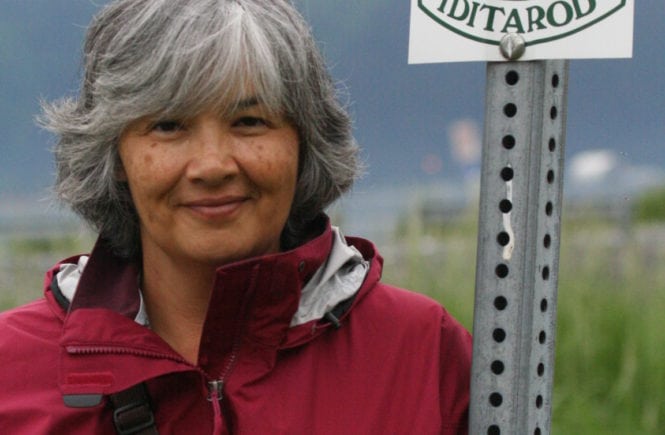
FORT COLLINS, Colo. — When Susan Devan Harness, an indigenous transracial adoptee, was removed from her home as a child, she was placed with a white family, and the resulting experience was a lifetime of otherness.

“You cannot take a child from a colonized race and place them in the midst of the colonizers and think everything’s going to go great,” said Harness, a Fort Collins author who said she is Salish Kootenai, of Western Montana.

The U.S. Supreme Court is considering a challenge to the Indian Child Welfare Act, also known as ICWA, enacted in 1978 to put in place adoption protections for Native American and Alaska Native children. If those protections are overturned, it would make it easier for non-native families to adopt a native child.

Before ICWA, indigenous children were removed from their homes at high rates. Studies showed 25% to 35% of indigenous children were being removed from their homes. Of that group, 85% were placed outside of their family and reservation community.

As someone who was removed from her home, Harness said she struggled to connect with American Indian peers in school and she also faced incredible difficulties trying to reconnect with her tribe.

There are complications to living in between those two worlds. The first, Harness said, is the historic violence and conflict that indigenous communities have faced at the hands of white communities.

“They’ve declared wars on us," she said. "Over a thousand wars, they’ve declared on us, the U.S. Army. They’ve objectified us and moved us when they didn’t want us. They’ve educated us in schools whose motto was ‘kill the Indian, save the man.’ ”

To understand who she was, she went to school to study anthropology. Eventually, she found others like her. They didn’t fit into white mainstream culture but didn’t necessarily have a place amongst American Indian peers, either.

“You can't be funny enough. You can't be scholarly enough. You can't be talented enough,” Harness said. “You're always going to be this person, this American Indian, living in white America.”

Harness wrote a book about her experience, aptly titled “Bitterroot,” named after a medicinal plant that grows near her tribe.

“It has the ability where if it goes through a lot of drought, it doesn’t bloom, but the first time it gets rain, it blooms in amazing ways,” she said.

Her book brought in rain. Harness reconnected with her tribe and even has an honor song. Now Harness knows her biological family, intimately, but that did not happen without a lifetime of emotional struggle.

“I don’t want to see other kids come out the same way I did, the same way a lot of people in my generation did, trying to figure out what happened to us when we’re in our 40s and 50s,” she said.

The U.S. Supreme Court has taken up challenges to ICWA three times — in 1989, 2013 and 2022. The current case is the most significant because it raises questions of equal protection under the Constitution.

The justices heard three hours of arguments Nov. 9. The high court wasn’t expected to rule in the case until next summer. Lower courts split on the case.

As the Supreme Court challenge goes on, Harness has a message: Anyone involved in a transracial adoption has an immediate responsibility to help the child find their place of belonging.

“They better be able to take that kid to the reservation every single year,” she said. “They better make friends with people in the tribe to ensure that child is given a proper education of who they are and where they came from.”

HER FANTASTIC WEBSITE: HERE 

Interview – The Archibald Project – American Indian Transracial Adoption


MORE ADOPTEE STORIES


Monday, July 26, 2021

Part 3: Victims of Adoption and Lies: Control the Message

REBLOG

Part 3
By Trace L Hentz


I woke up with two thoughts: there are two victims of adoption who need help and not necessarily from each other: the adoptee and the first mother. Each has its own burden and neither can heal the other.


CONTROL THE MESSAGE

Since I started this Victims series, I've heard from two new adoptees who came across this blog. I'm very happy - not because they are adopted but because we can now connect and relate as members of our own unique band of Native American adoptees. As each week passes, and the more I post about this history, perhaps even more adoptees will contact me.*

"Victim" is a word I don't like to use but in the case of Native adoptees, it fits. The adoption projects and programs in North America (US and Canada) intended to wipe out an entire population of Indian children by assimilating them (making them white) using closed adoptions. It was officially called the Indian Adoption Projects - but Canada and many states had their own programs like New York State's "Our Indian Program" and the Mormon's own Indian Adoption Program. How do you damage or destroy a culture? You abduct and claim their children as your own.

How this was planned and orchestrated is still kept under legal wraps, but the thousands of Indian children who were transracially adopted are certainly "victims" of planned ethnic cleansing. Not telling adoptive parents they were part of this program is quite a significant lie of omission, too. (Someday my hope is America will see an apology and eventually all parents will be informed. In the older days this country tried eugenics and sterilizing undesirables, and it's usually people who are considered minorities who are targets for this treatment.)

In adoption terminology, we are called transracial adoptees because we were raised outside our culture, in our case First Nations and America Indian territories. We're raised by non-Indian parents, far from the reservation. That would certainly destroy any contact and connections to our first families. With a closed adoption, no one would ever be able to find anyone, right?

It failed. My second book Two Worlds (out in 2012) is an anthology filled with adoptees that are living proof that the adoption/assimilation plan backfired. Adoption didn't kill our spirit or destroy our blood. The adoptees in this book did reunite with their relatives and tribes, despite closed adoptions.

Now with the amount of adoptees who've opened their adoption, including me, I'd imagine there would be more news and media coverage, right? No. Somehow the US adoption industry has its reputation and bankrolls to protect, and their jobs to protect, so they must protect their territory, control the message or lose their business.

I see how it works. A young lady doctor from California said to me a few days ago, "I wish to adopt a child and save them from being an orphan." I have heard and read those exact words before. The adoption industry has controlled that message and this mindset from their very beginning. This very nice doctor is young and open-minded so I asked her to consider that a child has its own name and ancestry - and would she consider becoming a legal guardian instead of an adoptive parent? I told her to get children out of the foster care system and if she could, raise as many children as she could afford. She is undoubtedly going to read up and do research, based on our conversation.

In the old mindset and in many adopters’ minds, there are still orphans! Can they imagine each baby has a mother and both are usually from a Third World Country, including Indian reservations in North American still plagued by poverty; and beyond that each baby has a country and relatives - so hardly anyone in the world is a true orphan!

That very old mindset has not been altered since the early 1900s (or 1958 when I was adopted). That is how you control the message. This doctor is among thousands of people planning to adopt in the near future with no clue how adoptees feel about this - even in 2012.

My point here is we have to do the work to change that mindset and control the message ourselves. We have to take to the streets and call lawyers and get lawmakers to open adoption records in every state. Until then, the adoption industry is winning and will still control the message.

*No one had done a blog for American Indian Adoptees like this prior, by the way. I started research in 2005, wrote my memoir on this history, and then created this blog in 2009 with medical studies, ideas, news and updates.

PART FOUR was accidentally deleted. Look for Part 5... Please write a comment or contact me. Thanks - Megwetch everyone!!


This series ran in 2012 on American Indian Adoptees. It was my most popular series on the topic of adoption…

Sunday, December 27, 2020

Is Culture How You Think?

REBLOG

By Trace L Hentz (5/14/2015)

So much about adoption is complicated for the adoptee.  If you are like me, you may feel torn between who you think you are, who you are inside, versus how you were raised and who raised you.

I am an adoptee as readers know. What a great many adoptees have told me is they feel they lost culture when not raised in their tribe, losing parents, grandparents and the language. Even typing those words hurts. Loss is loss. Loss hurts.

This has bothered me. I think that the loss is true yet culture is not completely lost.

How? You still have the blood and that is built-in culture. (It's not erasable or removable.)

I think Native Adoptees have a different thought process that was not acknowledged or celebrated or honored when they were young. Non-Indian parents may not have appreciated how sensitive or funny or curious you were or if they did see it, they didn't say anything nice about it.

Girls who were strong tomboys like me were criticized and shy boys who were sensitive were bullied.

One thing to remember: non-Indians don't think Indian. You do. It's not their fault. We're very different in how we think.

Sit back and remember all the times as a child you made people laugh. Remember how much you loved animals. Remember what made you cry - like a sunset or sunrise. Remember how you gave thanks for life and all that is sacred, even if you were alone. Remember watching westerns on TV and rooting for the Indians?

We have a choice as an adoptee to return home and what I call "go full circle." It takes patience. It requires courage. It costs money. It demands you take time to learn and relearn and listen. This return to your culture may take years! (We still have the burden of closed adoption records in many states.)

Every culture will say it's people who carry the culture.

There is no culture better than another. That is true. But the culture of Indigenous People lives in your breath, bone and blood. If you exist, it exists.

Nothing, including adoption, can ever erase it.


Please read the entire book series... it has so much important information to help you...
 
Trace is the author of One Small Sacrifice, the book series Lost Children of the Indian Adoption Projects  and the creator of the blog American Indian Adoptees.

Tuesday, September 29, 2015

Lasting effects of trauma reaches across generations through DNA

CBC RADIO |  September 27, 2015


Amy Bombay is Anishinaabe from Rainy River First Nation. She's an assistant professor of psychiatry at Dalhousie University in Halifax.
Amy Bombay is Anishinaabe from Rainy River First Nation. She's an assistant professor of psychiatry at Dalhousie University in Halifax. (courtesy Amy Bombay)


Listen 6:19
Indigenous elders often say that memory is in the blood and bone, that our stories are passed not just verbally but through a kind of genetic memory.
Well, it turns out that may not be far from the truth. Amy Bombay is Anishinaabe from Rainy River First Nation in Ontario.
Amy Bombay and family
Left Photo: Amy Bombay with her family. (courtesy Amy Bombay)

She's an assistant professor of psychiatry at Dalhousie University in Halifax, and has been studying the impact of trauma and how it reverberates through generations. She was drawn to this field of study, specifically related to residential schools, because of its effect on her own family.
"Both my grandparents on my father's side attended, and most of my aunts and uncles on that side as well," she explained.
KEEP READING

Wednesday, April 15, 2015

Bill aims to keep American Indian children with families

Archive Photo
LINCOLN, NE — While applying for her driver's license at age 16, Karen Hardenbrook saw her birth certificate and learned what her adoptive parents from Broken Bow never told her: she was born in Winnebago and her mother was a member of the Omaha Tribe of Nebraska. As a baby, the state removed her from her biological grandmother's crowded home on the reservation.

Today Hardenbrook, 57, lives on the Omaha Reservation in Walthill. She's an enrolled member but at times still feels like an outsider.

"I had a wonderful, beautiful (adoptive) home. I couldn't have asked for anything more," Hardenbrook said. "But I still wish I would have never left the res. I would have learned to dance. I would have learned to sing the songs. Now when I get out to the arena, I have to watch everyone, at 57 years old, because I don't know the steps."

A bill slated for a committee vote this week in the Nebraska Legislature would further strengthen protections of cultural identities for children like Hardenbrook by engaging tribal government and extended family mediation before removing children from tribal homes.

In 1978, Congress passed the Indian Child Welfare Act in response to what it deemed "a crisis of massive proportions." Between 25 percent and 35 percent of American Indian children were living in out-of-home placement, endangering the preservation of already dwindling American Indian tribes.
The federal law created standards that encouraged states to recognize the interests of Indian families and tribal governments when handling child custody issues. Nebraska adopted a nearly identical version in 1985.

"As sovereign entities, when one-third of the population gets taken out of your community, you won't have a tribe much longer," said Robert McEwen, attorney for legal nonprofit Nebraska Appleseed.
American Indian children represent just 2 percent of Nebraska's children but account for more than 5 percent of all children in out-of-home placement, one of the highest disparities in the nation, according to 2014 data from Nebraska's Foster Care Review Office.

The bill by Sen. Colby Coash of Lincoln would explicitly define when social workers can remove Native American children from their homes, making it harder to separate families and break the cultural ties

Coash said Nebraska's 30-year-old child welfare laws are too hazy for courts and caseworkers to effectively implement the federal law. When children or one of their biological parents are tribe members, state and federal laws require social workers to make "active efforts" to keep Native American families together — but state law doesn't define "active efforts."

"The state has a responsibility to not only provide for safety, but to keep the cultural connections," Coash said.

Under the bill, caseworkers would first have to contact tribal leaders, consult with mediators and exhaust all family counseling and mediation options before forfeiting parental rights. The Department of Health and Human Services would have to document each step.

The bill also broadens the definition of "expert witnesses," who are required to testify in American Indian child custody cases.

Judi gaiashkibos, executive director of the Nebraska commission on Indian Affairs, said tribal culture and state standards often clash in the welfare system, contributing to high numbers of Native American foster children.

"A caseworker might say, 'That's too crowded, that's not a good thing for the family. The child might be better in this white family. They get their own bedroom and bathroom,'" gaiashkibos said. "But they're not with the people they look like, their family and their tribal family."

Only 135 of Nebraska's 2,663 licensed foster homes are recognized as Native American, according to a DHHS spokesman. Many children are placed with non-native families, effectively severing tribal ties, gaiashkibos said.

She acknowledged that in emergency situations, temporary out-of-home placement might be needed.
The bill specifies that if a child can't remain safely at home, custody preference should be given to a foster home or adoptive parents that can best preserve and grow a child's political, cultural and social relationship with his or her tribe.

The Department of Health and Human Services has not taken a position on the bill, a spokesman said.
The Judiciary Committee is expected to discuss advancing the bill on April 14, according to the Associated Press. The bill is LB566.

Friday, February 27, 2015

RAD: Guest Post: Levi Eagle Feather Sr. (Part 3)


Part Two: RAD
by Levi Eagle Feather Sr.
Part Two: RAD
by Levi Eagle Feather Sr.

Part Three: RAD

By Levy Eagle Feather Sr.


The twentieth century has produced a world of conflicting visions, intense emotions, and unpredictable events, and the opportunities for grasping the substance of life have faded as the pace of activity has increased. Electronic media shuffle us through a myriad of experiences which would have baffled earlier generations and seem to produce in us a strange isolation from the reality of human history. Our heroes fade into mere personality, are consumed and forgotten, and we avidly seek more venues to express our humanity. Reflection is the most difficult of all our activities because we are no longer able to establish relative priorities from the multitude of sensations that engulf us. Times such as these seem to illuminate the classic expressions of eternal truths and great wisdom seems to stand out in the crowd of ordinary maxims... -Vine Deloria Jr. (preface to John Neihardts book "Black Elk Speaks")


Reality can be such a bastard sometimes! Just when you think you got it nailed, something happens and it all slips away. Good fortune, its second cousin, seems to operate along these same lines! You work hard, you’re ready, waiting, arms wide open and everything, then something happens blowing it all away. Does this sound familiar? Some people would say a person who thinks this way is just, “waiting for the axe to fall”. And if you think this way, too much of the time, it becomes a self-fulfilling prophecy.  
In medical terms, they say someone who thinks like this or sees life in this way is showing signs of paranoia. Meaning that someone is showing “a tendency….. toward excessive or irrational suspiciousness and distrustfulness of others.”1 In some situations, this kind of thinking can develop into a more serious condition known as schizophrenia. Noah Webster says schizophrenia is “a  psychotic disorder characterized by loss of contact with the environment, by noticeable deterioration in the level of functioning in everyday life, and by disintegration of personality expressed as disorder of feeling, thought (as delusions), perception (as hallucinations), and behavior —called also dementia praecox — compare paranoid schizophrenia”2   
In the two previous installments on RAD. I said my piece about certain spiritually abusive things that have happened to us American Indian people since western society brought its socially dysfunctional ways to our land. All of these happenings have been inducing an isolating oriented trauma on our people for several generations now. These things in particular, were the wars, reservations, boarding schools, relocation programs and adoption. Things which have worked in harmony, one after the other or simultaneously together, pretty much shattering and destroying the ways in which the beauty and magnificence of who we are as human beings can be fully realized, understood and enjoyed. I would say at this point RAD was intentioned and paranoid and schizophrenic type thinking and behavior are to be expected. 
The people who started these practices against us, in the past and continue to practice them today, have gotten away with it and continue making money off of doing it. Maybe not directly anymore, but indirectly still and that’s as simple and as good for them, as it can get! It indicates success, at least to them, of their westernized way of doing things.
By agitating and manipulating the destruction of others, confiscation of birthrights and through carefully and systemically applied abuses. These people have been capable, down through history of drastically changing tribal realities. Changing realities from systems which were built on self-reliance and were constructed for self-perpetuation to a single system which is built and designed solely for controlling and perpetuating the continued self-destruction of tribalism for profit. In short using you, your relatives and your friends to educate and labor towards your own self-destruction.      
If you think I'm wrong or misguided in my way of thinking. Look and see who has all the land, all the say and continues smiling all the way to the bank. We’ll call this group the top layer of western society. It is a top down system and we’ll call this layer the instigators or the 1% er’s of western society. The shot callers so to speak. There are other layers to this society. Here in America we know them as the middle, the lower, and the indigent classes. But for now I want to draw your attention to something else.
A simple fact! Obscured quite possibly by our own cultural amnesia of our individual ancestral roots is the fact we knew this was coming. A little less than 150 years ago my people, the Lakota, still understood our purpose. We knew and understood what sacrificing of ourselves was about. Of course, we still lived in Tipi’s on the wide open prairie and still hunted buffalo and much more. But we also lived in a civilized manner as civilized human beings then too. We knew and understood how fragile yet necessary keeping good relationships were to our health and wellbeing. We also knew and understood the threat and danger western thought and living posed to our health and well-being. The inevitability of this threat coming to fruition came through in dreams and visions of some of our great leaders of that time. Black Elk, a healer, was one of those leaders.
Black Elk was born in 1863 and lived until 1950. He was born well before the time of either the Sioux or the American Indian. He was born and lived as a Lakota. He thought, reasoned and behaved according to the Lakota way of being. He lived his life, perceiving reality understanding it and speaking of it in the language from within the worldview of his time. The Lakota worldview.
In the summer of 1872 at the age of nine Black Elk experienced a vision. In 1930, through a translator, Black Elk related his experience to John Neihardt, who in turn wrote about it as, “The Great Vision" in his book 'Black Elk Speaks". Whether this vision came to him through intuition, spiritual insight, or from hearing reports of what was befalling our Dakota relatives to the east, Black Elk's vision was spot on. Experienced well before the reservation, boarding school, relocation, and adoption eras of our people it was a foretelling. A vision foretelling the, as yet, unforeseen problems of becoming westernized. Something that we now experience on the regular, day in and day out. 

The following is an excerpt from this "The Great Vision:" 
And as we went the voice behind me said: "Behold a good nation walking in a sacred manner in a good land!"
Then I looked up and saw that there were four ascents ahead, and these were generations I should know. Now we were on the first ascent and all the land was green. And as the long line climbed, all the old men and women raised their hands, palms forward, to the far sky yonder and began to croon a song together, and the sky ahead was filled with clouds of baby faces.
When we came to the end of the first ascent we camped in the sacred circle as before, and in the center stood the holy tree, and still about us was all green.
Then we started on the second ascent, marching as before, and still the land was green, but it was getting steeper. And as I looked ahead, the people changed into elks and bison and all four footed beings and even into fowls, all walking in a sacred manner on the good red road together. And I myself was a spotted eagle soaring over them. But just before we stopped to camp at the end of that ascent, all the marching animals grew restless and afraid that they were not what they had been, and began sending forth voices of trouble, calling to their chiefs. And when they camped at the end of that ascent, I looked down and saw that leaves were falling from the holy tree.
And the Voice said: "Behold your nation, and remember what your Six Grandfathers gave you, for thenceforth your people walk in difficulties."
Then the people broke camp again, and saw the black road before them towards where the sun goes down, and black clouds coming yonder; and they did not want to go but could not stay. And as they walked the third ascent, all the animals and fowls that were the people ran here and there, for each one seemed to have his own little vision that he followed and his own rules; and all over the universe I could hear the winds at war like wild beasts fighting.6
And when we reached the summit of the third ascent and camped, the nation's hoop was broken like a ring of smoke that spreads and scatters and the holy tree seemed dying and all its birds were gone. And when I looked ahead I saw that the fourth ascent would be terrible.
Then when the people were getting ready to begin the fourth ascent, the Voice spoke like someone weeping, and it said: "Look there upon your nation." And when I looked down, the people were all changed back to human, and they were thin, their faces sharp, for they were starving. Their ponies were only hide and bones and the holy tree was gone.

6 At this point Black Elk remarked: "I think we are near that place now, and I am afraid something very bad is going to happen all over the world." He cannot read and knows nothing of world affairs.


Adoption causes RAD and RAD is a more normal reaction to adoption than not. Adoption in western society, especially the transracial adoption of American Indian children was and is an unnecessary and unnatural situation. Historically, the process of taking American Indian children away from families who birth them, love them, view them and understood them as their future causes immense suffering and loss that reverberates and is felt throughout each one of our nations. It broke our sacred hoop keeping the beauty of life just out of arms reach or so it seems.
The destruction didn’t happen overnight of course. Each and every one of these abuses aimed at destroying us was applied incrementally, generation after generation. Each and every one of them has done a pretty good job at what it was intended, and it isn’t over yet. It happened, some of it is still happening, and there isn't a whole lot we can do to stop it at this point. At least, I don't know of anything I can do that will.
This is not the reason I started writing this article, however. To talk endlessly about the things I cannot do or cannot change. The past is the past and there isn’t much we can do about that. Blaming won’t help, blaming ourselves and each other definitely won’t, but by being responsible and holding ourselves and each other accountable for recourse and recovery can.
As depressing as these three articles have all sounded, it was! I now prefer to spend the majority of my time working against the effects it has had on the hearts and minds of our people. So this will be the last I will have to say about all of that.
I’ve been working against the negative effects our past has had on us for the past 35 years or so. Both personally in my own life and the lives of my family members. As well as, professionally and as a volunteer within the American Indian community. Whenever the opportunity arose wherever it was I might have happened to be living at the time. Most recently I was able to offer my programming abroad, as a side job, amongst the folk in Germany, whenever the opportunity would arise.
I started out slowly of course way back then with baby steps. Thirty-five years have gone by and I seem to be walking much better now. On good days I think I might even be able to walk and chew gum. We shall see.
In the next series of blog articles I will be breaking away from the past. 
This series I’ll call Recourse and Repatriation, I will touch a little more on Black Elk’s vision and segue into a more personal accounting of my own experience of recourse and recovery from RAD. As well as offer my personal understanding of cultural repatriation and spiritual re-acculturation Lakota style.    
I am an American Indian, rightly enough. A card carrying one for all it might mean and for whatever purposes to which it matters. And I was adopted at one time. So be it. None of this has ever changed the facts of what really matters. I am a human being and I belong and so do my people. We belong to Mother Earth right here on this the North American continent. Until next time I wish you all enough. Hau Mitakuye Oyasin!

Part One: Reactive Attachment Disorder

Part One: Reactive Attachment Disorder
Monday, January 19, 2015

RAD: Guest Post: Levi Eagle Feather Sr.


Part Two: RAD
by Levi Eagle Feather Sr.

"as long as he's not bleeding he's fine
its just that
there are so damn many ways to bleed
that at times he's not really sure.....
but what the fuck
he's still standing" 
John Trudell
 
         The Western narrative sucks for a lot of people. Due mostly to the fact that the actual living of it comes nowhere near the glory of its telling. Not even close!
         For those of us who are descended from the original caretakers of this land the facts of living this reality get pretty bad at times. The more we become aware and understand why they get even worse and sometimes legendarily so!
         By default, those of us who got adopted out, we play a role in all of this. Our role may not be living on a reservation or even living within an American Indian community like a lot of our relatives do. But wherever we live, whatever we have done and whatever we have achieved has been accomplished outside the safety and comfort of our cultural heritage, our birthright. Needless to say, in this we have had no input or choice in the matter.
         This we share in common with all other American Indians alive today. No matter the location or condition of our social status or living situation, we are living the consequence of that reality. We lack our cultural heritage, our birthright and choice in the matter. In my opinion we are not better off because of it!
         I have never accepted my piece of this consequence as being a good thing for me. I didn't then and I still don't. For me it was not only something shitty which happened to me, but was for a long time beyond my ability to comprehend. In real time people were allowed to fuck me over and get away with it. Without any repercussions for them or reparation to me and it was considered to be something good I was expected to appreciate. It sucked then and when it happens now, it still does! 
         I spent eleven years of my early years resenting this and fighting back the best I could the best I knew how. When I was old enough and fed up with it enough I ran. It happened and this is how I dealt with it!
         Nothing much changed on the front end of that equation. The only change has been on the back end of it. How I choose to deal with it today. I don't run as much as I used too.
         I realize not everyone had my kind of experience. This is a good thing. For those of you who did I would like to think it's gotten better for you by now. Not everyone reacted to their experience the same way that I did either. This also I think is a good thing! I'm glad you didn't. I'm not a person who could wish a bad experience on anyone. For those of you who had less than a stellar experience. I would like to think you're finding your way and are doing better now.
         Regardless of what I think or how I felt about it. I was still raised to fit in with the Western narrative. To follow along and feed my energy and effort into the confusion and madness of it's dominence and influence. I've never been successfull at it though. At least not willingly and definitely not with any grace or much finesse. 
         Yes, I went to different schools and got their paper. I even went into it's military, eventually learning some valuable skills, eventually picking up trade experience. I've had several different kinds of jobs and occupations because of this. I've even experienced family and belonging along the way in a variety of places, situations and settings. But overall I never really fit, never liked it or felt like it was me and I suffered because of this.
         This is how being westernized, affected me. I think, it affects a majority of us American Indian folk in this way to varying degrees. I think it affects us, mentally, physically, emotionally and spiritually. Not always in the same ways on the same levels or to the same degree necessarily, but I think it affects us all. Not so that we can fit in, but so we can't resist it.
         The roots of the suck we experience are not rooted in a race, an ethnicity, a religion, or a creed though. Nor is it rooted in the color of anyone's skin. In my opinion it is rooted in a skewed way of thinking. A skewed way of perceiving reality. We are taught to think this way and we learn it and adapt to it!
         John Trudell, a Dakota relative of mine, broke our malfunction down this way.

            I've come to the conclusion that there are two perceptions of reality.
There's a religious perception of reality and there's a spiritual perception of reality.
            The religious perception of reality is about guilt sin and blame and thats the trap. Thats the chain thats hold every citizen.
            Spiritual perception of reality,...is about the responsibility. We're all responsible. We're not guilty we're  responsible.
            And its trying to make our way through these two perceptions of reality. That seems to be the biggest problem we're confronted with as human beings on the planet right now! Cause the religious perception is about dominence its not about responsibility its about subserviance and male authoritarian figures. And the spiritual perception of reality is about life and respect and responsibility.
            I think that the new world order is marching on. To me, in my own mind, it comes closer and closer to that... and is very real... that even though Germany and the Axis lost  WWII. I don't think that the Nazi's did. I think that the Nazi's won WWII. And I think that thier authoritarian methods of behavioral control, mind manipulation, converting human spirit into energy so that they can feed the need for their technologies. I think all of this stuff is just moving right on down the line again.
            And I think that there really is no political solution or an economic solution that exists right now. And I think we need to get a clearer perception of reality and where we are in reality and take responsibility. And by using our intelligence intelligently. Create the solutions that we need to create. Because right now we're just more fuel.
            Somewhere under the religious perception of reality a decision was made that the earth was the dominion of man and man therefore could plunder the earth. That man could take whatever they wanted from the earth. But somewhere in the progress of this mindset man has forgotten that we are part of the earth. And just the way that this system of technologic man has devised to take the resources of the earth and turn them into fuel and energy. They've taken our spirit and they're turning it through the process, through their process of civilization. Taking our spirit and turning it into energy to run their system. We need to remember that what happens to the earth happens to us. I'm not advocating anyones politics or any of it. To me, I just think we've got to continue to do the best that we can do. And thats what I'm trying to do.
1: https://www.youtube.com/watch?v=Xbjzujo1Qx8


         Of course this suck didn't happen overnight. It started long ago. Feeding off of and compounding with violence, the fear and chaos which separation from knowing and understanding ones place in nature causes. This skewed way of thinking and percieving reality was well developed and deeply entrenched in the western mind long before it reached our lands.
         It didn't take long for it to take root in our land. It's grown and morphed becoming highly refined and firmly entrenched. It's civilized now! Just as deadly and just as abusive, but civilized. At least in the western mind it is.
         Due to it, the destruction of our nature based cultures has become normal operating procedure. Insulating and normalizing our grief and suffering. Each successive generation the grief and suffering has mounted. Until our generation where loss of belonging and tribal identity have become common place.
         I look at this part of our history as the incubating process for a collective reattachment disorder. Individually, and as a part of a collective, we suffer this disorder without a clear and coherent way of seeing it. Consequently, we have no way of being able to find our way clear of it.
         In addition to this conditioned state of being. Where reactive attachment disorder exists and has morphed becoming the foundation of nearly all our societal interactions. We suffer too from a collective amnesia.
         This amnesia of which I speak is rooted in our loss of knowledge and understanding of cultural heritage. A knowledge base and educational body as large and comprehensive as all of that which we have received throughout our westernization process. For folks like myself access to this knowledge is critical.
         A friend of mine, Steve Smith, whose profession happens to be in the psychological field offered his thoughts on this subject.

            "Often when children are placed in abusive situations....situations where they are not cherished they bond to the anger, to the violence or some other abnormal thing (to bond to). They used to tell us that this is a permanent condition....the RAD or being bonded to abnormal things....but we are learning all the time what the elders have known....the brain is plastic (jargon for flexible) people suffering stroke or brain injury learn to use other parts of the brain to perform basic functions. Those of us exposed to living in places where we were not cherished....or even wanted can and do learn to bond normally to the healthy aspects and of course to those we love. Culture and spirituality are amazing at facilitating this kind of healing as is proper nutrition and exercise." Steve Smith via Facebook

           
            In future segments I will offer more on this subject. It won't be for everyone, necessarily. That is up to the reader to decide. It won't be definitive because our cultures are not that way and never have been. For those who are interested I can say it will be interesting, because it always is. What is more important, however and what I would most like for people to understand. Especially, folk like myself, American Indian folk who mistrust and hurt and don't clearly understand why. Homogenous tribal and cultural lifestyles may be a thing of the past, but culturally based living is not.
         You can be educated, undereducated, employed, unemployed, single, married to another Indian, transracially married, divorced, gay or straight, it doesn't matter. At the core of who we are, tribally, non-tribally, fullblood, halfbreed or fingernail is the reality of human beings being human. Our ancestral ways our ancestral cultural ways were the roadmaps the methods and the systems that taught us this. They educated, guided and showed us the why's, what's and wherefore's of how to live. So that we would belong, be connected and know and understand our place and our relationships to all that is. So until next time brothers and sisters stay classy and don't sweat the small stuff!  Hau Mitakuye Oyasin!   


click

Contact Trace

Name

Email *

Message *

NO MORE UPDATES

GO TO:  https://blog.americanindianadoptees.com/  for updates and news. THIS BLOG cannot be updated...