BLOGGER changed, not allowing us to UPDATE this back-up blog

(UPDATED 726/2025) issues with blogger are preventing this
Showing posts with label lost birds. Show all posts

Tuesday, July 9, 2024

Fiction: Lost Birds

👉 What We're Reading: Lost Birds (fiction)


Anne Hillerman's "Lost Birds," the ninth in her series, weaves together the search for a missing Navajo woman and a Diné woman's quest for her roots.

By Molly Boyle

"Lost Birds" by Anne Hillerman intertwines two searches on the Navajo Nation. Photograph by Inga Hendrickson.

AT THE OUTSET of Lost Birds (Harper), Anne Hillerman’s gripping ninth novel in the Leaphorn, Chee, and Manuelito series, a man rings up retired detective-turned-private-eye Joe Leaphorn for help.  As Cecil Bowleg begins to explain that his wife has gone missing from the Navajo Nation, a sudden explosion on the line interrupts the call.  Meanwhile, Leaphorn’s also searching for the biological parents of a DinĂ© woman who was adopted by a bilagáana (Anglo) family.  How’s it all going to come together with the help of Off.  Bernadette Manuelito and Lt. Jim Chee?  Read on.  According to Hillerman, the plot is inspired by the recently upheld Indian Child Welfare Act (ICWA), designed to protect Native children from removal from their communities.

Monday, May 6, 2024

Lost Records: Found Roots


How a Métis genealogist helps people uncover their Indigenous ancestry

Anne Anderson has spent a lifetime trying to piece together the past


Understanding your family history can offer a sense of identity and belonging, but for people with Indigenous ancestry, that history can be difficult to uncover. Survivors of the 60s Scoop, for example, have been told years after they were forcibly taken from their families as children that their birth records were lost or destroyed, meanwhile, churches held onto residential school records for decades.

Anne Anderson, a certified genealogist who researches family trees, has been trying to piece together the past throughout her entire life. Anderson is MĂ©tis from fur trade and has Cree, Illinois, Huron-Wendat and Huron-Abenaki ancestry. Since 2011, she has fielded calls from thousands of Indigenous people seeking information about themselves and their family histories.  

Anderson spoke to Hannah Carty about growing up Métis in the Belle River area, the importance of community, and the trials and triumphs of helping others uncover their ancestry.

HC: How has your understanding of Indigenous history in Canada deepened through your research?

AA: It’s been a lifetime of learning what happened to Indigenous people in Canada, and I don’t think I’ll ever know the whole story. I kind of always knew it, but there’s a lot of intolerance. That’s what this was all about. I’m glad that people are finally allowing Indigenous people to exist and that we’ve finally gotten to a point where they’re going to be able to at least be acknowledged. But there will not be reconciliation or justice until people not only understand that Indigenous priorities are just as important as their own, but that they also cherish them as much as their own. 

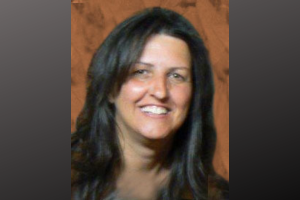
Image of a Métis woman with long brown hair, brown eyebrows and white teeth, smiling
Métis genealogist Anne Anderson (Photo courtesy of Anne Anderson).
 
READ INTERVIEW: https://broadview.org/lost-records-found-roots-how-a-metis-genealogist-helps-people-uncover-indigenous-ancestry/
 

Wednesday, March 16, 2022

LOST BIRD Cynthia Jeannette Mountain : her son Kyrie Irving is Little Mountain

(updated from 2018)
Kyrie and Asia Irving (Standing Rock)


Kyrie [Irving] stunned members of the tribe in 2016 when he said in an interview with ESPN that his mother Elizabeth was a member.  That sent the elders scrambling to identify a lineage, and they found his grandparents and great-grandparents from the White Mountain family in the Standing Rock reservation in South Dakota.
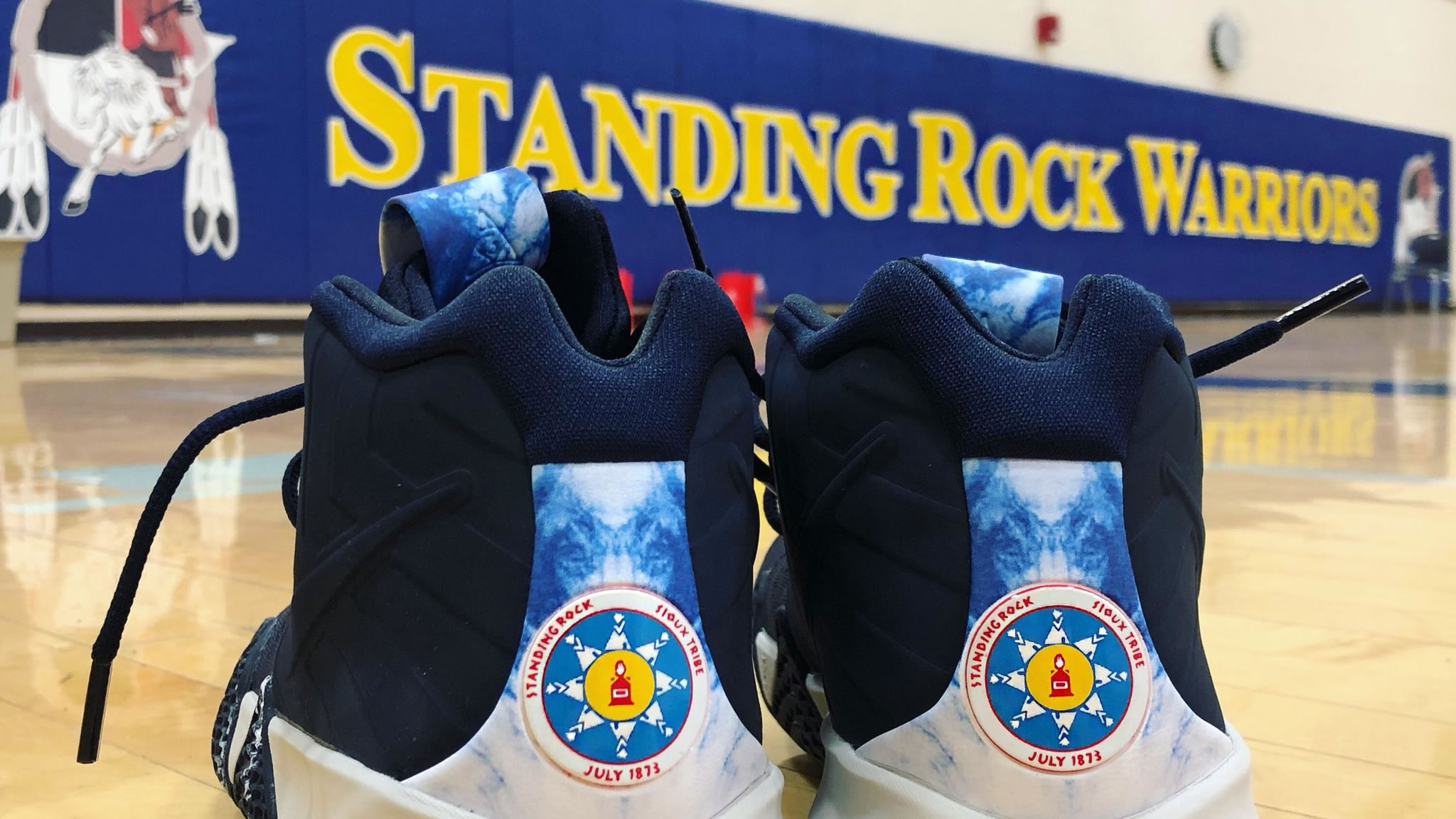
Irving supported the tribe’s fight against the Dakota Access Pipeline in 2016 and has had the tribe’s logo tattooed on the back of his neck. Earlier in 2018, he released a version of his Nike signature shoe that featured the logo as well. In 2017, Irving made a six-figure donation to the tribe.
The tribe and Irving have been working since April to put together a time for him to come and take part in a naming ceremony, which is sacred in Native American culture.


In Lakota, Irving’s name, ‘Little Mountain’ is ‘Hela’ (roughly: HEY-law), and his sister, Asia’s, name, ‘Buffalo Woman’, is ‘Tatanka Winyan’ (roughly: ta-TONG-ka WIN-yan). ‘Winyan’, ‘woman’, is perhaps most familiar to the rest of us in the derived form used to refer to one’s oldest daughter: ‘Winona’.  ESPN
Kyrie had apparently known of his tribal heritage for a while before acknowledging it publicly during the Dakota Access Pipeline protests in 2016. His mother was adopted out of the tribe as a child, a practice that was common at the time, but which was sharply curtailed by the Indian Child Welfare Act in 1978.

On his mother’s side, Kyrie and his sister are members of White Mountain family which is itself a part of the Hunkpapa band of the Lakota Sioux; Sitting Bull is probably the best known member of the band.

The tribe occupies some of the worst land in the Dakotas. The Sioux were, according to the 1868 Laramie Treaty, granted all of Dakota Territory west of the Missouri River, including the Black Hills. When George A. Custer’s expedition confirmed that there was gold in the Hills, the Army first put up a half-hearted effort to keep trespassers out of the Hills, before taking possession of them and protecting prospectors and others from the Lakota who objected to their presence.

Although the US had de facto, if not de jure, possession of the Black Hills, they were content to leave the rest of the Lakota reservation alone. However, passage of the Dawes act–which most famously opened up Oklahoma for homesteaders–led to a similar gutting of reservation lands in South Dakota.
What was left for Natives was the most unproductive land available. Such members of the tribes as had an inclination to learn how to farm and raise stock were forced to do so on the most marginal of land which was marginal for those purposes to begin with. The South Dakota Badlands, for example, occupy about a third of the land allocated to the bands of the Pine Ridge reservation.

At present, only about one out of a thousand U.S. citizens identify as Native American and their suffering is more or less invisible to the rest of the country. Life expectancy for those born onto the Pine Ridge reservation is less than 67 years. Unemployment is reportedly 60% on the Standing Rock, where 40% of the population is below the poverty line.

The pipeline protests of 2016 are perhaps illustrative of the occasional interest shown in Native issues. For a short period, any number of people embraced some Native phrases, and camped out along the Missouri River professing solidarity. When the protests ended, they left behind a gigantic mess and more or less forgot about the tribe, having done absolutely nothing to improve the plight of the people they were ostensibly there to support.

This is not a post about political parties, about who’s right and who’s wrong. This isn’t about blaming people of one particular set of political beliefs for a course of neglect and mistreatment that has gone on for over 200 years and for which people of all political stripes bear a measure of responsibility. This post is about the manifest suffering of ethnic groups that were more or less wiped out by the United States over the course of a century. It’s about the horrific world of Indian Health Services, the mismanagement of trust funds, and broken treaties.

What you choose to do with this information is up to you, but you need to know what life is like on these reservations.

source 

Kyrie and his mom Elizabeth. Elizabeth died from sepsis at a young age of 29. She was survived by her husband Drederick and their two kids – a son Kyrie and his sister Asia.

In spite of her early death, Elizabeth did a lot. She was a woman of an interesting and troubled fate.

She was born as Cynthia Jeannette Mountain. Her biological mother gave her for adoption. Thus, Kyrie’s mother got new parents and a new name – Elizabeth Ann Larson. She grew up in the family of a pastor and Lutheran minister George Larson and his wife Norma. She moved a lot in her childhood and teen years because of her father’s job.

After graduation from school she entered Boston University, where played for the local volleyball team. She was a brilliant student with open modern views and dreamed to become the first female president. After graduation she earned her living as a pianist, and was really talented in it. She could play by ear any melody.

Elizabeth tied a knot with Drederick Irving in 1990. They lived together during 6 years and gave a birth to a daughter and a son. She died six years later from skin disease. Source

Friday, December 6, 2019

Eisenhower policy of "assimilation" led to adoption

...In 1950, under the Eisenhower policy of "Assimilation" of Native American Tribes, the Gabrielino-Tongva were effectively terminated. The Mexican-American War was settled by the Treaty of Guadalupe, which ceded California to the United States. ... The Eisenhower policy of "assimilation" also lead to the adoption of over 50,000 Native American children into white, often suburban households (until the practice was ended by the Indian Child Welfare Act of 1978).


Saturday, November 30, 2019

We are more than adoptees

Mary Youngblood
Brule, Paul Laroche
Star Nayea

Eric Schweig

Paul DeMain
Chris Eyre 
Baby Veronica
Famous Lost Birds/Adoptees

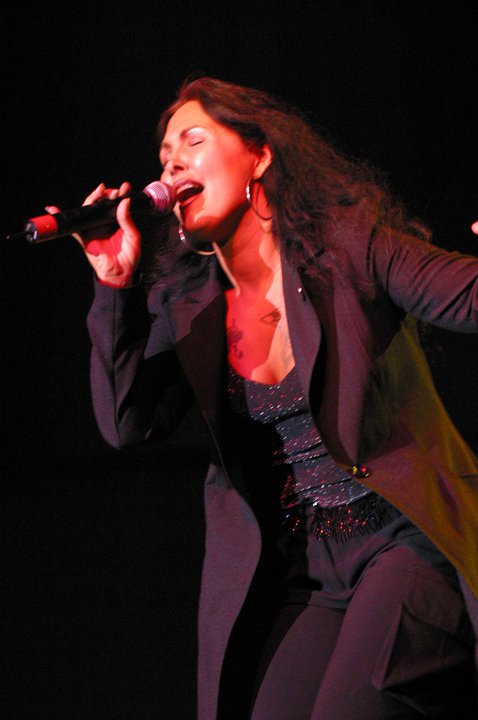
Star Nayea, raised in Detroit, Michigan, has often been described as the “little lady with a big voice,” who launched her career in Austin, Texas, then moved to New York City. In New York, several years ago, Star fully developed her unique contemporary edge of bluesy rock with hints of folk and traditional Native American vocals. Star, possibly Ojibwe-Potowatomi, adopted by a white family as an infant, is seeking her own birth family. Star currently lives with her son in Seattle.
BrulĂ©, aka Paul LaRoche, has a unique story to tell. Along with the amazing music, theatrics, and traditional dance troupe, Paul tells the story of how he came to realize his Native American heritage after nearly 38 years of separation from his biological family, who resides on the Lower Brule Sioux Indian Reservation in central South Dakota. Paul, adopted at birth off the reservation, discovered his Lakota heritage in 1993 after the death of both adoptive parents. He was reunited on Thanksgiving Day 1993 with a brother, sister, aunts, uncles, nieces and nephews. The discovery of his true heritage has greatly affected Paul’s life and those around him.
Chris Eyre was born in 1969 on the Warm Spring reservation in Oregon. He grew up in Klamath Falls, Oregon, adopted by a non-Native family. “I’m Cheyenne and Arapahoe. I went to school in Portland, Oregon. I pursued an associate’s degree in television, in directing; I earned my bachelor’s degree in media arts at the University of Arizona, and my master’s at New York University in filmmaking.” Chris Eyre attempts to display portraits of contemporary Native Americans as individuals who are plagued by problems common to all people, but who react within the confines of their own particular circumstances. He founded Riverhead Entertainment, a production company that for several years produced commercials, films, and documentaries.
Paul DeMain is a member of the Oneida (Wisconsin) and Ojibwe tribes, and was raised by a non-Native family in Wausau, Wisconsin. “I grew up with some compassionate liberals who never tried to hide my identity and encouraged me to inquire about it,” DeMain says. In the early 1970s, he made contact with the Oneida tribe, where he is enrolled. He has met his biological family. In 1986 he launched News from Indian Country, an independent newspaper that covers tribal politics, legal issues in Native and US courts, reservation crime, education and Indian art, with a circulation of 7,000 readers worldwide.
Eric Schweig was born to an Inuit mother and a Chippewa-Dene father in Inuvik, the Northwest Territories. At six months, he was adopted by a German-Canadian family. During his childhood in Inuvik, Bermuda and Toronto, he was systematically and physically abused by his adoptive parents then he ran away from home when he was 16, and became a laborer on construction sites. In 1987 he was “discovered” while walking down a Toronto street and cast in the movie The Shaman's Source. At least 16 films followed, most notably as Uncas in The Last of the Mohicans. During this time period he endured a “roller coaster of alcohol, drugs, violence, failed relationships, despair and confusion” [Schweig said] due to the abuse and racism and ethnic identity deprivation of his childhood. In 1996 he began to regain his cultural identity and is now primarily a carver, especially Inuit spirit masks, living on Vancouver Island, and he continues to act in films. He is a passionate opponent of the adoption of Aboriginal Native People by Europeans. Eric’s Adoption Speech: http://www.mohicanpress.com/mo05005.html
Mary Youngblood, Chugach Aleut/Seminole, is a Grammy award winning flutist, who was adopted and raised by a non-Native couple. Mary opened her adoption at age 26.

We are survivors!
We are actors, musicians, directors, athletes, comedians and so much more


Wednesday, January 9, 2019

BITTERROOT: Adoption Didn't Solve the Indian Problem


Adoption didn’t solve the “Indian Problem.” Its weight simply shifted to our small shoulders. No one told us “we” represented “them.” We had to find that out for ourselves. Some of us are still looking. Bitterroot is a roadmap. - Susan Harness
An author recounts how 1960s policies ripped apart families and communities, including her own.

MUST READ: Adoption didn’t solve the ‘Indian Problem’ — High Country News

See her other posts on this blog... HERE
 HERE

Susan Devan Harness, author of Bitterroot: A Salish Memoir of Transracial Adoption is a member of the Confederated Salish Kootenai Tribes, a writer lecturer and cultural anthropologist living in Fort Collins, Colorado.
10-16-2019
This past weekend Bitterroot: A Salish Memoir of Transracial Adoption took home two awards at the High Plains Book Festival:  Creative Nonfiction and Indigenous Writer.  I am so honored to be among so many really great authors.

Thank you goes to the readers and staff of the High Plains Book Festival, the University of Nebraska Press for their seeing the value of this project, my advisers Kate Browne and John Calderazzo, the overwhelming support from friends and family and the many voices who contributed to this work.

It is humbling.

All my best,
Susan
Susan Harness, M.A.

STOLEN GENERATIONS

Tuesday, November 4, 2014

Becoming a Grandma again

baby me, adopted
By Trace (Lost Bird-Adoptee) 2014

A few days ago I became a grandma again. I cried quietly when I got to hold my precious new granddaughter, who has all her fingers and toes and hardly cried a peep.

As I was holding her, I imagined how lucky she is to have her whole family with her (both sides of her extended family were there.)

Then I imagined how I must have felt when my own mother Helen disappeared and was not there to hold me. Or nurse me. Or dress me. Or sing to me.

I was placed in an orphanage. I had two living parents, a huge extended family, yet they put ME in an orphanage. How can I ever thank you Catholic Charities for tearing me from my own flesh and blood and for doing this heinous thing called "stranger adoption" because my mother was unmarried, when my own father wanted to raise me?

I cannot imagine how traumatized I was when Helen never came to hold me. I just know it is blocked in my body somewhere, buried so so deep I cannot reach that primal pain.

For many infants handed to strangers, they experienced birth trauma, when shock takes over and your baby tears are actually screams.

Then we get a bit older and experience even more trauma.
Read this:  http://splitfeathers.blogspot.com/2010/11/four-traumas.html

There is so much joy in becoming a grandma. To imagine my grandchild being ripped away from our family and handed to strangers, it's not possible for me to imagine that.

It is impossible for me to imagine that happening to her.

Monday, April 14, 2014

#Baby Veronica #ICWA: Future Threats coming


Another book about this appalling history

The Adoption Crunch, the Christian Right, and the Challenge to Indian Sovereignty
About Kathryn Joyce
Kathryn Joyce is the author of The Child Catchers: Rescue, Trafficking and the New Gospel of Adoption and Quiverfull: Inside the Christian Patriarchy Movement (Beacon Press 2009). Her work has appeared in the New York Times, the Nation, Slate, Mother Jones, the Atlantic, and many other publications.


While the demand for adoptable babies is increasing in the United States—driven in large part by evangelical Christians—the number of babies available for adoption is declining. Adoption agencies are now targeting tribal nations as a potential new source of babies to adopt, and forming alliances that threaten to undermine the sovereignty of Native American nations.
**This article appears in the Winter 2014 issue of The Public Eye magazine.**
On September 23, 2013, a child-custody battle that was nearly five years in the making came to its conclusion in Oklahoma when an Army veteran from the Cherokee Nation, Dusten Brown, handed over his daughter, Veronica, to Matt and Melanie Capobianco, a White couple from South Carolina who had raised her for the first two years of her life.1
Brown gained custody of four-year-old Veronica in December 2011, after a South Carolina court ruled that the adoption process had violated federal Indian law. Brown’s attorneys also argued that Christina Maldonado—Brown’s ex-fiancĂ© and Veronica’s biological mother, who is Latina—had deliberately concealed plans to let the Capobiancos adopt her.2  As the custody decision was reversed following a 2013 Supreme Court ruling,3 and Veronica was tucked into the Capobiancos’ car to return to South Carolina, the scene was broadcast across national and social media to two polarized camps. Brown’s supporters condemned the Capobiancos as baby-snatchers stealing an Indian child from her loving father, as tens of thousands of Native children had been systematically removed from their families in decades past. The Capobiancos’ supporters condemned Brown as a deadbeat dad who had given up his rights long ago and was hiding behind an obsolete law.
...In the 1950s and 1960s, boarding schools gave way to the Indian Adoption Project, which removed children from Native homes and placed them in foster care or adoptive homes. By the 1970s, an astonishing one-quarter to one-third of all Indian children in the United States had been taken away from their families, and 85-90 percent of them were placed in non-Indian families.  The generation came to be known as the “Lost Birds.”55


“There were literally American Indian communities where there were no children,” said Terry Cross. As the broader Native American community realized what was happening and began to collect testimony for Congress, other stories emerged: of Native American women pressured into relinquishing babies for adoption just after birth while still under the effects of anesthesia, and of women waking up to find that their babies were gone and, sometimes, that they had themselves been sterilized.56

 Read more→  HERE

Friday, November 25, 2011

"Little Papoose"

Amateur genealogist tracks down daughter's birth mother
11/25/2011 By Noelle McGee, http://www.news-gazette.com/news/people/2011-11-25/amateur-genealogist-tracks-down-daughters-birth-mother.html


Left to right, Susy Riggle of Georgetown; her adopted daughter, Amy Norman, of Indianapolis; her husband, Rich Riggle of Georgetown; and Karen and Cliff Andersen of Baraga, Mich, Norman's birth mother and brother, taken in July in Michigan. Susy Riggle searched for and found Karen Andersen in 2009. This past summer, Andersen reunited with Norman 33 years after she gave her up for adoption.


GEORGETOWN — As an amateur genealogist, Susy Riggle has researched generations of relatives all the way back to before the Civil War.

But one of her most meaningful searches uncovered a woman who isn't related by blood or marriage — her adopted daughter's birth mother.

Riggle found the woman in the fall of 2008 after about a year of searching for her. This past summer, Riggle helped reunite the birth mother with the birth daughter she hadn't seen since placing her for adoption 33 years ago.

"I really believe it was a God thing," said Riggle, who credits God with bringing her daughter — Amy (Riggle) Norman, who now lives in Indianapolis — into her and her husband's lives and bringing Norman and her birth mother together again.

Both lifelong Georgetown residents, Riggle — a retired teacher, guidance counselor and principal in the Georgetown-Ridge Farm school district — and her husband — Rich, a retired coal miner — had a son, Matthew, in 1970. A few years later, after trying unsuccessfully to have another child, they turned to adoption through the Easter House Adoption Agency in Chicago.

Amy Riggle was born on June 27, 1978, in Chicago. The Riggles took her home when she was four days old.

"She was precious," Riggle recalled. "She had dark hair and dark eyes. When my son saw her wrapped up in her blanket he said, 'She looks like a little papoose.'"

The Riggles raised their children on about 30 acres of land 2 miles east of Georgetown that's been in Susy Riggle's family for 175 years. Norman said she had an ideal childhood, growing up in a loving, Christian family with both sets of grandparents nearby.

"I always knew I was adopted, but I never thought anything of it," said Norman, who learned when she was 4 years old. "My mom was a counselor, so she thought it was important to tell me everything she knew, which was two typed paragraphs from the adoption agency. She never spun it like I wasn't wanted. I always viewed it as an unselfish act by someone who knew she couldn't take care of me. Because of that and because I had such a great family, I never felt like I needed to go looking for greener pastures."

The two typed paragraphs didn't reveal much, only that her biological mother was 20 and her biological father was 24. Both parents had dark hair and dark eyes. The back of Norman's adoption decree held one more clue: the name Cadeau.

"We had been told she was French," Riggle said of the birth mother's nationality.

Riggle was inspired to launch a search in the fall of 2007 after meeting a woman who had been adopted through Easter House and recently reunited with a sister. "I always thought if I could do anything to help her find out more about herself or her heritage, I would," said Riggle, who had her daughter's blessing.

With the help of a retired policeman, who was an adoptee himself, and a Massachusetts woman, Riggle got the name of two likely candidates. One was Karen (Cadeau) Andersen who lived on the west side of Michigan's Upper Peninsula.

Rich Riggle had been taking deer hunting trips on the east side for years. So in fall 2008, Riggle joined him, and the two made a side trip to Baraga, where Andersen lived. During their two days there, a librarian found an obituary for a woman named Cadeau, who was a member of the Keweenaw Bay Indian Community in Baraga.

"That's the first time we learned about the Native American connection," Riggle said, adding the woman turned out to be Norman's biological grandmother.

While visiting the local newspaper, the couple tracked down Andersen's cousin, John Cadeau. "He was kind of hesitant at first, but he agreed to let her know we were trying to get in touch," Riggle said. "When we got back home, the phone rang. A woman said, 'I'm Karen Andersen. I heard you've been looking for me.'"

Over the next few months, Riggle, Andersen and Norman, now a mother herself, exchanged phone calls, emails and pictures. Andersen learned that Norman was an exceptional student who graduated in the top of her class at Georgetown-Ridge Farm High School and a standout athlete who set records in volleyball, basketball and track and later attended Georgetown College in Kentucky on volleyball and academic scholarships. She also learned Norman and her husband, Isaac, had a son, Jonah.

"It affirmed her decision to place me for adoption," said Norman, who discovered Andersen wasn't married and didn't have a good job when she got pregnant. "She wanted her child to grow up in a two-parent home, in a home that was religious. She was so happy to learn that I've had a good life."

Norman was equally happy to learn that Andersen is "in a good place." She said her birth mother and her family — who are Ojibwe or Chippewa — moved back to Michigan and reconnected with their Native American community. Andersen married and had a son, Cliff, who's 24. She earned a bachelor's degree, and now works as a wildlife technician for her tribe.

The Riggles first met Andersen, her son and siblings in person at the tribe's annual pow wow in Baraga in July 2009. This past summer, they took Norman and her family — including infant daughter, Elizabeth — and their son, his wife and their kids.

When Norman met Andersen, who was dressed in native attire for the pow wow, she described feeling the way she did when her children were placed in her arms for the first time. "We both teared up, though neither one of us are emotional," Norman said.

That weekend, Norman also got to know her biological brother, an uncle and several aunts, one of whom could pass for her older sister.

"We formed a quick bond," Norman said of Andersen's sister, Denise. "We're both tall and look alike. We played the same sports in high school and college. We also have similar personalities."

Norman said can't help but feel doubly blessed to have her adoptive parents, who "will always be my mom and dad," and this new family, with whom she plans to keep in touch via Facebook. She said she and her husband also hope to visit them every other year or so.

"As my kids get older, I want them to know about this part of their heritage and culture," she said.

I love stories like this!   Trace


click

Contact Trace

Name

Email *

Message *

NO MORE UPDATES

GO TO:  https://blog.americanindianadoptees.com/  for updates and news. THIS BLOG cannot be updated...