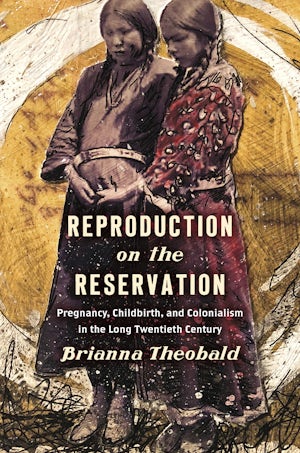
The United States did attempt to destroy future generations of American Indians using their own agency Indian Health Services, who successfully sterilized 35% of Indian women without their knowledge and consent.
In his report "A History of Governmentally Coerced Sterilization: The Plight of the Native American Woman," published on May 1, 1997 by Michael Sullivan DeFine, University of Maine School of Law, writes:
The United States General Accounting Office Investigation of the Indian Health Service (HIS) Procedures and the Meaning behind Statistics of Population Growth: Complaints of these unethical sterilization practices continued, but little was done until the matter was brought to the attention of Senator James Abourezk (D-SD). Finally, affirmative steps were taken - specifically the commissioning of the General Accounting Office - to investigate the affair and to determine if the complaints of Indian women were true - that they were undergoing sterilization as a means of birth control, without consent. The problem with the investigation was that it was initially limited to only four area Indian Health Service hospitals (later twelve); therefore, the total number of Indian women sterilized remains unknown.
The General Accounting Office came up with a figure of 3,400 women who had been sterilized; but others speculate that at least that many had been sterilized each year from 1972 through 1976.
The General Accounting Office confined its investigation to Indian Health Service records and failed to probe case histories, to observe patient-doctor relationships, or to interview women who had been sterilized. This deplorable lack of thorough investigation only served as an attempt to placate the concerns of Indian people.
The General Accounting Office investigators concluded that Indian Health Service consent procedures lacked the basic elements of informed consent, particularly in informing a patient orally of the advantages and disadvantages of sterilization. Furthermore, the consent form had only a summary of the oral presentation, and the form lacked the information usually located at the top of the page notifying the patient that no federal benefits would be taken away if she did not accept sterilization. The General Accounting Office notified the Indian Health Service that it should implement better consent procedures. Some Indian Health Service Area Directors were pressured by local Indians and by Indian physicians and staff to suspend certain nurses and to move the hospital administrators to another post. Other than that, however, there was little else done by government officials.
Outraged by the level of governmental inaction, Indian people accused the Indian Health Service of making genocide a part of its policy. For the Indian Health Service, this was a serious accusation, as the purpose of this agency was to somehow alleviate the terrible health conditions in Indian communities. The Indian Health Service defended itself by relying on the inaccurate sterilization figures provided by the General Accounting Office. In reality, however, the accusation of genocide was not far off base.
As Thomas Littlewood stated in his book on the politics of population control, “non-white Americans are not unaware of how the American Indian came to be called the vanishing American . . . [t]his country’s starkest example of genocide in practice.”
From a statistical point of view, the reality of the devastation of Native American women victimized by sterilization can be observed through the comments of Senator Abourezk himself: “...given the small American Indian population, the 3,400 Indian sterilization figure [out of 55,000 Indian women of childbearing age] would be compared to sterilizing 452,000 non-Indian women.”
Conclusion: Science has provided a means of categorizing and victimizing those in society deemed unworthy of continued existence. Its influence in academic and political circles has created a pervasive social bigotry that rewards extermination over reform. The failure to embrace the racial and cultural diversity of this country has left a wake of destruction and oppression in minority populations. It is time for the pundits of social change to rearrange their thinking and give back to the people the power to choose what is right for themselves. [Footnotes removed]