BLOGGER changed, not allowing us to UPDATE this back-up blog

(UPDATED 726/2025) issues with blogger are preventing this
Showing posts with label genocide. Show all posts

Wednesday, November 27, 2024

Scalp Bounties | DAY OF MOURNING | Thanksgiving in Plymouth

👉 “Bounty” shows daily at the Old State House and can be viewed online at the Upstander Project’s website, which also features a timeline and a teacher’s guide to the film and the issues it deals with.

New film at Old State House highlights Cambridge’s ties to colonial ‘scalp bounties’

By Beth Folsom |November 11, 2024

Spencer Phips’ scalp bounty proclamation issued in 1755. (Image: Penobscot Nation Museum)


“Bounty,” the newly installed film at Boston’s Old State House, is only nine minutes long, but its powerful and disturbing message looms much larger for audiences. Whether tourists or locals, visitors to the Old State House usually expect to tour the 1713 building to glimpse the legislative history of Massachusetts, particularly the events and public debates surrounding the Stamp Act, the Boston Massacre and other aspects of Revolutionary history. Now part of Revolutionary Spaces, which also oversees the Old South Meeting House, the Old State House is sharing the history of brutal attacks on New England’s Indigenous peoples as part of Massachusetts colonial policy – a legacy that is surprising and unnerving to those used to a purely celebratory telling of the colony’s story.

The exhibit, housed in the Old State House’s council chamber, tells the story of so-called “scalp bounties” – one that has a direct connection to Cambridge as a whole and, in particular, to History Cambridge’s headquarters at 159 Brattle St. The adopted son of Sir William Phips, the first governor of the Province of Massachusetts Bay, Spencer Phips entered politics in his own right in 1721 when elected to the provincial assembly. His family connections had set Phips up for political and economic prominence and, several years after his graduation from Harvard in 1703, he bought a large tract that encompassed much of what is now East Cambridge and settled there with his family.

Phips was appointed to the governor’s council in 1721, and from 1732-1757 was the lieutenant governor of the Province of Massachusetts Bay, which included the Massachusetts Bay Colony, the Plymouth Colony, the Province of Maine, Martha’s Vineyard, Nantucket, Nova Scotia and New Brunswick. During two periods (1749-53 and 1756-57) Phips served as acting governor while William Shirley was abroad.

As a prominent landowner and politician, Phips had set his children up to marry well; in the 1730s Phips’ daughter Rebecca married the up-and-coming merchant and land speculator Joseph Lee and settled into 159 Brattle St., known commonly as the Hooper-Lee-Nichols House. While we do not have direct evidence that this house, which serves as the headquarters of History Cambridge, was occupied by enslaved people on a permanent basis, we know that Joseph Lee and Rebecca Phips enslaved two men, Caesar and Mark Lee/Lewis, on other Massachusetts properties that they owned, and it is likely that one or both stayed with the Lees when they were at their Brattle Street property.  Spencer Phips, too, was an enslaver, holding five people in bondage, so his children would have grown up expecting to be waited on by enslaved servants.

In addition to his land in Cambridge, Phips was part-owner of a large tract on what is now the central coast of Maine (then part of the Province of Massachusetts Bay). In 1719, the owners began to develop the land for white settlement to the objection of the local Abenaki People, who argued that their leaders had made land grants to the colonists without authorization from the tribe.  Conflicts increased in the 1720s, leading to what is known as Dummer’s War from 1723-1727. For the next several decades, tensions flared between the Abenaki and the colonists, leading Shirley to declare war on the Abenaki in 1754.

In its declaration of war, Massachusetts made an exception for one group of Abenaki: the Penobscot People, whom the colonial government claimed were exempt from their attacks.  In reality, the position of the Penobscot made them vulnerable to the same brutality at the hands of colonists as other Abenaki.  In the ongoing colonial battles between the English and the French, Indigenous peoples were pressured to take sides; although the Penobscot desired to remain neutral, their geographic location meant that they could not escape colonial politics. Seen as pro-British by the French and pro-French by the Maine colonists, the Penobscot found themselves pushed increasingly toward French alliance because of incidents such as a 1755 attack by New England militiamen on a Penobscot fishing party.

In 1755, while Shirley was away from the colony, Phips issued a declaration of war against the Penobscot, offering cash rewards for each scalp of a Penobscot person turned into the colonial government. Phips’ proclamation put a value of 50 pounds for males over age 12, while women and male children under 12 were deemed to be worth 25 pounds and female children were worth 20 pounds. The next year, the colonial assembly voted to allow scalp bounties of up to 300 pounds – by far the largest sum ever offered in a wartime declaration.  In 1759, Massachusetts Gov. Thomas Pownall seized control of the Penobscot River and the homelands of the Penobscot people by force. 

Phips signed the declaration of war and the scalp bounty proclamation in the council chamber of the Old State House; in 2021, Upstander Project created a short film featuring several current-day Penobscot families reading the text of the proclamation aloud in the chamber.  Penobscot Nation tribal ambassador Maulian Bryant emphasized the importance of not only telling the story of the Phips Proclamation, but doing so in the physical space where these and other decisions were made that so greatly affected the Penobscot and other Indigenous peoples:

It conveys this empowering sense of resilience and that Penobscot people, Indigenous people all over this country were not supposed to still be here. That there were very systematic attempts to exterminate our people in order to have our land taken. So the fact that we are still living here in our home, and we will grapple with this trauma and we will reflect on it and honor our ancestors, but we need to do that by being strong, proud Penobscot people. And this project was a way to reclaim some of that space.

SOURCE: https://www.cambridgeday.com/2024/11/11/new-film-at-old-state-house-highlights-cambridges-ties-to-colonial-scalp-bounties/

History Cambridge is proud to partner with the Upstander Project to work toward the amplification of Indigenous voices and a broader understanding of local Indigenous histories during this Native American Heritage Month and well beyond.


🦃THANKS BRADFORD?


 Plymouth still celebrates (of course)

I do not... Trace
 

The National Day of Mourning plaque on Cole's Hill in Plymouth, Massachusetts

The first National Day of Mourning event was held on Thanksgiving Day, November 26, 1970 on Cole's Hill in Plymouth, Massachusetts. James delivered an amended speech[1] beside a statue of Ousamequin, including


"We forfeited our country. Our lands have fallen into the hands of the aggressor. We have allowed the white man to keep us on our knees. What has happened cannot be changed, but today we must work towards a more humane America, a more Indian America, where men and nature once again are important; where the Indian values of honor, truth, and brotherhood prevail.


You the white man are celebrating an anniversary. We the Wampanoags will help you celebrate in the concept of a beginning. It was the beginning of a new life for the Pilgrims. Now, 350 years later it is a beginning of a new determination for the original American: the American Indian."
- Frank "Wamsutta" James, first National Day of Mourning, November 26, 1970[2][4]

The event was attended by close to 500 Native Americans from throughout the United States[1] and has been held annually on the fourth Thursday in November every year since.  James' speech was one of the first public criticisms of the Thanksgiving story from Native American groups.[2]

DAY OF MOURNING:  NOVEMBER 28, 2024 

HEADLINES

Seattle Magazine: Chef Overcomes Personal Troubles to Celebrate his Native American Roots

Arizona Republic: Thanksgiving always reflected culture. Indigenous chefs are reclaiming it

Wednesday, November 15, 2023

2023: Reject colonial holidays that perpetuate dangerous stereotypes and whitewashed history


LEARN MORE: https://www.truthsgiving.org/

About Truthsgiving

Decolonize and celebrate Truthsgiving

There are many colonial mythologies about Indigenous Peoples and the founding of the US and Canada. Thanksgiving is one of them, however, in the words of Wamsutta Frank James, Wampanoag, “the Pilgrims had hardly explored the shores of Cape Cod four days before they had robbed the graves of my ancestors, and stolen their corn, wheat, and beans.” The truth is that real history has been whitewashed and that Thanksgiving perpetuates white supremacy and romanticized notions about Indigenous Peoples. To celebrate the current Thanksgiving mythology is to celebrate the theft of land through ethnic cleansing and enslavement. It is a lie that overlooks the genocide of Native American Indigenous Peoples and the enslavement of African Indigenous Peoples in order for settler-vigilantes and colonial militias to steal land and labor--the legacy of which is still felt today.

Tuesday, December 6, 2022

HISTORY: How the "free" state of California enslaved Native children

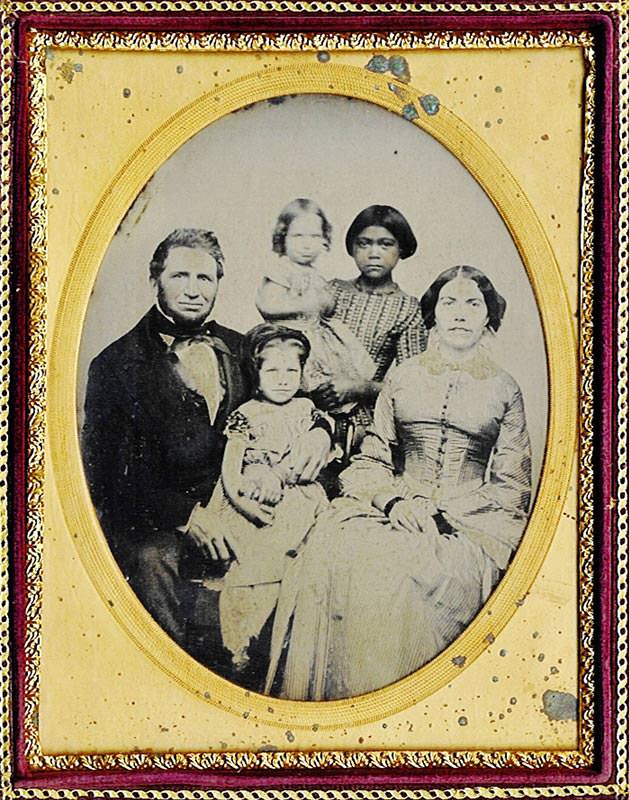
Photo of Kate Camden, a Native girl who at age 10 was forced into servitude for a white family living in Shasta County. Photo is one of few records that exist showing Native children entrapped by California's apprentice and guardianship laws // Credit: Camden Family Portrait, circa 1857-1859 courtesy of Whiskeytown National Recreation Area, WHIS 9066

 Kate Camden family portrait

New Episode of ACLU Gold Chains Podcast Examines Indigenous Child Slavery in 19th century California, Connects to Upcoming U.S. Supreme Court Case Brackeen v. Haaland

How the "free" state of California enslaved Native children

Media Contact: press@aclunc.org, (415) 621-2493

SAN FRANCISCO, CA – California came into the Union as a free state in 1850 with a constitution that banned slavery. So how did white settlers in the mid-19th century get away with enslaving Indigenous children, some of them as young as 2 years old? And why does this little known, terrible chapter of California history matter today?

Today, the ACLU of Northern California released the third episode of Gold Chains, our podcast about California’s hidden history of slavery. Indigenous Injustice” examines a 19th century state law called the Act for the Government and Protection of Indians that effectively legalized Indigenous child slavery and encouraged kidnappers to snatch Native children from their tribal communities.

“The horror of what happened in California, the genocidal violence against Native people, and especially the enactment of that violence against children, is unfathomable,” said historian Stacey Smith, who appears as a guest on the show.

“Indigenous Injustice” isn’t just ancient history. Over time, the practice of forcibly separating Native children from their tribal communities has taken on many forms. There were the so- called Indian Boarding Schools. A variety of other government-sanctioned adoption schemes have funneled Indigenous children into Non-Native, mostly white households.

Currently, there’s a landmark case scheduled to be heard by the U.S. Supreme Court on Nov. 9 – Brackeen v. Haaland – that deals with the very same issue of the forced removal of Native children from their families, tribes and tribal culture. It threatens to dismantle the Indian Child Welfare Act (ICWA), which was passed to prevent Native children from being removed from their communities.

The American Civil Liberties Union, along with 12 ACLU affiliates ( including the ACLU of Northern California) have filed an amicus brief with the U.S. Supreme Court, urging the court to uphold the constitutionality of the Indian Child Welfare Act.

“Indigenous Injustice” is a timely story that connects the dots between Indigenous child slavery in California to the present.

Link to Episode Website


November 1, 2022

Episode 3:
Indigenous Injustice

California joined the Union as a so-called free state in 1850. So how did white settlers get away with enslaving Native children until they were young adults?

We explore a little-known California state law called the Act for the Government and Protection of Indians that unleashed genocidal violence against Indigenous children. And we connect the dots between that terrible past and a landmark upcoming U.S. Supreme Court case.


Episode Credits:

Produced by the ACLU of Northern California

Host and writer Tammerlin Drummond

Senior Producer and Editor Joanne Jennings

Mix and Original Score Renzo Gorrio

Executive Producer Candice Francis

We’d like to thank our wonderful guides Stacey L Smith, William Bauer and Tedde Simon.

Our associate producers are Lisa P. White and Carmen King.

A special thanks also to our voice actors Pauline Schindler, William Freeman, and Avi Frey.

Elize Manoukian provided fact-checking and production assistance.

Field recording was done by Julie Conquest, Ron George and Eric Gleske.

We’d also like to thank the following members of our Gold Chains team: Brady Hirsch, Gigi Harney and Eliza Wee. Thank you also to Abdi Soltani, executive director of the ACLU of Northern California.

A special thanks to World Affairs, Oregon State University and the University of Nevada, Las Vegas for providing us with recording studios.

Archival sound was provided courtesy of Periscope Films and Prelinger Archives.


Episode Guests:

William Bauer is a professor of history at the University of Nevada, Las Vegas and a citizen of the Round Valley Reservation. He is the author of California Through Native Eyes: Reclaiming History and We Were All Like Migrant Workers Here: Work, Community and Memory on California’s Round Valley Reservation.

Stacey Smith is an associate history professor at Oregon State University. She is the author of Freedom's Frontier: California and the Struggle over Unfree Labor, Emancipation and Reconstruction.

Tedde Simon is the Indigenous justice advocate at the ACLU of Northern California and a citizen of the Navajo Nation.


Additional Resources:

Gold Chains: The Hidden History of Slavery in California, ACLU of Northern California

Among the Diggers of 30 Years Ago, Helen M. Carpenter

Early California Laws and Polices Related to California Indians Kimberly Johnston-Dodds, California State Library

Federal Indian Boarding School Investigative Report U.S. Department of Indian Affairs

This Land, host Rebecca Nagle

At Liberty, host Kendall Ciesemier


Thursday, November 10, 2022

ICT: Indigenous people flock to DC for ICWA hearing

 ‘If you take our children, you take our identity’


Approximately 60 stood in line waiting to sit inside the court to witness the oral arguments. Many sat between the Capitol and court listening to three hours of oral arguments on their headphones, and others listened to the line of speakers and songs all morning and into midday.

Haaland v. Brackeen challenges the Indian Child Welfare Act, a law that has been referred to as the “gold standard” for child welfare by many child welfare organizations. It was enacted in 1978 to “halt the unnecessary forced removal of Native kids from their families,” said Sarah Kastelic, an enrolled citizen of the Native Village of Ouzinkie and executive director of the National Indian Child Welfare Association.

ICWA - Sarah Kastelic, executive director of the National Indian Child Welfare Association and an enrolled citizen of the Native Village of Ouzinkie, stands outside the U.S. Supreme Court with a sign in her language in Washington, D.C., on November 9, 2022. (Photo by Jourdan Bennett-Begaye, ICT)

“So in our organization, one of the things that we talk about is the recipe for colonization,” Kastelic said. This recipe is “consistently followed by colonizers to colonize Indigenous people.”

She said there are five ingredients:

  1. “Take the land;”
  2. “Control the natural resources, especially the water;”
  3. “Usurp, replace Indigenous governance to delegitimize Indigenous thought;”
  4. “Undermine Native worldview, values, traditions, beliefs;” and

And number five, “the most important ingredient,” she says, is to “sever Native children from their sense of identity, from their culture, from their sense of belonging, from that sense of connectedness to something.”

This would meet the United Nations definition of genocide.

KEEP READING 

** BEST QUOTE


NATIVE AMERICA CALLING:

The fate of ICWA

Each side presented their oral arguments Wednesday to the U.S. Supreme Court for the most serious challenge to the Indian Child Welfare Act in recent memory. The decision in Haaland v. Brackeen will be a major force in the future of ICWA and the scope of tribal sovereignty. Today on Native America Calling, Shawn Spruce analyzes the legal debate from a Native perspective with Matthew Fletcher (Grand Traverse Band of Ottawa and Chippewa Indians), law professor at the University of Michigan Law School and author of the Turtle Talk blog; independent journalist Suzette Brewer (citizen of the Cherokee Nation); and Dr. Sarah Kastelic (Alutiiq), director of the National Indian Child Welfare Association.


Full Brackeen Indian Child Welfare Act oral arguments  (Indigenous Wire)

Oral arguments in Haaland v. Brackeen, a U.S. Supreme Court case that will decide whether the Indian Child Welfare Act (ICWA) of 1978 is constitutional and/or will be altered in any way, were heard yesterday. Books will likely be written about this law and the case — and their impact on tribal sovereignty — and we’ll be featuring much more about the issues at stake in days to come.

For those so inclined, take a listen to the 3-hour oral arguments, which are online here. Transcript here.

Of note: Not a single lawyer arguing the case in court yesterday were Indigenous, although Natives with Jenner & Block and the Native American Rights Fund did help prep for the case. A Native has never served on the U.S. Supreme Court, and the high court usually decides several cases each term that impact tribes and Indigenous citizens.


Thursday, December 26, 2019

Kikotan Massacre

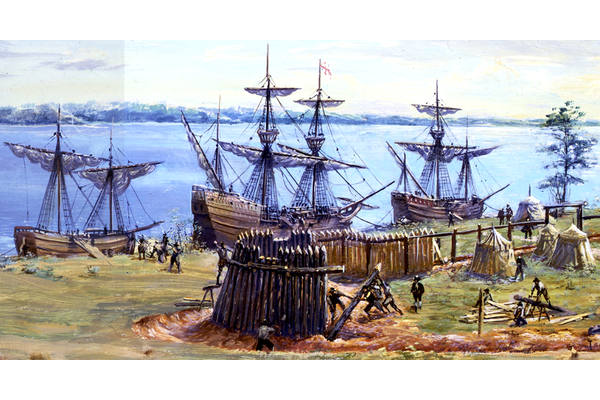
Commemorating the 400th anniversary of what the English colonizer John Rolfe described as the “20 and odd Negroes” (a number that was actually closer to 30) has dominated social media and the summer’s newscycle. But there’s an aspect of this commemorative activity that hasn’t received much attention. I refer specifically to the violence that occurred at Point Comfort less than a decade before the slave ship White Lion made anchor in August 1619. On that spot, a bloody event worthy of historical introspection took place: the massacre of the Kikotan Indians.
That bloody event is important because it made it possible for the English to take Native lands and build Fort Henry and Fort Charles. 
The Kikotan massacre prepared the ground for the arrival of the first Africans in Virginia.

READ: How the Kikotan Massacre Prepared the Ground for the Arrival of the First Africans in 1619 | History News Network

Tuesday, December 24, 2019

Indian Warriors: The Untold Story of the Civil War

Indian Warriors: The Untold Story of the Civil War


https://drive.google.com/file/d/0B_a0sdI5tCDYSUNtaHZMNVpqNm8/view?usp=sharing

Though largely forgotten, some 20-30 thousand Native Americans fought in the Civil War.
Ely Parker was a Seneca leader who found himself in the thick of battle at the side of General Ulysses S. Grant. Stand Waite, a Confederate General and a Cherokee was known for his brilliant guerilla tactics. Also highlighted is Henry Berry Lowery, who became known as the Robin Hood of North Carolina. Respected Civil War authors Thom Hatch and Lawrence Hauptman help reconstruct these stories, along with descendants like Cherokee Nation member Jay Hanna, whose great-grandfathers fought for both the Union and the Confederacy. Together, they reveal a new perspective and the very personal reasons that drew these Native Americans into the fray.

Monday, December 23, 2019

Genocide at Yosemite

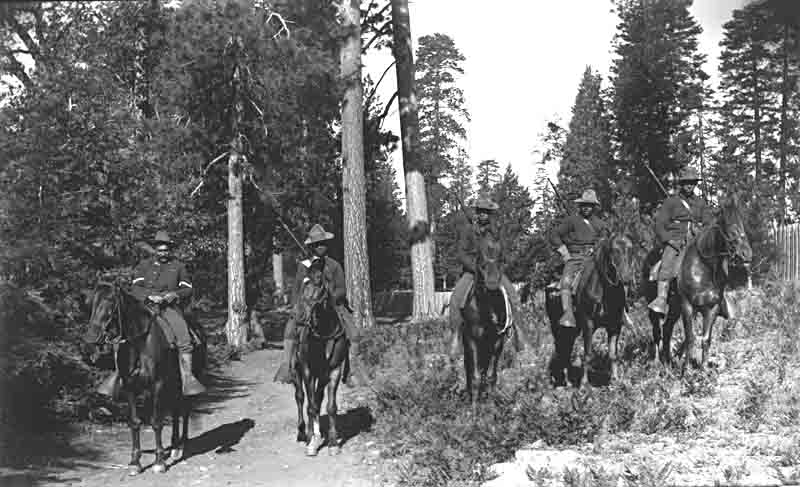
Buffalo Soldiers at Yosemite
Buffalo Soldiers at Yosemite National Park, NPS

The story of genocide at Yosemite National Park

When the conservation community talks about the first major federal actions to preserve land in the United States, we often cite the Yosemite Grant: Abraham Lincoln’s 1864 decision to cede Yosemite Valley and Mariposa Grove to the state of California for use as a public park. Lincoln’s decision set the precedent of the U.S. government setting aside land for the purpose of preservation that led to the establishment of the first national park, Yellowstone.

What is often overlooked when celebrating this event is the violent, forced dispossession in Yosemite Valley carried out by a California state militia force known as the Mariposa Battalion fewer than two decades earlier. In 1851, the unit attacked the villages of the Indigenous Ahwahneechee people living in the valley, burning their homes and food supplies to force them off the land. After the attack, the U.S. allowed a few surviving Ahwahneechee to stay on the land, but only if they agreed to serve as a “cultural attraction” and weave baskets for visiting tourists.
Yosemite National Park’s name is actually derived from an Ahwahneechee word shouted by villagers as militia forces attacked and drove them off the land.
Ironically, the word that eventually became the name of the national park is derived from an Ahwahneechee word shouted by the villagers during the Battalion’s attack. Battalion soldiers thought the word “Yosemeatea”" was a place name, but it was actually the Ahwahneechee word for “killers.” 

Thus, Yosemite National Park is actually named for the act of genocide committed by European-Americans a few years before the valley was federally designated as a state park.
While shocking, this example is not unique to Yosemite. It is emblematic of the fact that the history of parks, forests and other public lands in the U.S. is interwoven with episodes of great cruelty, often inflicted on the original and traditional inhabitants of what we call North America. It reminds us that the legacy of the conservation movement is complex and often dishonorable.
source

Friday, January 10, 2014

Canada accused of hiding child abuse evidence

Archive Photo


"I was given that porridge I got sick on and I had to eat that … And if you don’t eat, then you’re going to get beat up some more, and you’re going to get punished – and if you throw up again you’re going to have to eat that too, so what choice do you have?” Metatawabin, 66, says at times he and his classmates were forced to sit in an electric chair – either as punishment or as entertainment for the staff at St Anne’s Indian Residential School, which operated from the early 1900s to 1976 in northern Ontario province.  Now, Metatawabin says, the government is hiding information about the school... St Anne’s was part of a government-supported school system to "assimilate" aboriginal children.  About 150,000 indigenous children were forcibly removed from their families by the federal government for decades starting in the 1800s and put into church-run residential schools. Many suffered physical and sexual abuse and squalid living conditions, and a Truth and Reconciliation Committee recently said at least 4,000 children died – a number that could be much higher..."
via Canada accused of hiding child abuse evidence – Features – Al Jazeera English.

Thursday, May 3, 2012

The Aleut Tragedy

PLEASE WATCH THIS:

One point many Native Americans make repeatedly is our history has been altered, changed or not taught.
This documentary The ALEUT STORY narrated by Martin Sheen proves this point...

http://www.snagfilms.com/films/title/aleut_story

Friday, February 10, 2012

Colonization is an Act of Genocide

The following appplies in North America but since it is not taught in schools, apparently Native People are not considered to be the colonized. I beg to differ... Trace

Maori and Indigenous Analysis Ltd

Colonisation is an act of Genocide

Màori researcher Dr Leonie Pihama says the use of the term holocaust is an
appropriate and valid description of the impact of colonial genocide on Màori. A
Radio New Zealand panel featured Taranaki Màori academic Keri Opai using the
word holocaust to describe colonisation for Màori. The NZ Jewish Council said
his use of the term was "diminishing and trivialising of the Jewish Holocaust
experience". Dr Pihama says the NZ Jewish council are "basically incorrect" in
their response. She states "The term holocaust refers to deliberate acts of
genocide and ethnocide against groups of people, and that is exactly what
occurred here in Aotearoa. There was a deliberate and planned process of
colonisation that sought the extermination of our people. That is clear and well
documented".

United Nations conventions define genocide as "any of the following acts
committed with intent to destroy, in whole or in part, a national, ethnical,
racial or religious group , as such: as killing members of the group;

(i) killing members of the group;

(ii) causing serious bodily or mental harm to members of the group;

(ii) deliberately inflicting on the group conditions of life calculated to
bring about its physical destruction in whole or in part;

(iii) imposing measures intended to prevent births within the group;

(iv) forcibly transferring children of this group to another group

The definition of genocide by the United Nations is clearly one that reflects
the experience of Màori people and there needs to be a greater awareness of the
reality of the history of this country and of other Indigenous Nations. "There
is clear historical evidence of acts of genocide that were undertaken by
successive white settler Presidents in America. Hitler modelled many of his
oppressive acts on the forced removal and murder of Native Amerian people and
the imprisonment of thousands in concentration camps" states Dr Pihama.

Dr Pihama notes that Màori use of the term 'holocaust' should not be viewed
as in any way diminishing the experience of Jewish people and others that were
targeted by Hitler and Nazi Germany. She says clearly that Maori have always
actively acknowledged that history and the impact of it. Dr Pihama explains
"This is not about comparing experiences. The reference by Mr Opai is directed
to the historical trauma and post traumatic stress experienced by our tupuna and
generations of our people who continue to live with that impact on our own
land".

http://www.scoop. co.nz/stories/ PO1202/S00076/ colonisation- is-an-act- of-genocide. htm

Closed adoptions are a form of cultural genocide... Trace

Tuesday, January 12, 2010

The Only Good Indian is a Dead Indian

Every Indian I’ve met has heard, “Kill the Indian, and Save the Man,” or “the Only Good Indian is a Dead Indian.” Both were uttered by Capt. Richard C. Pratt, the head master and founder of Carlisle Boarding School.
Beginning in 1887, the federal government attempted to “Americanize” Native Americans, largely through educating young Native boys and girls. By 1900, thousands of Native Americans were studying at almost 150 boarding schools around the United States. Schools called Carlisle, Flandreau, Hampton, Haskell Institute and others were built. The U.S. Training and Industrial School founded in 1879 at Carlisle Barracks, Pennsylvania, was the model for most of these schools. Carlisle provided vocational and manual training and sought to systematically strip away tribal culture.
Schools insisted students drop their Indian names, forbade the speaking of their languages, and cut off long hair. Cutting off the hair was done in many tribes when a relative died, otherwise you wore it long. For these children, cutting hair meant cutting off contact.
Not surprising, some schools met fierce resistance from Native parents and youth. But some young people like athlete Jim Thorpe, responded positively, or at least ambivalently, to the boarding schools. Some students said the schools fostered a sense of shared Indian identity that transcended tribal boundaries.
Carlisle’s founder Captain Pratt, said the following to an 1892 convention, and spotlights his pragmatic, frequently brutal methods for “civilizing” the “savages.” A great general has said that the only good Indian is a dead one, and that high sanction of his destruction has been an enormous factor in promoting Indian massacres. In a sense, I agree with the sentiment, but only in this: that all the Indian there is in the race should be dead. Kill the Indian in him, and save the man. Again, Pratt implies Native traditions are wrong. Using God to defend the willful destruction of families in any culture is reprehensible to me, as I’m sure it is to God. Didn’t God create all nations and all skin colors?
Tribes strongly disagreed with the American/Canadian government’s system of boarding schools, removals and adoptions. The tribes felt their placement and enforcement are always best for their children. Tribal leaders took action and fought for the Indian Welfare Act which was passed in 1978. (It seems so recent.)
Our culture is our tribal family.
Yet in the past 100 years, tribes lost two or three generations to the government’s system of removals and adoption.

click

Contact Trace

Name

Email *

Message *

NO MORE UPDATES

GO TO:  https://blog.americanindianadoptees.com/  for updates and news. THIS BLOG cannot be updated...