
BLOGGER changed, not allowing us to UPDATE this back-up blog

(UPDATED 726/2025) issues with blogger are preventing this
Showing posts with label invisible. Show all posts

Tuesday, June 21, 2022

Cycle of Pain | Survivors of the ’60s Scoop await long overdue apology


PART 1: ‘We’re invisible’: Amid residential school reckoning, ’60s Scoop survivors in B.C. want action

PART 2: 

Fialka Jack-Flesh had not yet taken her first steps in the world before she entered the foster care system.

Her mother, a residential school survivor, was unable to take care of her, and she was taken into care at just eight months old.

“I was removed from my mom’s care originally because she grew up in residential school and she was deemed very unsafe at the age that she had me,” Jack-Flesh said. “She had me, I think, like seven years after she showed up for residential school. So not that long.”

It has been 10 years since Jack-Flesh aged out of government care.

Sometimes, it seems as if it was just yesterday.

For Jack-Flesh, aging out of government care, she said, was jarring and devastating.

“It’s kind of like being thrown off a f–king cliff.  If I’m going to be very honest with you guys.”
 

KEEP READING 

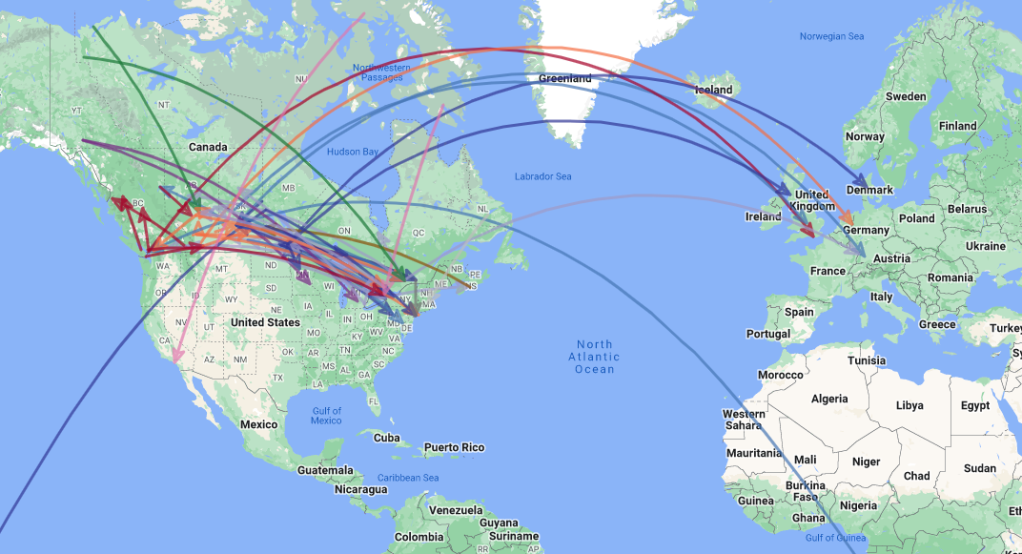
The Sixties Scoop Network’s open-source map tracking the diaspora of adopted Indigenous children. Sixties Scoop Network


Documenting the dispersal of children has fallen to grassroots groups like the Sixties Scoop Network, which has tried to map where Indigenous kids were “trafficked” as far away as Denmark and New Zealand, said co-founder Colleen Cardinal.

Read more: Survivors of the ’60s Scoop await long overdue apology

Sunday, June 19, 2022

Portraits of 1960s scoop survivors


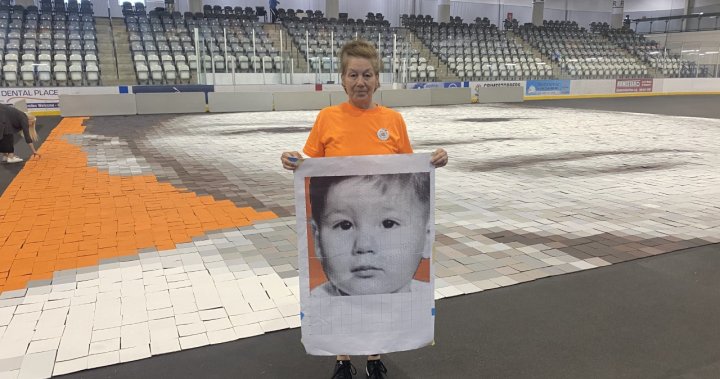
Students at Quispamsis Middle School used paperboard squares to recreate a photo of Mindaver Lee, a survivor of the scoop in the 1960s.

Minda Burley has only one photo of herself as a baby.

“It was published in the newspaper to adopt Metis’s child, and that’s how we found our family to adopt my biological sister Joan and me,” Burley said.

It was only recently that she discovered that she was part of the scoop of the 1960s. During this period, thousands of indigenous children were taken out of their homes and given to non-indigenous families.

“We can’t see”: British Columbia scoop survivors in the 1960s want action in housing school calculations

Burley’s photographs now show thousands of toddlers deprived of their culture, shedding light on the shadows of Canadian history.

Her story and the stories of many others related to the scoops of the 1960s have been the focus of studying at Quispamsis Middle School in this past grade.

On Friday, Grade 8 classes completed an art installation project at QPlex, Quispamsis, New Brunswick, that recreates Burley’s only toddler photo.

“It’s about pulling out all my brothers and sisters and listening to their stories and what they’ve experienced,” because much happened to them. It’s much worse than what everyone really wants to know, “Burley said.

“This will make them feel better and hopefully bring out what happened to us and everyone in the 1960s scoop.”  SOURCE   MORE PHOTOS

Read more: ‘We’re invisible’: Amid residential school reckoning, ’60s Scoop survivors in B.C. want action 


click

Contact Trace

Name

Email *

Message *

NO MORE UPDATES

GO TO:  https://blog.americanindianadoptees.com/  for updates and news. THIS BLOG cannot be updated...