BLOGGER changed, not allowing us to UPDATE this back-up blog

(UPDATED 726/2025) issues with blogger are preventing this
Showing posts with label Kate Fort. Show all posts

Tuesday, August 29, 2023

Dear Tribal Leaders: Create a STATE ICWA law


Dear Tribal Leader Letter Regarding Uniform State ICWA Law

The Uniform Law Commission is seeking to consult with tribes regarding the need and/or benefit of a uniform ICWA law for those states that either need to update their current state laws or do not have one yet. Consultation will be held via zoom on September 6, with written comments accepted through September 30.  Please see the letter for additional details on the project. Please distribute widely.

ULC ICWA Committee Report to Scope Committee

Dear Tribal Leader Letter

**

State ICWA Law Chart

Over the last week, I've put together a (large, clunky) Google sheets of all the state ICWA laws. It isn't perfect and subject to change as I see problems or people tell me there are problems. Sheets can be difficult, but it is nice to use to keep it updated. Someday I'll learn how to make a proper database, but I know there is a need for this now rather than later.

I've linked to it on the state law page here and the link directly to the sheet is here.


Wednesday, June 21, 2023

Stunning Outcome: ICWA STANDS (podcast)

 LISTEN

06/19/2023

Supreme Court Stunner: The Indian Child Welfare Act Stands

Last week, in a surprising 7-2 decision, the U.S. Supreme Court fully upheld the Indian Child Welfare Act in Brackeen v. Haaland. We break down the full opinion of the court and their various reasons for siding in support of the 1978 law that was passed at a time when nearly a third of indigenous children were separated from their family. 

We are joined for reaction to the Brackeen ruling by three women close to the case:

-Kate Fort of Michigan State University, one of the foremost experts on ICWA in this country, who assisted with the tribes’ preparation for the Supreme Court oral arguments

-Chrissi Ross Nimmo, deputy attorney general for Cherokee Nation, one of the the tribes that officially was party to the case

-Rebecca Nagle, journalist and architect of the podcast This Land, whose second season focused on the Brackeen case.

Guest Interview

Kate Fort is director of clinics at Michigan State University College of Law, including the Indian Law Clinic

Chrissi Ross Nimmo is the deputy attorney general for Cherokee Nation.

Rebecca Nagle is an award-winning journalist and host of the podcast This Land.

Reading Room

Indian Child Welfare Act Stands, Native Families Empowered
https://bit.ly/3PjEV3L

The Imprint’s continuing coverage of Brackeen v. Haaland, 2018-2023
https://bit.ly/3ttyzTy

Opinion in Brackeen v. Haaland
https://bit.ly/3PhDGCa

Imprint Reporting by Nancy Marie Spears
https://imprintnews.org/author/nancy-marie-spears

Wednesday, November 30, 2022

 This Supreme Court Case Is a Case Study in Conservative Hypocrisy


Just weeks after railing against race-conscious college admissions, the justices entertained a bogus race-based argument aimed at undermining Native sovereignty.

By Elie Mystal

There is a deep irony to this claim by white families, who are in essence the beneficiaries of centuries of theft, discrimination, and outright genocide of Native peoples, that they are the victims of a law preventing them from claiming Native children against the will of tribal governments.  More to the point, this case should not turn on the race of the families involved in the dispute because, from the perspective of ICWA, race is irrelevant.

READ 

**

Supreme Court could decide where Native American foster kids in Michigan live

“It’s causing a lot of confusion, and tribal communities feel as if rights are being taken away from them,” Kate Fort said.

If the act is found unconstitutional, this could enable other groups to question more of tribal communities’ sovereignty because they would be designated as a racial group, not a political entity, Fort said. This is especially problematic because not everyone who lives in a tribal community is racially Native.

“Tribal sovereignty exists whether or not the Supreme Court recognizes it,” Fort said. “If the ruling is overturned, the trust between tribes and the U.S. government will be eroded.” READ


**


Sunday, August 21, 2022

GOOD NEWS: 21 pro-ICWA Amicus Briefs


Amicus Briefs in Haaland v. Brackeen

We have a total of 21 pro-ICWA Amicus Briefs. Here they are in some rough categories and some VERY rough summaries. In writing this post, I became overwhelmed at this stunning array of briefs and support for ICWA.

Government Briefs

NARF's Tribal Government and Organizations Brief : this brief has the sign on of nearly 500 tribes and over 60 tribal organizations. It discusses ICWA as an exercise of the trust responsibility, and the political relationship of tribes.

Congressional Brief : 87 Members of Congress signed this brief defending ICWA in the four principle arguments in the case

State AG Brief : 23 states and the District of Columbia signed on to this brief, which highlights how ICWA allows and encourages tribal-state relations in the area of child welfare.

LA County Brief : from the county counsel at the largest child welfare system in the country, it discusses the importance of ICWA to LA County practice with a focus on relocation in particular

Semi-Party Brief

Bradshaw Brief : This brief is unique in that it primarily tells the story of Robyn Bradshaw, the grandmother who adopted her granddaughter who was the subject of the claims of the Cliffords, one of the three foster family plaintiffs in the case. Because the procedural posture of the case below, the Cliffords' narrative of facts was allowed to go unchecked throughout the life of the case until now.

How Child Welfare Works Briefs

Family Defenders : a brief from parent attorneys/family defenders in more than 8 states, this brief discusses the constitutional rights afforded to parents and families, how those intersect with the child welfare system, and the importance of ICWA in that structure. It directly addresses the arguments made by the other side regarding the child welfare system.

American Bar Association : This brief directly takes on the contention that child welfare is the sole province of the states as well as discussing the legal complexity of the child welfare system.

Casey Family Programs and 26 Other Child Welfare and Adoption Organizations : A continuation of the original, wildly successful, "gold standard" brief from Baby Girl, this brief focuses on child welfare best practices and how ICWA creates, promotes, and supports them.

National Association of Counsel for Children and 30 Other Children's Rights Organizations : In addition to discussion the Constitutional rights of families, this brief directly addresses how ICWA supports the best interests of children in state proceedings.

Former Foster Children : One of the briefs with a particular place in my heart, this brief allowed Native youth to tell their lived experience to the Court.

How Adoption Works Brief

Non-Native Adoptive Parents : while the plaintiffs in this case were not adoptive parents, this brief directly addresses how ICWA actually works in voluntary adoptions.

Law Professor Briefs

Ablavsky Brief : The originalism brief

Administrative and Constitutional Law Professors : this brief addresses three main issues--federal power, anti-commandeering, and delegation

Indian Law Professors : this brief focuses on the exclusive power of Congress to legislate on behalf of Indians as a political class

American Historical Association : this brief provides historical context, especially around the early efforts (or lack thereof) of state child welfare systems and Native children

Medical Organizations

American Academy of Pediatrics and the American Medical Association : ICWA works directly to address the attendant physical and emotional trauma of federal and state policies designed to destroy tribal families and extended tribal networks

American Psychological Association (specifically including the associations of Texas, Louisiana, and Indianan) and the Society of Indian Psychologists : The benefits for children of being parented by Indian adults

Interest Groups

ACLU : ICWA is not a race based law

Constitutional Accountability Center : Originalism and anti-commandeering

National Indigenous Women's Resource Center : The ramifications, specifically to VAWA, if "Indian" is a racial classification

Sen. Abourezk/Lakota People's Law Project : Passage of ICWA and issues in South Dakota

Wednesday, March 16, 2022

Technicalities: Transfer to Tribal Court Case from Iowa Supreme Court [ICWA] [CASA]


Background: Brackeen v. Bernhardt HAALAND threatens to topple ICWA and place Native American children at risk. Supreme Court Justices agree to review constitutionality of Indian Child Welfare Act (Amy Howe, February 28, 2022)

Earlier article worth a read: https://blog.americanindianadoptees.com/2019/05/op-ed-preserve-indian-child-welfare-act.html

Kate Fort : Transfer to Tribal Court Case from Iowa Supreme Court [ICWA]

210243_816EBFA59A154

This is a very useful decision directly addressing one for the most difficult parts of a transfer process--whether the state court will use a best interest analysis to determine jurisdiction.

These are not reasons to deny a tribe jurisdiction over a child welfare case:

The State argued that transfer should be denied because of the lack of
responsibility by Mother and Father, the efforts of the foster parents to promote
the children’s Native American heritage, and the good relationship between the
current professionals and the children. The guardian ad litem for the children
joined the State in resisting the transfer of the case to tribal court.

Oh, and would you look at that, a CASA:👈  👇

The juvenile court noted that the court appointed special advocate (CASA) for the children recommended that the parental rights of the parents be terminated and the children continue living with the foster parents.  (And a full picture of the racist underpinnings of the modern child welfare system helps develop a fuller view of CASA programs. The term structural racism can call to mind invisible forces that shape the world in a discriminatory way.)

But don't worry--the Iowa Supreme Court clearly channeled the Washington Supreme Court in its thoughtful discussion of ICWA and its purpose, summarizing that

The federal ICWA and accompanying regulations and guidelines establish a framework for consideration of motions to transfer juvenile matters from state court to tribal court. Although good cause is not elaborated at length, both the statute and regulations state in some detail what is not good cause. Absent an objection to transfer or a showing of unavailability or
substantial hardship with a tribal forum, transfer is to occur. Clearly, Congress
has an overall objective in enacting ICWA to establish a framework for the preservation of Native American families wherever possible.

The Court goes on to discuss the Iowa ICWA at length, along with some bad caselaw in Iowa, specifically the In re J.L. case, which is a really awful decision and has been a pain to deal with for years.

This Court states,

State courts have struggled with the statutory question of whether federal
or state ICWA statutes permit a child to raise a best interests challenge to
transfer to tribal courts. In In re N.V., 744 N.W.2d 634, we answered the
question. After surveying the terms of the federal and state ICWA statutes, we
concluded that the statutes did not permit a child to challenge transfer on best
interests grounds. Id. at 638–39.

***

In short, there can be no substantive due process violation arising from a
statute that refuses to allow a party to present on an issue irrelevant to the
proceeding. To that extent, we overrule the holding ofIn re J.L. (emphasis ADDED)

***

In conclusion, if there is no objecting child above the age of twelve, we hold
that the transfer provisions of ICWA which do not permit a child from raising the
best interests of the child to oppose transfer does not violate substantive due
process.

Therefore,

In an ICWA proceeding, the United States Supreme Court observed that
“we must defer to the experience, wisdom, and compassion of the . . . tribal
courts to fashion an appropriate remedy” in Indian child welfare cases. Holyfield,
490 U.S. at 54 (quoting In re Adoption of Halloway, 732 P.2d at 972). These
observations apply in this case

There is a small dissent on whether the Father could appeal this case, but no issues with the Tribe's appeal. Also, a reminder that the issue of jurisdiction was never a question Brackeen and decisions like this one are tremendously helpful for tribes seeking to transfer cases.


FYI:

Volunteer child advocates, or “CASAs” (Court Appointed Special Advocates), are lay volunteer guardians ad litem appointed by the family court to represent the “best interests” of children who enter the child welfare system. 

  (report)

  
 [[...what is particularly striking about the proliferation of volunteer CASA programs is just how visible, and visibly racist, they are. When a CASA is appointed to speak for a child in family court, the child’s parents lose one of the most cherished responsibilities any person can have—the power to decide what is best for their own children and speak on their behalf.  This power is not transferred to the child, but rather to the CASA herself; once appointed, it is the CASA who voices “the child’s” position, based on the CASA’s own assessment of what the CASA thinks is best for the child. 4 When that power—not just the power to determine a child’s fate, but the power to even speak one’s own opinion on the matter—is distributed away from poor families and children of color and given to a group of middle-class white volunteers, the racial bias in the system—the structural racism—is not just clearly visible, but is actually given a seat at the table in court for all to see.
And that power works real, tangible harms on families who encounter the child welfare system. The simple act of having a CASA assigned increases the chance that a parent’s rights to her child will be terminated, 5 an outcome that has been called the “civil death penalty.”
CASA programs have carved out a unique and in some ways untouchable role in child welfare decision-making nationwide.    

Wednesday, February 16, 2022

Indian Children and Their Guardians ad Litem (GALs)


BABY Veronica :  Adoptive Couple v. Baby Girl

From the Turtle Talk blog:


North Carolina Supreme Court on Reason to Know [ICWA]

by Kate Fort

 (click headline)


Fletcher & Fort: “Indian Children and Their Guardians ad Litem”

Kate Fort and I published a short paper for a Boston University Law Review mini-symposium on Adoptive Couple v. Baby Girl: “Indian Children and Their Guardians ad Litem.”

An excerpt:

One of the primary goals of the Indian Child Welfare Act (ICWA) is to limit the influence or bias of state workers in decisions placing American Indian children out of their home and community.1 While this focus usually concerns state social workers, the officials who most often seek removal of a child, or the courts, the body that issues the orders and opinions, guardians ad litem (GALs) receive less attention.2 Despite this lack of attention, GALs exert a similar level of influence as state social workers. In Adoptive Couple v. Baby Girl,3 the role of the GAL was unusual but critical – the GAL, while officially appointed by the court, was handpicked by the adoptive parents.4 The role of the GAL remains understudied in the ICWA literature, though GALs continue to exert enormous influence in the courts. Unfortunately, many GALs throughout the nation subvert the national policy embodied by the ICWA by advocating against the implementation of the statute in case after case.5

There are three other papers in the symposium:

Perspective I by Professor Barbara Ann Atwood is available here

Perspective II by Professor James G. Dwyer is available here, and

Perspective III by Professors Naomi Cahn and June Carbone is available here.

Tuesday, August 17, 2021

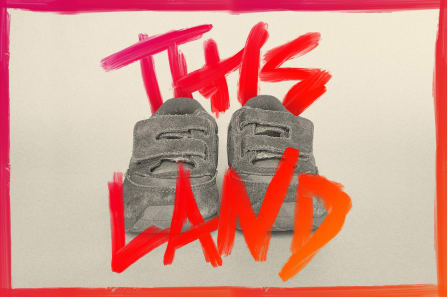
THIS LAND: Season 2 Podcast Debuts August 23


 LISTEN:  Here

This season is all about the Indian Child Welfare Act and the federal attacks on it.

ALM – as referred to in court documents – is a Navajo and Cherokee toddler. When he was a baby, a white couple from the suburbs of Dallas wanted to adopt him, but a federal law said they couldn’t. So they sued. Today, the lawsuit doesn’t just impact the future of one child, or even the future of one law. It threatens the entire legal structure defending Native American rights. 

In season 2 of This Land, host Rebecca Nagle investigates how the far right is using Native children to quietly dismantle American Indian tribes. 

Tune in beginning August 23rd.


Some White supremacists don't know we can REALLY SEE what they are doing


click

Contact Trace

Name

Email *

Message *

NO MORE UPDATES

GO TO:  https://blog.americanindianadoptees.com/  for updates and news. THIS BLOG cannot be updated...