Wednesday, April 2, 2025

Thursday, July 25, 2024
How did this HAPPEN? Few adoptees know personal effects exist or how to reclaim them
By TRACE L HENTZ (stunned!!!)
I had no clue that Minnesota kept mother's gifts to their child lost to adoption!
 |
| What kind of system is this? REALLY? |
YOU KNEW Minnesota opened all sealed adoption records July 1. Yes, I sent in a check but sent the wrong form (and it costs $40) so I am reapplying to get my original birth certificate (OBC). I have waited over 65 years to hold this stinking piece of paper in my hands. It will say my mother is HELEN THRALL. I know that. But it will be nice to have physical paper proof. Many adoptees are not given access to their own OBC.
Here is the shocker: This story hit Minnesota newspapers this week. If you were adopted out of that state like me, the state has been holding mementos from mothers to give to their child given up for adoption.
ARE YOU KIDDING ME? Where did they store all this stuff?
Thousands, maybe a million babies were adopted out of Minnesota… What about other states? OMG!
‘Minnesota could actually be the leader in figuring this out’ - OH REALLY!?!
WHO KNEW? The change in state law — which went into effect on July 1 — has brought renewed attention to personal effects kept in adoption files. The agency which once placed children will now support adopted people in claiming these gifts. WHAT THE HELL?
No one, including me, knew anything about this… I knew an adoptee who said her mother sent letters to the adoption agency in Mississippi to give to her but the adoptee never knew, and only got the letters years later, after she met her biological mom. Her mom told her she sent several.
Personal histories, items can be claimed by adult adoptees from Minnesota’s DHS files

Permanency Supports Grant Manager
Crystal Graves explains the concept of personal effects during an informational
gathering about recent adoption law changes at the Minneapolis American Indian
Center on July 11.
MINNESOTA PUBLIC RADIO
On a warm July evening, a group of fewer than a dozen people met at the Minneapolis American Indian Center to share information about how adopted adults can claim personal items left for them at the time of their adoption by their birth parents.
Ann Haines Holy Eagle searched and found her birth family many years ago and now advocates for Native American children and families, including fellow adoptees.
 |
Ann Haines Holy Eagle (center), Minneapolis urban representative for the Indian Child Welfare Advisory Council, speaks with adoptee advocate Sandy White Hawk during a gathering at the Minneapolis American Indian Center on July 11. Ben Hovland | MPR News |
“If I would have had something from my mom ... just to know that my mom loved me, you know, or thought enough to send something with me to fight in this world. It would have made a huge difference,” said Haines Holy Eagle.
For the past several decades activists have pushed for access to birth and adoption records. Last year, the state Legislature answered those calls, making state birth records available to adoptees for the first time.
The change in state law — which went into effect on July 1 — has brought renewed attention to personal effects kept in adoption files. The agency which once placed children will now support adopted people in claiming these gifts.
Haines Holy Eagle and members of the Indian Child Welfare Act Advisory Council, which advises DHS, first learned about personal effects kept by agency this past spring during a routine meeting. She says they learned about items kept in storage for decades — items of personal value, including photos, family heirlooms and small keepsakes.
Haines Holy Eagle said she and others were taken by surprise.
“We were just kind of shook,” said Haines Holy Eagle.
Haines Holy Eagle and members of the advisory group invited DHS representatives to present that same information to members of the community.
 |
Piikuni adoptee Kirk Crow Shoe smudges DHS employee Crystal Graves (left) with eagles feathers and sage during a healing ceremony at the Minneapolis American Indian Center on July 11. Ben Hovland | MPR News |
At the public event in July, adult adoptees let DHS staff know they’d like to approach the process not as a private matter, but as a community.
Haines Holy Eagle said she’s prepared to use the wisdom gained through her personal experience to lead the process of claiming personal effects.
She says the work should center on the experiences of adopted people in connection with their birth and adoptive communities.
“It’s time for us to be at the forefront of our healing and truth and reconciliation,” said Haines Holy Eagle.
DHS staff member Crystal Graves began her presentation to the community by explaining that she’s handled these personal effects going back 20 years. Throughout the evening, Graves told everyone she welcomes input from the adoption community in re-thinking how DHS can help adoptees request their belongings.
She explained to the small gathering how adopted adults can make a request to claim their belongings — what paperwork to fill out and where to send it.
Few adoptees know personal effects exist
Adoptees have been able to recover personal effects for years. DHS says they have followed statutory requirements that mandate confidentiality of adoption records, and they say it’s likely most adoptees don’t know they might have a personal effect in their file. DHS says only a few adoptees recover personal effects from their adoption files every year.
DHS provided MPR News with general information about the personal effects associated with adoption files but declined to make a staff member available for interview.
The agency estimates approximately 7,500 adoption files contain personal effects — less than 10 percent of all the adoption files kept by the agency.
 |
The handwritten words “For-Get-Me-Not” appear in an Easter greeting card addressed to “Bobby” displayed on a table in the Minnesota Department of Human Services building in St. Paul. Photographed on July 5. Ben Hovland | MPR News |
Haines Holy Eagle says she believes it’s possible that DHS has held onto these personal effects because they prioritized the wishes of adoptive parents over those of adoptees.
“You want it to be respectful of the adoptive parents, you didn’t want to disrespect them because you want them to feel like this is my new start. This is my new family,” said Haines Holy Eagle.
DHS estimates about ninety percent of the personal effects associated with adoption files are photos and the remaining ten percent are family documents.
DHS did allow MPR News to document a small number of personal effects in files over 100 years old. A black and white photo shows a baby in a pram. Another black and white photo shows a group of three siblings standing in front of a farm building. One of the personal items is a handcrafted Easter card. Inside is a hand pasted image of forget-me-not flowers, the signature page signed by the child’s birth parent.
Another item is a family document, an ornate baptismal certificate in the adoption file dating from just before 1920.
DHS points out the agency no longer places children up for adoption, following changes to adoption law in the 1980s. Still, as a state agency, DHS receives adoption files from placing agencies that have closed. DHS says its staff are still cataloging thousands of files, some of which contain still more personal effects.
DHS says it’s likely that current adoption placing agencies have adoption files, and those may contain more gifts.
 |
Seventy-three-year-old Lakota adoptee Pearl Brave Heart fills out post adoption search forms during the adoptee law informational gathering on July 11. Ben Hovland | MPR News PHOTO: Lakota adoptee Pearl Brave Heart, 73, shares the story of her adoption into a family of German descent as DHS employee Crystal Graves listens during a gathering at the Minneapolis American Indian Center on July 11. Ben Hovland | MPR News |
‘Minnesota could actually be the leader in figuring this out’
One adoptee advocate says Minnesota could be the first in the country to help people recover their belongings.
Attorney Gregory Luce is the executive director of the Adoptee Rights Law Center and sometimes helps adoptees obtain court orders to open their adoption files.
“It’s taken 80 years to talk about personal effects,” said Luce. “[Adoptees] have become inured to this idea that you’re entitled to nothing.”
Luce, who is also an adoptee, applauds the state for its renewed effort at helping adoptees claim their belongings.
“It’s huge, because it didn’t take a court order to make them do this. And so, Minnesota could actually be the leader in figuring this out.”
The beginning of the work to recover these personal effects was marked with a ceremony held during the July meeting at the Minneapolis American Indian Center. An elder performed a healing ceremony first for DHS staff member Crystal Graves and then invited members of the adoption community to join.
DHS says it will reconvene workgroups with members of the adoption community this fall.
Individuals interested in initiating a search can fill out the post adoption search form at the Foster Adopt Minnesota website.
STORY: https://www.mprnews.org/story/2023/08/04/minnesota-adoption-birth-records-policy-change
VIDEO https://youtu.be/88f4UVVcui4?si=l_dhZqX6-IOooaGz
- With Minnesota law change in effect adoptees can access original birth records
- Law change will unseal original birth recordsfor people born in Minnesota and later adopted
- People who were adopted, birth parents react to change in Minnesota birth records policy
- Adoptee reflects on Minnesota's new adoption policy, opening decades of family secrets
 | |
| Caption: Fritz Scholder, “Dying Indian” (1968), acrylic on canvas, 27 x 40 inches (all images courtesy the Estate of Fritz Scholder and Garth Greenan Gallery, New York) GO READ: https://hyperallergic.com/935167/fritz-scholder-art-of-non-belonging/ | |
Friday, November 17, 2023
Native American teach-in November 18
Director of First Nations Repatriation Institute is keynote speaker for Native American teach-in [USA]. The
University of Minnesota Morris will hold a teach-in about the history
and impact of Native American boarding schools, including the ones that
operated on [the UMN Morris] campus site, on Saturday, November 18. The
keynote speaker is Sandy White Hawk, Dakota adoptee.
For those unable to attend in person, the Teach-In will also be available via Zoom. Registration is required: z.umn.edu/BoardingTeach2023
Tuesday, August 29, 2023
Thursday, May 18, 2023
BRUTAL PAST| Mental Impact of Cross-Cultural Adoptions
👉 The Brutal Past and Uncertain Future of Native Adoptions. “It is our right as Indian nations to raise our children,” said Sandy White Hawk, founder of the Minnesota-based First Nations Repatriation Institute, which serves Native people affected by adoption and foster care.
In 1958, the Indian Adoption Project(s) were created “to stimulate adoption of American Indian children by Caucasian families on a nationwide basis.”
See a 1967 portrait of a Long Island family, the Zuckermans, who took part in the project. The program was immensely popular in New York, which was already the center of a robust and lucrative adoption marketplace.
Such treatment of Native parents and caretakers by white social workers was not uncommon, but the Devils Lake Sioux were among the first to fight back publicly. Members of the tribe, which is now called the Spirit Lake Tribe, traveled to New York for a news conference at the Indian Affairs office arranged that summer. CLICK: [https://turtletalk.files.wordpress.com/2018/11/proquestdocuments-2018-11-09.pdf.]
The entire argument for eradicating the Indian Child Welfare Act was expressed in a white supremacist poem by Robert Louis Stevenson that I expect Samuel Alito to quote in the opinion, with zero sense of irony:
Little Indian, Sioux, or Crow,
Little frosty Eskimo, Little Turk or Japanee,
Oh! don't you wish that you were me?
You have seen the scarlet trees
And the lions over seas;
You have eaten ostrich eggs,
And turned the turtle off their legs.
Such a life is very fine,
But it's not so nice as mine:
You must often as you trod,
Have wearied NOT to be abroad.
You have curious things to eat,
I am fed on proper meat;
You must dwell upon the foam,
But I am safe and live at home.
Little Indian, Sioux or Crow, Little frosty Eskimo, Little Turk or Japanee,
Oh! don't you wish that you were me? VIA
(New York Times)
++
👇
Not Feeling “American Enough”: The Mental Impact of Cross-Cultural Adoption. “For adoptees in the adoptee community, to move forward is to have allies,” she explains. “The narrative [around cross-cultural adoption tends to] lie with adoptive parents, and so we need them to elevate our stories, to elevate us in order for people to know that there is another narrative out there. It's not this fairy tale.”
👀Let's celebrate - over TWO MILLION VIEWS on our little website! THANK YOU! -TLH
Wednesday, April 5, 2023
Sandy White Hawk, in Conversation with Gabrielle Glaser

|
|
|
|

Thursday, March 16, 2023
NEWS: ICWA, Kinship, and more


With Supporters from Indian Country Looking on, Minnesota Lawmakers Vote to Protect Indigenous Families


Minnesota was already among the 12 states with a law that mirrors some
or all of the protections of the Indian Child Welfare Act (ICWA),
federal legislation passed decades ago to protect Indigenous families
from unnecessary family separation.
But the state Legislature went further this year with enhancements to
the Minnesota Indian Family Preservation Act, which was originally
passed in 1985. The bill moves to Gov. Tim Walz’s desk as the nation
waits for a ruling from the Supreme Court on a case called Brackeen v.
Haaland, which could decide the fate of ICWA as a national law. A
decision in the case is expected this summer.
“This bill says that we agree on Minnesota land that our children
deserve the opportunity to have access to their family, their culture,
their beliefs, and what I believe is the most beautiful part of
Minnesota,” Rep. Heather Keeler told lawmakers in advance of the floor
vote.
OPINION: We’re Building a New Path to Prioritize Kin
A group of leading organizations in child welfare is working to build
a new path for quickly licensing kin as foster parents.
The Imprint Weekly Podcast
Episode 122: We Were Once a Family, with Journalist and Author Roxanna Asgarian
Imprint alum Roxanna Asgarian joins to discuss her new book, “We Were Once a Family: A Story of Love, Death, and Child Removal in America,” which traces the lives and families of six children killed by their adoptive parents in March of 2018. HERE
02/20/2023
A Child of the Indian Race: A Conversation with Sandy White Hawk
Part Two: A song for orphans
On this week’s podcast, we begin a two-part interview between Imprint reporter Nancy Marie Spears and Sandy White Hawk, author of the recently released memoir A Child of the Indian Race: A Story of Return. White Hawk’s recounts her own adoption story, which began in 1955, decades before the Indian Child Welfare Act was passed to protect Indigenous families from being separated.
This conversation comes just months after the Supreme Court heard arguments in a case called Brackeen v. Haaland, in which several non-Indigenous families and the State of Texas have claimed that ICWA is unconstitutional. A decision in the case is expected to be delivered this summer.
Guest Interview: Sandy White Hawk is a Sicangu Lakota adoptee from the Rosebud Reservation, South Dakota. She is the founder and director of First Nations Repatriation Institute
An Indigenous Adoptee Reclaims Her Culture
http://bit.ly/3YI0oF9
First-of-its-kind Survey Examines Trauma and Healing Among Indigenous Survivors of Family Separation
http://bit.ly/3e3XHfd
How a Chippewa Grandmother’s Adoption Fight Ended Up in the U.S. Supreme Court
http://bit.ly/3VLeS6k
The Imprint’s Coverage of Brackeen v. Haaland
http://bit.ly/3ttyzTy

Thursday, March 9, 2023
We the Expert Series: MEPA, IEPA & ICWA
COMING UP: Saturday, March 11 2023 Adoption Mosaic this Saturday has a great program discussing an alphabet of laws that control many aspects of adoptions, particularly transracial adoptions and adoptions from Native American communities. Featuring Sandy White Hawk, Jordan Davis, Torie DiMartile, Daryle Conquering Bear Crow, and Summer Sullivan, the program discusses the Multi Ethnic Placement Act, Inter Ethnic Placement Act, and the Indian Child Welfare Act and their impact on adoption, communities, and adopted people. We the Expert Series: MEPA, IEPA & ICWASaturday, March 11, 202310am Pacific/11am Mountain/12pm Central/1pm Eastern
COST $10/15 (financial support is available to adoptees)
https://subscribe.adoptionmosaic.com/we-the-experts-register
Thursday, December 8, 2022
NEW BOOK: "A Child of the Indian Race"
 "A Child of the Indian Race": A Story of Return

Sandy White Hawk
Foreword Gene Thin Elk
Introduction by Terry Cross
Minnesota Historical Society Press (December 1, 2022)
Description
An adoptee reconnects with the Lakota family and culture she was born into— and nurtures a new tradition that helps others to do the same.
In the 1950s, when Sandy White Hawk was a toddler, she was taken from her Lakota family on the Rosebud Indian Reservation in South Dakota. Her adoption papers identify her as “a child of the Indian race,” and her adoptive mother never let her forget it, telling her she was unwanted and shaming her for being “Indian.” White Hawk medicated her traumas with drugs and alcohol. At age twenty-eight, she gained sobriety and reconnected with her birth relatives. As she learned what it means to be Lakota, she also learned that thousands of Native adoptees shared her experience—left to navigate racial and cultural complexities as children, with no way to understand what was happening to them.
Mentored by a respected elder, White Hawk began to work with relatives who also had been separated by adoption and foster care, taken away from their families and communities. Fighting through her feelings of inadequacy, she accepted that she could use her voice to advocate. Ultimately, White Hawk founded the First Nations Repatriation Institute, an organization that addresses the post-adoption issues of Native American individuals, families, and communities.
White Hawk lectures and presents widely on the issues around adoption. She exposes the myth that adoption is a path to protecting "unwanted children" from "unfit mothers," offering a child a "better chance at life." Rather, adoption, particularly transracial adoption, is layered in complexities. “A Child of the Indian Race” is Sandy White Hawk's story, and it is the story of her life work: helping other adoptees and tribal communities to reconcile the enormous harms caused by widespread removals.
Advance Praise
“Of all human rights assaults on Native peoples in the United States, the stealing
of Native children is perhaps the most heartbreaking. Adopted by a white couple,
Sandy White Hawk grew up without cultural defenses against the onslaught of racism and
erasure she experienced. Her eloquent, riveting book takes the reader
on her journey back home and toward her life’s work: helping Native
families to reconnect and, together, face down generations of trauma.”
Suzan Shown Harjo (Cheyenne and Hodulgee Muscogee), writer, curator,
policy advocate, and recipient of a 2014 Presidential Medal of Freedom
"In this profoundly moving
memoir, Sandy White Hawk, Sicangu Lakota, speaks eloquently of her life
as a young child adopted by a white family. It is an intensely personal
story of resilience and perseverance in spite of trauma, racism, and
painful truths. At the core of her healing is her tribe’s Welcome Home
song and ceremony for adoptees. To all Native adoptees, this book is a
must read. Welcome home."
Denise Lajimodiere (Turtle Mountain Band of Chippewa), author of Stringing Rosaries: The History, the Unforgivable, and the Healing of Northern Plains American Indian Boarding School Survivors
"Worthy
of a novel—but true. A young child is transported to a strange place
where she is challenged to overcome events no child should have to face.
She lives in a world that doesn’t recognize or accept her, all the
while being told that this is in her own best interest. This is a story
about the triumph of the human spirit that finds love, acceptance, and
purpose in restoring hope to others who were also lost.
William A. Thorne, Jr. (Pomo and Coast Miwok), retired tribal and state court judge
"Since
the 1870s, first through boarding schools and then through forced
adoptions, federal bureaucrats have permanently removed Native children
from their families. Their goal was the erasure of Native people; the
result was trauma and severely damaged families. Sandy White Hawk, who
lived this adoption experience, has become a strong advocate for Native
people and Native families. In this compelling and immensely readable
story, her compassion and dignity shine through."
Anita Fineday (White Earth Tribal Nation), managing director, Indian Child Welfare Program, Casey Family Programs
“Sandy White Hawk is ‘a child of the Indian
race.’ This is her powerful memoir of coming home to the Rosebud Sioux
Reservation in South Dakota as an ‘Indian adoptee.’ It is a story of
much suffering and great courage, and it highlights the indelible
importance of song, ceremony, culture, and landscape in the arduous
journey towards truth, reconciliation, and healing. It is also a
journey greatly facilitated by the vision and hard work of many Native
mentors, families, and communities. Read this book. It will change
you.”
Frank Pommersheim, professor of law and associate justice, Rosebud Sioux Tribe Supreme Court
Author Information
Sandy White Hawk is a Sicangu Lakota adoptee from the Rosebud Reservation, South Dakota. She is the founder and director of First Nations Repatriation Institute, which offers resources for First Nations people impacted by foster care or adoption to return home, reconnect, and reclaim their identity. White Hawk is Director of Healing Programs at the National Native American Boarding School Healing Coalition and was elder-in-residence at the Indian Child Welfare Law Office in Minneapolis. She is the subject of several documentaries, including Blood Memory: A Story of Removal and Return.
Gene Thin Elk (Great Sicangu Nation) is an internationally known consultant in the area of Indigenous healing methods.
Terry Cross (Seneca Nation) is the founding executive director of the National Indian Child Welfare Association. He is the author of the Heritage and Helping and Positive Indian Parenting curriculum, as well as Cross-Cultural Skills in Indian Child Welfare.
$ 18.95 Minnesota Historical Society
Friday, June 24, 2022
Sec Haaland, other leaders testify at U.S. Senate about boarding schools report and investigation

Interior Sec. Deb Haaland vows to continue to investigate U.S. Indian boarding schools and support healing efforts for tribal communities impacted by intergenerational trauma caused by the schools.
Many students faced physical, mental, spiritual and sexual abuse. And, many students did not make it back home.
Sec. Haaland testified Wednesday before the U.S. Senate Committee on Indian Affairs on the findings of her federal Indian boarding school initiative, which she announced last June.
A report released in May found there were 408 schools across the U.S. from 1819 to 1969, and about 53 marked or unmarked burial sites identified.
Boarding school policies focused on cultural assimilation, and the forced removal and relocation of Native children.
Sec. Haaland says as the investigation continues, the next step is to gather testimony, find support for healing, and resources for language and culture initiatives.
“I recently announced we will embark on the road to healing, a tour to hear directly from survivors and descendants. A necessary part of this journey will be to connect survivors and their families with mental health support, create a permanent collection of oral histories. We know this won’t be easy, but this is a history we must learn from if we are to heal from this tragic era in our country.”
The hearing also focused on Indian boarding school legislation (S. 2907) to create a commission to help locate and analyze records, and hold culturally appropriate hearings.
Sandra White Hawk, board president of the National Native American Boarding School Healing Coalition, was among a panel of Native leaders to testify in support of the legislation.
“It will open up wounds, but in order for us to heal we need to air out those wounds and replace them with the medicines that we have within our ceremonies, our songs along with our mental health professionals that can help us as well. Most importantly, what was taken from us our songs, our lifeways that will bring the healing when our wounds are open from that. There was an elder that was one of my teachers and he said we are people that are well acquainted with grief. And, I’ve watched and seen that as we’ve gone into communities and listened to experiences and watched healing take place.”
Senators on the Indian Affairs Committee, including chair Brian Schatz (D-HI), vowed to continue to push the boarding school legislation forward and to help find appropriations.
Monday, November 1, 2021
Still here 17 years later... #NAAM2021 #Adoptee

This post was written in 2014 - now UPDATED in 2021 for National Adoption Awareness Month (#NAAM2021)
By Trace L Hentz (formerly DeMeyer)
If you had asked me in 2004 what I had planned for myself, I would
have not said “writing” about adoption and child trafficking. I had just
left my editor’s job at the Pequot Times in Connecticut in August and
by September I was married, my second time. I have always known adoptees. It's like some (╋) magic radar that we seem to find each other... (which has always been life-saving for me.)
When I first started writing the article GENERATION AFTER GENERATION WE ARE COMING HOME in 2004, finally written and published in 2005 by American Indian Community House in New York City then in News From Indian Country, it was like a door opened. That door is still open and I am still learning (and blogging here and covering news). I am not in Higher Ed nor do I wish to be.
I write for adoptees like me. I am not a leader of adoptees/Lost Birds/SplitFeathers. I am
an adoptee, someone who gathers stories who happens to be trained as a journalist (aka blogger.)
Second, I do help adoptees (Native and non-Native) connect with one
another. There are plenty of adoptees with leadership skills, like my
friend Levi EagleFeather and Sandy WhiteHawk, both are Lakota. If
adoptees need ceremony, they are the people to approach. I am a bridge
and can help you reach them.
Third, I am an adoptee myself so I know what I went through. And I write
about it in great detail but that doesn't make me an expert. I do feel
like I have an advanced degree in adoption after 17+ years of reading
and writing on this topic. (And I'm 65 so it's a lived experience too.)
To me it doesn’t seem possible that those years went so fast
– I didn't have any idea my skills would
be put to use in this way. I am deeply humbled and deeply grateful to Great Spirit...Wakan
Tanka.
Since I started American Indian Adoptees in late 2009, I met and know many bloggers on the topic of adoption (and many are good friends to me). We had hoped
we’d made a strong and lasting impact by now.
We all knew:
The adoptee voice was missing.
Chapters of history were blank. The changes I worked for: giving voice to
adoptees and writing that chapter, and I did what I could. There are
four books in the Lost Children Book Series. That was the history few had ever documented...I had saved one article from Canada when I was working as a journalist at NFIC from 1996-1999. One!
Changing adoption? I had that dream myself. I
am not sure we can actually gauge or measure how worldviews of
adoption have changed. States still have adoption files sealed tight.
Are they hiding something? Are they afraid of a massive uprising of
adoptees? (There are an estimated 10 million of us, maybe more!) Are they
afraid we'll find out adoption agencies and churches were trafficking
in children? For a profit?
The governments of Canada and America have much to fear.
Other changes? If books on Amazon are an indication, adoptee memoirs are still climbing the ranks over all the propaganda books about how to adopt a baby.

If the statistics on adoption are any indication, the number of babies adopted by Americans are dropping each and every year. There is definitely a demand for infants (primarily because of rising infertility since the 1950s) but there is still a short supply of newborn flesh to adopt. (I do believe the adoption traffickers are constantly reinventing new ways to grab a fresh supply of infants. Think of what new poor countries or communities they will invade as the demand increases!! Propaganda will change.)
Will there be more adoptees? Sadly yes.
A happy ending in the media erases the very real structural realities of the adoption industrial complex, one that orchestrates the exchange of babies for money. - Alexa Strabuk
What hasn’t changed much since 2004 are adoption laws, sealed adoption files or the old archaic views of promised secrecy and confidentiality for first mothers.
Haven’t we moved past shaming women for unwed pregnancies? Yes, but not enough, apparently. Lawmakers are still being wined and dined by adoption agency lobbyists so I don’t expect to see much change in the laws – but I hope I am wrong.
What I’d hoped would change faster is the perception of adoption, that it’s not as great and wonderful for adoptees as the public was made to believe. (In fact, vocal adoptees have changed everything in that regard.)
As much as I’ve read in these past 17+ years, blogs and books changed me beyond recognition!
Many times I
have emailed legislators (like in New Jersey and Illinois) and offered my
memoir (as a free book) hoping they would see the light and change
existing adoption laws. Maybe it helped?
The big question: Open Adoption--when adoption is necessary--is also an indication
that times are changing! But we have a long way to go…This is a quote I
saved about open adoption:
…ignored by the adoption agencies is the reality of “open adoption.” Only 22 of fifty states in America (in 2014) recognize open adoption agreements, but failure of the adoptive parents to comply with the agreement is not legally enforceable by the surrendering mother. (It is failing from many accounts I have read.)There are many excellent writers making profound statements too.
A quote by adoptee-author-blogger Elle Cuardaigh:
And adoption certainly is “worked.” When supply of newborns decreased in the 1970s, the adoption industry had to put a new spin on relinquishment to stay in business. Since women could not be so easily shamed by single motherhood, they changed tactics. Potential suppliers (pregnant women) are now encouraged to “make an adoption plan.” She reads the “Dear Birthmother” letters and interviews hopeful adoptive parents. She is provided with medical care and possibly even housing. She is promised this is her choice, and that she can have ongoing contact with her child in an open adoption. It would seem she has all the power, but she is being systematically conditioned to accept her role, her place. She doesn’t want to hurt the baby’s “real parents,” feels indebted to them, emotionally invested. She is soon convinced they are better than she is. She becomes “their birthmother.” It almost guarantees relinquishment. READ Elle’s blog and new book THE TANGLED RED THREAD. Or visit: http://ellecuardaigh.com
Read any and all posts at THE LIFE OF VON. (Von has since passed.)
Powerful WRITING!
In Blogland, when your topic is adoption, you can never be free of trolls, extremists, zealots, fundamentalists, missionaries, the blinkered and the closed-minded. - (adoptee) Elizabeth Von Hughes
The number of excellent powerful blogs by adoptees and first parents (and even some APs) exploded in the past 15 years but there are far fewer now.
Helping to writing and publish four books about the Indian Adoption Projects and Programs and contributing to books like ADOPTIONLAND certainly changed me. And the Vance twins are doing a new anthology on Adoptionland and I have contributed (in 2021).
Back in 2014, #FliptheScript in November was brand new and really moved people - tweets and comments were flying everywhere, some good, some not so good. Discussion is still needed and the people who need to hear adoptees out are the ones we don't reach that well: ADOPTIVE PARENTS. They have their own fog to lift.
Last but not least: I am happily shocked this blog AMERICAN INDIAN ADOPTEES reached over 1,600,000 million hits with 1800+ posts! If that is any indication, times really are a changin’. Thanks to all the people who comment and read and subscribe!
There are thousands of Lost Children/Adoptees who are Native American. They are still out there. I do hope they find this blog and reach out and contact me!
There are two things I hope to see for Lost Bird Adoptees: A class action lawsuit in the USA on behalf of those children who were taken from their tribes because of the gov't programs (IAP and ARENA) and admitting PUBLICLY it happened with a declaration of this FACT.

(Canada is now doing this for the 60s Scoop adoptees.)I never would have guessed my life would move in the direction it did. I want to thank those hundreds of adoptees and families who have inspired me so much over past 17+ years.
So what will the next 17 years be like? I don’t have a clue.
Tuesday, October 5, 2021

Monday, September 20, 2021
TODAY: Native America Calling
Monday, September 20, 2021 – ICWA: Federal protections for children under constant legal pressure

Host: Rebecca Nagle
The Indian Child Welfare Act has been upheld in dozens of court decisions as a vital federal protection for Native adoptees and foster children. That string of wins ended when a Texas district court judge ruled the more than 40-year-old law unconstitutional. A subsequent federal appeals court agreed that at least parts of ICWA are unconstitutional. Long considered by legal experts as the gold standard of adoption law, ICWA faces its most significant legal challenge. We’ll examine how we got here and who is behind the legal efforts to dismantle ICWA.
Guests:
Matthew Fletcher (Grand Traverse Band of Ottawa and Chippewa Indians) - law professor at Michigan State University’s college of law and author of the “Turtle Talk” blog
Sandy Whitehawk (Sicangu Lakota) – Elder in Residence at the ICWA Law Center
Shana King (citizen of the Mandan, Hidatsa and Arikara Nation) – parent advocate at the ICWA Law Center
CLICK TO LISTENBreak 1 music: Tapwe Oma (song) Fawn Wood (artist) Iskwewak (album)
Break 2 music: Dat One (song) The Delbert Anderson Trio (artist) MANITOU (album)
Sunday, March 28, 2021
Red Hoop Talk EP 49: CELEBRATE WOMEN'S HISTORY MONTH WITH LAUGHTER
The Association on American Indian Affairs
#WOMENS HISTORY MONTH
Visit with amazing Native women who inspire us!
JACKIE CROW SHOE is Turtle Mountain Band of Chippewa and an Indian Child Welfare Act advocate, and Policy Associate with the University of Southern Maine. She is also a Consulting Organization to the Capacity Building Center for Tribes that serves to support Tribal child welfare professionals.
SIENA EAST is Choctaw and Isleta Pueblo and a writer, comedian, and actress based in Los Angeles. She studied Film and Television Production at New York University. You can find Siena on Instagram, Twitter, and www.sienaeast.com.
PURA FE is Tuscarora and Taino and an award-winning singer-songwriter, musician and activist. She is the founding member of the internationally renowned Native women’s acapella trio, Ulali. She currently lives in Northern Saskatchewan. Read more about her and listen to her music at www.purafe.com.
SANDY WHITE HAWK is Sicangu Lakota and an adoptee from the Rosebud Reservation, South Dakota. She is the founder and Director of First Nations Repatriation Institute, which helps First Nations people impacted by foster care or adoption return home and reclaim their identity. Sandy also serves as a board member for the Association on American Indian Affairs.
Tuesday, December 8, 2020
Indigenous-led survey centers boarding school, adoption experiences (VIDEO)
The Child Removal Survey looks at how the federal government upended Native American communities and how they have sought healing.
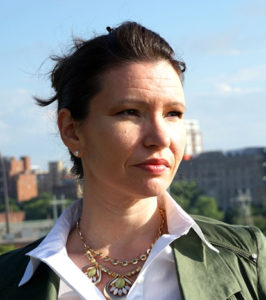
(left) Photo Courtesy of Christine Diindiisi McCleave, CEO of the National Native American Boarding School Healing Coalition.
December 7, 2020
For more than a century, Native American children were forcibly removed from their families and driven into boarding schools where their hair was cut, and they were stripped of their culture.
Now, Indigenous community members and University of Minnesota researchers are looking at the trauma caused by this practice.
The Child Removal in Native Communities Survey centers the experiences of American Indian and Alaskan Native people who were forced into boarding schools and the foster care system, focusing on the generational impact of these practices. Led by Native researchers, it is meant to study the trauma inflicted on Indigenous communities and subsequent healing.
In April 2019, two Indigenous community-based researchers opened the survey with a ceremony, establishing that their academic research would be “guided by spirit, not just by the intellect,” said Sandy White Hawk, a Sicangu Lakota tribal citizen and founder of the First Nations Repatriation Institute.
Christine Diindiisi McCleave, an enrolled citizen of the Turtle Mountain Ojibwe Nation and CEO of the National Native American Boarding School Healing Coalition, co-led the study and said academic research of Native communities historically has been extractive and privileges the voices of researchers who are not Indigenous.
This research is different.
Diindiisi McCleave said that her and White Hawk’s leadership in the project has been critical because they had direct experience with boarding school survivors and Native American adoptees.
“We Indigenous peoples, we don’t want to be studied from the outside,” Diindiisi McCleave said. “We have a lot to say about our own histories, about our own experience and about our experience with American history.”
A survey and a ceremony
The approximately 30-minute survey looks at three different experiences: if the respondent went to boarding school, if their family went to boarding school, or if they were adopted or put into foster care. Participants could fill out one or all segments, depending on which fit their experiences.
Because of COVID-19, the researchers have stopped recruiting participants for the survey, though it is still open online. Diindiisi McCleave said the survey addresses difficult experiences, so the team did not want to push the survey on people who were already under pandemic-related stress.
Carolyn Liebler, a University of Minnesota sociologist who is helping to lead the research alongside White Hawk and Diindiisi McCleave, said their approach is “totally different” from other research.
“We have ceremonies and prayers as part of the research process … talking about things holistically, recognizing that just because time passes doesn’t mean things change,” Liebler said.
Until the pandemic is over, the team will not close the survey or move on to analysis. The researchers are aiming for 1,000 participants and currently have about 600, Liebler said.
She added that they plan to attend in-person events once the pandemic is over to meet with the tribes in large groups and provide paper copies of the survey while offering support for participants who are sharing traumatic experiences.
“And then we will have a ceremony when the survey closes to thank the community for allowing this to exist,” Liebler said.
Generations of trauma, and the path to healing
The research unearths a painful era of federally mandated Indian boarding schools that were enforced from 1860 to around 1980.
At this time, government officials forced many Indigenous children to leave their families to attend boarding schools and assimilate to white, Christian culture. Eventually, the Indian Child Welfare Act of 1978 gave jurisdiction of children to tribal governments, enabling tribes and families to be involved in child welfare cases.
White Hawk previously conducted research on Native American adoptees and served as an honorary witness for the Truth and Reconciliation Commission in Canada, which addressed a similar era of boarding schools and aimed to facilitate reconciliation between former students and their communities.
“I listened to three days of testimony from former boarding school attendees,” White Hawk said. “And nearly every single individual said, ‘I did not know how to express love to my child [because of the boarding schools].’”
White Hawk said boarding schools led to the “breakdown of the family,” which continued into the adoption era where many Native children were adopted into white families. This resulted in further assimilation and loss of Indigenous culture — which included assigning children “white” names, forbidding them from speaking their Native language, cutting their traditionally long hair and converting them to Christianity.
Today, these effects are still apparent as American Indian children are 18 times more likely to experience out-of-home care than white children, according to a 2019 survey conducted by the Minnesota Department of Human Services.
“The result is: You were disconnected, you were removed. You lost that connection to your family, your language and culture, your community, your homelands,” Diindiisi McCleave said. “If the harms and impacts are the same or similar, then the healing path is also similar, where the healing comes from reconnecting with language and culture, returning home.”
The researchers said they hope gathering data will help provide a legal basis for experiences they have known for decades.
“That’s part of why we need empirical data, right? It’s part of the westernized system,” Diindiisi McCleave said. “It’s something that people will believe and rely upon.”
NEW IN 2020
kakichihiwewin project director S.A. hosts as Christine Diindiisi tells
her story, and elaborates on her experiences that led her to becoming
the Chief Executive Officer for the National Native American Boarding
School Healing Coalition.

click
-
 Editor NOTE: This is one of our most popular posts so we are reblogging it. If you do know where Michael Schwartz is, please leave a com...
 -
Published on Sep 28, 2013 This 40-minute documentary explains the reason for and the process of creating and implementing ...
-
 By Mary Charles I somehow don't believe the intention was for us (adoptees) to find our homes using DNA. But when I came across t...
 -
 By Melanie Payne ( mpayne@news-press.com ) August 15, 2010 Alexis Stevens liked to describe herself as a model citizen. She was adopted fr...
 -
South Carolina court drops contempt charge against Dusten Brown Dusten Brown and the Cherokee Nation rea...
-
 By: Shannon Logan Feb 07, 2014 Leland Morrill was estranged from h...
 -
 Being adopted gives you a certain view of "adoption" unique to the adoptee. Here are my thoughts (some published in August prio...
 -
By Trace L Hentz, blog editor I have often wondered about how we adoptees were affected by our adoptions, as far as our mental health. (I ...
-
 By Trace A. DeMeyer Have you watched the TV program WHO DO YOU THINK YOU ARE, a not-so-subtle sales pitch for the Mormon’s...


