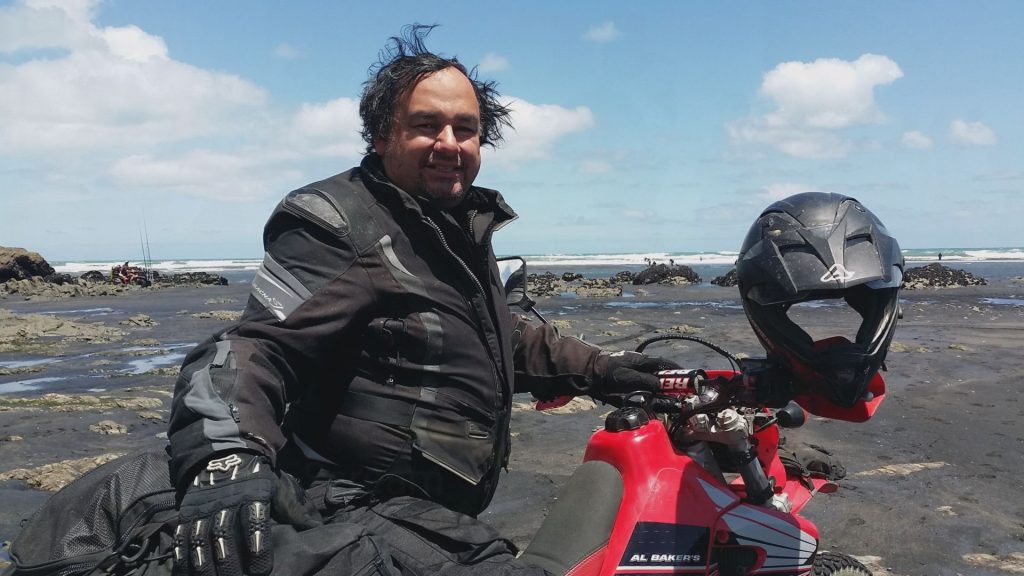
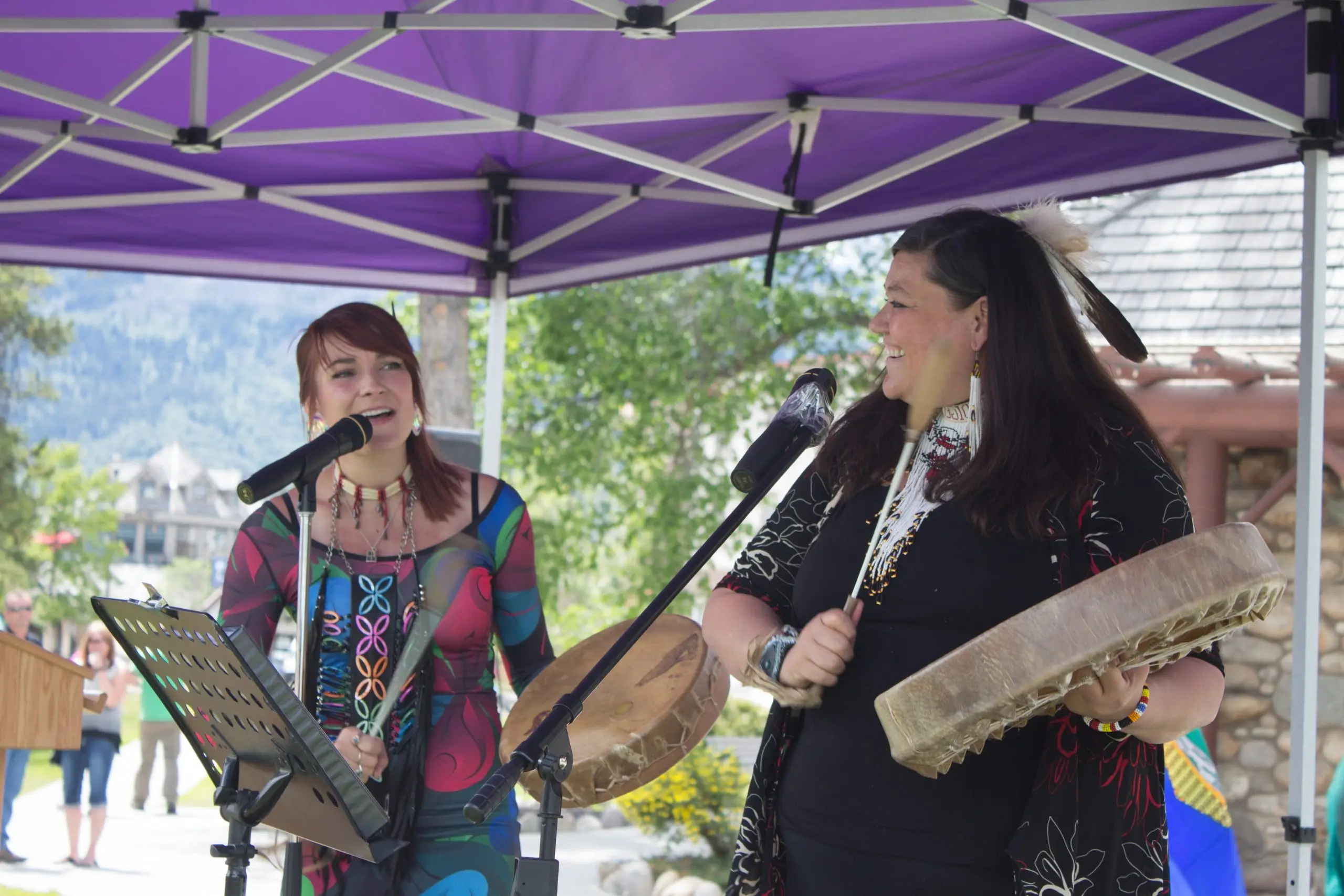
Andrew Balfour, a Cree composer and a ’60s Scoop survivor, has spent nearly two decades developing the ideas behind Polyphony Meets the Prairies.
The concert tells the story of a young Cree girl, Chepi, who is guided by a trickster through time and place, encountering prophetic music from figures such as Hildegard von Bingen, Portuguese composer Alonso Lobo, and Mexican Indigenous composer Manuel de Zumaya.
The music, both old and new, serves as a bridge between past and present, Indigenous and European traditions, and storytelling and song.
Andrew Balfour is a Cree composer and conductor from Winnipeg, Manitoba. He is the artistic director of the vocal ensemble Dead of Winter.
Balfour was nominated for the 2023 Juno Award for Classical Album of the Year (Small Ensemble) for Nagamo, recorded with Musica Intima vocal ensemble.[1][2]
Early life
Balfour was born in the Fisher River Cree Nation, located north of Winnipeg, in 1967.[3] He was taken from his birth mother at six months old as part of the Sixties Scoop and adopted by a White settler family of Scottish descent.[4]
Balfour's adoptive father was a minister at All Saints’ Anglican Church
in Winnipeg and his mother was a violinist. His adoptive family would
encourage his interest in music which developed through choral singing and playing trumpet and trombone.[4]
Balfour would go on to attend Brandon University, later dropping out. During this period he would develop a dependence on alcohol. Balfour was arrested in 1992 for vandalism and was then placed in Milner Ridge Correctional Centre.[4]
Following his time in prison, he would begin singing in an informal
choir with a group of singers which would later become Camerata Nova
(now Dead of Winter), of which Balfour is artistic director.[4][5][6]
Jim Oskineegish, “The Power of
Soul - Jimi Hendrix,” 2010, acrylic on canvas, 60" x 48" (courtesy of
the Ahnisnabae Art Gallery)
Keep Yourself Alive is the debut exhibition by Jim
Oskineegish, a second-generation Woodland artist from Eabametoong First
Nation (Fort Hope). Curated by Caitlyn Bird, Jim’s paintings fuse
personal stories with Woodland, Surrealism, and Pop Art. This exhibition
of thirteen portraits is a love letter to his heroes.
In 2010, after a major surgery and a long recovery, Jim experienced
painful memories from his childhood, specifically the abuse and trauma
he endured as a Sixties Scoop survivor. In his My Hero Series, he
portrays his childhood heroes including 1980s rock stars like Jimi
Hendrix and Freddie Mercury and movie stars such as Bruce Lee and Chief
Dan George. His portraits also pay homage to family and friends, like
his late brother, Robert Kowalow. For Jim, these heroes have qualities
of strength and bravery and provided comfort and inspiration for keeping
yourself alive.
Jim Oskineegish is an Ojibway artist who is a registered member of
the Eabametoong First Nation which is located in Northern Ontario,
Canada. Jim paints in the Woodland Style using bold lines and bright
colors. He loves to paint legends and stories of his people and hopes
that his art can bridge a universal understanding of love, faith, and
unity.
Jim has post-secondary instruction in the field of visual arts and
has further developed his own unique and distinctive style. If Jim can
evoke a response or emotion from the viewer, then he feels that he is
successful in the world of contemporary art. While in attendance at
Lakehead University, he was awarded the Framing Experience Award during
the Lakehead University Juried Student Art Exhibition in 1990-1992.
Subsequently, he then was awarded the Thunder Bay Society of Architects
Award during the Lakehead University Juried Student Art Exhibition in
1991-1992. Keep Yourself Alive is his first solo exhibition.
Organized and circulated by the Thunder Bay Art Gallery
Jay
Mitchell by the Yukon River in Whitehorse. Mitchell has spent most of
his life in Alberta and Ontario and believed he was Métis — until a DNA
test helped him find his true biological family in the Yukon, and
prompted him to pick up and move to the North. (Cali McTavish/CBC)
Having
spent his whole life in bigger cities, Jay Mitchell says he's still
getting used to the pace of life in the relatively small town of
Whitehorse.
"It's a shock. I'm so used to city life," said Mitchell.
He's
also getting used to meeting new members of his extended biological
family. He says people often come up to him on the street in Whitehorse
and tell him, "you're my cousin," "you're my second cousin," or "you're
my nephew."
Mitchell moved to the Yukon last May after discovering
errors in his Sixties Scoop adoption papers and then learning the truth
about his ancestry. He spent most of his life believing he was Métis,
only to have a DNA test reveal that both of his biological parents were
from Yukon First Nations.
Mitchell says he misses his wife and son
back home in Oshawa, Ont., but he says they'll join him soon. He's
grateful to the Kwanlin Dün First Nation in Whitehorse for embracing him
and giving him a job, and a place to live, while he waits for his
family. He is now a citizen of Kwanlin Dün, and works as a records
keeper for the First Nation.
Mitchell's family's move to the
North is about building connections with his biological family,
and finding support for Mitchell's 17-year-old son Nicholas who has
autism.
A photo of a younger Mitchell with his wife Lisa Hughes and their son, Nicholas Hughes Mitchell who is now 17 years old. (Submitted by Jay Mitchell)
"We're
doing this for my son," says Mitchell, "to make sure that, you know,
there's family to take care of him, if anything happens to us."
A case of mistaken identity
Mitchell,
57, was born in Edmonton and raised there by his adoptive family before
they moved to Oshawa. He was 10 years old when his mother told him he
had been adopted. He says it was a shock.
"I had no idea," said Mitchell.
His
mother also then showed him his birth certificate which said
Mitchell was Métis. That set him on a path to discover his cultural
roots.
"I went to Métis celebrations, and I met the Ontario Métis chief in Oshawa," he recalled.
When
he was in his 50s, a health issue prompted a doctor
to encourage Mitchell to try to learn about his biological family's
medical history. That led to another surprise for Mitchell, when a DNA
test and an ancestry research service revealed that he was not in
fact Métis.
He learned that his biological family were Yukon First
Nations members. He soon connected with his biological half-brother
Jeffrey Kalles in Whitehorse, and eventually his two half-sisters as
well.
Jay Mitchell, centre, with his adoptive mother Barb Mitchell, and his son Nicholas Hughes Mitchell. (Submitted by Jay Mitchell)
Kalles describes the first time he talked on the phone with Mitchell.
"Hearing that voice, and just really realizing that's [my] big brother — it's surreal," Kalles recalled.
It was also surreal for Mitchell to learn about his biological family.
"The
funny thing is that with my adopted family, I'm the baby of all the
siblings — and in my biological family, I'm the oldest. It's kind of
weird how that works," said Mitchell.
Kwanlin
Dün First Nation members welcome Mitchell to Whitehorse last year.
Mitchell is standing at the back with a ball cap and red vest on. (Submitted by Jay Mitchell)
Putting the pieces together
Through
a Freedom of Information request, Mitchell was able to get his adoption
records from the Alberta government and confirm the identities of his
biological parents as Yukon First Nations.
"I don't understand
why they didn't put me as First Nations. It's kind of puzzling, but a
lot of people say that things were different back then, in the '60s,"
said Mitchell.
The Sixties Scoop refers to the practice from the
1950s to the 1980s of removing First Nations and Inuit children from
their families and communities and placing them in foster care or
adopting them out to non-Indigenous families. According to Sixties Scoop class action lawsuit settlement website, many claimants described being cut off from their culture and language.
Mitchell
says when he learned about the class action lawsuit he was told he
didn't qualify because of his Métis status. By the time he found out the
truth about his Indigenous ancestry, the deadline to join the claim had
passed.
'A lot of people were shocked ... that I existed'
After
moving to Whitehorse and reuniting with biological family, Mitchell
learned there were two people he would not be able to meet: his
biological parents. Dennis Ladue and Joyce Jonathan had both died a few
years earlier.
"A lot of people were shocked about who I was, and that I existed," says Mitchell.
Duran Henry is one of Mitchell's cousins. He thinks Ladue would have loved to meet Mitchell.
Mitchell, left, with his cousin Duran Henry. (Submitted by Jay Mitchell)
"I think he would have been surprised, and then just overwhelmed by joy and love," says Henry.
He says sometimes Mitchell reminds him of Ladue.
"The way he laughs and, you know, the way we joke around — he's just a happy guy, and [Ladue] was like that."
Kalles was
also adopted and also never met Joyce Jonathan, his biological mother.
But he says their parents live on through the siblings.
Jay Mitchell's biological parents Dennis Ladue and Joyce Jonathan who both died before Mitchell had a chance to meet them. (Submitted by Jay Mitchell)
"There
are these idiosyncrasies — we didn't grow up together, but the way we
talk and the way he looks around and stuff like that. I guess, when I
talk to him and look at him, I just know, that's my brother,"
said Kalles.
Mitchell says he can't wait for his family to join him in Whitehorse this summer.
"Every day I miss my wife and son. My son and I do everything together," he said.
Kalles says he's also excited to meet more of his extended family.
"I'm going to retire here shortly, so I'll have a lot of time to hopefully show them around the Yukon," said Kalles.
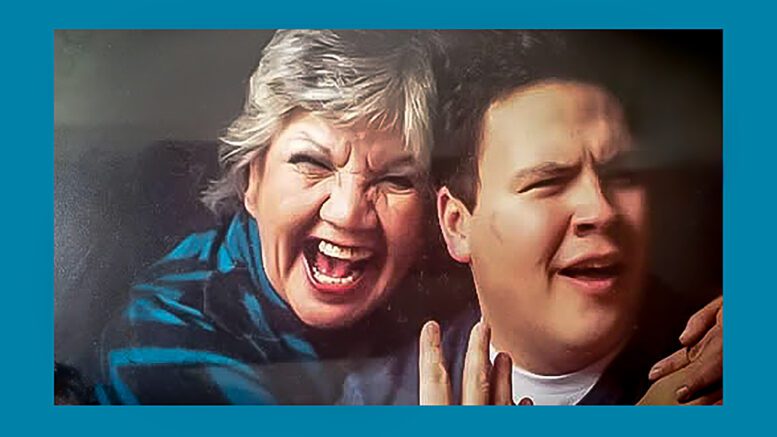
A family gathering. Jonathan Hooker, Lori Brem, Lori's daughter Eva Dawn and Darryl Flett. (Submitted by Lori Brem)
Through
laughter, Lori Brem tells the story of the meeting that brought her
brother Jonathan Hooker, a New Zealand resident, and her Uncle Darryl
Flett from northern Manitoba together for the first time.
The
three relatives met in Texas in November 2024. Brem, a resident of
China Spring, Texas, and Hooker, of Mount Maunganui, New Zealand, share
the same birth father and Flett is their uncle.
"To hear them all talking," Brem chuckles.
"Jonathan
speaks so fast and Darryl speaks real slow. And then we have our drawl,
like we say 'Y'all.' Hearing all the different accents was just so
funny to me."
How do the roads between three communities on opposite sides of the world converge in Texas?
Brem
and Hooker are survivors of the Sixties Scoop, where First Nations,
Métis and Inuit children were removed from their homes and placed with
non-Indigenous foster or adoptive parents between 1951 and 1991, and
lost their cultural identities as a result.
Brem was taken from Swan River, Man., along with her siblings. Hooker was taken from Moose Lake, Man.
Brem and Hooker's adoptions, like so many others, tore them from their families and their roots.
Hooker
was adopted by a couple from the U.K. who spent time in Canada and
eventually settled on New Zealand's North Island. He said he always know
he was adopted because he didn't look like his fair-skinned parents.
"It was really obvious that there was some job going on there, having black hair and dark skin," he said.
"I was really too young to realize the enormity of what had happened to me."
During
the 2024 reunion, Flett sat down with Brem and Hooker to discuss the
family history and the Sixties Scoop. Hooker said it was "a shock to the
system" to hear how authorities would go to reserves and remove
children.
Powerhouse restaurateur Inez Cook (traditional name: Snitsmana) is originally from Bella
Coola’s Nuxalk Nation, but she grew up in Vancouver and went on to
spend 33 years in the airline industry, tasting her way around global
cities (Paris, naturally, was a favourite). In 2022, Cook left airlines
to dedicate herself full-time to running the wildly delicious Salmon n’ Bannock Bistro—Vancouver’s
only Indigenous restaurant—as well as opening Salmon n’ Bannock on the
Fly at YVR and penning two children’s books about her experience as a
child of the Sixties Scoop. When she’s not busy hosting customers at
“SnB,” this is where Cook’s dining around town.
A Sixties Scoop Survivor who was taken from a northern Manitoba
community in 1975 and sent to New Zealand, wants to return home to learn
his history. But with little government support, he may have to pay out
of pocket to return to the country that he claims once sold him away.
“As I’m older now and am looking into it, it’s obviously affected a
lot of people in a lot of different ways, so for me, it’s an emotional
roller-coaster, it’s up and down,” said Jonathan Hooker.
Dan Hooker. (Photo Courtesy: Dan Hooker)
Hooker was 18-months-old when he was taken from his Indigenous family
and adopted by a New Zealand couple in 1975 as part of the Sixties
Scoop. A practice from the 1950s to 1980s where Indigenous children were
forcibly placed in non-Indigenous homes across Canada and beyond.
“Deep down inside me there was always the connection to the Indigenous side of it, but again I didn’t understand it.”
MMF President David Chartrand announced the fund at the 2024
Annual General Assembly, with a goal of providing immediate financial
relief to eligible Red River Métis Sixties Scoop Survivors. Survivors can submit their completed applications through email at info.ssrs@mmf.mb.ca, or by appointment at 200 Main Street by calling 1-877-595-2194. Applications can also be submitted by mail at:
MMF Sixties Scoop and Residential Schools Department c/o Manitoba Métis Federation 200 Main Street Winnipeg, Manitoba R3C 1A8
Winnipeg, MB, in the National Homeland of the Red River Métis - Today, the Manitoba Métis Federation (MMF), the National Government of the Red River Métis, is pleased to announce that applications for the MMF's own Bridge to Justice Fund are now available for living Survivors.
MMF President David Chartrand announced the fund at the 2024
Annual General Assembly, with a goal of providing immediate financial
relief to eligible Red River Métis Sixties Scoop Survivors. The fund is
part of our ongoing commitment to support those who were forcibly
removed from their families and placed in the child welfare system
between January 1, 1951, and December 31, 1991.
"Seeking justice for our Sixties Scoop Survivors is of great
importance to us," said Minister Thomas, MMF Minister for Sixties Scoop.
"We actively support their re-integration into our culture and
community, which were stolen from them when they were taken away from
us. This work is critical, but we also know that they still deserve an
apology and justice for what was done to them by colonial governments,
with so many of them treated poorly in their adoptive and foster
environments. Many of our Survivors experienced physical, mental, and
sexual abuse, and were used as slaves on farms for the personal economic
growth of the farmers. I'm proud that the National Government of the
Red River Métis is able to provide Survivors with some compensation
while the wheels of justice continue to turn."
Each eligible living Sixties Scoop Survivor who is a Red River
Métis Citizen is entitled to receive an advance payment of up to $5,000,
with the total disbursement not to exceed $2 million . The fund has
been set aside from the MMF's own resources, while we continue to pursue
the existing lawsuit between the MMF and the Government of Canada. We
believe that the Government should settle our lawsuit and the class
action lawsuit in the Varley case, in which the MMF was recently granted intervenor status.
Survivors can submit their completed applications through email at info.ssrs@mmf.mb.ca, or by appointment at 200 Main Street by calling 1-877-595-2194. Applications can also be submitted by mail at:
MMF Sixties Scoop and Residential Schools Department c/o Manitoba Métis Federation 200 Main Street Winnipeg, Manitoba R3C 1A8
"Hearing the stories of our Sixties Scoop Survivors and the pain
they've had to deal with their entire lives has made it clear that there
is a need for justice," said MMF President David Chartrand. "That's why
we've used our own resources to develop this fund, to address the
Survivors who were abandoned and left out by both the federal and
provincial governments. Both played a role in the circumstances our
Survivors have been left in. There can be no doubt that some of our
Survivors have already left this world, and others may soon leave.
Nothing will ever truly compensate them for being stolen away from their
families and their Nation, but I hope these dollars help them do
something that matters to them and to their loved ones while they are
still with us."
For more information, Sixties Scop Survivors may contact: Sixties Scoop Department 1-877-595-2194 info.ssrs@mmf.mb.ca
The Manitoba Métis
Federation (MMF) is the democratically elected National Government of
the Red River Métis, also known as the Manitoba Métis. The Red River
Métis are a distinct Indigenous Nation and People and Canada's
Negotiating Partners in Confederation and the Founders of the Province
of Manitoba.
Beginning
in the mid-1950s and lasting until the early 1980s, a series of
policies enacted by provincial child welfare authorities saw thousands
of First Nations children taken from their homes and families, placed in
foster homes, and eventually adopted out to white families from across
Canada and the United States. (Sheila North/CBC)
First Nations
leaders in Manitoba are adding their voices to the call for a
federal inquiry into a dark history known as the Sixties Scoop.
Beginning
in the mid-1950s and lasting until the early 1990s, a series of
policies enacted by provincial child welfare authorities saw thousands
of First Nations and Inuit children taken from their homes and families,
placed in foster homes, and eventually adopted out to white families
from across Canada and the United States.
The children lost their names, their languages and connections to their heritage.
"The
Sixties Scoop legacy was just a continuation of violent and ignorant
policies that were designed by Canada to disrupt and destroy First
Nations families and communities," Grand Chief Jerry Daniels of
the Southern Chiefs' Organization in Manitoba said Monday at press
conference at the Canadian Museum for Human Rights in Winnipeg.
He
called the practice, which began in the mid-1950s and lasted until the
early 1980s, the definition of state-sponsored violence.
"By
attacking the family structures and incentivizing the apprehension of
our families by not only the church, but now Canadian and foreign
families, they made everyday citizens complicit in the violence and
reliant on the financial compensation it came with," Daniels said.
'Trauma, hurt, pain to children'
Manitoba
Keewatinowi Okimakanak Grand Chief Garrison Settee said parents who had
their children taken suffered deeply while their children were used
as commodities without any explanation from the government, he said.
"There
were commercials — government commercials — to advertise for the
adoption of First Nation children. What kind of mentality goes into that
kind of mindset to actually use our children as commodities?" Settee
asked.
"The people that were behind this policy are responsible
for trauma, hurt, pain to children. And Canada must own up to that.
That's why there should be an inquiry."
Former Canadian senator
Murray Sinclair and a group called 60s Scoop Legacy of Canada first
issued the call in early August for an inquiry.
Daniels and Settee
said their organizations held a summit in September and
unanimously passed a resolution in support of the inquiry call as well
as long-term funding support for survivors.
"It's important that
Canada understands what happened to every single one of the children
that were impacted by this. Until that's done I think we haven't really
done justice for Canadians and for all the children that were taken
away," said Daniels.
They also want to see the immediate release
of any records held by state or church-run entities "to expedite the
process of bringing families back together and to bring some closure."
The
SCO represents 34 Anishinaabe and Dakota communities in southern
Manitoba while MKO represents 26 First Nations in the province's north.
It's
believed somewhere between 11,000 and 20,000 children were removed from
their homes and placed with new families in Canada, the U.S.
and Europe.
Need to analyze numbers, effects of scoop
The estimates vary greatly because many children are believed to have not been recorded as status Indian in their child services records.
There
is a need to determine exactly how many children were taken, where they
were taken to and the longterm effects of the trauma they have
suffered, said Katherine Legrange, a scoop survivor who became the
founder and director of 60s Scoop Legacy of Canada, a peer support and
advocacy group based in Manitoba.
Katherine
Legrange is a scoop survivor and director of 60s Scoop Legacy of
Canada, a peer support and advocacy group based in Manitoba. (CBC)
"Our
parents and grandparents need to know that this was not their fault,
that this was a result of [government] policies," she said.
"This
was not our fault. We did nothing wrong as children. And so that's what I
really want to emphasize in this inquiry going forward."
Legrange
was taken just after birth from a Winnipeg hospital. By the time she
learned, as an adult, that her birth family was from Crane River, it was
too late to seek them out.
Both parents died before she turned 10, "so I'm still struggling to put the pieces of my birth story together," she said.
She has four siblings — one who died this past summer in Winnipeg of an overdose, and three who are reluctant to meet.
Sixties
Scoop survivor Teri Starr was taken from her family at three months
old. She said she was raised in a really good home but many of the other
adoptees cannot say that. (CBC)
"I was
told that was one of the reasons why I was scooped is because my parents
didn't love me, or that community didn't love me," said Teri Starr, who
was taken from her family in Sagkeeng First Nation at three months old.
"But
it was due to a policy and other peoples' hand that was able to scoop
the children. Those questions need to be asked: Why? Why was that all
right?"
Between two worlds
She said there is a feeling for
many adoptees of being untethered once they are made aware they were
part of the scoop. It's a feeling of being between two worlds and trying
to balance that out.
"You try to go back and learn your culture,
but that's been taken away. Where do you start and where do you go? Who
do you ask?" she said.
Starr said she was raised in a really good
home but still faced difficult question from herself and others as a
dark-haired, dark-skinned, dark-eyed girl in a family with light
features.
Now as she begins her search for the past, she faces difficulties in trying not to hurt those who adopted her, she said.
"I
want to respect the family that raised me, and I don't want to
disrespect them [by] going and trying to find my family, but that piece
is important to me as well," she said.
December 10, 2024 (Edmonton, AB) – A class action aiming to hold
Canada accountable for the harms it inflicted on Métis and non-status
Indian children in the Sixties Scoop is currently before the courts.
From December 9-12, the Otipemisiwak Métis Government will participate
as an intervener in the summary judgment hearing in Varley et al v. The Attorney General of Canada (“Varley Action”).
The Otipemisiwak Métis Government is seeking justice for the many Métis
children taken from their parents, families, and communities in this
heinous act of cultural genocide.
“This week marks a pivotal moment in our ongoing journey toward
justice for Métis Citizens who—through no fault of their own—were
victims of Canada’s deliberate efforts to erase their identity as
Indigenous people,” said Andrea Sandmaier, President of the Otipemisiwak
Métis Government. “While we remain hopeful that the Court will
recognize Canada’s responsibility for its actions—taking our children,
disrupting our families, and stripping us of our ability to pass down
our language, traditions, and culture—we know that true justice extends
beyond addressing the harm done to individual victims. Our government is
committed to holding Canada accountable for the profound damage
inflicted on the Métis Nation within Alberta as a collective. We will
continue to work tirelessly to ensure our future generations are rooted
in the richness of our Métis heritage.”
Brooke Bramfield, Secretary of Children and Family Services for the
Otipemisiwak Métis Government, added, “the Sixties Scoop tore children
away from the heart of their Métis identity, leaving scars that continue
to affect families and communities today. As a government, we continue
to seek accountability as we work to ensure that future generations of
Métis children never experience the same erasure of their culture,
language, and heritage.”
The Varley Action was brought in the wake of the 2018 Sixties Scoop
settlement, which excluded Métis and non-status Indian victims from the
compensation Canada promised victims. The summary judgment motion will
address whether Canada had a responsibility to protect Métis and
non-status Indian children who were taken from their families in the
Sixties Scoop, and if Canada had a special obligation to act in the best
interests of those children. Canada, for its part, denies
responsibility and argues that the victims’ claims are out of time
because the limitation period has lapsed.
Founder of the NWT Native Court Workers Association, former
Yellowknife city councillor and member of the NWT Human Rights
Commission passed away this week at the age of 71.
Gail Cyr and son Jesse Wheeler. (Photo courtesy Jesse Wheeler via Facebook)
Gail Cyr was known for her unwavering bravery fighting for
Indigenous people in the North, and her life’s work was recognized
nationally in 2022, when she was invested into the Order of Canada.
Cyr passed away on Tuesday, her son Jesse Wheeler posted to social media. She was 71.
“Thank you for your kind words and your sharing of stories,” Wheeler
stated. “She led an incredibly full life. She leaves this place much
better than she found it.
Gail Cyr, on the right, works with an unidentified woman in 1983. (Photo courtesy of NWT Archives/Arthur Boutilier fonds)
“That is all we can ask of a person. She did it tenfold. One-hundred fold.”
Cyr is originally from Nelson House, MB. A survivor of the Sixties
Scoop, Gail was one of seven siblings all apprehended from her Cree
parents.
In a 2022 profile in UpHere Magazine, Cyr stated: “There were a lot of rough times, and there were a lot of lonely times.”
The racism and sexism she recalled after moving to Winnipeg, led her to move to Yellowknife in 1974.
Cyr wrote a series of columns for Northern News Services in recent
years, one detailed her early experiences in her new home of Yellowknife
— on the Range.
“I started work at the Gold Range behind the bar pouring drinks as I
had at the Spaghetti Factory in Winnipeg, with the one exception that
hot pants and high heels were required as hostess wear,” she wrote in
her column.
“I made it to the floor from bartending. I loved it. We walked miles
every night carrying a tray of 16 of the largest draft glasses in
Canada, perhaps 14 ounces – not like the wimpy glasses from down south –
and ashtrays, change and a walled folder for bills.”
Cyr later was a coordinator with the Indian Brotherhood of the NWT,
and was the first executive director of the NWT Native Court Workers
Association.
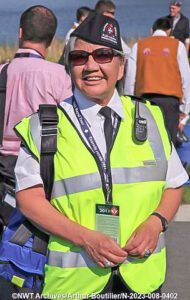
Gail
Cyr, a St. John Ambulance volunteer, at the 2011 visit of the Duke and
Duchess of Cambridge. (Photo courtesy of NWT Archives/Arthur Boutilier
fonds)
She served on Yellowknife city council, worked for the territorial
government and was a special advisor on Missing and Murdered Indigenous
Women and Girls.
She also enjoyed live performances, producing costumes for the
Northern Arts and Cultural Centre and performing with her son, Jesse.
Cyr was the former executive director of the Native Women’s
Association and up until her passing, was on the NWT Human Rights
Commission.
Charles Dent currently chairs the commission. He recalls first
meeting Cyr at one of the first Folk on the Rocks festivals in the 1980s
when Cyr was with St. John Ambulance and he was a volunteer
firefighter.
Later on, when the pair were on Yellowknife City Council in the
1980s, with Cyr being the only Indigenous councillor. Dent said Cyr
impressed by doing all the required reading and really made an effort to
make good decisions to help the city develop.
Then, when Cyr joined the Human Rights Commission, Dent said she translated her personal experiences into leadership.
“She brought her … understanding and empathy that goes with having
experienced the discrimination she personally went through during the
Sixties Scoop,” he said.
“She was never afraid to talk about her experiences, never afraid to
talk about how that affected her and others like her that you know had
experienced the same sorts of things.
“She was courageous, because she was willing to share her experience.
She tried to help people empathize with what people have gone through,
and help along our path to reconciliation.
“As we developed the Commission, we developed our reconciliation
strategy, she was key to helping us set that up, and I’m gonna miss her.
We’re gonna miss her.”
CKLB will update this story when Cyr’s funeral arrangements are known.
“You will be told you are ugly or
‘too beautiful to be Indigenous!’ If you were fostered into a white
home, you will be told to your parents were drinkers, and you will be
told to ignore any pull to your family you lost.”
– Gail Cyr, on growing up in a non-Indigenous community
Gail Cyr as a teenager. (Photo courtesy of Cyr family via Facebook)
"I felt so much pain that I had been carrying melt away."
TODAY Illustration / Courtesy Yvette McKinley
By Yvette McKinley, as told to Rachel Paula Abrahamson
When
I was a toddler, I was stolen from my home in the middle of the night.
Child welfare authorities banged on the door and said, “We’re here for
Yvette,” and my parents had no choice but to hand me over.
I’m
one of more than 20,000 Indigenous children in Canada who were ripped
from their families during what is known as the Sixties Scoop. The
Canadian goverment believed that Indigenous people were not fit to raise
children. In the words of former prime minister Hector Langevin, “To
educate the children properly we must separate them from their families.
Some people may say that is hard but if we want to civilize them we
must do that."
My
siblings — I’m the youngest of 14 — were sent to federally operated,
Catholic boarding schools where they were given English names and
forbidden from speaking their aboriginal language. In these programs of
forced assimilation, many experienced horrific physical, sexual and
emotional abuse.
I was more fortunate.
In
1974, I was adopted by a white Christian couple in Oregon. They were
told by the adoption agency that my biological parents didn’t want to
raise me. For decades, I believed that story, too.
My adoptive parents were kind, but I always had a sense of being different.Courtesy Yvette McKinley
It
was quite easy for a white couple to adopt an Indigenous child at the
time. My adoptive parents started the paperwork in January, flew up in
March to meet me for the first time, and the very next day they took me
back to their home in Oregon.
Growing up, I was aware
that I was Indigenous, but it’s not something that I embraced. At
school, my classmates called me an Indian. Redskin was another one I
heard a lot. My mom says I always asked her to buy me white tights so my
legs would look white like the other girls. I didn’t want brown skin. I
didn’t want to be different.
It
wasn’t until my 20s that I started to get more curious about my
history. My brother, who is half Japanese, had started looking for his
biological family, so I decided I would, too. I knew my birth parents
had the same name, Acoby, so I started by writing to every Acoby I could
find in the Canadian providence of Manitoba.
The first
person I heard back from was my sister Lorraine, who shared that we are
members of Swan Lake First Nation. She said our parents had never
stopped looking for me. When I read those words, I felt so much pain
that I had been carrying melt away. I had spent my life believing that
they didn't want me.
From Lorraine I learned about how
our sister Charlotte was taken at a doctor's appointment when she was 5
months old. My mom handed Charlotte over to a nurse, not realizing she
would never hold her baby again. My mom went back to that doctor's
office every single day for months begging for them to let her see
Charlotte, but she was gone.
My sister Charlotte (left) and me: I've discovered a whole family I never knew I had.Courtesy Yvette McKinley
At
the age of 24, I reunited with my mother. My dad, a former chief of
Swan Lake, had died a few years earlier. My sisters were there to
translate for our mom who spoke only Ojibwe. She was relieved to learn I
was raised by kind parents. For all those years she had wondered if I
was OK, and I’m glad she was able to have some closure.
It’s
so hard to put into words what it was like to be surrounded by people
who look like me. There’s this feeling of acceptance. But at the same
time, I feel so Caucasian when I’m around my biological family. Sometimes I feel like I don’t belong anywhere, which is not uncommon for
survivors of the Sixties Scoop.
Since reconnecting with
my birth family, I travel to Swan Lake reserve every summer. I feel at
peace there. It’s just prairie land and it’s a part of me that I didn’t
know I had been missing.
Now I have sisters that I text
and call. We do big family dinners. When we’re together there is this
overwhelming sense of calm.
I love sitting around with
the council people and learning about where I came from. At my first
powwow, I met family members I never knew existed — aunts, uncles,
cousins. Unfortunately, the tribe can’t recognize me as a family member
because the Canadian government erased my birth certificate. But I do
have my Ojibwe name, which means Morning Sky in English. My kids now
want to get their spiritual names.
I'm working to get my real birth certificate. The one I have now lists my adoptive parents as my parents.
I
received a $25,000 apology check from the Canadian government. And
that’s what my life is worth in their eyes. It’s like, "We destroyed
your entire family. We took you from your home, from your family. Here’s
a check for $25,000.” That hurts a lot.
There are so
many people that don’t know anything about what happened to my people
during the Sixties Scoop. One summer, I stopped at a burger stand just a
few miles from Swan Lake and the woman working behind the counter had
never heard of the Scoop.
I want the government to
acknowledge what they did and honor those children who never made it out
alive from their schools. Let’s call it what it is: The Sixties Scoop,
like the Holocaust, was a genocide.
At least 4,120
children are known to have died in the residential schools in Canada. In
the U.S., a federal investigation found that at least 973 children died
in residential schools — and the actual number is probably much higher,
since many were buried in unmarked graves.
My siblings
were sent to those schools. They say their hair was cut off. They were
beaten for speaking our language and singing our songs. They were forced
to study the Bible. My sister Yvonne can only talk about it in little
tiny segments because it was so traumatic.
We are healing together.
I will never forget how Swan Lake First Nation chief Jason Daniels welcomed me back.
"You're home," he said. "This will always be your home."
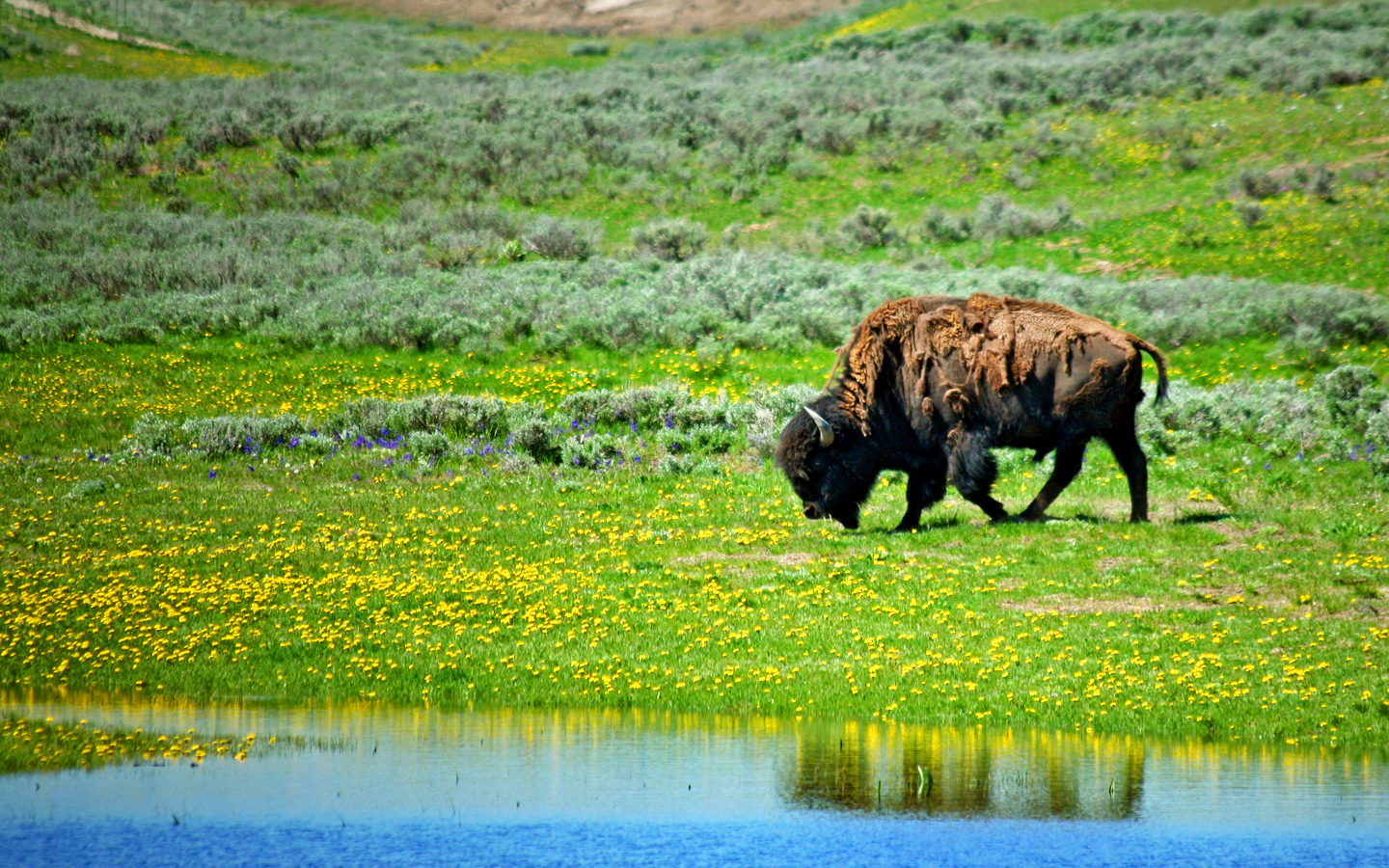
Buffalo have deep cultural significance to members of the Cree Nation. // Matt Hinsta via Flickr
By Bob Covey |November 7, 2024
To members of the Cree Nation, the buffalo has deep and significant spiritual meaning.
“At a core level, the Cree people in Alberta were buffalo
people,” says Jasper’s Matricia Bauer. “Buffalo was their food, their
celebrations, their instruments, their tools, their way of life.”
But even though her own life as a knowledge keeper and storyteller is
centred around connections to Cree culture, until she took up residency
at the Banff Centre recently, Bauer hadn’t spent any time considering what the buffalo represents to her.
“The government has done a pretty good job of colonizing us,”
she said when asked to consider that particular crevice between her
ancestors. “And I guess I’ve done a good job of colonizing myself.”
Jasper’s Matricia Bauer (right) with her daughter Mackenzie, performing as Warrior Women in 2016. // M McFarlane
Bauer is a Sixties Scoop
survivor. She was one of thousands of Indigenous children in Canada
removed from their families to be raised by non-Indigenous families. As
an adult, Bauer has reconnected to her heritage, and today as an
Indigenous educator operates Warrior Women, an organization which aims to “Indigenize the world” through workshops, performances and plant walks.
“It was nice to be back in the boots of a student,“ she added.
The conduits which allowed her do that inner reset were twofold:
Firstly, as one of seven other Indigenous artists at the Banff Centre
residency, she was able to tap into a shared community, and exchange
traditional knowledge and skills. And secondly, she tapped into the
power of paskwâwi-mostos: the buffalo.
“I thought [the residency] would be more about traditional
practices and processes, but it was more about the relationship with the
buffalo,” she said.
Despite
its importance to her ancestors, until her residency at the Banff
Centre, the buffalo was not part of Cree educator Matricia Bauer’s
connection to her culture. // Matt Hinsta via Flickr
Navigating that relationship was neither easy nor expected. When she
first saw the buffalo hide that she and the group were slated to tan,
Bauer was instantly overwhelmed.
“When they rolled it out I just thought ‘oh no, that’s so big,’” she laughed.
Bauer had experience tanning hides, but she still couldn’t fathom the
amount of physical work which would be required to scrape the buffalo
hide clean of its membranes and hair. For hours each day, Bauer scraped.
By the end of each session, she could barely lift her arms. Her back
ached and her hands were cramped. And the pitiful progress made from her
monumental efforts simply ticked her off.
“I would get mad,” she said. “You would stand there scraping
for four to eight straight hours. It breaks you down mentally,
physically, emotionally.”
Hitting a low point, suddenly, one day, Bauer noticed the Banff
Centre was abuzz with activity. The reason for the heightened energy was
a visit from a group of Indigenous seniors—elders from the Bow Valley
community of Mini Thni were being toured around campus. When they saw
the hide, Bauer said, the elders were immediately drawn to it. By turn,
the aunties and uncles picked up unclaimed scraping tools, helping to
dress the hide. It was a revelatory moment for Bauer.
“I realized it’s not something meant to be done alone,” Bauer said. “It’s meant to be done together, with community.”
The shared experience buoyed Bauer and her fellow artists in
residency. They soon completed the scraping and tanning process, and
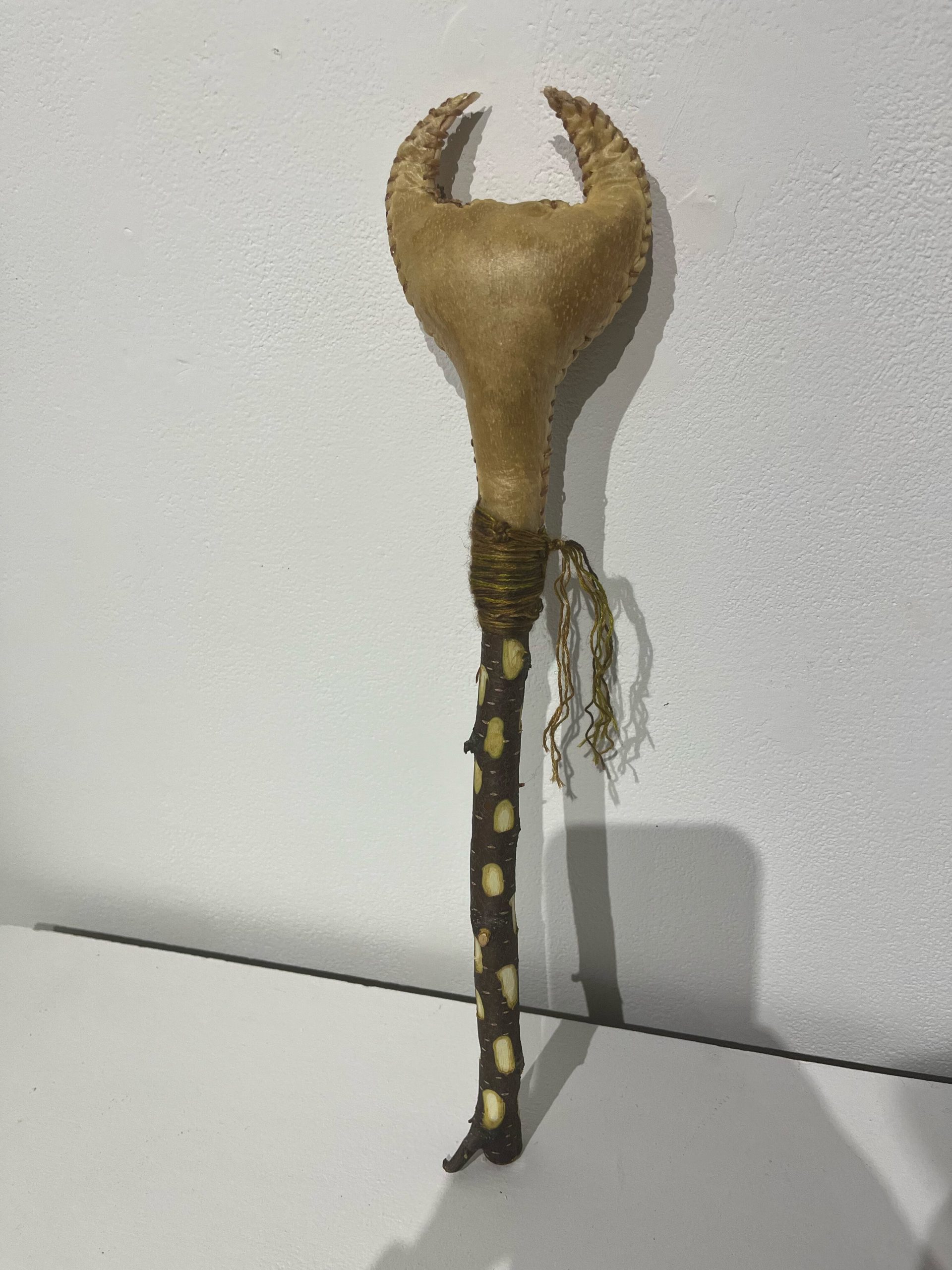
from the hide created drums, rattles, parfleches and other tools.
Buffalo hide rattle made by Bauer during her residency at the Banff Centre. // Supplied
A secondary exchange of knowledge came when the artists—whose
collective mosaic included representation from the Māori people, the Ute
from Colorado, the Lakota, and several other First Nations across
Canada—shared their traditional forms.
Bauer demonstrated fish scale jewelry-making and caribou hair
tufting. In exchange, she was taught horse hair wrapping, porcupine
quilling, moose hair embroidery, and making leather from fish skin.
“I learned how to carve tools out of moose bone,” she said. “That blew my mind.”
Ten weeks after wildfire destroyed parts of her community, Bauer’s
mind welcomed the outside stimulation. Because the fire torched any fall
performances and workshops she had booked, a freed-up schedule allowed
her to go into the residency with necessary focus. But like many of her
friends and neighbours, she was also feeling very vulnerable.
“I went into it like a lot of Jasperites after the fire—fractured, confused and beat down,” she said.
The physically-demanding hide tanning process broke her body down
even further, but by the end of the three weeks, she had not only had
stronger arms and shoulders, but a clearer head and a fuller heart.
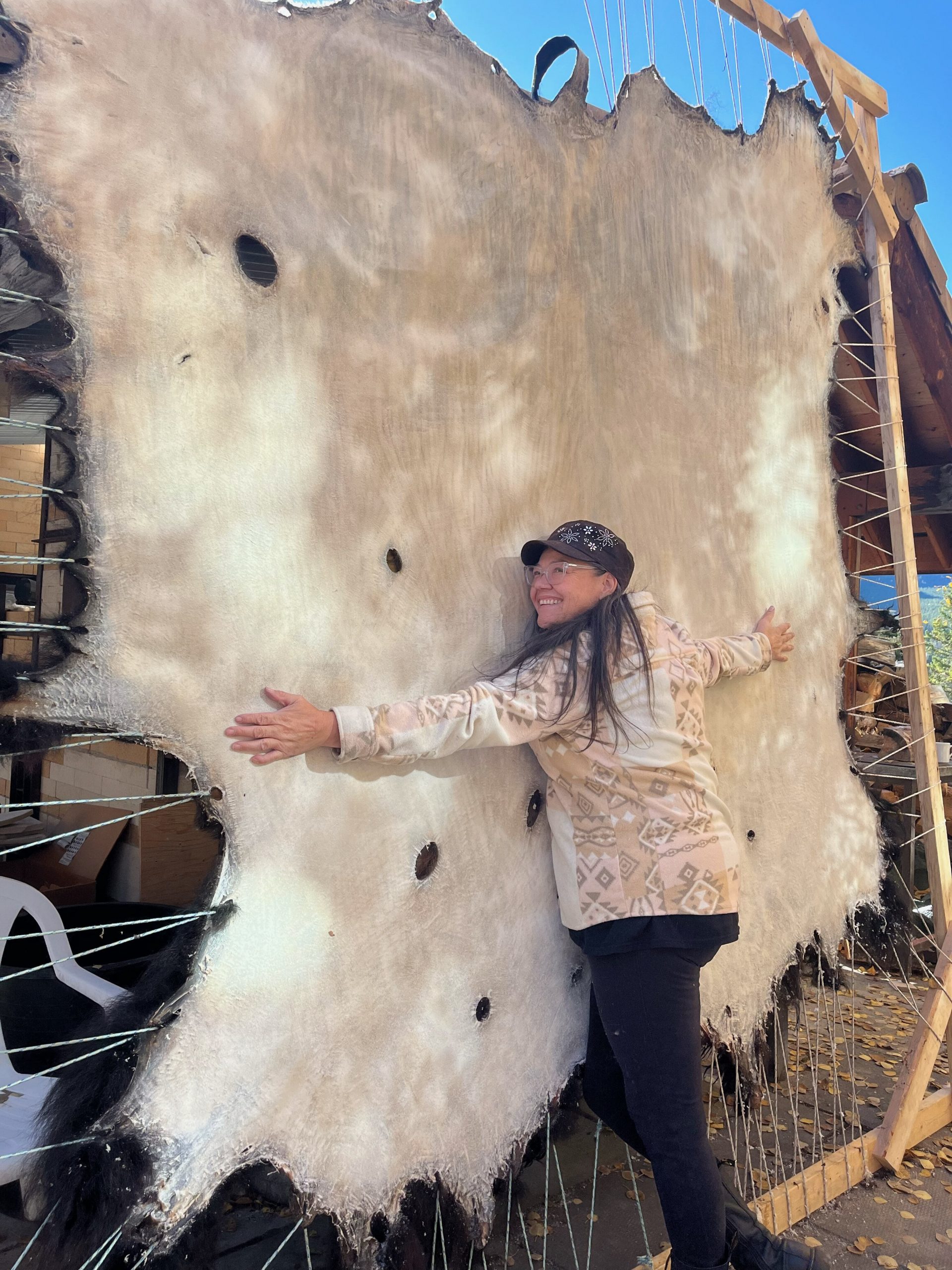
Perspective
is everything: Bauer with the enormous buffalo hide she and her fellow
artists in residence at the Banff Centre scraped and tanned. // Supplied
The biggest lesson she learned? To be open to the teaching in the first place.
“It reminded me that as much as I share my culture, I still
have a massive amount to learn, and other people have a lot of gifts to
share,” she said.