Tuesday, August 15, 2017

Monday, August 14, 2017
Tuesday, August 8, 2017
Billings Gazette Piece on the #ICWA Court in Yellowstone County
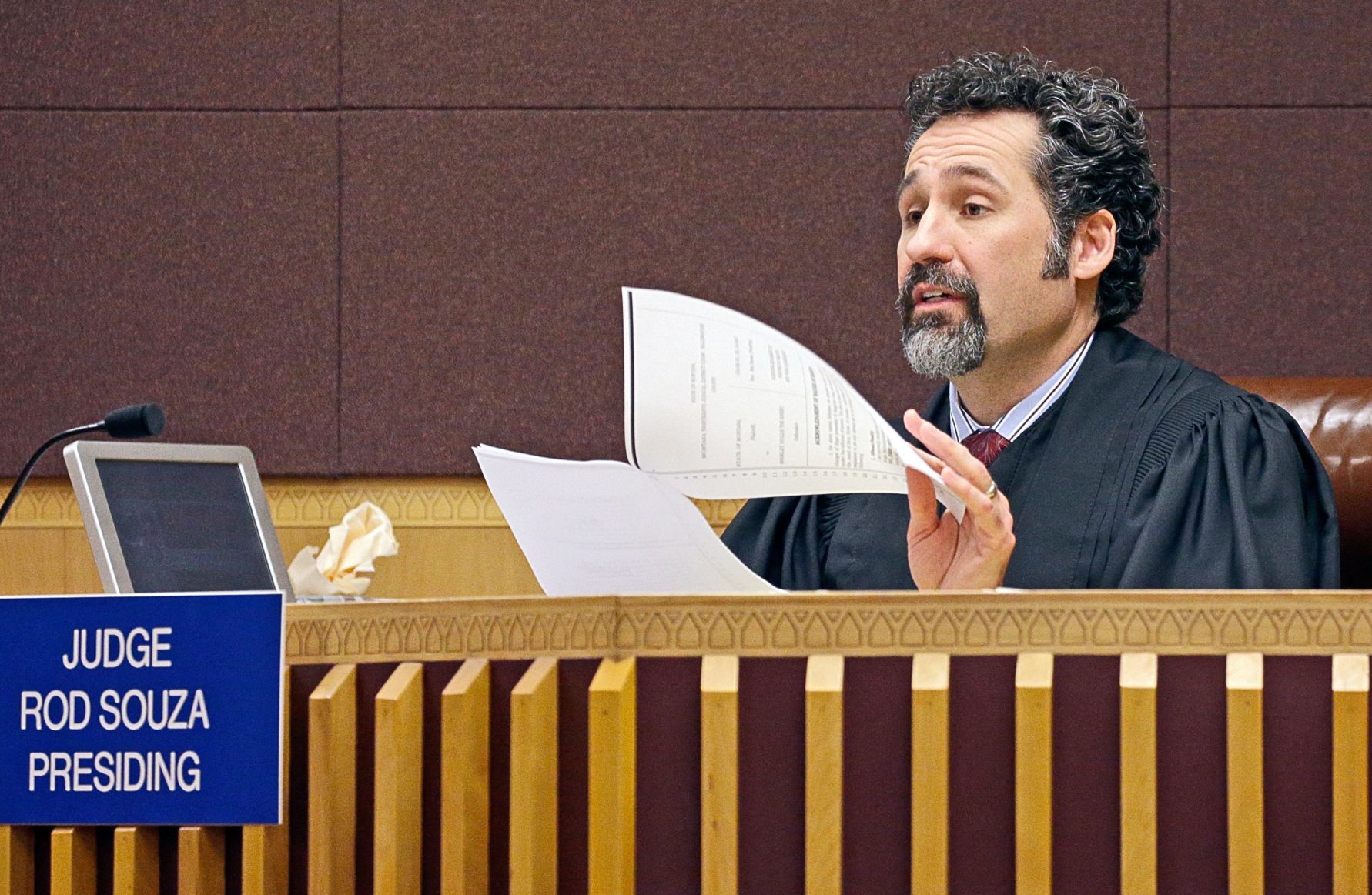 The most difficult cases in Montana District Courts involve children who have been abused or neglected in their own homes.
When children are in danger, judges must decide where and with whom they will live, making rulings that could affect the children for life.
When Native American children are involved, the legal situation is more complex. In addition to state law, the federal Indian Child Welfare Act must be applied, and the child’s tribe is part of the decision making.
At any given time, the number of Native American children in Montana’s foster care system is much higher than their 10 percent share of the total child population would suggest.
In Yellowstone County last year, 43 percent of the 550 civil child abuse and neglect cases filed involved children who are tribal members or eligible for membership. But there hasn’t been court resources dedicated specifically to improving outcomes for ICWA children — until now.
READ: Gazette opinion: Bringing Indian foster kids home | Editorial | billingsgazette.com
Monday, August 7, 2017
Returning Home
American Indian Children Buried in Carlisle for a Century to be Disinterred
/
Currents /
07 Aug 2017

Published August 7, 2017
Editor’s Note: This article was published on PENNLIVE.
CARLISLE, PENNSYLVANIA – It has been more than a century, but they are finally going home.
Three Native American children, buried at what is now the Carlisle Barracks, will be disinterred on Tuesday, starting the process of returning their remains to their rightful home in Wyoming, capping decades of efforts to get them there.
The three children are members of the Northern Arapaho Nation and are among the 200 who died when they were students at the Carlisle Indian Industrial School.
Read more …
Thursday, August 3, 2017
Remembering our friend Cynthia Lammers
 Cynthia Lammers (center photo)
FUNK — Cynthia S. “Cindy” Lammers, 51, of Kearney died Tuesday, July 11, 2017, near Funk.
Private family memorial services will be later.
There will be no visitation. Horner Lieske McBride & Kuhl Funeral and Cremation Services is in charge of arrangements.
——
Cindy was born on Feb. 10, 1966, in Rosebud, S.D. She grew up in Kearney and graduated from Kearney High School in 1984. She then attended Central Community College. She married Mike Splitter in Kearney on Aug. 14, 1993. They later divorced.
Cindy worked at Mount Carmel Home and Rehabilitation Center in Kearney. She enjoyed fishing and camping.
Surviving relatives include her father, LeRoy K. Lammers of Kearney; sister, Shellie Ingersoll and her husband, Odee, of Kearney; stepbrothers, John Moss and Jeff Moss, both of Fort Wayne, Ind., David Blankenship and his wife, Sandy, of Alliance and Johnny Blankenship and his wife, Jennifer, of Lincoln; also many nieces, nephews, aunts and uncles.
Cindy was preceded in death by her mother, Norma Lammers; brother, Mitch Lammers; grandparents; stepbrother, Earl Soden; and birth mother, Amy Standing Soldier-Busch.
Memorials are suggested to the Red Cloud Indian School in Pine Ridge, S.D.
Visit www.hlmkfuneral.com to leave a tribute or message of condolence.
 |
| Photo from the memorial on August 4 (Jessica photo) |
 |
| A roadside marker where she was killed (Family Photo) |
Tuesday, August 1, 2017
Am I Indian?
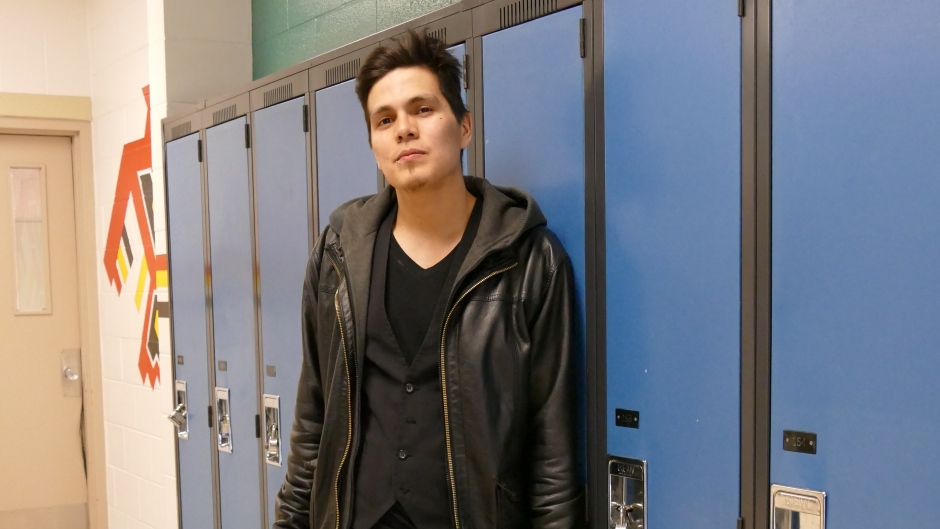
Growing up, Matthew Shorting knew that he was Indigenous — but didn’t know much more than that. Join Matthew on his journey of discovery as he seeks to find out more about his Indian heritage.
For the entire NewFire article visit here.
more stories from this episode
- WATCH | I Am Indigenous
- 'Am I Indian?': A young man's journey to reclaim identity
- BLOG | Lisa Charleyboy: my journey to Indigenous nationhood
NEWS
Tribes Call For Testimony on Children Who Went Missing at Boarding Schools
July 24, 2017. The Boarding School Healing Coalition (NABS) is working with the International Indian Treaty Council (IITC) and the Native American Rights Fund (NARF) to file a submission with the UN Working Group on Enforced and Involuntary Disappearances (UNWGEID) to call on the United States to provide a full accounting of American Indian and Alaska Native children who were taken into government custody under the U.S. Boarding School Policy and whose fate and whereabouts remain unknown.
Thursday, July 27, 2017
Sen. Udall Holds Listening Session on Human Trafficking in Indian Country
| Native News Online Staff |

Vice Chair of the U.S. Senate Committee on Indian Affairs Tom Udall - D - New Mexico
WASHINGTON — Today, U.S. Senator Tom Udall,
vice chairman of the Senate Committee on Indian Affairs, held a
stakeholder meeting on ways to more effectively prevent, prosecute, and
improve data collection on human trafficking in Indian Country. Federal
data on human trafficking in Native communities is limited, but
available information suggests human trafficking in the United States
frequently targets vulnerable populations, which would include Native
Americans who disproportionately face high rates of poverty and trauma.
In order to address the shortage of information, the Indian Affairs
committee requested that the Government Accountability Office (GAO) seek
data on the prevalence of human trafficking in Native communities and
research the frequency with which law enforcement agencies have
encountered it, the services that are available to victims, demographic
information, efforts to increase prosecutions, and other federal
initiatives.
Udall released the following statement:
"Human
trafficking affects every community in the United States – regardless
of age, gender, ethnicity and socio-economic background. And because
Native Americans disproportionally face high rates of poverty and
trauma, they are especially vulnerable and frequent targets of human
trafficking. For years, Tribal leaders and Native activists have raised
the issue of human trafficking with Congress. By sharing their powerful
and often heart-breaking stories, they have elevated our awareness about
the need for more information and more resources to combat the spread
of human trafficking in Indian country.
"But
the fact is that the federal government knows very little about the
rates of human trafficking on Tribal lands. And it knows even less about
human trafficking of individual Native Americans. After reviewing these
GAO reports, it is clear that the true extent of human trafficking in
Indian Country remains unknown. But it is also clear to me that the
federal government could do more to help Native victims who are slipping
through the cracks. Congress must take a long, hard look at how federal
agencies collect and monitor data on this issue, ensure their
accountability, and then work to provide federal and Tribal law
enforcement agencies with enough resources to keep Indian Country safe.
The administration’s proposed cuts to federal law enforcement agencies
and Tribal programs would only further strain public safety initiatives
on Tribal lands. Instead of jeopardizing Native communities by cutting
policing and justice budgets, Congress should look for new ways to get
funding resources to Tribes.
"Like
with other crimes in Indian Country, addressing human trafficking will
require Congress to look at and pass legislation that addresses issues
of jurisdiction and inter-agency cooperation, and I’m hopeful that we
can work together to provide Tribes with more resources to combat human
trafficking and ensure that all Native victims of crime get the support
they so desperately need."
Wednesday, July 26, 2017
The REAL ID ACT is already here?
The REAL ID Act: Are You Ready for a National ID?

Sample of the new REAL ID for Wisconsin
People throughout the country might see some big changes happening to their driver’s licenses and state IDs. As of February 2013, 19 states have demonstrated compliance with the REAL ID Act, a piece of legislature that imposes much stricter measures on how people can obtain a driver’s license, and sets more thorough standards as to what will be displayed on them. Called the new “national ID,” the REAL ID Act has gained some traction in light of recent events like the Boston Marathon bombings.
But what exactly is the REAL ID Act, and how will it affect drivers across the nation?
The History of REAL ID
After 9/11, the federal government began to look at ways to increase security surrounding state identification cards and driver’s licenses, in an attempt to prevent further terrorism and/or unlawful entry into and out of the country.In 2005, the House of Representatives passed a bill into law called the REAL ID Act. This Act would set certain federal standards upon all driver’s licenses, which are currently regulated by each individual state. After being passed into law, the bill was tabled until 2007, when it was announced that the federal enforcement of the act would be postponed for a period of two years. However, many state governments were slow to support this act, feeling that it not only infringed upon states’ rights handed to them by the 10th Amendment, but also created unnecessary cost to taxpayers in order to implement the change. It wasn’t until this year that the federal government announced that all states would need to be in compliance with the REAL ID Act by the end of 2017.
How IDs Will Be Affected
The REAL ID Act sets forth new federally mandated requirements for all state driver’s licenses and ID cards. The Department of Homeland Security (DHS) has set standards not entirely dissimilar from the requirements already in place for most states throughout the country. On each ID, the following information must be present:- Full legal name
- Residential address
- Birth date
- Gender
- Driver’s license/identification card number
- Digital front-facing photograph
- Signature
- A photo ID, or non-photo ID that contains the applicant’s full legal name and birth date
- Valid birth certificate
- Social Security number
- Proof of legal U.S. citizenship, OR proof of lawful admittance into or temporary residence within the U.S.
The Pros and Cons of REAL ID
Proponents of the REAL ID Act cite its advantages to national security. These measures ensure that non-citizens are unable to obtain a state-issued ID or driver’s license, and also prevent anyone without one from boarding aircraft or entering high-security locations. Similarly, these IDs would place the United States in the company of nearly 100 other countries in the world (including most European countries) that have some form of a national ID card.Cost, Freedom, and Privacy Concerns
However, many states oppose the implementation of the REAL ID Act based upon the estimated cost. The Act is a unfunded mandate, meaning that while the requirement is federally issued, the entire cost of recreating and re-issuing millions of licenses and ID cards would fall solely upon the states – without any financial assistance from the federal government. States are therefore required to raise their licensing fees in order to make up the added cost… putting an extra financial burden upon the licensee, who may simply be attempting to transfer one valid license into the REAL ID format.Once the Act is fully implemented, residents without the new mandated ID will also be barred from boarding airplanes, entering nuclear facilities, and performing any other actions that require “official” federal identification. Citizens will need to provide a valid U.S. passport or permanent residency card in place of the new ID.
Another major concern is the idea of personal information being gathered and stored into what some are calling a “national database.” In order for the DHS and TSA to validate a citizen’s identity, they need to collect and store the information that otherwise would be solely kept by individual states. Many are worried about the “Big Brother”-esque implications this may have to personal privacy.
Major Effects Upon Immigrants
Immigrants and foreign nationals working in the United States are similarly worried about how the REAL ID Act may affect their abilities to live and work within the country. As the requirements for obtaining a new ID card are much more stringent than what some states may currently employ, foreigners without legal proof of entry into the country or without a Social Security number will be barred from obtaining a driver’s license, limiting their means of travel throughout country by a huge margin and possibly forcing them to return to their home country to renew their ID. Then again, supporters of the REAL ID Act cite this as an example of the system working properly, as it ensures that the only people working and traveling within the U.S. are those that the government has officially allowed to be here.Immigration, Adoptees and The Identity Police: The REAL ID ACT of 2005
By Trace Hentz, Blog Editor
Have you tried to get a driver's license recently? I spoke to a cousin in Illinois who was not given a driver's license (renewal) but a piece of paper instead. She is not adopted. The Illinois Motor Vehicles people told her they are doing a background check first then will mail it to her. (My cousin has lived in Illinois all her life and she is over 60.)
WHAT IS HAPPENING?
We have seen this coming. (I was worried in 2005 when I went to get a passport and had to mail them my fake birth certificate.)
In 2011, Leland Morrill wrote this Facebook post on his concerns about the lack of original birth certificates for many Native adoptees like him. Leland did not have a birth certificate but a Certificate of No Birth Record.
READ HERE
 Leland contributed to the book series Lost Children of the Indian Adoption Projects. In the first book TWO WORLDS he shared he had not found his mother or father and was adopted by Mormons. In the second book CALLED HOME he found his mother's family. In STOLEN GENERATIONS, the third book, he found and met all his clans and his father.
Each year for an adoptee, information can drip drip drip and finally come. It's not a fast process. Each piece of paper helps.
You have two parents and two family trees. Never give up hope of finding the paperwork and the people.
ALSO::: If you adopted a child, request their adoption file as soon as possible. If you signed these documents you have the right to have a certified copy of the adoption proceedings and court documents. You and your adopted child will need ALL this information, when they reach adulthood. If you adopted a child from another country, did you get them their US citizenship records? If not, they could be deported. It is that serious.
If you do not have documentation of any kind, call the local FBI right now and explain your situation and remind them of the REAL ID ACT - and how it affects you as an adoptee.
This is what Leland shared about the REAL ID ACT of 2005:
REAL ID ACT of 2005 passages affecting me and possibly other Native Americans:
(pg 42) TITLE II—IMPROVED SECURITY FOR DRIVERS’ LICENSES AND PERSONAL
IDENTIFICATION CARDS
(pg 43) Minimum document requirements:
(pg 44) (2) The person’s date of birth.
(pg 45) (B) Documentation showing the person’s date of birth
(pg 46) (C) TEMPORARY DRIVERS’ LICENSES AND17 IDENTIFICATION CARDS
(i) IN GENERAL.—If a person presents evidence under any of clauses (v) through (ix) of subparagraph (B), the State may only issue a temporary driver’s license or temporary identification card to the person. (ii) EXPIRATION DATE.—A temporary driver’s license or temporary identification card issued pursuant to this subparagraph shall be valid only during the period of time of the applicant’s authorized stay in the United States or, if there is no definite end to the period of authorized stay, a period of one year.
There will be undocumented Native Americans who will find through their respective state Department of Motor Vehicles (DMV) they no longer have the eligible documentation to maintain or be issued an Identification Card or Drivers License. Some will be issued a temporary "paper" 1 to 6 month extension, up to one year, as per The Real ID ACT of 2005. Others will not. Once the State issued temporary extension, Identification, Drivers License expires, these Native Americans (me included) will become undocumented, thus illegal with no papers.
One of the main reasons for me setting up this Facebook page is because I never received correspondence from Representative Sensenbrenner. In addition, through 22 years of research, my own research has resulted in obtaining a State of Arizona Certificate of No Birth, keep in mind the Navajo Nation adopted me out in Chinle, Arizona.
My State of Arizona "Certificate of No Birth," was issued December 21, 2010, the result of my continuous research since September 07, 1989.
So far, with the help of my close friends, and people willing to help, my own financing, tens of thousands of US dollars later, I now have a State of Arizona Certificate of No Birth and a second State issued 6 month temporary paper Drivers License expiring July 13, 2011. My United States of America CITIZENSHIP expires on that date, again JULY 13, 2011. By virtue of the REAL ID ACT of 2005, States may only issue temporary Drivers Licenses and Identification for those who currently have one for an additional year. I am one of those cases.
Representative Sensenbrenner's Real ID ACT of 2005 will make me an ILLEGAL ALIEN who cannot work, and cannot access medical care, obtain a credit card, bank account, vote, and any right that is afforded a United States Citizen because of not having a current State issued Identification Card or Drivers License. My citizenship expires July 13, 2011 after my second 6 month temporary State issued Drivers License does. (Leland was able to get this resolved.) Commissioner Chai Feldblum delivered a copy of my version of the Real IS Act to Jim Sensenbrenner.. The same day I talked to Chai Feldblum at UCLA School of Law, the Navajo Nation called me to tell me they were going to issue my Birth Certificate.
*** My Final Thoughts
The Department of Homeland Security (DHS) originally estimated that REAL ID will cost $23.1 billion over 10 years. DHS planned to extend the deadline in 2013. Now it's 2017 and states must put it into effect.
In 2017, tell your governor to boycott it! If you are an adoptee, explain why you cannot access your original birth certificate (if you live in a state with sealed adoption records.) Tell them what you stand to lose!
When an adoption is finalized, a new birth certificate for the child is customarily issued to the adoptive parents. The adoptive parents names are listed on our amended birth certificate. The original birth certificate is then sealed and kept confidential by the State registrar of vital records. In the past, nearly all States required a court order for adoptees to gain access to their original birth certificates. In approximately 26 States, the District of Columbia, American Samoa, Guam, and Puerto Rico, a court order is still required.
Read more about your state's adoption laws here (2009 report):
www.childwelfare.gov/systemwide/laws_policies/statutes/infoaccessap.cfm
Lawmakers ignorance about adoptees is not only dangerous, it's another SCARY chapter of adoption culture!
Have you tried to get a driver's license recently? I spoke to a cousin in Illinois who was not given a driver's license (renewal) but a piece of paper instead. She is not adopted. The Illinois Motor Vehicles people told her they are doing a background check first then will mail it to her. (My cousin has lived in Illinois all her life and she is over 60.)
WHAT IS HAPPENING?
We have seen this coming. (I was worried in 2005 when I went to get a passport and had to mail them my fake birth certificate.)
In 2011, Leland Morrill wrote this Facebook post on his concerns about the lack of original birth certificates for many Native adoptees like him. Leland did not have a birth certificate but a Certificate of No Birth Record.
READ HERE
Each year for an adoptee, information can drip drip drip and finally come. It's not a fast process. Each piece of paper helps.
You have two parents and two family trees. Never give up hope of finding the paperwork and the people.
ALSO::: If you adopted a child, request their adoption file as soon as possible. If you signed these documents you have the right to have a certified copy of the adoption proceedings and court documents. You and your adopted child will need ALL this information, when they reach adulthood. If you adopted a child from another country, did you get them their US citizenship records? If not, they could be deported. It is that serious.
If you do not have documentation of any kind, call the local FBI right now and explain your situation and remind them of the REAL ID ACT - and how it affects you as an adoptee.
This is what Leland shared about the REAL ID ACT of 2005:
REAL ID ACT of 2005 passages affecting me and possibly other Native Americans:
(pg 42) TITLE II—IMPROVED SECURITY FOR DRIVERS’ LICENSES AND PERSONAL
IDENTIFICATION CARDS
(pg 43) Minimum document requirements:
(pg 44) (2) The person’s date of birth.
(pg 45) (B) Documentation showing the person’s date of birth
(pg 46) (C) TEMPORARY DRIVERS’ LICENSES AND17 IDENTIFICATION CARDS
(i) IN GENERAL.—If a person presents evidence under any of clauses (v) through (ix) of subparagraph (B), the State may only issue a temporary driver’s license or temporary identification card to the person. (ii) EXPIRATION DATE.—A temporary driver’s license or temporary identification card issued pursuant to this subparagraph shall be valid only during the period of time of the applicant’s authorized stay in the United States or, if there is no definite end to the period of authorized stay, a period of one year.
There will be undocumented Native Americans who will find through their respective state Department of Motor Vehicles (DMV) they no longer have the eligible documentation to maintain or be issued an Identification Card or Drivers License. Some will be issued a temporary "paper" 1 to 6 month extension, up to one year, as per The Real ID ACT of 2005. Others will not. Once the State issued temporary extension, Identification, Drivers License expires, these Native Americans (me included) will become undocumented, thus illegal with no papers.
One of the main reasons for me setting up this Facebook page is because I never received correspondence from Representative Sensenbrenner. In addition, through 22 years of research, my own research has resulted in obtaining a State of Arizona Certificate of No Birth, keep in mind the Navajo Nation adopted me out in Chinle, Arizona.
My State of Arizona "Certificate of No Birth," was issued December 21, 2010, the result of my continuous research since September 07, 1989.
So far, with the help of my close friends, and people willing to help, my own financing, tens of thousands of US dollars later, I now have a State of Arizona Certificate of No Birth and a second State issued 6 month temporary paper Drivers License expiring July 13, 2011. My United States of America CITIZENSHIP expires on that date, again JULY 13, 2011. By virtue of the REAL ID ACT of 2005, States may only issue temporary Drivers Licenses and Identification for those who currently have one for an additional year. I am one of those cases.
Representative Sensenbrenner's Real ID ACT of 2005 will make me an ILLEGAL ALIEN who cannot work, and cannot access medical care, obtain a credit card, bank account, vote, and any right that is afforded a United States Citizen because of not having a current State issued Identification Card or Drivers License. My citizenship expires July 13, 2011 after my second 6 month temporary State issued Drivers License does. (Leland was able to get this resolved.) Commissioner Chai Feldblum delivered a copy of my version of the Real IS Act to Jim Sensenbrenner.. The same day I talked to Chai Feldblum at UCLA School of Law, the Navajo Nation called me to tell me they were going to issue my Birth Certificate.
*** My Final Thoughts
The Department of Homeland Security (DHS) originally estimated that REAL ID will cost $23.1 billion over 10 years. DHS planned to extend the deadline in 2013. Now it's 2017 and states must put it into effect.
In 2017, tell your governor to boycott it! If you are an adoptee, explain why you cannot access your original birth certificate (if you live in a state with sealed adoption records.) Tell them what you stand to lose!
When an adoption is finalized, a new birth certificate for the child is customarily issued to the adoptive parents. The adoptive parents names are listed on our amended birth certificate. The original birth certificate is then sealed and kept confidential by the State registrar of vital records. In the past, nearly all States required a court order for adoptees to gain access to their original birth certificates. In approximately 26 States, the District of Columbia, American Samoa, Guam, and Puerto Rico, a court order is still required.
Read more about your state's adoption laws here (2009 report):
www.childwelfare.gov/systemwide/laws_policies/statutes/infoaccessap.cfm
Lawmakers ignorance about adoptees is not only dangerous, it's another SCARY chapter of adoption culture!
The Identity Police are asking for our identification and they are the ones withholding it for adoptees?If anyone reading this blog has been denied a driver's license because you are an adoptee and do not have a copy of an original birth certificate - please email me: laratrace@outlook.com. You can also read about Navajo adoptee Leland Morrill on this blog - use the search bar to find his posts. He had difficulty replacing his lost driver's license...but was successful and is now an advocate for all of us adoptees.
Human Trafficking in Indian Country
The General Accounting Office has published a report, HUMAN TRAFFICKING: Information on Cases in Indian Country or that Involved Native Americans.
PDF
NOTE: If you are an adoptee and do not have papers, and your adoptive parents have died CONTACT THE FBI immediately. Many adoptions were done by private attorneys and you could be a victim of human trafficking and were sold into adoption.
https://www.uscis.gov/humanitarian/victims-human-trafficking-other-crimes
Human trafficking—the exploitation of
a person typically through force, fraud,
or coercion for such purposes as
forced labor, involuntary servitude or
commercial sex
—is occurring in the
United States and
involves vulnerable
populations. Native Americans are
considered a vulnerable population
because of high rates of poverty and
abuse, and other factors. GAO was
asked to research human trafficking
taking place in Indian country and
trafficking of Native American persons
regardless of where they are located in
the United States
.
NOTE: If you are an adoptee and do not have papers, and your adoptive parents have died CONTACT THE FBI immediately. Many adoptions were done by private attorneys and you could be a victim of human trafficking and were sold into adoption.
https://www.uscis.gov/humanitarian/victims-human-trafficking-other-crimes
Sunday, July 16, 2017
Wednesday, July 12, 2017
TRIBAL JUSTICE DOCUMENTARY: reexamine the current definition of justice in America

New PBS Documentary on Native American Judges Focuses
on Rehabilitative Justice
"We are village people. We have
village values. And those values compel us to take care of each other, our
families and our country," says Abby Abinanti, chief judge of the Yurok
Tribal Court and the first Native American woman admitted to the State Bar of
California. Tribal Justice spotlights tribal courts that incorporate indigenous
customs and beliefs into their justice systems. The film follows Abby Abinanti
and Claudette White, chief judges in two of the more than 300 tribal courts
across the country, as they navigate cross-jurisdictional issues in their
courts and communities.
Tribal Justice has its national broadcast premiere on the PBS documentary series POV (Point of View) on
Monday, August 21, 2017. POV is American television's longest-running
independent documentary series, now in its 30th season.
White is the chief judge of the Quechan Tribal Court in the Southern California desert. She says the affiliated tribe has been "vastly diminished," but never removed from its homeland. "We have a lot of social ills in our community based on our location and the limitation to services," she says. "In my capacity as chief judge, what I'm fighting for is our people, our independence, our sovereignty, our existence."
White sees Abinanti as a mentor, and both women are focused on restoring their communities rather than punishing offenders. The Yurok and Quechan tribes are the two largest in California. Each faces its own unique issues, but Abinanti and White share the goal of increasing safety and decreasing incarceration in an effort to dismantle the school-to-prison pipeline. Both judges are passionate about preserving their cultures and creating new pathways to justice for families dealing with historical trauma and intergenerational addiction.
"You guys could be leaders in our community or you could help destroy our community," White tells two teenage boys in her court.
Studies show that rural areas and American Indian reservations are plagued by the manufacturing, trafficking and use of crystal methamphetamine. Reservations are targeted by non-Native drug cartels. Native Americans have the highest meth usage of any ethnic group in the nation, resulting in extremely high crime and incarceration rates. Abinanti remarks, "The state has a lot of responsibility for all the people. I have responsibility to one set of people-6,000 Yuroks and their families. And that's what I'm responsible for: for that and for this land."
Viewers first meet Taos Proctor, a large and gregarious young man, in Abinanti's tribal court in 2013. While out on parole from San Quentin State Prison, Proctor was arrested with methamphetamine on his person; he is facing a third-strike conviction and 25 years to life in prison. Over two years, the film follows Abinanti and her staff as they take on Proctor's case and help him to complete court programs and rebuild his life.
A thousand miles to the south, White invokes the Indian Child Welfare Act of 1978 to reunite an autistic and epileptic 9-year-old boy with his family. She also takes on a more personal case when she becomes the legal guardian to her troubled teenage nephew, Isaac Palone. Palone has recently left a group home and faces two felony charges for breaking into cars; his case is in state court rather than tribal court, and he is at risk of beginning a life shuttling in and out of prison.
Tribal Justice contradicts the entrenched mainstream narrative that depicts Native Americans as locked in hopeless circumstances as their tribes vanish. Abinanti and White's struggles and triumphs tell a different story, one of strong female leaders working alongside their people to affirm tribal sovereignty and break free of the systems of poverty and inequality confronting Native Americans today.
Director Anne Makepeace says that she was immediately moved by the two judges upon meeting them in 2013 and felt that audiences needed to know about their work. "I realized the film would educate a broad audience about something few Americans know about-tribal courts-and that it could have a tremendous positive impact on our criminal justice system."
"Tribal Justice challenges viewers to reexamine the current definition of justice in America," says POV executive producer Justine Nagan. "Through the often personal experiences of two powerful women striving to elevate their people through the tribal court process, Anne Makepeace gives us the opportunity to watch a rarely seen justice system effectively at work."
Friday, July 7, 2017
'It's a way of moving forward': Innu leaders praise announcement of inquiry into children in care

Innu leaders say there needs to be more of an effort to keep troubled Aboriginal children in Labrador, with treatment that includes a focus on their culture and roots.
The removal of children from their homes in Labrador has also been flagged by the province's child and youth advocate who has called for a new community-based approach to child welfare in the region.
In March, CBC News reported that 265 children from Labrador were living in foster care — including many from Inuit communities who had been sent to foster homes on the island of Newfoundland.
Uprooted: Why so many of Labrador's children are in foster care so far away from home
In Natuashish, a community of 963 people, there are 60 children in care of provincial government agencies.
Sheshashiu, the other Innu community in Labrador, with a population of 671, had 90 children in care.
"This is unacceptable that your children are being taken from you," Carolyn Bennett told him at the time. "We are going to change it."Source: 'It's a way of moving forward': Innu leaders praise announcement of inquiry into children in care - Newfoundland & Labrador - CBC News
Tuesday, July 4, 2017
Powwows, rodeos, homecomings today

How do Indians observe the 4th of
July? Do we celebrate?
To answer, let’s turn back the pages of time. A
reasonable chapter to begin in is July 1776, when the Continental Congress
adopted the Declaration of Independence and 13 colonies
became the United States of America. With the emergence of a nation interested
in expanding its territory came the issue of what to do with American Indians.
History tells us that as the American non-Indian population increased, the
indigenous population greatly decreased, along with their homelands and
cultural freedoms.
From the beginning, U.S. government
policy contributed to culture and land loss. Keeping our focus on the 4th of
July, however, let’s jump to the early 1880s, when Secretary of the Interior
Henry Teller developed what has come to be called the Religious Crimes
Code—regulations at the heart of the Department of Interior, Office of Indian
Affairs, Code of Indian Offenses
that prohibited American Indian ceremonial life.
Teller’s general guidelines to all Indian agents were to end tribal dances and feasts. Enforced on reservations, the code banned Indian ceremonies, disrupted religious practices, and destroyed or confiscated sacred objects. Indian ceremonial activities were prohibited under threat of imprisonment and/or the withholding of treaty rations.
The Secretary of the Interior issued
this Code of Regulations in 1884, 1894, and 1904 through Indian Affairs
Commissioner’s circulars and Indian agent directives. Indian superintendents
and agents implemented the code until the mid-1930s. During this 50-year
period, Indian spiritual ceremonies such as the Sun Dance and Ghost Dance were
held in secret or ceased to exist. Some have since been revived or reintroduced
by Indian tribes.

READ July 4th Facts
Indian Humor
Saturday, July 1, 2017
History: Britain’s Futile Attempt to Keep American Colonists From Taking Tribal Land

***

In the 1760s, the government in Britain was taking a new approach to its
vast colonial holdings, and in 1763, colonial governors and tribal
leaders met in Fort Augusta, Georgia, for the first of 10 congresses at
which they negotiated a geographic separation. The king had ordered that
there should be a limit to colonial expansion—if a tribe claimed a
stretch of land, a colonial governor was not supposed to grant it to
settlers. The Fort Augusta meeting began with the tribal representatives
describing what they believed to be the extent of their territory. Over
the course of several congresses, the diplomats agreed on a boundary
between tribal lands and the seaboard colonies. This negotiated line was
supposed to limit conflict for the foreseeable future.

The
Royal Proclamation of 1763 was issued October 7, 1763, by King George
III following Great Britain's acquisition of French territory in North
America after the end of the French and Indian War/Seven Years' War,
which forbade all settlement past a line drawn along the Appalachian
Subscribe to:
Posts (Atom)

click
-
 Editor NOTE: This is one of our most popular posts so we are reblogging it. If you do know where Michael Schwartz is, please leave a com...
 -
Published on Sep 28, 2013 This 40-minute documentary explains the reason for and the process of creating and implementing ...
-
 By Mary Charles I somehow don't believe the intention was for us (adoptees) to find our homes using DNA. But when I came across t...
 -
 By Melanie Payne ( mpayne@news-press.com ) August 15, 2010 Alexis Stevens liked to describe herself as a model citizen. She was adopted fr...
 -
 By: Shannon Logan Feb 07, 2014 Leland Morrill was estranged from h...
 -
South Carolina court drops contempt charge against Dusten Brown Dusten Brown and the Cherokee Nation rea...
-
 Being adopted gives you a certain view of "adoption" unique to the adoptee. Here are my thoughts (some published in August prio...
 -
By Trace L Hentz, blog editor I have often wondered about how we adoptees were affected by our adoptions, as far as our mental health. (I ...
-
Using her own money, Karen traveled to Iceland late last year to meet Guðrún and the Iceland media covered it. Her wish was to reunite G...
-
 By Trace A. DeMeyer Have you watched the TV program WHO DO YOU THINK YOU ARE, a not-so-subtle sales pitch for the Mormon’s...


