BLOGGER changed, not allowing us to UPDATE this back-up blog

(UPDATED 726/2025) issues with blogger are preventing this

Tuesday, August 1, 2023

Sundre author’s book recounts her experience as Sixties Scoop survivor


A Sixties Scoop survivor who wrote an autobiography about her experience hopes that sharing her story will not only raise awareness but perhaps also embolden others with similar life experiences to embark on their own personal path of healing.

Shirleylee Shields, who moved to Sundre about a year ago, was taken away from her biological parents at the age of three and subsequently placed into the care of a foster family in a strict religious sect.

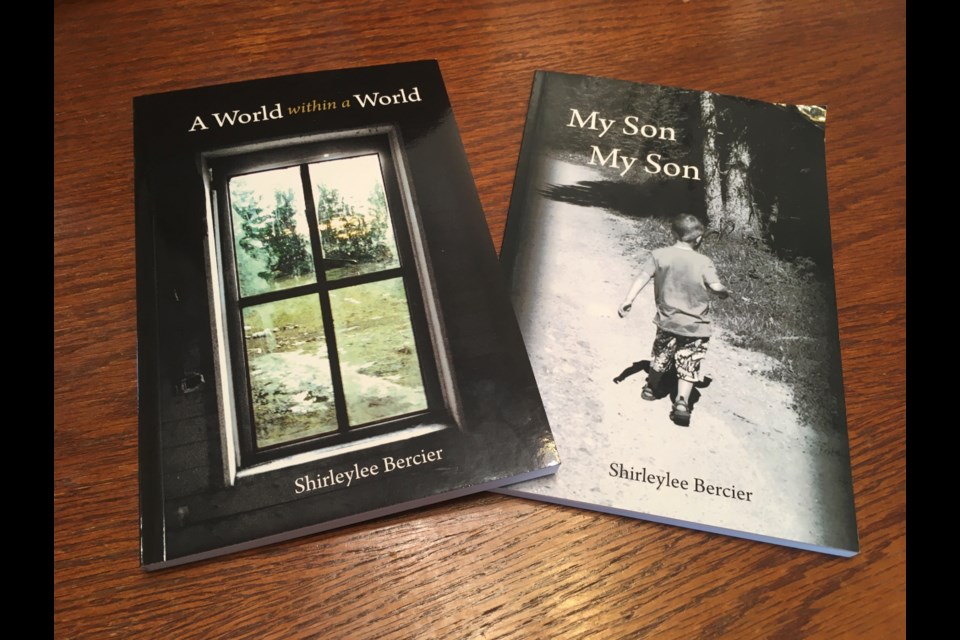
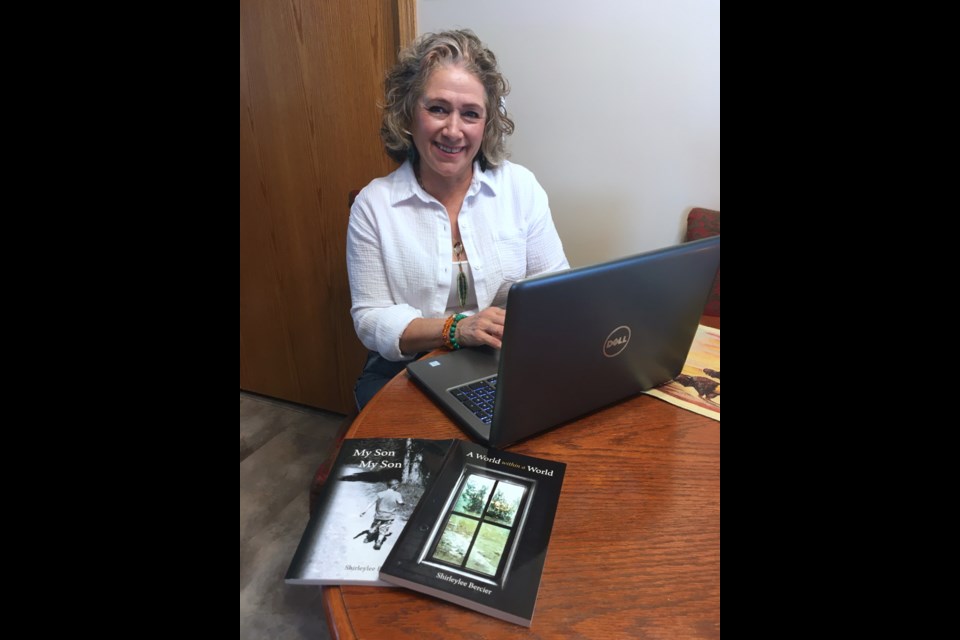
She recently offered a presentation at the Sundre Municipal Library to provide insight into her 2009 book, A World Within A World. She also penned a sequel called My Son My Son.

During a June 13 interview with the Albertan, the 58-year-old candidly recounted the long, difficult journey of self-discovery that ultimately led her to walk away from a fundamentalist life that was forced upon her and to reconnect with her family and heritage.

Sharing experience a liberating step

“There’s no more skeletons in the closet,” she said with a laugh in response to being asked how seeing her published story felt. “You have nothing to hide. It was the most freeing, cleansing thing to do, was to reveal and to bring all of this out and throw it on the table.”

At first, she confessed being “petrified” that nobody would even want to read her story. But A World Within A World is now on its fourth print run, while copies of My Son My Son are out of stock for now.

Born on May 1, 1965 in Benito – a small, rural Manitoba community just east of the border with Saskatchewan – Shields lived only briefly for three years with her six other biological siblings and parents, an English mom named Myrtle Harrington and a Métis dad called Herman Moses Bercier, at a home in the Roblin area south of where she was born.

“Me and my younger brother had been removed from the home and put into foster care and dad didn’t even know anything about it,” she said. “He came home (from working in the bush) and we were gone.”

Shields was fostered into a family that already had 10 children – making her a distant 11th – not far away from Roblin in a relatively remote rural community called Shortdale, Man., where her adoptive parents owned and worked a farm.

“They were part of the Mennonite society, but they were the Holdeman sector, which is the strictest of the Mennonite society,” she said. “There was no radio, no television, no higher education, no makeup, no jewelry; the list is endless. That’s where they dropped me off when I was three.

“It was all I knew, from three years old. You grow up with that environment, it’s just like a cult,” she said. “That’s why my book is called A World Within A World.”

Raised by her foster parents Benjamin and Tina Isaac, the couple eventually adopted her at age 10; a decision she would not find out until years later was actually Benjamin’s idea.

Strict religious upbringing

Amid a strict religious upbringing that demanded unquestioning conformity to rigid rules, Benjamin was among the few silver linings to be found.

“Even though he was a staunch believer and a member of the Holdeman Mennonite society – he loved me,” she said. “He is the only human that I knew growing up that loved me unconditionally; I did everything with my dad. He never hit me; he was the kindest soul that you could imagine.”

He even seemed to understand the internal struggle she faced on a daily basis.

“He knew,” she said. “Even when I was young – six or seven – I would look at him and I’d say, ‘I don’t belong here.’ And he’d say, ‘Well, for now, you do.’”

Expressing a deep respect born of affection for her adoptive father, she said, “I loved him and he loved me.”

Sometimes, she said he was even reprimanded.

“He’d be (temporarily) expelled from the church for associating with what they considered ‘worldly’ people; so, people of the town,” she said. “It blows your mind at the mentality that they are allowed to sit in judgment of every human being on this planet, but yet they will preach god’s love or whatever they want to believe Sunday morning. I mean, it’s just ludicrous.”

Yet she never developed a connection or relationship with Tina, who died in a vehicle collision in which only Benjamin and Shields survived; she was 15 at the time and subsequently sent away to live in Steinbach, Man. for 11 years.

But she does remember Tina as a “phenomenal gardener” who knew how to prepare a hearty meal.

“We were never hungry; we ate very well,” she said.

Pursuing her own path

Shields remained a part of that family until she decided to walk away from the strict sect in 1994 at about age 28. Although she had previously attempted to leave during a rebellious adolescent phase in her late teens, Shields said she “went back to the church because I didn’t know where any of my biological family was.”

Not having an identity to anchor to made forging out on her own path forward that much harder.

“When you grow up in that environment, they so masterfully indoctrinate you that you are worth nothing unless you are part of them,” said Shields, adding she was eventually forced into an arranged marriage with a member of the Holdeman Mennonites with whom she had four children.

“I had maybe spoken three words to him before we were engaged; if that,” she said. “And then we were married two weeks later; didn’t know him from Adam – didn’t know anything about him.”

She and her arranged husband eventually moved with their four kids to Rimbey from Kleefeld, Man. where they’d worked a dairy operation until 1993, and the writing on the wall became increasingly clear.

“There was a new little congregation starting there of the Holdeman Mennonites,” she said, referring to Rimbey. “And I knew that I needed to leave; I did not want to bring my children up in that environment.”

By the following spring, Shields had mustered up the courage to pursue her own path.

But the next leg in her journey was no walk in the park and involved a drawn-out legal battle to gain not only her freedom but also custody of her children.

“The church took my children because in their eyes I was going to hell, and if I had my children they would be going to hell with me,” she said. “So, I was probably fighting for two years to get my children back.”

Reconnecting with roots

In 1997, the fruits of her labour blossomed.

“I am the first woman in Canada and the United States to have taken this society to the Court of Queen’s Bench in Edmonton and I won my freedom,” she said, adding she was also granted sole custody of her children, who are now all adults and remain in close contact.

Now removed from the sect for more than 30 years, Shields said she decided to cut all ties after Benjamin died and has since been living her best life, eventually going on to remarry and have another daughter with Dave Shields, who had established a respectable reputation as a Calgary Stampede chute boss.

“My book is (about) my fight for freedom,” she said, adding it’s also about her journey of personal and spiritual liberation as well as rebuilding a relationship with her biological family and reconnecting with the Métis heritage that had been all but taken away from her.

“My biological family lived half an hour to an hour away from me my whole life, and I did not know that,” she said.

“My world was so hidden,” she said, adding that in 1979, the church pulled all of the Holdeman children out of the public school system and started their own private school system.

“So, we had nothing to do with the outside world,” she said.

“It was very healing for me to be able to let go of all these memories and this way of life and this programming; to put it all out there,” she said. “Because it took me 10 years to de-program. It’s like the MKUltra; it’s so brainwashing. Your value is based on what they say, not who you are.”

It wasn’t until the age of 24 while attending an uncle’s funeral that Shields finally met her biological father.

“It was so surreal for me because he stood there and he had these tears running down his cheeks and he just said, ‘You were only three when they took you; I never saw you again.’”

She recalls embracing him and offering him words of comfort and told him, “Well, I’m here now.”

Despite all of the time they were denied, Shields was nevertheless grateful to have the opportunity to get to know her father, who lived to be 90. Along the way, she was able to re-establish relationships with the rest of her biological family.

Sixties Scoop a stain on Canada’s history

Although she’s worked through her past trauma and since moved on, Shields remains committed to sharing her story of putting back together a life that was wrongfully torn asunder.  

“That is one of the biggest injustices done in humanity, is removing children improperly,” she said.

Calling the Sixties Scoop a “horrific” stain on Canada’s history, Shields said there to this day remains plenty of room for improvement on the path to meaningful reconciliation.  

“Everybody wants to talk about reconciliation with dollar signs,” she said.

But all of the money in the world won’t make much difference if survivors’ stories are downplayed – or worse, ignored – and their lives are not valued enough to reach out and listen to their experiences, she said.

Asked for her response to people who downplay what happened or who say it’s in the distant past and that it’s time to move on, she said, “Well they definitely – Number 1 – haven’t lived it. You don’t forget it.

“I’ve had a lot of people say, ‘Well, at least you had a good life.’ You mean, at least I was given air and water and a house and food? Sure. I was given the necessities of life, absolutely,” she said, adding bluntly, “but we cannot move forward as a society – as a nation – until we are ready to listen and to heal.”

Recognizing history part of reconciliation

Dismissing history without acknowledging it and addressing the harm it caused serves only to perpetuate the cycle, she said.

“There’s many things that are in the past. But they are not cleaned up, so they are constantly coming forward,” she said.

“My journey has been bringing in awareness that this still is happening,” she said, adding the fundamentalist community she was raised in hasn’t changed and that Indigenous children are still being taken away from their families by social services.

“My book is still relevant because what is in my book is still happening today,” she said. “So if people say, ‘I don’t understand, that happened in the past, why won’t you let it go?’ – I have let it go, but I’m still bringing awareness that this is still going on today.”

For those who might struggle to relate or understand, Shields encourages them to consider how drastically their own identity would be impacted faced with the sudden loss of a loved one; a formative life experience that causes a tremendous sense of loss and grief as those left behind try to put their life’s shattered pieces back together.

Money alone can't remedy past injustice

Healing is arguably the most important part of the path to reconciliation, she says, but it can also be among the most difficult for all too many survivors.

Shields, who enjoys every opportunity to speak publicly about her experience, says she’s been in rooms with dozens of survivors who were either too terrified or ashamed to share their own stories because they don’t feel valued as that’s how they’ve been treated. Fear, she added, can be an incredibly powerful emotion that prevents people from opening up.

But Shields enjoys a heart-to-heart conversation and helping others start or continue along their own paths of healing, which goes further toward mending past wounds than money alone ever could.

“We have stepped so far away from giving a damn because it’s easier to throw dollars at people,” she said.

“(But) the possibilities are endless when it comes to learning and understanding who you are, and I think it just comes back to empowering yourself and seeking your personal freedom and truth because nobody can give that to you except yourself.”


Simon Ducatel

About the Author: Simon Ducatel

Simon Ducatel joined Mountain View Publishing in 2015 after working for the Vulcan Advocate since 2007, and graduated among the top of his class from the Southern Alberta Institute of Technology's journalism program in 2006.

Tuesday, July 18, 2023

Ned Blackhawk on How Native People shaped U.S. History (podcast)

 Ned Blackhawk on How Native People shaped U.S. History 

 July 5, 2023, CT WNPR 
 

This podcast, we are exploring the central role that Native peoples have played in the development of the United States, while facing legal discrimination that goes all the way back to the country's founding documents.  Professor of Law Matthew L.M. Fletcher gives us the context around the Supreme Court's recent ruling on the Indian Child Welfare Act.  And Ned Blackhawk discusses his new book, The Rediscovery of America: Native Peoples and the Unmaking of U.S. History, which tells the history of the United States, emphasizing how Native Americans have been essential to determining that history.

CLICK HERE

BOOK: Until I Find You


Disappeared Children and Coercive Adoptions in Guatemala

The poignant saga of Guatemala’s adoption industry: an international marketplace for children, built on a foundation of inequality, war, and Indigenous dispossession.

In 2009 Dolores Preat went to a small Maya town in Guatemala to find her birth mother. At the address retrieved from her adoption file, she was told that her supposed mother, one Rosario Colop Chim, never gave up a child for adoption—but in 1984 a girl across the street was abducted. At that house, Preat met a woman who strongly resembled her. Colop Chim, it turned out, was not Preat’s mother at all, but a jaladora—a baby broker.

Some 40,000 children, many Indigenous, were kidnapped or otherwise coercively parted from families scarred by Guatemala’s civil war or made desperate by unrelenting poverty. Amid the US-backed army’s genocide against Indigenous Maya, children were wrested from their villages and put up for adoption illegally, mostly in the United States. During the war’s second decade, adoption was privatized, overseen by lawyers who made good money matching children to overseas families. Private adoptions skyrocketed to the point where tiny Guatemala overtook giants like China and Russia as a “sender” state. Drawing on government archives, oral histories, and a rare cache of adoption files opened briefly for war crimes investigations, Rachel Nolan explores the human toll of an international industry that thrives on exploitation.

Would-be parents in rich countries have fostered a commercial market for children from poor countries, with Guatemala becoming the most extreme case. Until I Find You reckons with the hard truths of a practice that builds loving families in the Global North out of economic exploitation, endemic violence, and dislocation in the Global South.

Important, compelling reading. Nolan has interviewed countless people, obtained access to adoption files, read the human rights reports, and sorted through the legal history. This will become a key, authoritative account of the deeply corrupt state of Guatemalan adoption from the 1970s to the 2000s.—Laura Briggs, author of Taking Children: A History of American Terror


MAPPING THE DOCTRINE OF DISCOVERY (podcast)

My takeaway from this excellent podcast: The Supreme Court just makes up rules ... and it has all along...and IT'S CRAZY! And it's been going on since the invention of the DOCTRINE OF DISCOVERY. - Trace, Blog Editor


MAPPING THE DOCTRINE OF DISCOVERY: Johnson v. McIntosh and Federal Anti-Indian Law with Peter d’Errico

The goal of this Podcast is to help identify these systems of domination that have been sustained by greed and power, through the subjugation of human beings and the natural world.  

Philip P. Arnold and Sandra Bigtree, “S02E03 - Johnson v M’intosh and Federal Anti-Indian Law with Peter d’Errico,” Mapping the Doctrine of Discovery (Podcast), July 13, 2023. https://podcast.doctrineofdiscovery.org/season2/episode-03/.

⤓ Download a transcript of the Episode as a PDF // LISTEN


Thursday, July 13, 2023

Indigenous Human Remains, Mostly Boarding School Children, Reported In 3 States This Week

Please share this story... thanks, Trace, blog editor

Secretary of The Interior Deb Haaland listens to testimony from a boarding school survivor during the first stop on The Road to Healing tour at Riverside Indian School in Anadarko, Oklahoma in July 2022. Photo by Nick Oxford.

Indigenous communities in three states this week are mourning the human remains discovered in their area.

Some have been waiting for confirmation that Native children were buried at the sites of local boarding schools, while other remains were discovered by sheer accident.

In southern Utah on July 11, twelve children’s bodies were found at a burial site at Panguitch Boarding School east of Highway 89 — becoming the only school among at least eight operated in Utah where student deaths and burials at the school have been verified.  The Paiute Indian Tribe of Utah and its five sovereign bands are “devastated” by what was unearthed by Utah State University using ground-penetrating radar.

“Our hearts go out to the families of these children as we are left to consider how best to honor and memorialize their suffering,” said Ona Segundo, chairwoman of Arizona’s Kaibab Band of Paiute Indians, in a statement provided to The Salt Lake Tribune.

In Nebraska, archaeologists began digging at the site of the long-shuttered Genoa Indian Industrial School 90 miles west of Omaha, hoping to uncover the location of the school’s cemetery.  Though the school closed in 1931 and most of its buildings were demolished, the dig is an attempt to locate children who never came home from the school and whose bodies were never uncovered. 

The process is expected to take several days, after months of trial and error to determine the exact location of the graves, The Washington Post reported July 11. 

Last summer, dogs trained to find decaying remains signaled to archaeologists that they had found a burial site in a piece of land bordered by railroad tracks, a canal and an agricultural field.

Then in November, ground-penetrating radar was again used and detected an area that was consistent with burials, but nothing could be confirmed until archaeologists broke ground. 

Researchers found that 86 children — described in a student’s letter, newspaper clippings and school records — had perished at the school, mostly because of disease. At least one death was caused by an accidental shooting.  The researchers have not yet identified 37 of the children.  Some of the bodies had been returned to their families, while others were buried at the school in a forgotten location.

In Pennsylvania, officials confirmed on July 9 that the human remains discovered during construction work by a gas crew late last month were Indigenous people.

On June 21, workers and contractors excavating on Short Canal Street in Sharpsburg unearthed human remains four to five feet underground while attempting to install a piece of equipment. Sharpsburg’s police and Allegheny County forensics consulted with anthropologists and archaeologists to confirm the remains belonged to Native Americans. 

The anthropologist from the Seneca Iroquois National Museum in upstate New York said the remains are specifically from an Iroquois group, according to Melanie Linn Gutowski, chair of the Sharpsburg Historical Commission.


READ MORE

Wednesday, July 12, 2023

Looking Beyond Haaland v. Brackeen


The ACLU submitted an amicus brief in the case, and has been following the issue closely because of the profound threat it poses to Indigenous communities, particularly federally recognized tribes in the United States. In light of this victory at the Supreme Court, we are now urging states to take action and introduce or strengthen existing state-level ICWA protections.

READ

STOLEN (podcast)


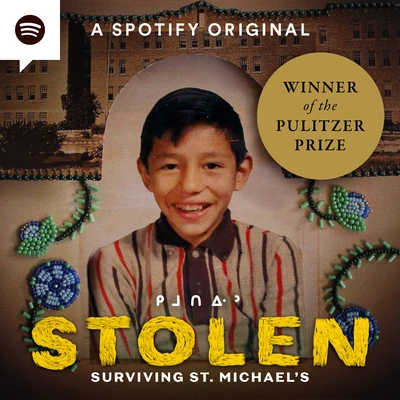
About Stolen: Surviving St. Michael's (Season 2)

Last May, investigative journalist Connie Walker came upon a story about her late father she'd never heard before. One night back in the late 1970s while he was working as an officer in the Royal Canadian Mounted Police, he pulled over a suspected drunk driver. He walked up to the vehicle and came face-to-face with a ghost from his past—a residential school priest. What happened on the road that night set in motion an investigation that would send Connie deep into her own past, trying to uncover the secrets of her family and the legacy of trauma passed down through the generations.

In Stolen: Surviving St. Michael's, Connie unearths how her family's story fits into one of Canada's darkest chapters: the residential school system.

HERE 

About Stolen: The Search for Jermain (Season 1)

In 2018, a young Indigenous mother named Jermain Charlo left a bar in Missoula, Montana, and was never seen again.  After two years and thousands of hours of investigative work, police believe they are close to solving the mystery of what happened to her.  We go inside the investigation, tracking down leads and joining search parties through the dense mountains of the Flathead Reservation.  As we unravel this mystery, the show examines what it means to be an Indigenous woman in America.

Stolen is hosted by Connie Walker.

LISTEN

Tuesday, July 11, 2023

#60sScoop Survivors gather in Winnipeg for conference

 'STILL HEALING'

Survivors of the Sixties Scoop gathered in Winnipeg on Saturday for the Manitoba Sixties Scoop Conference and share their stories and experiences of being taken from their families.  

“Since the apology of 2015, there really hasn’t been a bigger gathering of Sixties Scoop Survivors to talk about some of the issues that we’re still working our way through,” said 60s Scoop Legacy of Canada Director and spokesperson Katherine Strongwind. “We’ve had about 23 smaller healing gatherings, mostly in Winnipeg and some across western Canada and we thought it was really important to pull everybody together today to say, ‘You know, we are still here, we’re still healing ourselves.’  The province really needs to step up their game in terms of really how they’re going to be helping us.”

The “Sixties Scoop” refers to the large-scale forced removal or “scooping” of Indigenous children from their homes, communities and families of birth through the 1950s, 60s, 70s and 80s, and the subsequent adoption into predominantly Caucasian, Christian, middle-class families across Canada, the United States and overseas.

Many adoptees and Survivors were left with a lack of or poor sense of cultural identity. The forced physical and emotional separation from their birth families by the government’s assimilationist policies continues to affect adult adoptees and Indigenous communities to this day.  Many Survivors had parents, grandparents, and extended families who were forced to attend Indian Residential Schools.

“The purpose this afternoon is to pull people together and get some feedback from them on some of the very specific issues that adoptees and folks who have been through child welfare have such as name changes, child welfare records, adoption records, all of those sorts of pieces,” said Strongwind.

Organizers plan to draft a report for the provincial government but also for Indigenous leaders.

“I’m not sure (Indigenous leaders) really know what to do with us,” said Strongwind. “We’re coming home and we’re trying to reconnect our families and our communities but they don’t always have the best understanding of how to support us.”

Some 120 Scoop Survivors attended the one-day gathering.  Half of the cost of the gathering was covered by the provincial government with the remainder covered by fundraising.  City of Winnipeg donated the space at Sergeant Tommy Prince Place in the North End for the gathering through the Indigenous Liaison Unit.

“We invited a couple of speakers to share part of their story this morning and there’s definitely some similarities among all of us but also we wanted to talk about inspiring stories and ‘What’s worked best for you on your healing journey and how can we support each other?’ because so far we don’t have any kind of healing program specifically for Sixties Scoop Survivors,” said Strongwind. “So we’re supporting each other.”


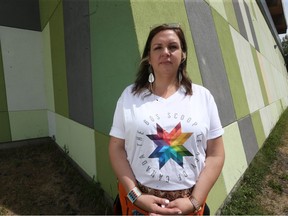
Katherine Strongwind
Katherine Strongwind. Photo by Chris Procaylo /Winnipeg Sun

In 2015, then-Manitoba Premier Greg Selinger apologized on behalf of the province. Six years later, the 60s Scoop Legacy of Canada and Manitoba Senator Murray Sinclair called for a federal inquiry.

“We still don’t know how many kids were taken, where they were taken to, where they are now, how many died in care and those kind of pieces,” said Strongwind on what an inquiry would uncover. “We also know that people want to share their stories and their testimonies before they pass away.  Over the next year or so, we’ll focus on that but also gatherings like this are really important to get people together and learn from each other on how we can support each other on some of these pieces when we’re not be recognized, we’re not being acknowledged.

“We’re really out here on our own it seems like.”

The provincial government needs to provide funding for these sorts of gatherings but also provide a unit or some sort of fund available for Survivors to be able to access some of the services that they offer such as the post-adoption registry and child welfare records, Strongwind said. Even something as seemingly simple as making it easier for Survivors to legally change back to their traditional names.

“The province did the dirty work of the Sixties Scoop,” said Strongwind, who legally changed her name in November. “They were given jurisdiction in 1951 from the federal government and they really took that and ran and decided they were going to scoop up entire families off reserves and they thought they were going to make us into upstanding Christian citizens. In some respects, they were successful but we know that many of us ending up leaving that lifestyle and our families and ended up coming home to our biological families and communities. Culture plays a huge role in our healing.

“There’s all of these sorts of pieces that the province could be helping with but really aren’t.”

City could participate by providing spaces for gatherings and a memorial of some sort.

“All levels of government I feel have a part to play in this,” Strongwind said.

With some 10,000 Indigenous children in care in Manitoba, Strongwind believes Sixties Scoop Survivors can have role in preventing a recurrence of what happened to them.

“We want to use our experience as best practices to prevent that from happening in the future,”Strongwind said. “That’s part of the purpose that the 60s Legacy of Canada works towards every day.”

[gdawkins@postmedia.com]

Monday, July 10, 2023

60sScoop Survivor: ‘I basically rescued myself’

Guelph poet and ’60s Scoop survivor shares her personal journey through writing

How Cynthia (Wasizo kwe) Missabie became her own hero

Cynthia Missabie, a ’60s Scoop survivor, looks out at the Speed River in Guelph's Riverside Park. - Joy Struthers/Metroland

Local poet Cynthia Missabie took her name back when she was 40 years old, though she did not know how to pronounce it. 

Her adoptive parents had changed her name to Catherine Claire Cross, after their daughter who had died.

It was in the 1960s when she said she was three or four, when she was adopted by a “white, middle class” couple she still calls her mother and father. They were the parents of four boys and owned a Guelph bowling alley.

“I was part of the ’60s Scoop,” said Missabie.

Her birth mother and father were married but struggled with alcohol and illness. They had two little girls, and her birth mother also had four other children, who were all given up for adoption.

Missabie’s birth mother was from the Henvey Inlet First Nation located on the French River. She grew up living in a residential school and later lived in Toronto. Missabie’s birth father was from Newfoundland.

A very independent child, Missabie said she was happy with her new family at first.

“In the beginning, it was beautiful,” she said. “Then when I was about nine or 10, I was molested by my father, and he had it out for me, like he was attracted to me for years. I had to keep protecting myself.”

Her family had left Guelph, was moving around the United States, and even went to Puerto Rico.

“At first, it was an adventure, like, oh, I’m going to a new place, I’m going to meet new people,” Missabie said. “But then I got attached to those people.”

She would even change her name when she moved, from Catherine to Cathy, or Kate to Katie. Some people still call her by different names.

“I look back on that time and I think, wherever we lived, I tried to make some kind of friend, so I could escape,” Missabie said.

Finally, she admitted to her mother that she was abused by her father, and it split up the family temporarily.

“My mother moved everybody up to Canada for a year,” Missabie said. “At the end of the year, my parents got back together.”

She said her mother had been drinking for years, and “was a mess” without her father.

The children were all struggling, and Missabie said some of them still do.

“Not every story has a happy ending, and so many people lose themselves,” said Missabie.

For her, she said she loves the peaceful life she has created. She returned to Guelph in 1981 and has been here ever since.

Both her mother and father are now dead, but Missabie had tried to maintain relationships with her family, as well as learn about her birth relatives.

She has been in recovery for 34 years and runs a weekly meeting which incorporates both Alcoholics Anonymous and Indigenous teachings.

“Everything is a teaching, no matter how you go about your life. If this hadn’t happened to me, I wouldn’t be who I am,” she said. “And then there’s the idea of what I am leaving behind for other people.”

Missabie sings with the barbershop group, the Over Tones, and dotes on her dog, though she never had children of her own.

“I started writing because I was so depressed and lonely, I just had to do something,” she said.

One night she read a poem at an event and a man said to her, “You’re kind of angry, aren’t you?” And she thought, “well, if you had lived my life, you’d be a bit angry too.”

Truthfully, she said now she approaches things with a healthy sense of humour.

She is in a different place now emotionally then she was when she contributed poetry to “River Bundles, an Anthology of Original Peoples in the Waterloo-Wellington Area,” edited by Plume Writers Circle.

She was one of the original circle members in Guelph along with friends Hope Engel and Wendy Stewart. She also read her poetry with them at the Eden Mills Writers’ Festival.

She plans to contribute to an upcoming compilation, called “Blood Memory, an Indigenous Poets Society Anthology.”

“One thing I got through my writing, and what I gained over that time, is that I basically rescued myself. So, I had become my own hero in a way,” she said.

She shared that her spirit name is Wasizo kwe, or Woman who Glitters.

“I always thought I was kind of different, and it wasn’t always great, but now it’s wonderful,” Missabie said.

 SOURCE


The Unravelling of a Colonized Mind


IMAGE

REBLOG from

By Jana-Rae Yerxa

Sure everybody struggles. But to be born an Indigenous person, you are born into struggle. My struggle. Your struggle. Our struggle. The colonial struggle. There are many layers to this struggle. For the longest time, I didn’t even know what the true struggle was about yet I couldn’t escape it. It consumed me. Colonialism, as I have been forced to discover, is like a cancer. But instead of the cells in your body betraying itself, the thoughts in your mind work against you and eat you up from the inside out. You’re like the walking dead and you don’t even know it because you are so blinded. You can’t see the truth.

Here are some of the perverted ways colonialism infects the mind:
• With a colonized mind, I hate being Indian.
• With a colonized mind, I accept that I am Indian because that’s who the colonizer told me I am.
• With a colonized mind, I don’t understand that I am Anishinaabe.
• With a colonized mind, I believe I am inferior to the white race.
• With a colonized mind, I wish I was white.
• With a colonized mind, I draw pictures of my family with peach coloured skin, blonde hair and blue eyes because I’ve internalized that this is the ideal, what looks good and what is beautiful.
• With a colonized mind, I keep my feelings of inferiority to white people a secret from others and even from myself.
• With a colonized mind, I try diligently to mirror white people as closely as I possibly can.
• With a colonized mind, I desperately want to be accepted by white people.
• With a colonized mind, to gain the acceptance of white people, I will detach myself from all that does not mirror acceptable “white” standards, whether it is how one dresses, one speaks, or one looks.
• With a colonized mind, I feel as though I am swearing when I say “white people” in front of white people.
• With a colonized mind, I believe there is no racism.
• With a colonized mind, I believe that racism does not impact me.
• With a colonized mind, I deny my heritage and proudly say, “We are all just people.”
• With a colonized mind, when discussing issues pertaining to race, I try desperately not to offend white people.
• With a colonized mind, I do not know who I am.
• With a colonized mind, I believe I know who I am and do not understand that this isn’t so because I’ve become the distorted image of who the colonizer wants me to be and remain unaware of this reality.
• With a colonized mind, I could care less about history and think that our history don’t matter.
• With a colonized mind, I do not understand how the history created the present.
• With a colonized mind, I do not see how I have been brainwashed to be an active participant in my own dehumanization and the dehumanization of my people.
• With a colonized mind, I do not recognize how others dehumanize me and my people.
• With a colonized mind, I devalue the ways of my people- their ways of seeing, their ways of knowing, their ways of living, their ways of being.
• With a colonized mind, I cannot speak the language of my ancestors and do not care that this is so.
• With a colonized mind, I am unaware of how colonization has impacted my ancestors, my community, my family, and myself.
• With a colonized mind, I think that my people are a bunch of lazy, drunk, stupid Indians.
• With a colonized mind, I discredit my own people.
• With a colonized mind, I think that I am better than ‘those Indians’.
• With a colonized mind, I will silently watch my people be victimized.
• With a colonized mind, I will victimize my own people.
• With a colonized mind, I will defend those that perpetrate against my people.
• With a colonized mind, I will hide behind false notions of tradition entrenched with Euro-western shame and shame my own people re-creating more barriers amongst us.
• With a colonized mind, I tolerate our women being raped and beaten.
• With a colonized mind, I tolerate our children being raised without their fathers.
• With a colonized mind, I feel threatened when someone else, who is Anishinaabe, achieves something great because I feel jealous and wish it was me.
• With a colonized mind, when I see an Anishinaabe person working towards bettering their life, because my of my own insecurities, I accuse them of thinking they are ‘so good now’.
• With a colonized mind, I am unaware that I was set up to hate myself.
• With a colonized mind, I do not think critically about the world.
• With a colonized mind, I believe in merit and do not recognize unearned colonial privilege.
• With a colonized mind, I ignorantly believe that my ways of seeing, living and believing were all decided by me when in reality everything was and is decided for me.
• With a colonized mind, I am lost.
• With a colonized mind, I do not care about the land.
• With a colonized mind, I believe that freedom is a gift that can be bestowed upon me by the colonizer.
• With a colonized mind, I believe that I am powerless and act accordingly.
• With a colonized mind, I do not have a true, authentic voice.
• With a colonized mind, I live defeat.
• With a colonized mind, I will remain a victim of history.
• With a colonized mind, I will pass self-hatred on to my children.
• With a colonized mind, I do not understand the term “self-responsibility.”
• With a colonized mind, I do not recognize that I have choice and do not have to fatalistically accept oppressive, colonial realities.
• With a colonized mind, I do not see that I am a person of worth.
• With a colonized mind, I do not know I am powerful.

The colonial struggle, as I said earlier, has many layers. I am no longer being eaten from the inside. Yet it is no less painful. What is different today is that I am connected to a true source of power that was always there. It’s like my friend once said, “I come from a distinguished people whose legacy shines on me like the sun.” I now understand this and it is because of this understanding that my mind and my soul are freer than they have ever been. It is because of that gift- that awakening which came through struggle- that I will proudly continue to struggle for freedom. 

My freedom. Your freedom. Our freedom.

Jana-Rae Yerxa, is Anishinaabe from Little Eagle and Couchiching First Nation and belongs to the Sturgeon clan. Activist. Social Worker. Former professor. Current student. She is committed to furthering her understanding of Anishinaabe identity and resurgence as well as deconstructing Indigenous/settler relations in the contexts of colonization and decolonization. Jana-Rae is currently enrolled in the Indigenous Governance Program at University of Victoria.

LAST REAL INDIANS


This post is from 2014 but is STILL TRUE for too many of us...But we have the POWER to change ourselves. We must!  Trace


Sunday, July 9, 2023

Cutting through the Brackeen v Haaland case


Was it a victory?

Read my friend Peter (law professor) on Substack.

Cutting Through the US Claim of a Right of Domination over Indigenous People: An Analysis of Haaland v. Brackeen

https://peterderrico.substack.com/i/130980867/haaland-v-brackeen-misplaced-celebration

READ

Tuesday, July 4, 2023

OBC Miracles - look at this MAP


👉 https://adopteesunited.org/legislation/state/

On a scarier note: On a much scarier note:

Friday, June 30, 2023

(Almost) Dead Indian: Writing in 2008


By Trace L Hentz, blog editor
 
In 2008, this is what I wrote as an introduction to the memoir I was working on... (a draft)

… a memoir of brainwashing and life as a dead Indian…


I did have to pretend to be someone – and live a lie - because I’m adopted. Ask any adoptee who has Native American ancestry.  If you are not told any truth, you’re just another dead Indian, at least on paper or on tribal rolls.  Our papers are usually fake and we live with amended original birth certificates (OBC).  Our adoptive parents are listed as our biological parents, which is another lie we live with....        

            America is like that.  Adoptees seem invisible yet the number of adoptees in the United States is estimated to be between six and ten million.  They’d prefer every one of us to live as an American citizen as if none other were as good or as important.  America forgets it’s very new by all standards and just acts like its old.  America has its own amnesia.

I intended to write about adoption history and what I experienced opening my adoption many years ago.  America’s adoption files of my era (the 1950s) are still sealed by laws in most states, still shrouded in secrecy. I expected little help or new discoveries.  Never did I expect to find so many adoptees in the same boat from 2005 onward.  I didn’t know there were millions of us, some blazing new trails on the internet global highway. I found friends.
            In the last 20+ years, adoption’s gone global, widely publicized and still touted as noble, saving and particularly saintly of those men and women who adopt, who give so generously to orphans.  That’s about all we hear: how great it is to adopt.
            I asked myself, where is the missing piece …where is the voice of the adopted… what happens to the adoptee?  I decided to write about my experience (as an adoption survivor and journalist) and include other American Indians who experienced being adopted.  I found much more going on with the business of adoption, so I include it.  Certainly this will be the most controversial book on adoption since I was often in a state of shock and utter disbelief during my years of research on the adoption industry.
            Indian child removals by adoption set out to accomplish the break-up of Indian families and culture.  Once adopted, you’re erased, an outsider, a stranger to your own nation, lands and people.  I prefer to think of my younger self as brainwashed.  There was fear and emotional illness, which I explain. What is known about the Indian Adoption Projects (more than one) and the aftermath, few books actually acknowledge it happened here.
            There is persistent rampant poverty in Indian Country even now.  I found Indian people who were white-washed through strenuous puritanical forces using assimilation via adoption and residential boarding schools. 
            Adoptees with Indian blood find out soon enough their reservations are closed to strangers.  Without proof, you’re suspect.  You can’t always get the proof since laws prevent it.  Just one Minnesota tribe, White Earth, decided to call out to its lost children; this made news in the fall in 2007.  Going back takes a special kind of courage.
            One Native American adoptee I know was told – be happy, be white. Ask yourself, how would you react? Is Indian Country such a bad place to be from? How did this happen to us?
            Society determined long ago what was best for children.  Once adopted, society can let us go, write us off.
            Here in America, thousands of Indian children were taken from parents and given to non-Indian people.
            Survivors are here to tell you this was a genocidal act against our humanity. Some of us were abducted, abused, brainwashed and all of us erased.
            Adoption secrets are protected by laws.  Laws prevented me from ever knowing the truth of my true identity.  I still found a way. 
 
This edition is on amazon and in some bookstores

p.s.
Wayne Carp, an adoption advocate and author who went “undercover” to compile his book on adoption industry history kept running into secrecy problems. Unlike Carp, I am the story.


click

Contact Trace

Name

Email *

Message *

NO MORE UPDATES

GO TO:  https://blog.americanindianadoptees.com/  for updates and news. THIS BLOG cannot be updated...