BLOGGER changed, not allowing us to UPDATE this back-up blog

(UPDATED 726/2025) issues with blogger are preventing this

Tuesday, June 20, 2023

Little Bird (TV links)

 for CANADA TV VIEWERS 


Links👇: Little Bird

From Cassandra Szklarski of the Toronto Star:

Link: ‘60s Scoop grief and Holocaust trauma entwine in limited series ‘Little Bird’
“These are extremely triggering stories to tell – not just for Indigenous people and not just for people who experienced the current reality of colonial violence in whatever form that is, which is an everyday reality for us as Indigenous people, but for non-Indigenous people who were realizing the gravity of the situation and feeling guilty.” Continue reading.

From Elisabetta Bianchini of Yahoo News:

Link: ‘Little Bird’ Crave, APTN drama follows Sixties Scoop survivor’s search for home
Famed Canadian producer and actor Jennifer Podemski has taken on the role of showrunner for the new Crave and APTN lumi drama series Little Bird, authentically and honestly telling the story of a Sixties Scoop survivor uncovering her family history, starring Darla Contois. Continue reading.

From Debra Yeo of the Toronto Star:

Link: They woke up with four kids. By the end of the day, they had one. Inside the devastating new ‘Sixties Scoop’ drama ‘Little Bird’
One morning, Patti and Morris Little Bird wake up with their four children. By the end of the day they have one child left, the other three having been shoved into a car and taken away, screaming for their mother. Continue reading.

From Ilana Zachon of The Canadian Jewish News:

Link: ‘Little Bird’ called on Jewish and Indigenous writers and actors to tell the story of a child caught in the Sixties Scoop
“I thought: how is it possible that I’ve lived all my life in Canada… and I didn’t know the story. When I read the script, I just thought this will illuminate a lot of things for a lot of people and it’s very important.” Continue reading.

From Matthew Simpson of That Shelf:

Link: Little Bird Review: A Must-Watch Canadian Story
It is Contois who is the star of this show. Her portrayal of Esther is nuanced and empathetic. The character’s journey in the first episode – from thinking she might have it all to realizing she will never belong – is masterfully performed, almost entirely with body language and tone as she navigates a party to celebrate her happiness. Continue reading.

From Julia Mastroianni for Streets of Toronto:

Link: Toronto showrunner is behind this powerful new Indigenous-led series
“Everything I’ve done as a producer has intersected with historical trauma and colonial violence. There is also a lot of joy, love, rich culture and teaching, but there are so many urgent stories that need to be told as a way to move forward and heal.” Continue reading.

From Crystal St. Pierre of Windspeaker:

Link: New series hits close to home for creator Jennifer Podemski
“It is really the closest thing to me that I have ever done. Even though I’m not adopted, those are my two worlds. Those are the exact worlds I grew up in. And it was the perfect way for me to dive into something in a very personal way because I’ve never really explored both of those sides of my family.” Continue reading.

From David Briggs of Toronto.com:

Link: Young Nipissing First Nation actor spreads his wings in Little Bird TV show
Tayton Mianskum recently starred in a soon-to-be-released series on CRAVE television. And, if that’s not remarkable enough, this was Tayton’s first time auditioning or acting, so his first role is in a major television production. Continue reading.

From Louise BigEagle of CBC News:

Link: New series tells story of Sixties Scoop survivor learning about her past
“I just hope people feel the love that was put into this, and I hope that non-Indigenous people feel connected to it because the stories are relatable, but also I guess unique, in the sense that nobody really knows very much about the Sixties Scoop.” Continue reading.


Thursday, June 15, 2023

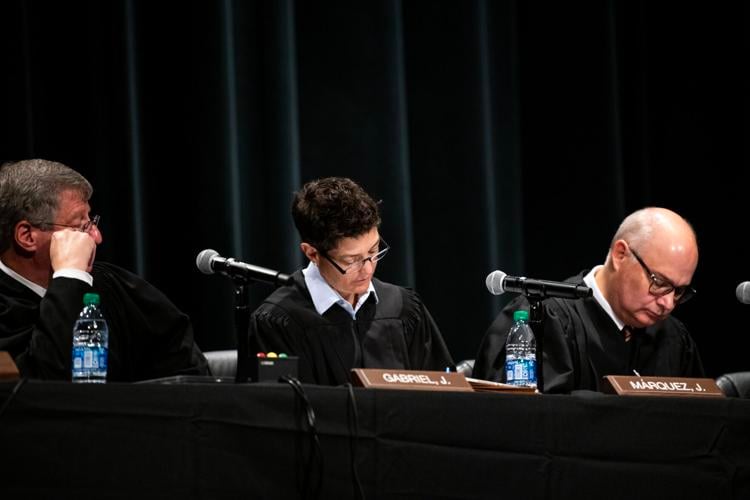
Supreme Court affirms ICWA

UPDATED: ‘The bottom line is that we reject all of petitioners’ challenges to the statute, some on the merits and others for lack of standing’


Justice Neal Gorsuch, the justice with extensive federal Indian law knowledge and experience of all the justices, wrote in support:

"Often, Native American Tribes have come to this Court seeking justice only to leave with bowed heads and empty hands. But that is not because this Court has no justice to offer them. Our Constitution reserves for the Tribes a place—an enduring place—in the structure of American life. It promises them sovereignty for as long as they wish to keep it. And it secures that promise by divesting States of authority over Indian affairs and by giving the federal government certain significant (but limited and enumerated) powers aimed at building a lasting peace"


READ THIS

OMG - VICTORY! ICWA stands


 I CANNOT STOP CRYING!  -- HAPPY EDITOR Trace


ICWA UPHELD BY U.S. SUPREME COURT


WASHINGTON — The Indian Child Welfare Act lives on courtesy of a 7 -2 high court decision — a much better outcome than anxious tribal advocates had hoped.  Justice Amy Coney Barrett writes for the majority.  Justice Neil Gorsuch provides strong concurring opinion.  Justices Clarence Thomas and Samuel Alito dissent.  Read all 133 pages here.

Tribal sovereignty, American Indian children and families widely viewed as biggest winners. 

https://www.supremecourt.gov/opinions/22pdf/21-376_7l48.pdf Here is the full court decision. Note - this was 7-2 and the dissenters were Alito and Thomas citing state’s rights. 

Tuesday, June 13, 2023

Part 6: WHAT IF WE LOST ICWA: SOUTH DAKOTA

By Trace L Hentz, blog editor and adoptee

If we lost ICWA, let's look at South Dakota.  How are they doing?  Terrible!  Also not good, I have posted on this website many times their failures to protect Native kids from predators called social workers and missionaries.

Why ICWA matters there seems pretty obvious: Kids are screwed without it.

LIKE:  Why SD lawmakers won't be studying Indigenous child welfare this year


The kids are not alright: Little progress on welfare of Native children in South Dakota 

Keeping families together

(excerpt) 

 One of the commission’s recommendations implemented by the legislature was to address kinship placements. Kinship placements refers to keeping children with relatives, which Mousseau said can minimize the trauma experienced by the child.

Following the implementation of preference for kinship placements, DSS found that there was an increase of 25% of such placements for all children between July of 2004 and June of 2005. 


According to data requested by Foster, there are still large gaps of the number of children, Native and non-Native, that are placed with relatives.

During the session, Democratic Representative Peri Pourier introduced House Bill 1229 to address such placements. The bill died in the House Judiciary committee.

Mousseau said that kinship placements are important to the long-term wellbeing of children, especially when it comes to delinquency and recidivism.

“It is a practice in social work that has been shown to have amazing effects,” Mousseau said. “And we wanted all the children of South Dakota to have the opportunity to be placed with their relatives. That didn’t even make it out of committee.”

From poverty to prison

Data from the National Data Archive on Child Abuse and Neglect shows that in 2020, 95% of Native children affected by maltreatment were experiencing neglect compared to 86% of their non-Native peers. The data also showed that Native children face higher rates of abandonment and parents with substance abuse issues.

“Being born and raised in one of the most poorest counties in the United States, I can tell you that neglect looks a lot like poverty,” Pourier told House lawmakers on Wednesday.

South Dakota is home to some of the poorest counties in the country, many of which are on tribal land.

Pourier and Mousseau say the impact of poverty and neglect in childhood connect directly to crime and the overflowing prisons in South Dakota.

“South Dakota is funding more prisons because there’s a need but we go further upstream, there’s that need because of policies to remove children that dates back, which is why ICWA came into effect in 1978 and it has been in effect since,” Mousseau said.

As of January 31, 2023, Native American women outnumbered women of other races in South Dakota’s prisons. Additionally, nearly 33% of the male inmates in state prisons are Native American.  

 Mousseau said addressing the disproportionate rates of Native children in foster care, specifically those not placed with kin, can better address issues of crime and substance abuse.

“As you can imagine being removed from your family and being placed outside of your family, which a lot of Indian children are, that’s traumatic. That has dramatic effects on somebody who has to experience it and their children, right, their brains are still developing there,” Mousseau explained. “And we know from the Adverse Childhood Experiences Study that, you know, those early traumatic experiences in children’s lives leads to negative health outcomes, run ins with the law, you know, substance use. Look up the ACEs study, that that has been foundational.”

KEEP READING 

  READ:

The Lost Bird of Wounded Knee - South Dakota Public Broadcasting


COLORADO

Congress originally enacted ICWA after learning of the large number of American Indian children being removed from their households into non-tribal families and institutions.


to be continued

Pandora's Box: Opening an adoption & the stages of search


REBLOG from 2011

By Trace Hentz, blog editor
 

Opening an adoption is just like opening Pandora’s Box. You just never know who - or what – will fly out at you.

I think back to my inner battles years ago. There were many stages I went through:

  • I almost stop when I hear I was "saved" from being an orphan - so that should be the reason I never search. I don't know it will take years to find my parents.
  • I almost stop when I hear adoptions were done legally yet it's illegal for me to search. Wisconsin was a closed record state. Now the state will contact your parents to get their consent to let you know who you are.
  • I almost stop when I think my mother had problems so she had to give me up. I get scared of why she did it. I get scared she might not want to meet me (and in fact, she didn't).
  • I almost stop when I do not hear back from the ALMA registry in New York. Apparently no one is looking for me.
  • I almost stop out of guilt. I feel guilty because my parents were so generous to raise me, since I was an orphan. They didn't have to adopt me but they did! (But can they imagine what it feels like being adopted? No. Can I talk to them about searching? No.) I love them for adopting me.
  • I almost stop when friends tell me to get over it and move on with my life. "Forget about her." Adoptees know this game. "Don’t talk about it. Shut up. Stop whining. You were lucky to be chosen."  Really? I didn’t feel lucky. I felt hurt, betrayed and rejected.
  • I almost stop when I read the letter from my natural mother, saying she doesn't want anyone to know about me. She's worried what people will think.

Back then it was like I was wedged between helpless and hopeless. I was doing this search for me and my own sanity. Plus it was impossible to search without names. And what was I being saved from? I should be grateful that I lost my natural parents?

I moved past all that and found my natural mother, and then my father.

Having a reunion with my dad was the hardest thing I ever did and the best thing I ever did. It was not what I expected, that's for sure.

Never in my wildest dreams did I imagine how meeting him (and his kids) would change me as a person. I was almost 40 when we met. There was no one to advise me on what to do, or what to say, or what to expect having a reunion.

First things first.  My birthdad Earl Bland wanted a DNA test to be sure I was his.  I wanted to know that, too.  This all happened back in 1996 and I traveled from Oregon to meet him in Illinois. (I paid for my plane ticket and $500 for the DNA lab with help from my ex-husband).

My dad and I got the results (by mail) a little over a month later. Earl was indeed my dad but I never saw him again.

I write about my reunion with Earl and our time together in my memoir "One Small Sacrifice." I looked for him for years and only met him once. How does the adoption industry justify keeping us apart for years with secrecy and laws, then my dad dies shortly after we meet.

All I can say is I wish everyone who is adopted gets the chance to meet their natural parents. Even if it is only once. Even if it is only one parent. It is a spiritual awakening.

Since I read so much about the adoption industry, I was wondering when an adoptee's emotional well being and health would be mentioned and considered? 

 Apparently, this is not an issue, and not a concern of the adoption industry. It's about protecting the adoptive parents. Secrecy and sealed records is part of their sales pitch. It's not about the adoptee but the adopter. The mood, anxiety, thrill and angst of our adopters is what we hear growing up adopted - and we learn to be appreciative, silent and grateful. We mourn in silence.

Every adoptee I know wraps their mind around this. It's simply ridiculous to be denied the chance to know and meet our natural parents. There should be people and laws helping us, the natural parents and the adult adoptee. We all need to understand the family dynamics to have meaningful reunions, and know what to expect.

Sadly, this is not happening. Not yet.

((1-22-2011))

Wednesday, June 7, 2023

BONES OF CROWS Official Trailer (2023)

Oregon's new law signed | Minnesota opens records to ADOPTEES in 2024


👇👇👇IMPORTANT UPDATES:

https://adopteesunited.org/legislation/state/

Minnesota

SF1279/SF2995/HF1778.[ENACTED!] Unrestricted equal rights bill that dismantles Minnesota’s forty-five year history of inequality. These bills are unrestricted equal rights bill that are generally identical to bills filed in the prior two legislative sessions. Sen. Erin Maye Quade, a DFL (Democratic) legislator, is the chief author of the Senate bill, and Rep. Steve Elkins is the chief author of the House bill. The bills constitute a necessary simplification of the law by eliminating Minnesota’s incomprehensibly complicated and discriminatory intermediary system, the first such system in the United States and one that has been in place since 1977. Minnesota Coalition for Adoption Reform and Minnesota-based Adoptee Rights Law Center are working collaboratively on the bill. The House bill has been assigned to the Health Finance and Policy Committee. The Senate bill was reported out of the Judiciary and Public Safety Committee and heard in the Health and Human Services Committee. It is now part of the Senate HHS omnibus appropriations bill (SF2995), which passed the full Senate on April 18. After negotiations, the adoptee birth record provisions in the Senate version of SF2995 were included and approved as part of the the overall HHS omnibus bill. The legislature passed the omnibus bill on May 22, the last day of the regular session, and Governor Tim Walz signed the bill into law on May 24. Minnesota will now become the 15th state in the country to restore equal rights to all adopted people born in the state. The law is fully effective on July 1, 2024.

Oregon

SB573 [ENACTED!] Allows a biological parent who was omitted or listed incorrectly to be added to an original (pre-adoptive) birth certificate.  This bill has been in the Oregon legislature for about three sessions now, doggedly pursued by an adult adoptee who wants the correct factual information listed on her own original birth certificate. The bill, carried by Senator Sara Gelser Blouin, would allow addition or correction of a birthparent on the OBC if approved through an administrative determination of paternity or parentage.  DNA evidence is required, along with a $100 filing fee.  The first hearing on the bill was January 23, 2023, before the Senate Committee on Human Services, chaired by Senator Gelser Blouin.  The bill was then delayed for consideration to work out issues arising out of the process to approve corrections to the birth record.  It was reported out favorably on March 6 after the bill was simplified to avoid a court process.  It passed the Senate on March 13, on a 28-1 vote and is now in the House, where it was heard on April 24 in the Early Childhood and Human Services Committee and subsequently recommended for passage by the House.  The House passed the bill on May 23, 2023, and Governor Tina Kotek signed it into law on June 6, 2023. It is effective on January 1, 2024.


#ICWA verdict looms

When it comes to championing the health of Indigenous children in the United States, few pieces of legislation possess the profound significance of the Indian Child Welfare Act (ICWA). It is not merely a dry legal document, but a lifeline of cultural health for Indigenous nations and countless children in the foster care system.

In the coming weeks, the Supreme Court of the United States (SCOTUS) is expected to release its decision on Haaland vs Brackeen, a case that challenges the constitutionality of the ICWA.  The plaintiffs, a non-Indigenous Texan couple named Chad and Jennifer Brackeen, claim that the ICWA's preference for placing Indigenous children with foster parents from their tribal nations discriminates against non-Indigenous individuals who wish to adopt Indigenous children.

Proponents of the ICWA, which include 486 tribal nations, assert the law’s preference for Indigenous families promotes cultural well-being and is based on the political status of tribes, rather than the social construct of race. According to the Native American Rights Fund (NARF), “The ICWA does this by upholding family integrity and stability and by keeping Indian children connected to their community and culture. The ICWA also reaffirms the inherent rights of tribal nations to be involved in child welfare matters involving their citizens.”

Samantha Maltais, a member of the Aquinnah Wampanoag tribe, ICWA advocate and a third-year student at Harvard Law School, shares this perspective. 

“Tribes have been and always will be sovereign nations. Their status as such pre-dates America’s founding and its earliest formulations of what race is. To misunderstand this truth not only threatens the welfare of Native children today, but could also undermine the ways we write federal Indian laws and policies for future generations to come,” she said.

READ HERE
 

Tuesday, June 6, 2023

What we’ve known a long time

 
REBLOG from January 2013
 
By Trace L Hentz, Blog Editor
 
First, do no harm. That is the doctor’s creed. Doctors are part of a larger group I call The Adoption Industry. Their group includes clergy, politicians, academics, psychology-types, social workers, lawyers and adoption agencies made up of similar people.  Apparently this group lacks historians.  If they had historians, they’d know adoption hurts the adoptee. Statistics don’t lie. Adoptees are among the highest population in psychiatric care. If it hurts, it harms.
The mental health of Native babies and children who go through adoption with non-Indian parents has been documented in studies for decades. Suicides, arrests and addictions are common and adoptees have known this a long time. The Indian Child Welfare Act of 1978 was supposed to end the harm to Indian children by placing them with other family members. Sadly, that still isn’t happening.
 
My friend Stephanie Woodard wrote in Indian Country Today, here (Dec. 1, 2012) about South Dakota’s ICWA violations:
“The ICWA directors found that the latest information shows South Dakota is not only taking a disproportionate number of children into custody, it is also failing to ensure that they stay with their tribes, despite ICWA provisions requiring that tribes have a say in their children’s placement. As of July 2011, they said, Native American foster homes sat empty while nearly 9 out of 10 Indian children in state foster care were in non-Native homes.
“The ICWA directors also noted the state’s tendency to equate “poverty” with “neglect,” which in turn results in more seizures of Native American children: “South Dakota’s rate of identifying ‘neglect’ is 20 percent higher than the national average,” they wrote.
“The group also found disturbing information on the fate of children once they left the (social care) system. Some youngsters are reunited with their families or adopted; or they may turn 18 and “age out.” But from 1999 to 2009, the “other” category—children who died, ran away or were transferred to correctional or mental-health facilities—grew from 6.9 percent to 32.8 percent….”
In two conversations, two different birthmothers in Minnesota confirmed what I was thinking about harm to the adoptee.  One mother found her son was harmed emotionally by his adoption and is in treatment for addictions.  Then an adoptee friend shared her brother, also an adoptee, is homeless and drug addicted.  Her family doesn’t know what to do, other than hope and pray he finally gets mental health counseling for adoption issues and not get prison-time.
 
This mental health crisis has been building for decades! I sought counseling twice in my life, and even though it wasn’t focused on adoption, it helped me recover my self-esteem. Doing research for my book One Small Sacrifice changed me the most and healed what I call “the wound.”
The truth that adoption harms and hurts Native children is something we’ve known a long time. But this truth never seems to reach our adoptive parents ears.  They were not told by Adoption Professionals they’d need to prepare for our adoptee issues and get us help early.  
 
Propaganda by the Adoption Industry would prefer we don’t speak the truth. Adoptees have known that a long time, too.
 
2023: I will be able to request my Original Birth Certificate (OBC) from Minnesota in July 2024. I have waited over 65 years for that piece of paper. - Trace

And if you adoptees need support, advice and an ear, I’m here: tracelara@pm.me (2023)

Our Stories Heal – Ginoojimomin Apii Dibaajimoyang [Recording]


Our Stories Heal – Ginoojimomin Apii Dibaajimoyang [Recording]

The full recording can be found here.


In 2021, Secretary of the Interior Deb Haaland announced the Federal Indian Boarding School Initiative. This initiative, which includes gathering records from the boarding school era, and compiling an official list of boarding school sites, makes visible on a national scale the intergenerational impact federal Indian board schools have had on tribal communities. Currently, there are five schools in the state of Michigan that were identified from the federal investigation process (Holy Childhood Boarding School, Baraga Chippewa Boarding and Day School (Holy Name), Mount Pleasant Indian Industrial Boarding School, Mackinac Mission School, and Catholic Otchippewa Boarding School). This is not an extensive list of all the other entities, schools, and programs that operated in Michigan through the Indian Civilization Act of 1819.

The Native Justice Coalition’s Truth and Reconciliation Commission (TRC) was launched in July 2022. It seeks to expand its reach to strengthen relationships between Indigenous and non-Indigenous people in an effort to seek the truth behind the Indian boarding school policies and corresponding actions taken by the government and church. Through this work, the NJC provides safe, supportive, and culturally competent spaces that offer opportunities for healing and uniting our Native communities on this journey. Our goals are to create an Indigenous-led process that is grounded in mutual respect, culturally sensitive, and focused on meeting clearly defined, jointly agreed upon metrics. Our key four priorities are truth and reconciliation, healing our people and our communities, strengthening ICWA and ensuring a cultural identity for our children, and building a strong ecosystem through investment in the Native Justice Coalition.

Without support from community partners such as the Indigenous Law & Policy Center, Native American Institute, and American Indian and Indigenous Studies at Michigan State University, this work would not be possible. This one-day symposium honors that work on a local scale, providing Michigan State University, and the greater Lansing community an opportunity to learn about the intergenerational trauma caused by federal Indian boarding school policies. Attendees will hear first-hand accounts from boarding school survivors and others who can provide the legal, social, and historical context of the Indian boarding schools. By joining together in community to share stories and voices, the symposium provides a space for knowledge and healing.

Thursday, June 1, 2023

StrongHearts Raises Elder Abuse Awareness #WEAAD


(EAGAN, MN. June 1, 2023)
  Despite the horror of being physically hurt, and having their money or medication stolen, elders who are abused or neglected often endure the abuse without calling for help. As lifelong caregivers and protectors, many elders suffer in silence to maintain the well-being of their family and that may include their abuser.

June 15 is World Elder Abuse Awareness Day (WEAAD) - a day to raise awareness and prevent elder abuse. It’s a day to reflect on what it’s like to become an Elder and the many challenges they are facing such as: losing strength, muscle, and bone mass. Mental clarity can deteriorate and lead to memory loss. These inevitable vulnerabilities leave our elders at risk of being abused.

According to the National Council on Aging, most abuse occurs in the home and at the hands of family members.

“It’s unacceptable when elders silently suffer abuse and neglect at the hands of those who should be protecting them,” said CEO Lori Jump, StrongHearts Native Helpline. “Many elders refuse to report their abusers because they are closely related and want to protect their family, but there are so many more reasons that most people can’t imagine.”


     Love: Despite the abuse or neglect, victims continue to love their abusive partner or relative.

     Fear: Elders may fear retaliation if they report the abuse.  

     Embarrassment: Worrying about what others might think or do to make matters worse. 

     Lack of Resources: Many elders live on fixed incomes and may depend on their abuser for shelter.

     Accessibility: Elders may not be able to report if they do not have access to cell phones, internet and/or transportation.

     Polyvictimization and Normalization: For generations, Native people have endured multiple types of abuse at the hands of non-Natives - so much so that abuse seems normal - an everyday part of life. 

Types of Abuse

Elder abuse is an intentional act or failure to act that causes or creates a risk of harm to an older adult. The abuser can be a family member, caretaker or another person that the elder trusts. Types of abuse can include:

     Emotional abuse - causes mental pain, fear and/or distress

     Physical abuse - the use of force to cause pain, injury, etc

     Financial abuse - improper use of an elders money, property or assets

     Caregiver neglect - a failure to meet basic needs (food, water, medical care)

     Sexual abuse - forced or unwanted sexual interactions of any kind

     Cultural and spiritual abuse

Learn The Signs Of Abuse

The signs of elder abuse may be difficult to spot as they could sometimes be the result of disease, side effects from medications or similar reasons. However, if you suspect that an Elder is being abused, be patient, talk and listen to them. Be aware that they may say that they are being “disrespected” rather than abused. Other signs of abuse may include:

     Unexplained bruising or injury

     Changes in behavior

     Lack of interest in family or social events

     Loss of weight

     Not having necessary medical aids ( glasses, walkers, teeth, etc) or adequate food, water, shelter

How can you help?

Education is always the first step. Understand the warning signs of elder abuse and pay attention to the elders in your life. Ensuring that our elders are properly cared for can include:

     Offering to help those in your family that might be feeling burdened with the care of a loved one.

     Spending time with an elder and planning a rotating schedule if you have multiple caregivers.

     Bringing them nutritional foods like baked goods or even better fry bread.

     Talking and listening to their stories because elders have a lot of wisdom to share and appreciate.

     Every state has an Adult Protective Services division for those wishing to report abuse at www.napsa-now.org/help-in-your-area.


StrongHearts can help. Advocates are available 24/7 to provide support and advocacy, make referrals to Native centered service providers and connect our relatives to regionally available resources. We are here 24/7/365.

SOURCE

National Center for Injury Prevention and Control, Division of Violence Prevention  https://www.cdc.gov/violenceprevention/elderabuse/fastfact.html

National Adult Protective Services Association https://www.napsa-now.org/help-in-your-area/


click

Contact Trace

Name

Email *

Message *

NO MORE UPDATES

GO TO:  https://blog.americanindianadoptees.com/  for updates and news. THIS BLOG cannot be updated...