BLOGGER changed, not allowing us to UPDATE this back-up blog

(UPDATED 726/2025) issues with blogger are preventing this

Friday, November 11, 2022

Haaland v. Brackeen: The Case that Could Break Native Sovereignty


Why ICWA Matters

Breaking News
tags: Supreme Court, Native American history, Tribal Sovereignty, Haaland v. Brackeen, Indian Child Welfare Act


Rebecca Nagle is a journalist based in Tahlequah, Oklahoma. Her podcast, This Land, won the American Mosaic Journalism Prize in 2020.

Every generation of Americans has seen an effort to undermine Indigenous sovereignty. The latest attempt heads to the Supreme Court tomorrow.

In the sprawling federal lawsuit Haaland v. Brackeen, a handful of white foster parents, among other plaintiffs, are asking the Supreme Court to overturn a law called the Indian Child Welfare Act. ICWA was created in 1978 to prevent family separation in Native communities. When the law passed, about a third of Native children had been removed from their families. But in the lawsuit, far more than the future of Native children is at stake.

When a Native child is up for adoption, ICWA prioritizes placing that child first with relatives, then other members of their tribe, and then other Native families. These placement preferences, the non-Native foster parents claim, give them “fourth-tier status.” Their pro bono lawyer Matthew McGill told the Fifth Circuit that this was all because “they are not and cannot be, because of their race, Indian families.” (Notably, in two of the three underlying custody cases, the non-Native foster parents won custody—when blood relatives also wanted to raise the children.) Citing the equal-protection clause of the Fourteenth Amendment, the plaintiffs claim that ICWA violates their constitutional rights by discriminating against them.

What makes the case tricky is that many people in the United States think of Native Americans as a racial group. But that is not how American law works. Under federal law, tribes and tribal citizens are not a racial group, but a political one.  Accordingly, ICWA applies only to Native children who either are enrolled in a federally recognized tribe or are eligible based on a given tribe’s citizenship requirements. Just as certain laws apply to me because I am a citizen of the United States or a resident of Oklahoma, certain laws apply to me because I’m a citizen of the Cherokee Nation. Those laws flow from the treaties signed between my sovereign Indigenous nation and the United States, established through the same constitutional process the U.S. uses to sign treaties with Britain or Japan.

A host of federal statutes—including on land rights, water rights, health care, gaming, criminal and civil jurisdiction, and tribal self-governance—treat Native Americans differently based on this political classification. In this light, I fear that the Brackeen lawsuit is the first in a row of dominoes—if the Court strikes down ICWA, everything else could soon go with it.

If ICWA is unconstitutional because it is based on race, then what of the clinic where I get my health care that serves only tribal citizens? If ICWA discriminates against non-Native foster parents, what of gaming regulations that allow tribes to operate casinos where non-Native casino developers can’t?  What “racial group” in the United States has their own police forces, courts, elections, governments, and lands, as tribes do?  The possible shift is radical.  The U.S. has been passing laws that treat tribes and tribal citizens differently from non-Native citizens since the founding of the republic.  If that is unconstitutional, the entire legal structure defending the legal rights of Indigenous nations could crumble.

KEEP READING

Thursday, November 10, 2022

ICT: Indigenous people flock to DC for ICWA hearing

 ‘If you take our children, you take our identity’


Approximately 60 stood in line waiting to sit inside the court to witness the oral arguments. Many sat between the Capitol and court listening to three hours of oral arguments on their headphones, and others listened to the line of speakers and songs all morning and into midday.

Haaland v. Brackeen challenges the Indian Child Welfare Act, a law that has been referred to as the “gold standard” for child welfare by many child welfare organizations. It was enacted in 1978 to “halt the unnecessary forced removal of Native kids from their families,” said Sarah Kastelic, an enrolled citizen of the Native Village of Ouzinkie and executive director of the National Indian Child Welfare Association.

ICWA - Sarah Kastelic, executive director of the National Indian Child Welfare Association and an enrolled citizen of the Native Village of Ouzinkie, stands outside the U.S. Supreme Court with a sign in her language in Washington, D.C., on November 9, 2022. (Photo by Jourdan Bennett-Begaye, ICT)

“So in our organization, one of the things that we talk about is the recipe for colonization,” Kastelic said. This recipe is “consistently followed by colonizers to colonize Indigenous people.”

She said there are five ingredients:

  1. “Take the land;”
  2. “Control the natural resources, especially the water;”
  3. “Usurp, replace Indigenous governance to delegitimize Indigenous thought;”
  4. “Undermine Native worldview, values, traditions, beliefs;” and

And number five, “the most important ingredient,” she says, is to “sever Native children from their sense of identity, from their culture, from their sense of belonging, from that sense of connectedness to something.”

This would meet the United Nations definition of genocide.

KEEP READING 

** BEST QUOTE


NATIVE AMERICA CALLING:

The fate of ICWA

Each side presented their oral arguments Wednesday to the U.S. Supreme Court for the most serious challenge to the Indian Child Welfare Act in recent memory. The decision in Haaland v. Brackeen will be a major force in the future of ICWA and the scope of tribal sovereignty. Today on Native America Calling, Shawn Spruce analyzes the legal debate from a Native perspective with Matthew Fletcher (Grand Traverse Band of Ottawa and Chippewa Indians), law professor at the University of Michigan Law School and author of the Turtle Talk blog; independent journalist Suzette Brewer (citizen of the Cherokee Nation); and Dr. Sarah Kastelic (Alutiiq), director of the National Indian Child Welfare Association.


Full Brackeen Indian Child Welfare Act oral arguments  (Indigenous Wire)

Oral arguments in Haaland v. Brackeen, a U.S. Supreme Court case that will decide whether the Indian Child Welfare Act (ICWA) of 1978 is constitutional and/or will be altered in any way, were heard yesterday. Books will likely be written about this law and the case — and their impact on tribal sovereignty — and we’ll be featuring much more about the issues at stake in days to come.

For those so inclined, take a listen to the 3-hour oral arguments, which are online here. Transcript here.

Of note: Not a single lawyer arguing the case in court yesterday were Indigenous, although Natives with Jenner & Block and the Native American Rights Fund did help prep for the case. A Native has never served on the U.S. Supreme Court, and the high court usually decides several cases each term that impact tribes and Indigenous citizens.


Tuesday, November 8, 2022

Unprecendented ATTACK on ICWA

 “This is an all-out nuclear war attack on ICWA,” said Mary Kathryn Nagle, a Cherokee attorney for the National Indigenous Women’s Resource Center who filed a brief in support of the law. “We have not seen that before. That’s either ironic or interesting, because the law has been on the books for 44 years, and this is the first time the constitutionality of the law has been challenged. This is unprecedented.”

READ


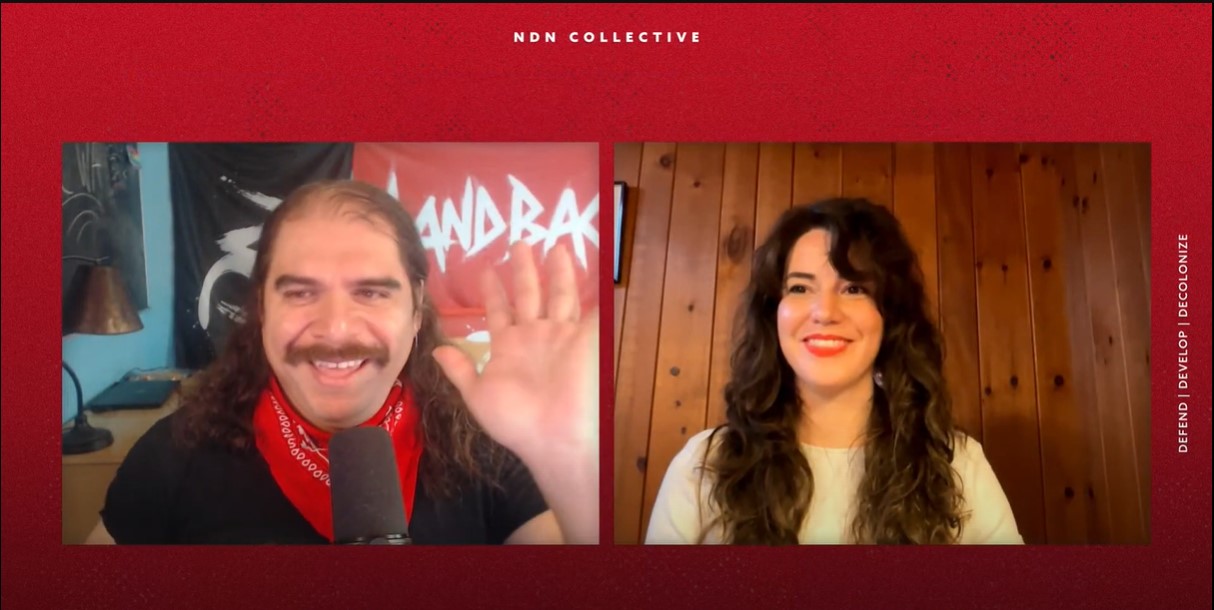
NDN Collective LIVESTREAM #ICWA Lawsuit


The Indian Child Welfare Act (ICWA) was passed in 1978 as a federal law that set standards for the removal and out-of-home placement for Indigenous children; it protects the best interests of the child by placing them in homes that are connected to their tribes and relatives. Brackeen is challenging the constitutionality of ICWA, as it places preference for the placement of Indian children to the tribes themselves.

This Wednesday, November 9th, the Supreme Court of the United States will hear oral arguments for the Brackeen v. Haaland (2021) case. 


Learn more about the case, the Indian Child Welfare Act, and the fight to protect ICWA by visiting these resources:

Monday, November 7, 2022

Zoom Discussion on Brackeen ICWA CASE November 9th - free to register


Brackeen Post-Oral Argument Discussion – via Zoom

Please join the Indigenous Law and Policy Center this Wednesday, November 9, at 6:00 p.m. ET for a post-oral argument discussion of Brackeen over Zoom. Wenona Singel will be moderating this conversation with speakers Matthew L.M. Fletcher, Melody McCoy and April Youpee-Roll.

The link to register is here. Please see the below flyer for more information.

Videos are not displayed in this email and must be viewed on the website.

Friday, November 4, 2022

National Adoption Awareness Month #NAAM2022 #adoptiontraffickingmonth


MORE MAPS: here 


Tuesday, November 1, 2022

November is Adoption (beware) Awareness Month (#NAAM) AND Native American Heritage Month


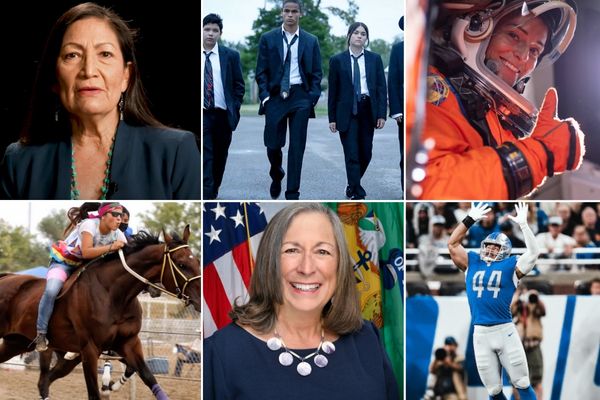
Top row (L-R): Interior Secretary Deb Haaland (Laguna Pueblo), the first Native American cabinet secretary; some of the young cast members of the breakout hit show “Reservation Dogs”; Marine Colonel Nicole Aunapu Mann (Round Valley Indian Tribes), the first Indigenous woman in space. Bottom row (L-R): An Indian relay rider in Buffalo, Wyoming; Chief Lynn Malerba (Mohegan Tribe), Treasurer of the United States; Detroit Lions rookie linebacker Malcolm Rodriguez (Cherokee).


A journalist asked me recently: What’s the one thing that mainstream media often get wrong about your community?

My answer was brief:  Unfortunately, the media still speaks about Native Americans in the past tense. 

The truth is: We are still here.

That’s part of the reason Native News Online was founded in 2011. Because the media often portrayed Native people in a negative light: high levels of alcoholism, poverty or as all being rich because of Indian casinos.

In our newsroom, we work to present a balanced and accurate portrayal of Native people living in contemporary times. We write about Native people as we are now, and the issues that actually matter to us. 

We report on — and occasionally celebrate — Native people who, in 2022, are reaching new heights in art, science, business, and public service.  

They’re not just doing great things in Indian Country.  They’re doing great things that affect the entire country — and well beyond our borders, as well. 

Throughout the month of November, Native News Online will highlight some of the Native Americans who have made “immeasurable contributions to the country’s progress,” as President Joe Biden noted in his proclamation about National Native American Heritage Month yesterday. We’ll share stories of Native Americans who have helped shape culture in Indian Country, the United States, and around the world.

We are still here, and our presence is growing.  

In advance of recognizing Native American Heritage Month, the U.S. Census Bureau released the following facts about American Indians and Alaska Natives:

3.7 million

The nation’s American Indian and Alaska Native population alone in 2020. This population group identifies as AI/AN only and does not identify with any other race.

10.1 million

The projected population of American Indian and Alaska Native alone or in combination with other race groups on July 1, 2060, about 2.5% of the projected total U.S. population.

324

The number of distinct, federally recognized American Indian reservations in 2022, including federal reservations and off-reservation trust land. 

574

The number of federally recognized Indian tribes in 2022.

120,944

The number of single-race American Indian and Alaska Native veterans of the U.S. Armed Forces in 2021.

We are still here.  We have been since time immemorial.  And we plan to be for generations to come. 

SOURCE


We are not going back


We’re not going back

By Blog Editor Trace Hentz  (on WHY ICWA MATTERS)


Can you imagine this: you are a young girl and someone throws a bag over your head and ties your wrists and you end up on a boat? And that boat takes you to an island? And there are others there, just like you?

Can you imagine the horror of this, of being abducted?

This really happened in the Americas but we are just finding out about it.  Brown University in Rhode Island is investigating Indigenous slavery, finally looking at it in 2022.  I studied this slavery of American Indian people back in 2000 and wrote a paper called First Contact. I read the paper at NAJA in Florida. Most did believe me but it was so hard to find proof.

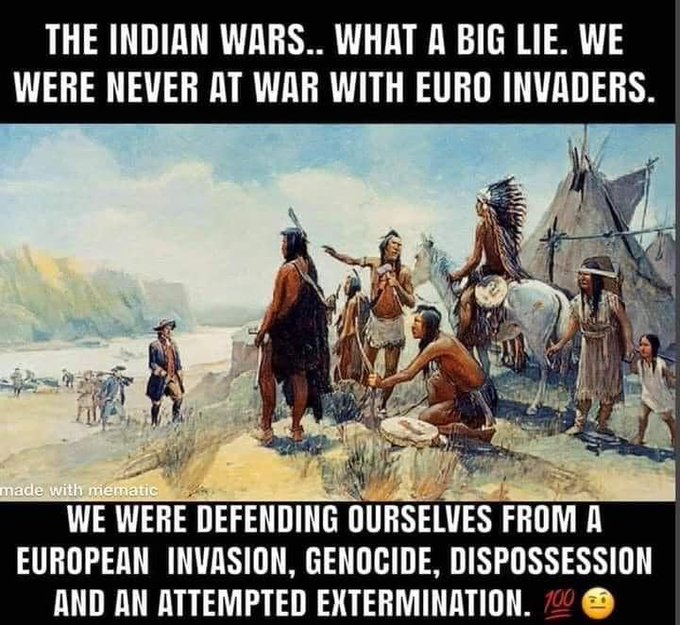
Who did this slavery? Not just Spain and France, it was England, too.  Some call this method colonizing the Americas and Indian people were just another commodity, a way to make money.

Scholars now estimate that between 2.5 and 5 million Natives were enslaved in the Americas between 1492 and the late nineteenth century – an astonishing number by any measure, even compared to the approximately 12.5 million Africans who were brought as slaves from Africa in this same time period. This is a long-neglected aspect of North American history in the age of European empires, one historians are now exploring in much greater depth. To begin to tabulate the immensity of indigenous slavery in the Americas and to centralize the research that is being done, the team of researchers I’m leading are documenting as many instances as possible of indigenous enslavement in the Americas between 1492 and 1900.  BROWN UNIVERSITY (www.indigenousslavery.org)

Another example:

The Treaty of Hartford was signed in 1637 and a different version was found hiding in the British Museum 20+ years ago.  That discovery of a piece of paper in the UK didn’t make any headlines in American or New England newspapers.  The final act of the Pequot War was on September 21, 1638, when Miantinomi (Narragansett Sachem), Uncas (or Poquiam, Mohegan Sachem), John Haynes, Roger Ludlow and Edward Hopkins signed a tripartite treaty. Known as the Treaty of Hartford, the articles of agreement specified: Forbade any followers of Sassacus (Pequot Sachem) to be called Pequots.

Governor John Winthrop (Slave owner: Harvard)
(1588–1649) Overseer (1637–1649)  His Slaves: The wife and two unnamed sons of Pequot Sachem Mononotto.  At least four other unnamed Indigenous people, two men and two women. https://www.thecrimson.com/article/2022/4/26/harvard-legacy-of-slavery-report/


WE ARE NOT SUPPOSED TO KNOW

For academics and scholars who write history, they definitely knew about the extermination of First Nations Indigenous people, and their murders and their enslavement, but conveniently chose not to write about it.  They knew the evidence was right there all along, but they chose not to document it. 

‘I agree that much of this history was hiding in plain sight (and in many published documents and sources that historians had used for decades to research colonial history in New England.’ Ohio State University Professor Margaret Ellen Newell, History Department  (Her book, Brethren by Nature: New England Indians, Colonists, and the Origins of American Slavery, received the 2016 James Rawley prize for best book on the history of race relations in America, Cornell Press.  (Her response to an email inquiry by author Trace Hentz) *

Most Americans don’t know that slave owners killed their slaves without mercy, just to keep the rest in terror, scared for their lives and their children’s lives: 

“Gen. Charles LeClerc wrote the French monarch Napoleon: We must destroy all the Negroes of the mountains, men and women, and keep only children under 12 (then import new ones.) So the French would need to inspire great terror.”  That is what they did.

Slavery in historical perspective:  Slavery was the cornerstone of the colonization of the Americas.  Of the ten million or so people who crossed the Atlantic before 1800, about eight and a half million—roughly six of every seven people—were enslaved Africans.  By the time the transatlantic trade was finally suppressed in the 1860s, a total of 10 million to 12 million Africans had been carried into New World slavery, while an estimated two million more had died in the passage. http://www.brown.edu/Research/Slavery_Justice/documents/SlaveryAndJustice.pdf

I’m sure plenty of you are aware that historians (history snobs) have controlled the narratives a long long time and created divisions in the way we think.  You’d guess right that they did this on purpose.

For years and years I searched for the books that mention what happened to tribes in the east, how they were loaded on boats and sold into slavery on the islands.  I met people from Bermuda who are relatives of these Eastern Indians who were enslaved.

You may not know these early chapters of COLONIZATION and SLAVERY in the Americas.  The next chapters are Residential Boarding Schools and The Indian Adoption Projects, and all the laws made to crush Tribal Sovereignty, etc.   Let me say that SOME Euro-white people have TAKEN what they wanted from the beginning and always invent ways to take more.

Like Goldwater Institute who is behind the unravelling of tribal sovereignty.  Like dismantling ICWA and the federal law protecting tribes from having their children stolen AGAIN via adoption.

Universities across the United States and the world have been forced to confront connections to slavery throughout their histories. From Brown to Yale, Oxford and in South Africa, students, faculty, and administrations wrestle with how to expose, conceal, honor, or memorialize the legacies of slavery.

I wonder if “they” realize how much they suppressed and oppressed history by keeping it theirs, locked up in academia archives, in costly history books, in their versions.  Today European churches and especially Spain’s churches and cathedrals are crammed full of stolen and looted gold from Peru: Gold that was mined by Indigenous slaves from the Americas.

Oh, our Indian bones are still locked up in their dusty drawers, too, in those same Ivy League Schools.  To them Indians are the distant past, relics, disappeared.  Some of these schools are sweating the revelations how they profited from the slave trade, too, of course.

We are not going back. 

We will not allow the future of Tribal Nations to experience HUMAN TRAFFICKING again via adoption or slavery.

If the Indian Child Welfare Act (ICWA) fails we will write a stronger law.

I wrote more about this history here:  https://pressbooks.pub/cosmicglue/chapter/chapter-4/


click

Contact Trace

Name

Email *

Message *

NO MORE UPDATES

GO TO:  https://blog.americanindianadoptees.com/  for updates and news. THIS BLOG cannot be updated...