BLOGGER changed, not allowing us to UPDATE this back-up blog

(UPDATED 726/2025) issues with blogger are preventing this

Saturday, May 1, 2021

Federal ICWA lawsuit remains a case to watch despite split decision in 5th Circuit Court of Appeals

 LISTEN


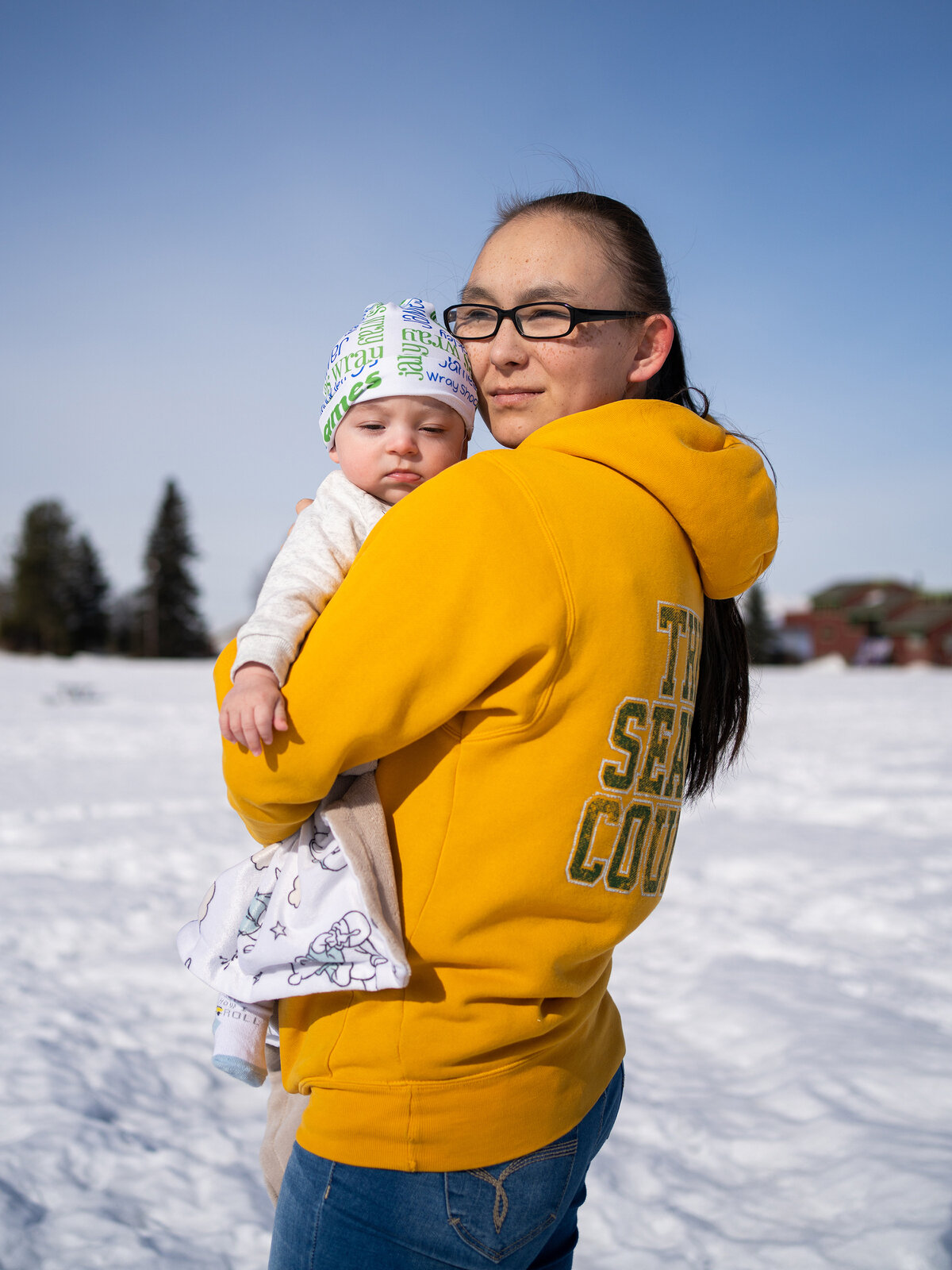
A lawsuit challenging the Indian Child Welfare Act received a split decision in federal appeals court on April 6, 2021. The law, the lawsuit and the split resulted in a 300-plus-page decision that confounded experts and lay people alike. The decision won’t impact Alaska directly. But legal experts  say Alaska should still keep an eye on the case.

The Indian Child Welfare Act, or ICWA, basically provides Tribes with an opportunity to intervene when state child welfare and adoption agencies consider whether or not to remove a Native child from a home. The children can be enrolled citizens of the Tribe or be eligible for membership status. 

Alaska Native Justice Center policy director Alex Cleghorn says ICWA was passed in 1978 in response to the disproportionate removal of Native children from their homes, families and communities.

“They were primarily being placed in the homes of non-Native people and growing up without a connection to their culture or to the communities,” said Cleghorn, who worked as a Tribal attorney for much of his career, is a citizen of Tangirnaq Native Village and serves on the board of directors for Koniag Incorporated regional Native corporation. “I believe the Alaska Native culture is something that is a strength."

The Alaska Native Justice Center is an advocacy organization that provides Alaska Native people with direct services in education, victim advocacy, Tribal court assistance and more.

(Disclosure: The Alaska Native Justice Center, KNBA and Koahnic Broadcast Corporation are tenants of Cook Inlet Tribal Council.)

What is now Brackeen v. Haaland began in 2018 as a lawsuit in Texas that challenges ICWA. The lawsuit says the federal law discriminates against non-Native families looking to adopt.

“They seem to believe that being a Native person is solely a racial classification, which ignores many years of precedent and legal rulings that as a Native person, our relationship with our Tribe is that of a citizen who works in government.”

Erin Dougherty Lynch is a staff attorney at Native American Rights Fund, a nonprofit legal organization that holds the U.S. governement to its treaty obligations with Tribes as well as laws that affect Native people. Lynch works on a variety of federal Native issues including Tribal jurisdiction, sovereignty – and child welfare.

She says the plaintiffs in the Brackeen case argue that ICWA is a law based on race: “That it's a race-based law that provides preference to extra services to Native children, to provide preferences to Native families, which should be struck down by the Supreme Court on an equal protection ground.”

But Lynch says ICWA, along with the bulk of federal Indian policy, is grounded in a political relationship between governments – between federal and Tribal governments, and between Tribes and their citizens.

ICWA is a federal law that establishes a floor-level basis for reviewing Native child adoption cases. Some states passed their own ICWA laws, but those laws must offer additional benefits – not change or remove the application of federal law: “States can never do less than what's in the federal law, but they can always do more,” Lynch says. 

For example, Washington state has its own ICWA law.

Alaska does not have a state ICWA law. In 2017, then-Governor Bill Walker’s administration championed and signed a child welfare compact between the state and many Alaska Tribes.

“(Compacts are) another kind of tool that we've had in Alaska where Tribes are working, have compacted on a government-to-government relationship with the state government and with the goal of providing more culturally appropriate services to children in the state's child welfare system.”

Tribal leaders often testify at Alaska Legislature hearings that Alaska Native children are over-represented in the foster care system.

According to the Alaska Tribal Child Welfare Compact (2017), even though Alaska Natives represent less than 20 percent of children in the state, they make up more than half the children placed in foster care.

Cleghorn says the Brackeen case illustrates that more states should be looking at state-based ICWA protections.

“If the federal law is going to continue to be under attack, it may be time to look at a state equivalent to ensure that we continue to recognize Tribes recognized as the gold standard in child welfare and protection, and that those protective factors of having children connected to their culture, the Tribes and their families are important and should be enshrined in law.”

The Brackeen lawsuit worked its way to the United States Court of Appeals for the Fifth Circuit, which covers the federal judicial district in Louisiana, Mississippi, and Texas.

A three-member judges panel heard the case and upheld the constitutionality of ICWA, but with partial dissent. That allowed the plaintiffs to request and receive a full bench – or en banc – decision.

Sixteen judges split down the middle and wrote a 325-page decision. Because of the split, Lynch says the decision largely impacts cases in that district’s region – and wouldn’t affect Alaska directly.

Alaska Native Justice Center policy director Cleghorn is also confident the split decision should not impact ICWA cases in Alaska or in states that are outside of the Fifth Circuit.

“I also think it's important to keep our eyes open for those of us who do work in this area and represent Tribes in this area, because sometimes there are misguided attempts to import reasoning or to import reasoning or decisions that may not apply,” Cleghorn said. 

For now, legal experts and Tribes will keep an eye on the Brackeen case, and will be on the lookout for others, Lynch said.

"Certainly, if the case ends up going up before the United States Supreme Court, what the Supreme Court determines will have an effect in Alaska. But right now, you know, state and Tribal child welfare workers who are involved in state child welfare cases don't have to worry about this opinion."

But Lynch says it is possible that Alaska Native children living in the Fifth Circuit could be affected.

“When you start talking about places that are in states that are in the Fifth Circuit, like Texas and Louisiana and Mississippi, then the whether the case applies is a maybe,” Lynch said. “Which I know might be sort of unsatisfying, but there are sort of these general principles that federal courts don't necessarily tell state courts what to do. And so it sort of depends state-to- state as to whether or not this is going to have precedential effect in the Fifth Circuit. But for our purposes in Alaska, we we can ignore this decision for now.”

The legal experts and attorneys following the case worked to unravel its many threads and how each one would impact ICWA or their understanding of the case and law.

“It definitely took us a few days to sit down and, like, sort it all out,” Lynch said. “We literally had to map out every issue that had been brought up in the case and then sit down and go through all of the opinions and see how folks had come down. I know the court in those first few pages did issue like a per curiam opinion where they tried to give a synopsis of where the whole thing had come down. But you still really have to sit down and go through it all. And it's complicated for the lawyers.”

The Native American Rights Fund helped publish a one-sheet flow chart to help people determine whether the decision impacts their case

"I guess my takeaway is that the worst did not happen, which is good," Lynch said. "But there are still pieces of this opinion that are not great."

Source: Federal ICWA lawsuit remains a case to watch despite split decision in 5th Circuit Court of Appeals


READ MORE:


Wednesday, April 28, 2021

How Alaska OCS Stole Millions from Alaska Native Foster Kids


Marshall Project and NPR on How Alaska OCS Stole Millions from Alaska Native Foster Kids

If you, like me, enjoy starting your day with the clarifying anger of a thousand white hot fires, may I recommend this article on how various state agencies rerouted foster children’s SSI benefits to pay for their own foster care–especially impacting Alaska Native children. 

A few of those children are highlighted in this article:

https://www.themarshallproject.org/2021/04/22/foster-care-agencies-take-thousands-of-dollars-owed-to-kids-most-children-have-no-idea

The Marshall Project and NPR have found that in at least 36 states and Washington, D.C., state foster care agencies comb through their case files to find kids entitled to these benefits, then apply to Social Security to become each child’s financial representative, a process permitted by federal regulations. Once approved, the agencies take the money, almost always without notifying the children, their loved ones or lawyers.

At least 10 state foster care agencies hire for-profit companies to obtain millions of dollars in Social Security benefits intended for the most vulnerable children in their care each year, according to a review of hundreds of pages of contract documents. A private firm that Alaska used while Hunter was in state care referred to acquiring benefits from people with disabilities as “a major line of business” in company records.

Some states also take veterans’ benefits from children with a parent who died in the military, though this has become less common as casualties have declined since the Iraq War.

In Alaska, more than 250 current and former foster children — many of them Alaska Native — are part of the class-action lawsuit demanding that the state pay their Social Security money back. 

Monday, April 26, 2021

Bone Rooms


In the 2016 book ‘Bone Rooms: From Scientific Racism to Human Prehistory in Museums’, Samuel J Redman notes: “The campaign to preserve and collect was viewed as a race against time; bone empires benefited from this powerful sentiment by conceptualising indigenous and ancient bodies as a limited and scientifically valuable resource.”

READ: Native Americans and the dehumanising force of the photograph | Wellcome Collection


In the 2005 book Beyond the Reach of Time and Change: Native American Reflections on the Frank A Rinehart Photograph Collection’, Simon Ortiz writes:

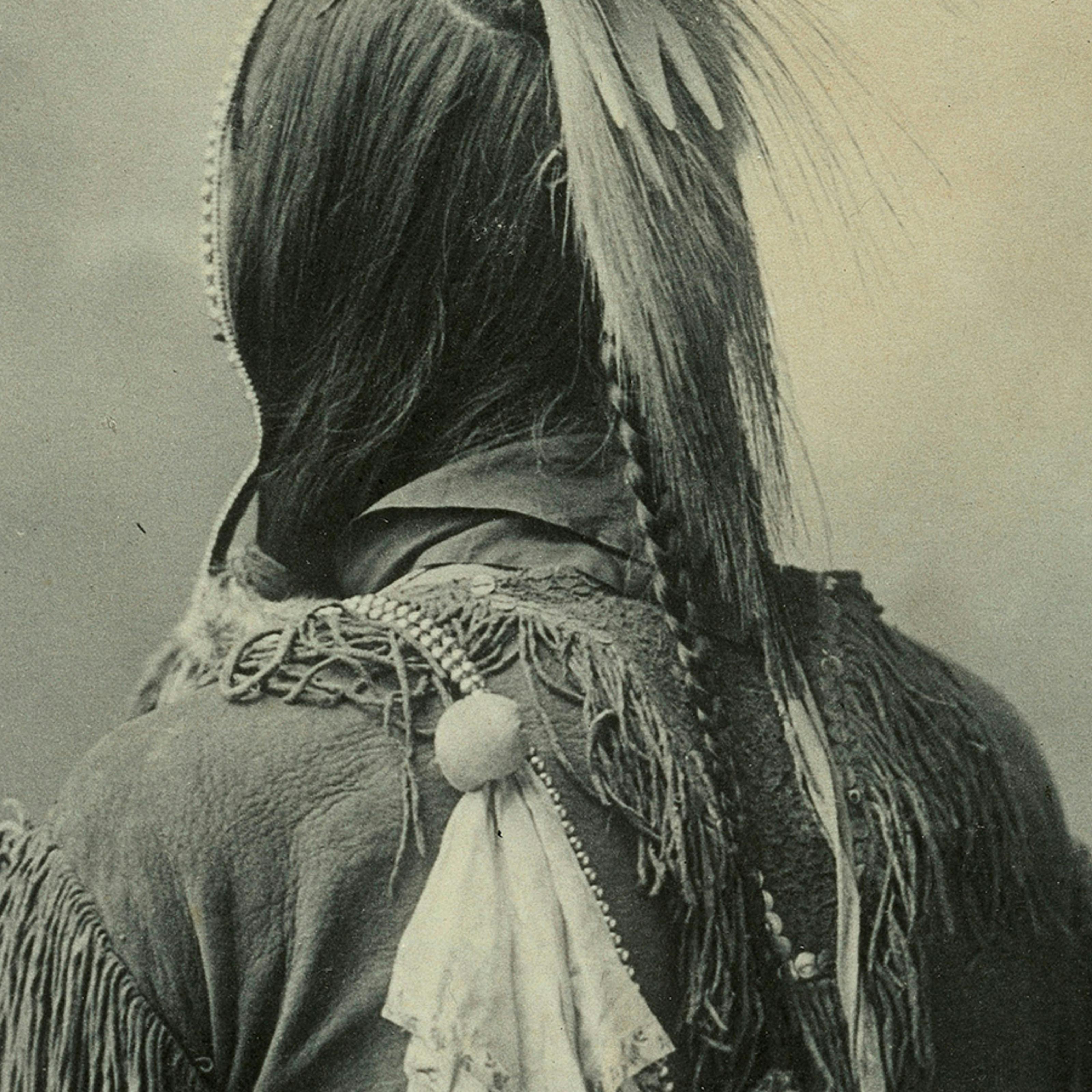
“Whether he wanted to or not, the real and actual Indian vanished into the image contrived by non-Indian interests, since he became, in some sense, acceptable then ‘as an Indian’, albeit an Indian fashioned, styled and – even literally – costumed (for example, photographic studio props were used by photographers such as Rinehart and Edward Curtis) so that he could be identified as nothing but an Indian.”


Friday, April 23, 2021

What Does The #ICWA Ruling Mean For The Mountain West? For Now, Not Much

Apr 20, 2021| The Mountain West News Bureau | Tribal News

The Indian Child Welfare Act still stands, with some of its key provisions weakened by a sharply divided U.S. Fifth Circuit Court of Appeals this month. The 325-page opinion has no immediate impact on child welfare cases in the Mountain West, but it's likely to be challenged in the U.S. Supreme Court.

Since 1978, ICWA has required that tribal nations have a voice in adoption, foster care and custody proceedings involving their youngest citizens. The federal law was intended to reverse a long legacy of federal and state agencies forcibly removing Indigenous children from their families and communities.

Initially filed in 2017, the lawsuit - Brackeen v. Bernhardt then, Brackeen v. Haaland now - took aim at ICWA's constitutionality, arguing that its preference for placing Indigenous children in Indigenous adoptive and foster homes violated the equal protection clause. Thirty tribal governments in the Mountain West and the states of Colorado, Utah, Montana and Idaho urged the court to reject that argument. Ultimately, the Fifth Circuit's en banc ruling did just that.

"After this decision, and even if this decision stands, most of ICWA is constitutional," said Dan Lewerenz, an attorney with the Native American Rights fund.

Lewerenz said the court upheld what tribes have always asserted, that ICWA is based not on race, but on a child's political status as a tribal citizen. But the court narrowly ruled that certain provisions of the law, including its mandate that Indigenous children be placed with Indigenous foster parents when possible, intrude on the authority of states.

"[The Native American Rights Fund] disagrees with those holdings," Lewerenz said. But he added that the ruling does not impart any "precedential value" requiring other courts to follow suit.

"It really only applies to the Brackeen case," he said. "Any other court, state or federal, is open to reject those holdings. It is of little significance outside of this specific litigation."
 

Still, if any of the lawsuit's plaintiffs succeed in appealing the case, the U.S. Supreme Court's decision will be binding for courts across the United States. And a Supreme Court rejection of ICWA's constitutionality would have ripple effects for other parts of federal Indian law.

For that reason, Governor Phillip Perez of the Nambe Pueblo, a tribe in northern New Mexico, called the Fifth Circuit's ruling "deeply concerning."

"The Indian Child Welfare Act was enacted to protect the best interests of Indian children and to promote the stability of our tribes, our customs and traditions. This decision by the Fifth Circuit threatens who we are as tribal people and undermines our tribal sovereignty," Perez wrote in a statement.

New Mexico State Rep. Georgene Louis, who also serves as general counsel for the Pueblo of Tesuque, agrees.

"With all the challenges that have been made [to ICWA], it could be eroded. And some of the protections that ensure reunification with a child's tribe might not be there anymore," Louis said.

In New Mexico's recent state legislative session, Louis sponsored a state statute that would have ensured that many of ICWA's provisions were followed in state court proceedings regardless of the federal law's status. But that bill died in committee. In light of the Fifth Circuit ruling, Louis said codifying ICWA statutes at the state level should be a priority.


READ MORE:

Thursday, April 22, 2021

Trump Judges Cast Deciding Votes to Strike Down Important Parts of Indian Child Welfare Law: Confirmed Judges, Confirmed Fears

 Confirmed Judges, Confirmed Fears” is a blog series documenting the harmful impact of President Trump’s judges on Americans’ rights and liberties. Cases in the series can be found by issue and by judge at this link.

Trump judges Duncan, Willett, Engelhardt, and Oldham cast deciding votes to invalidate important parts of the Indian Child Welfare Act and try to do even more damage to the important law.

MUST READ: Trump Judges Cast Deciding Votes to Strike Down Important Parts of Indian Child Welfare Law: Confirmed Judges, Confirmed Fears


The Native American Rights Fund (NARF), National Congress of American Indians (NCAI), the National Indian Child Welfare Association (NICWA), and the Association on American Affairs (AAIA) have stated that they are “deeply concerned that aspects of this opinion misunderstand the unique relationship between the United States and tribal nations.”


Bad history is damaging to all tribes and our children. - Trace 

Recognizing Rape, Finding Bravery and Beginning Healing


*TRIGGER WARNING: This article includes graphic content that some readers may find distressing.

Names have been changed. 


GUEST POST By Cassie Roy 

College Trials and Tribulations

I was 22 years old and in college when I was raped by a mutual friend. I had sorority sisters and fraternity brothers. We all shared a common purpose — to get an education and to make memories to last a lifetime. Looking back, I see how toxic the environment truly was and that what happened to me wasn’t my fault.

I was in my second year in college and I had a lot going on in my life. My life was moving in the right direction and everything was going as planned. That is until both my best friend and my grandmother passed away. I was struggling to comprehend what my life would look like without them. I was devastated and sought therapy to help me deal with the unexpected loss of my closest friend and relative. My life was falling apart.

I don’t remember if it was a weekend or a weekday, our sorority always planned social events with the local fraternity. It was rare for me to miss a social function. On this particular night, I went to a well-known party house with my sisters. We knew to make sure we stayed together throughout the night. There were always fraternity brothers we would stay away from. To them, girls were nothing more than a challenge. I guess we thought boys chasing girls was just part of student life.


It Was No Big Deal

Bill was cute. In fact, I thought I might even like to date him because he was always so nice. As the night went on, I lost communication with my sorority sisters. Everyone was drunk. One of the fraternity brothers started to take some people home. I don't know why I stayed or why my sorority sisters left me behind. Maybe because we all just drank too much.

I remember the couches and chairs were all taken — people were passed out and I was ready to pass out. Bill offered me a place to sleep. I felt like I could trust him, besides there was nowhere else for me to go. He motioned for me to come over and lie next to him. “You might as well just sleep in my bed,” he said. “It’s not a big deal.” I did lie down because it was no big deal, just as he said.

From the moment I fell asleep to the moment I woke up everything was a blur. I knew that I had laid down with the intention to sleep but that’s not what happened. I remembered he was trying to kiss me and wondered if I was kissing him back. I couldn’t remember because I was in and out of consciousness.

The next morning I woke up next to Bill. He was still sleeping. I knew something was wrong. I could feel that something had happened to me. I felt sick in the pit of my stomach. When I realized that I was only partially clothed all I wanted to do was cry. I was so confused. Did I want him to kiss me? Did I kiss him back? I must have given him the idea I wanted him to kiss me… Right?

All I wanted to do was get out of that house as soon as I could. I got up and rushed to get out. I was so confused that I started to cry. One of his friends saw me rushing to get out of the house and saw that I was in tears. He didn’t ask and I didn’t stop to explain. I just kept running.


The Aftermath

Bill and I had mutual friends. His friend must have asked him what had happened because he saw that I had been crying. So later that day, he texted me to apologize. “I’m sorry if that is not what you wanted.”

I didn’t respond. I was still so confused. Did I give him the idea that’s what I wanted? Did I kiss him? What really happened? I couldn’t tell anyone because I felt responsible for what happened. It was my fault... right? I shouldn’t have drunk so much. I shouldn’t have gotten so drunk. I shouldn’t have got into bed with him and I shouldn't have passed out.

I didn’t tell my sorority sisters. I didn’t tell anyone. I couldn’t talk about it because I wasn’t sure what happened. I continued to see Bill because he and I were attending the same mixers and events. I tried to ignore him when he started to date one of the girls in my sorority. I was seeing him more than I wanted to and I just couldn’t handle it anymore.

At that time, I thought it was best for me to just leave college. My best friend had died. My grandmother passed away and then that happened. So, I literally just left and I didn’t tell anyone about my experience with Bill.

I didn’t know how significant that night would be in my life until three or four years later. It was life-changing. I was young and single. I used to want to have closer relationships with men, but now things are different. I tried to have relationships. I tried to trust again, but I couldn’t. I just couldn’t.

There was a part of me that felt responsible. My body and brain were not in sync. I didn’t fight. I wasn’t pinned down. I wasn’t injured. I rationalized that if sex doesn’t leave bruising and it didn’t happen in the back alley it wasn’t rape. I didn’t accept that what had happened was an assault because he didn’t hurt me — or so I thought. 


Life Gets Better

I was already on a path in therapy and I don’t know if it was fate or I just got lucky. A domestic violence helpline for Native Americans was moving into the Minneapolis area. I applied for and secured a job with the helpline. My new job afforded me training in domestic and sexual violence. That’s when I started to unravel the confusion and pieces of the puzzle started to fall into place.

Later, after about two years of working and living in the city, I had a conversation with a friend. She and I had similar experiences, and I was able to open up and talk about it. Even though I knew what happened that night wasn’t my fault, I still felt responsible. I was still blaming myself. That’s when my friend helped me to see what my heart already knew — that I had been raped. 


Faces of Rape

Rape has many faces and it doesn’t always look big and scary or violent. Bill wasn’t a scary man coming out of the darkness. He didn’t attack me. He wasn’t a stranger. He wasn't even one of the brothers we all knew to stay away from. He was a friend of my friends. We were friends. In any other situation, I might have had sex with him willingly. But I didn’t consent because I wasn’t given the option.

When I think back to that night, I was so naive to think it wasn’t a big deal. He wasn’t an upstanding guy. He is a non-Native man who thinks he deserves to take whatever he wants whenever he wants. I’m not looking for and won’t ever look for justice. The rape happened to me but it does not define me. I take solace in the idea that education on the topic of sex is changing. Gender identity and sexual orient-ation are on the cusp of being old news and no longer considered abnormal. The world is changing. Education is changing. I’m changing. 


StrongHearts and Common Ties

Native American women are preyed upon by non-Native men in large part because of what history has set into motion. The trajectory of Native women and children being captured, bought and sold by colonizers had ramifications and consequences that Native women still experience in the present day. She was a beautiful young Native woman and he was a young non-Native man. The common thread is undeniably sexual assault and/or rape.

If you or a loved one has experienced sexual violence, StrongHearts Native Helpline can help 24 hours a day, seven days a week. For one-on-one chat advocacy visit StrongHearts Native Helpline online or call/text 1-844-762-8483.

Thursday, April 15, 2021

Caseworker’s path lined with desire for investigation, love of #ICWA families


Caseworker’s path lined with desire for investigation, love of families

April is Child Abuse Prevention Month, a time when programs across the country like Citizen Potawatomi Nation’s FireLodge Children & Family Services bring awareness to child abuse and neglect and advocate for happy and healthy childhoods for all. CPN Indian Child Welfare Department caseworker Whitney Coots helps children of neglect and abuse improve their situation every day.

She sought a different career path while in college, but life events and interests opened doors for her to utilize her skills in an unexpected way. Coots graduated in 2015 from the University of Central Oklahoma in Edmond with a double major in forensic science and criminal justice and joined FireLodge’s workforce in 2019.

“I originally wanted to do crime scene investigation. I love it. I still do. My major was a blast, but it is really hard to find jobs in forensic science,” Coots said.

She perused work in criminal justice and spent four years as a probation supervisor before accepting her current role as an ICW caseworker in September 2019. The change reset her career goals, unveiling a desire to help Native children and families.

“I didn’t understand the depth of the (the Indian Child Welfare Act) whenever I started. I knew what it was, and I knew the basis of ICWA, but not truly what it stood for. And so now that I understand that … protecting ICWA and Native American children is what I feel I was called to do,” Coots said.

GOOD READ: Caseworker’s path lined with desire for investigation, love of families


For more information about FireLodge Children & Family Services, visit potawatomi.org/services/firelodge or find them on Facebook, @CPNFireLodge.

Wednesday, April 14, 2021

Up and Down, Back and Forth: Still Fighting over ICWA

The demand from white people (non-Indian PAPS - prospective adoptive parents) who want to freely adopt Native kids will NEVER stop apparently... and we know it's always about what THEY want... not what is best for us adoptees.

We have posted about Goldwater before and what their intent truly is...


Federal appeals court strikes key provision of Indian Child Welfare Act
Divided ruling seen as defeat for tribal leaders concerned about act
 

WASHINGTON — Legal experts are deeply concerned about an “incredibly divisive” ruling from a federal appeals court that struck down parts of a law giving Native American families preference in the adoption of Native American children.

The ruling by a sharply divided U.S. 5th Circuit Court of Appeals is seen as a defeat for tribal leaders who said the 1978 Indian Child Welfare Act was important to protecting their families and culture.

Mary Kathryn Nagle, Cherokee, is a partner with the law firm Pipestem and Nagle, and specializes in federal Indian law.  She called the 5th Circuit ruling “incredibly divisive” and said “certain parts of this decision are incorrect.”

PLEASE READ: Federal appeals court strikes key provision of Indian Child Welfare Act | Navajo-Hopi Observer | Navajo & Hopi Nations, AZ


And those same adoptive parents might not want to hear from adoptees or accept how WE feel being adopted.

These words are, according to (adoptee) Eric Schweig, his "mission statement."
 

Firebar
"We can never go home because the concept of home is lost on us."
Firebar
 

Adoption of aboriginal children by Caucasian couples is to me, for lack of a better term 'State Sanctioned Kidnapping.'  Too often Euro-American couples are preoccupied with the romantic notion of having a "real live Indian baby" or a "real live Inuit baby" which instantly transforms the child into an object rather than a person.  For decades our communities' babies have been unceremoniously wrenched from the hands of their biological parents and subjected to a plethora of abuses.  Physical abuse, mental abuse, sexual abuse and a host of others.   I have first-hand knowledge of this because I was one of those children.  For years my adoptive parents beat me bloody on a regular basis.  I've been trapped in rooms naked and beaten with belt buckles, hockey sticks, extension cords, and once with a horsewhip. His speech


GOLDWATER is behind the attacks on ICWA:

WHAT DO THEY WANT? What is Goldwater doing?


Wednesday, April 7, 2021

Promoting Indian Child Welfare Through Inquiry and Data


Data collection on Native American involvement in adoption and foster care is needed to remedy courts’ failures.

More than four decades after the U.S. Congress passed the Indian Child Welfare Act (ICWA), state courts still do not reliably fulfill their obligations under the statute. As a result, Native American children, families, and communities are too often denied the very protections the ICWA sought to establish.
Congress enacted the ICWA in 1978 to address the disproportionate rates at which Native American children were—and continue to be—removed from their homes and placed with overwhelmingly non-Native adoptive and foster families. These removals, Congress recognized, were frequently unwarranted, harmful to Native families and communities, and infringed upon Tribes’ inherent rights of sovereignty and self-governance.

The Interior Department sought to address this problem through a second ICWA rule also issued in 2016.

GOOD READ: Promoting Indian Child Welfare Through Inquiry and Data | The Regulatory Review

Sunday, April 4, 2021

First Environmental-Themed Program in April | “commUNITY: Environment is Sacred”

In April, VMM’s first environmental-themed program will acknowledge International Earth Day with a month-long community-themed online film streaming event, titled “commUNITY: Environment is Sacred,” and a panel discussion. The April programs are free and open to the public but registration is required.


“commUNITY: Environment is Sacred” is a program of six films, featuring themes of water, energy, Indigenous food and health. The themes highlight important environmental issues that have a direct effect on Native lands and an Indigenous philosophy for the world to better understand. The films will be available April 1-30 for worldwide online streaming 24/7 at visionmakermedia.org.


The six films include: “
Crying Earth Rise Up” (2015, USA, 57 min.); “Red Power Energy” (2016, USA, 56 min.); “Growing Native Northwest: Coast Salish” (2018, USA, 57 min.); “RETURN: Native American Women Reclaim Foodways for Health & Spirit” (2019, USA, 28 min.); “Rematriation Series: Joanne Shenandoah” (TBD, USA, 10 min.); and “The Seven Generation River” (2019, USA, 27 min.). 

For more information about the films and to register, visit visionmakermedia.org.

Lack of federal recognition to slow-motion ‘genocide’


For over 120 years, the Chinook Indian Nation of the Pacific Northwest has been trying to prove its sovereignty to the United States government by seeking formal federal recognition -- yet the tribe is still unrecognized. And the pandemic has only exacerbated the Chinook’s lack of a social safety net.

“We don’t need the government to tell us we’re Indian. We just need them to honor the treaty our ancestors signed.”

READ: Members of Chinook Indian Nation liken lack of federal recognition to slow-motion ‘genocide’

Sunday, March 28, 2021

Red Hoop Talk EP 49: CELEBRATE WOMEN'S HISTORY MONTH WITH LAUGHTER


The Association on American Indian Affairs 

#WOMENS HISTORY​ MONTH 

Visit with amazing Native women who inspire us! 

JACKIE CROW SHOE is Turtle Mountain Band of Chippewa and an Indian Child Welfare Act advocate, and Policy Associate with the University of Southern Maine. She is also a Consulting Organization to the Capacity Building Center for Tribes that serves to support Tribal child welfare professionals. 

SIENA EAST is Choctaw and Isleta Pueblo and a writer, comedian, and actress based in Los Angeles. She studied Film and Television Production at New York University. You can find Siena on Instagram, Twitter, and www.sienaeast.com. 

 PURA FE is Tuscarora and Taino and an award-winning singer-songwriter, musician and activist. She is the founding member of the internationally renowned Native women’s acapella trio, Ulali. She currently lives in Northern Saskatchewan. Read more about her and listen to her music at www.purafe.com. 

SANDY WHITE HAWK is Sicangu Lakota and an adoptee from the Rosebud Reservation, South Dakota. She is the founder and Director of First Nations Repatriation Institute, which helps First Nations people impacted by foster care or adoption return home and reclaim their identity. Sandy also serves as a board member for the Association on American Indian Affairs.

Wednesday, March 24, 2021

How to Create an Indigenous Child Welfare System

The Splatsin, among the first nation to create its own, will share hard-won knowledge in an upcoming webinar.

SOURCE:Katie Hyslop March 23, 2021 | TheTyee.ca

It’s been over a year since a federal law affirming the right of First Nations, Inuit and Métis peoples to run their own child welfare systems came into force.

Yet over half of the children in government care nationally and two-thirds of kids in care in B.C. are still Indigenous, despite making up just 10 per cent of all children.

Bill C-92 allows communities to create their own child welfare systems and services, but implementation is just beginning and no funding is yet confirmed, with the Assembly of First Nations and federal government still in discussions.

The Assembly of First Nations and the First Nations Leadership Council have held some information sessions and town halls on creating and operating child welfare systems in B.C.

But Kukpi7 (Chief) Wayne Christian of the Splatsin of the Secwepemc Nation said they haven’t answered all the questions about what it means to have jurisdiction over child welfare.

And he should know. Christian helped spearhead a movement in 1980 that saw the Splatsin become one of the very few First Nations in Canada to create and operate its own child welfare system. It continues to operate today.

And he’ll share the lessons learned in a two-day webinar for other First Nations Wednesday and Thursday.

“I wanted the opportunity to explain to people in a learning environment what is it we actually do. And what does it mean in terms of jurisdiction, because jurisdiction, in essence, is having the resources and making decisions for your children,” he said.

“Our Elders told us back in 1979, when we started the process, this is our inherent law before the white people imposed their law on us, this is how we did it. And so that’s what we codified with our Elders at the time, and that’s what we’ve been operating with now for four decades.

“We know where every child is and who they are in our community,” said Christian. In the community of about 1,000 people just outside Enderby, B.C., 30 to 35 children are in care at all times, he said, a rate that hasn’t changed much since the community numbered 350 in 1980.

“Every child that’s been born in that four decades, we know. And I think that’s the key is that we know, and then they know, who they are and who they’re connected to.”

The law — C-92: An Act respecting First Nations, Inuit and Métis children, youth and families — came into effect in January 2020 as a result of a national outcry over the disproportionate number of Indigenous youth in care, as well as the federal government’s systematic underfunding of child and family services in First Nations and Inuit communities.

But 39 years earlier, when the Splatsin of the Secwepemc Nation were pushing for child welfare jurisdiction, it didn’t have national support.

Instead, it had the support of several B.C. First Nations who joined them in a caravan to then-deputy premier Grace McCarthy’s Vancouver house on Thanksgiving weekend to demand jurisdiction over their children’s welfare.

With help from these nations, along with George Manuel, then-Grand Chief of the Union of BC Indian Chiefs, human rights lawyer Louise Mandell and Jacob Marule, an exiled member of the South African National Congress, the Splatsin were able to hash out a jurisdiction agreement with McCarthy.

The federal government did not stand in the Splatsin’s way of reclaiming its child welfare services, and ultimately the Splatsin’s jurisdiction was federally and provincially recognized.

But the federal government would not allow several dozen other First Nations to follow suit.

“I think there was about 40 to 45 communities, and it would have made a big difference if they were able to stand up their laws at that time. But Indian Affairs said no to them,” Christian said.

Which is why the Splatsin of the Secwepemc Nation are holding these webinars.

“It’s our way of thanking people for helping us back then, because without that groundswell of support from all the communities, we wouldn’t have been able to achieve what we’ve achieved back in 1980,” Christian said, adding that Mandell will address the legal aspects of the win during the webinar.

Many of the roadblocks the Splatsin have and continue to face in delivering child welfare services are ones that other First Nations communities will grapple with, too.

For example, retaining control over services on and off reserve land will mean dealing with both the provincial and federal governments. As recently as a decade ago, the Splatsin were in conflict with a provincial government that refused to acknowledge their jurisdiction over Splatsin children who lived outside of the community.

“We were going to file a constitutional challenge,” Christian said, but five years ago the deputy minister of children and family development agreed to sign a memorandum of understanding with the nation that reaffirmed B.C.’s acknowledgement of Splatsin jurisdiction.

Nations will also need to determine how they used to govern themselves before colonization and how to adapt those laws into a modern-day child welfare system.

“The essence of what we do and follow is related to the wisdom of our old people,” Christian said, adding it’s the same in many other nations.

Then there are several other matters: federal funding, both initial capital and long-term operating funds; hiring and training personnel; gathering and storing community members’ data; developing culturally relevant child, youth and family programming; developing an appeals process; sourcing and funding temporary caregivers; and liaising with other health and social services that community members use.

Monty Montgomery, associate professor at the University of British Columbia’s school of social work, said finding the right people to work in an Indigenous-run child welfare system isn’t as easy as hiring for a typical service.

“It can be difficult work. There is a sacred responsibility in looking after our young people and working with our young people, our Elders tell us this,” said Montgomery, who is of Mi’kmaq and Irish-Canadian descent.

“And we need to be trained in ways that we understand both the culture and the dynamics of the communities, plus mainstream ways.”

Christian said federal funding has not been easy to maintain. The federal government still pressures the Splatsin to change its child welfare system to a Delegated Aboriginal Agency format, where the offices would be staffed by mostly Indigenous people but operate under provincial government laws and jurisdiction, he said.

“I really have a hard time with the federal government, because they don’t understand jurisdiction,” Christian said. “So when we’re in discussion with them, we’re continuously educating them in terms of what it actually means.”

Because of the lack of federal funding for Indigenous child welfare jurisdiction so far, Montgomery predicts some First Nations will join together to create their own delegated agencies and apply for federal funding that way. But again, they would have to operate under provincial child welfare rules. For a band or nation to do it on their own, Montgomery isn’t sure what operational funding they could access at the moment.

The barriers are real, and not every community or nation will be ready to open and operate their own child welfare system any time soon. But it can be done, Christian said.

“I think at times we get disheartened or so many roadblocks get put in place that people give up,” he said. “And you can’t afford to give up on your children, you have a responsibility to them.”  [Tyee]

Tuesday, March 16, 2021

HUGE NEWS! Deb Haaland makes history as first Indigenous cabinet secretary


In a historic vote on Monday, Debra Haaland was confirmed as President Biden’s Interior secretary. As a member of the Laguna Pueblo tribe, she will be the first Native American cabinet secretary in U.S. history.

Haaland, a former representative from New Mexico, was confirmed with a 51 to 40 split in the Senate, the narrowest margin of any of Biden’s cabinet picks so far. At the helm of the Department of the Interior, which houses the Department of Indian Affairs, she will oversee 500 million acres of public land, including the national parks system and oil and gas drilling on federal land. The Interior has an important part to play in tackling climate change, as one-quarter of all U.S. emissions can be attributed to fossil fuels extracted on these lands.

READ: Deb Haaland makes history as first Indigenous cabinet secretary

Saturday, March 6, 2021

Better late than never

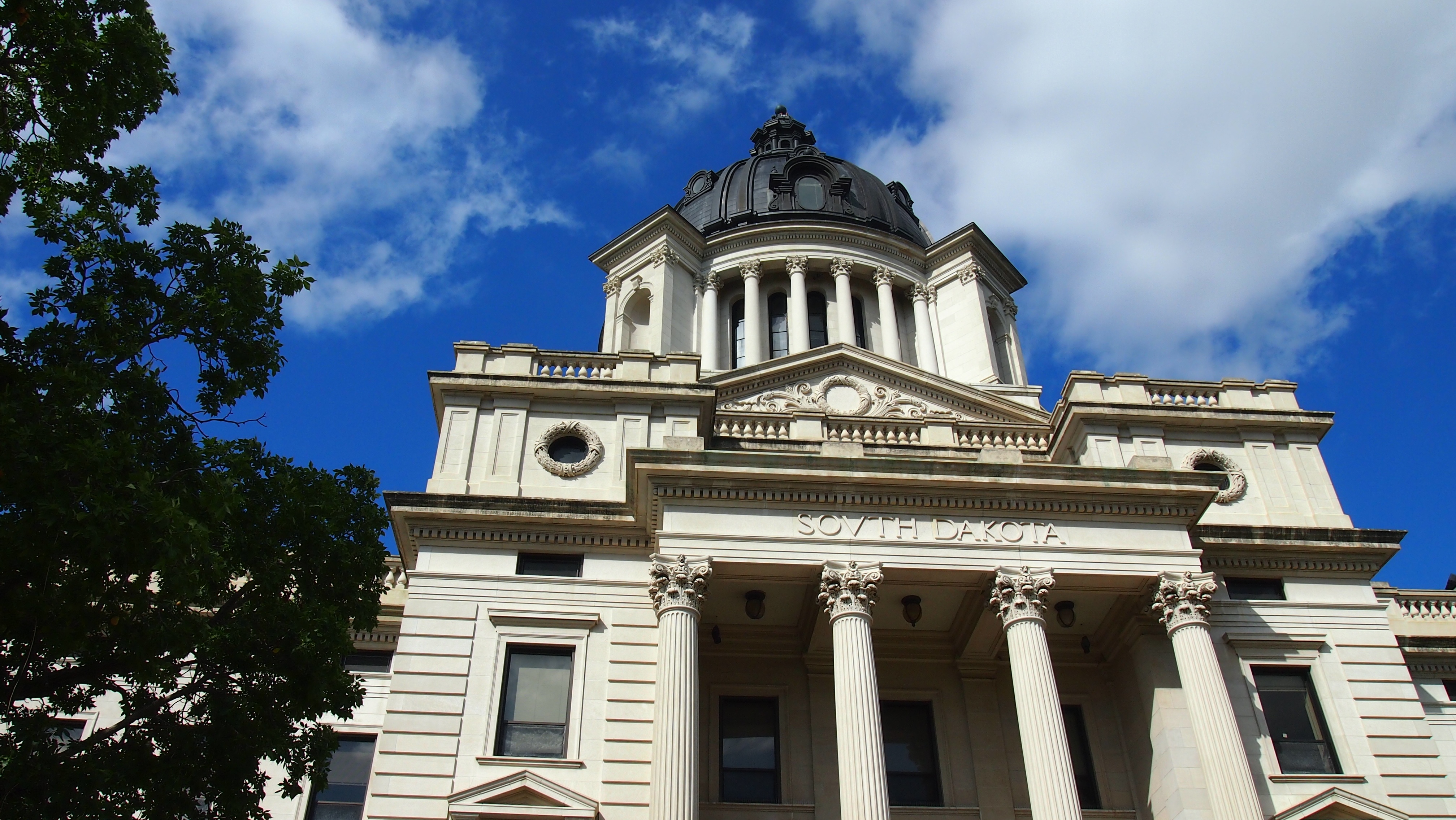
 South Dakota House Passes Resolution Acknowledging Boarding Schools

The South Dakota State Capitol building in Pierre, S.D.

PIERRE, S.D. — The South Dakota State House of Representatives passed a resolution on Tuesday, March 2, 2021, acknowledging and honoring the survivors of American Indian boarding schools. House Concurrent Resolution 6014 was introduced and sponsored by State Rep. Peri Pourier (D—Pine Ridge), who is an enrolled member of the Oglala Sioux Tribe. 

“This passage from the House of Representatives speaks volumes towards reconciliation,” said South Dakota Representative Peri Pourier to Native News Online. “The acknowledgement of the suffering and abuse while honoring survivors’ resiliency is long overdue.” 

The resolution was adopted in a 52-17 vote. 

Boarding schools for American Indian children began in 1860 when Methodist missionary James Wilbur established a vocational Indian Boarding School on the Yakima Indian Reservation in the state of Washington as part of the Yakama Indian Agency. 

KEEP READING

Wednesday, March 3, 2021

ADOPTEES: Petitioning a Court for Birth Records


We're excited to announce an upcoming online event that features adoptees who have successfully obtained court orders in their states to release their own records, including birth records and, in some cases, adoption agency records.

Join us on Sunday, March 21 as I talk with Rudy Owens and Courtney Humbaugh about their experiences in seeking court orders to release their own records in Michigan and Georgia. We'll discuss the ins and outs of the legal process, whether or how to work with an attorney, and what it looks like when an adopted person seeks a court order to get his or her own birth and adoption records.

I'll also chime in on my own experience in the District of Columbia as well as what the process looks like as an attorney in Minnesota and other states. - Attorney Gregory D. Luce

The event is Sunday, March 21, 2021, at 1pm Pacific/4pm Eastern. Details and registration are here

 LINK 

Vision Maker Media Celebrates Women’s History Month


...in March with Online Film Event and Panel Discussion Featuring Prominent Indigenous Women Leaders

LINCOLN, Neb., March 2, 2021 — Vision Maker Media (VMM) is marking its 45th anniversary in 2021 with a yearlong celebration of free “commUNITY” events, including thematic online film screenings, online virtual programs and more. To celebrate Women’s History Month in March, VMM will launch its first online program of 2021, a community-themed online film streaming event, titled “commUNITY: Herald Native Women.”  All March programs are free and open to the public but registration is required. The Cherokee Nation Film Office is a sponsor of VMM’s 45th anniversary events.

The March celebration will include a program of seven films — two short and five feature-length documentaries — all produced and/or directed by women, and a panel discussion organized in partnership with Americans for Indian Opportunity (AIO). Founded in 1970 by LaDonna Harris (Comanche), AIO advances, from an Indigenous worldview, the cultural, political and economic rights of Indigenous peoples in the United States and around the world.

The seven films will be available all month for streaming 24/7 at visionmakermedia.org. The films portray Native women in leadership, coming of age, and language revitalization. All are available worldwide. For more information about the films and to register, visit visionmakermedia.org.

“Making Matriarchs – Indigenous Values-Based Leadership Development,” a panel discussion featuring four Native women leaders who are among the more than 250 graduates of AIO’s Ambassadors Program, will take place via Zoom on Tuesday, March 16 at 7 p.m. CST. AIO’s Ambassadors Program is the only national leadership training that encourages Native leaders to weave their traditional tribal values in a contemporary reality in order to affect positive social change and advance human rights.

“Americans for Indian Opportunity is pleased to partner with Vision Maker Media during Women’s History Month as we showcase some of the many contributions of Indigenous women to American society,” says AIO Executive Director Laura Harris (Comanche). “Together, we can amplify Native voices, build awareness and understanding, and share a positive and contemporary Indigenous narrative.”

Panel participants include: Francene Blythe-Lewis (Diné, Sisseton-Wahpeton, Eastern Cherokee), executive director, Vision Maker Media (introduction); Laura Harris (Comanche), executive director, Americans for Indian Opportunity (moderator); Janeen Comenote (Quinault/Hesquiaht/Oglala), executive director, National Urban Indian Family Coalition (panelist); Brittany Schulman (Waccama Siouan), director of leadership initiatives, AIO (panelist) and Lindsay Early, deputy director, National Indian Child Welfare Association (panelist). The fourth panelist is unconfirmed at press time.

The panelists will discuss the importance of female leadership and the influence of matriarchy. They will talk about the work they do for social change and education, and how they utilize the teachings of the AIO Ambassadors Program and their “Medicine” (personal strengths and talents) for the good of their communities and humanity. 


About Vision Maker Media

https://youtu.be/WVZtMXX6ZB4 Vision Maker Media (VMM) is the premiere source of public media by and about Native Americans since 1976. Our mission is empowering and engaging Native people to share stories. We envision a world changed and healed by understanding Native stories and the public conversations they generate. We work with VMM funded producers to develop, produce and distribute programs for all public media. VMM supports training to increase the number of American Indians and Alaska Natives producing public broadcasting programs. A key strategy for this work is in partnerships with Tribal nations, Indian organizations and Native communities. Reaching the national public and a global market is the ultimate goal for the dissemination of Native public media that shares Native perspectives with the world. VMM is a nonprofit 501(c)(3) funded in part by the Corporation for Public Broadcasting (CPB). For more information, visionmakermedia.org, visionmaker@unl.edu or (402) 472-3522.


click

Contact Trace

Name

Email *

Message *

NO MORE UPDATES

GO TO:  https://blog.americanindianadoptees.com/  for updates and news. THIS BLOG cannot be updated...