BLOGGER changed, not allowing us to UPDATE this back-up blog

(UPDATED 726/2025) issues with blogger are preventing this

Tuesday, March 13, 2018

National database for First Nations adoptees | #60s Scoop Peer Support Line #NISCW

reblog: March 2018


60s Scoop


Eleanore Sunchild, a Cree lawyer who specializes in Aboriginal law and has represented Sixties Scoop adoptees, says, "a lot of times, they were so young they don't remember their family, they don't know what community they come from or even what tribe they belong to."

Sunchild says that loss of Indigenous identity coupled with separation from family is often devastating.

"The whole loss of being raised in a different home and not exactly knowing why, why they were removed — there's something wrong with them? Or was there something wrong with their family? And in a lot of instances it was just because of the policy that was in place at the time," she said.
Kicknosway says some people don't necessarily want to return to their communities.
She says they "only want to know they belong somewhere" and "have validation that they were alive" and that maybe someone missed them when they were taken away.
Author and Sixties Scoop survivor Raven Sinclair, an associate professor of social work at the University of Regina, has written extensively on the subject. She is in the midst of a five-year study with the aim of creating a national database of adoptees.
Her goal is to create a network that can provide practical, long-term support similar to what is available to some of the people affected by the residential school system.
Eleanore Sunchild
Cree lawyer Eleanore Sunchild, who represents survivors of the Sixties Scoop, says it's hard for adoptees to track down their biological families because many of them were so young when they were taken that they don't remember any details about their relatives or their community. (Connie Walker/CBC News)


"An adoptee you know here in town could call up a therapist who's been approved by us ... and get some help," she said. "For some, it's been a lifetime of abuse, so it's going to take a long time for them to recover."


NOT WORKING:  NISCW has set up a toll-free number to help adoptees searching for family connections and to provide peer support.

Meet Melissa Olsen | Stolen Childhoods

The Indian Adoption Project (IAP), which resulted in the out-of-home placement of many Native American children, lasted from 1958 through 1967. It emerged during the U.S. federal government’s ‘Termination Policy’ that sought to assimilate Native tribes into the larger American fabric “as rapidly as possible.” This meant removal of federal protection of tribes and tribal lands and the transfer of civil and criminal jurisdiction to the states, affecting laws around “social services, child welfare, probate, those kinds of civil matters,” Melissa says.


“You’re telling me this thing I’ve lived all these years has a history and that history includes some policy and that policy has been unknown to me? I’m a second year PhD student. To be at that level of study and for that to just be known, it still floors me.”
 Source: Meet Melissa Olson | Pollen - Pollen
Documentary 
Stolen Childhoods, an audio documentary written by Melissa Olson, Ryan Katz, and Todd Melby aired during the Listening Lounge and Truth to Tell. You can listen to the podcast below.

To support the project, visit their
GiveMN page.

Sunday, March 11, 2018

Indian Child Welfare Act attacks are a threat to tribes #ICWA


High Country News
This week, High Country News published a story by reporter Allison Herrera detailing a conservative think tank’s efforts to dismantle the Indian Child Welfare Act, an adoption law that turns 40 this year. The 1978 act was created to prevent the separation of Native children from their families and communities through adoptions, to “protect the best interests of Indian children and to promote the stability and security of Indian tribes and families.”
...
Groups like the Goldwater Institute that push for the elimination of ICWA are, intentionally or not, contributing to the continued attack on Native existence.
Such groups have attempted to capitalize on misinformation and stereotypes as a way to undermine ICWA. But ignoring the rights of tribes as both governments and as peoples to protect their culture not only ignores sovereignty, an all-too-common practice these days, it also overlooks, quite callously, generations of historical trauma.
Note from Trace Hentz
I am so grateful to Graham for writing this article and interviewing me and others on the topic of ICWA and keeping adoptees in the news. When I spoke to him, it hit me that I wrote the article for Indian Country Today in 2013 and very little has changed. other than Goldwater trying to end the important much-needed federal law Indian Child Welfare Act.

Right now, ICWA is the law, but legal challenges against it continue.

Monday, March 5, 2018

Grandmothers on front lines of opiate crisis need to be heard and helped #ICWA

In Indian country, opiates and heroin are called dark spirits.

“...When you are in the throes of opiate addiction, it now owns your soul,” he added. “Pharmaceuticals was the gateway to addiction for our elders, and now some are experiencing addiction at 60, 70, 80 years old who had led a clean and traditional life but were prescribed without being told they were going to have a dependency problem.”

Meanwhile, the rate of drug-related out-of-home child placements in general in Minnesota has skyrocketed.

Of the 7,595 children placed into out-of-home care in Minnesota in 2016, parental drug abuse was cited as the primary reason in nearly 28 percent of cases. Of those 1,478 children covered under the Indian Child Welfare Act, 588, or about 40 percent, were removed for the primary reason of parental drug abuse, according to Department of Human Services data.
Nearly 90 percent of ICWA children, regardless of the reasons for removal, were placed with a relative while in out-of-home care.

READ: Rosario: Grandmothers on front lines of opiate crisis need to be heard and helped – Twin Cities

Wednesday, February 28, 2018

#AdopteeArmy | A Generation Removed #ICWA


Here's an older post (2014)  still relevant today:
LINK

An excerpt:


Margaret Jacobs’s new book, A Generation Removed, provides a thoroughly documented and heart wrenching account of good intentions gone wrong, both in education and in child welfare. Jacobs’s specialization is women’s history, particularly the interactions between Indigenous and white women in settler nations such as the United States, Canada, and Australia. I appreciate Jacobs’ stance as a scholar all the more because she is a white feminist historian who is able to cast a critical eye on the contradictory roles often played by women of European descent. It was from reading Jacobs’s earlier work that I first encountered the Maternalism movement: the proto-feminist reformers of their day who asserted female authority and expertise (before American women could vote or hold elected office) into the public spheres usually reserved for male leadership.

Jacobs’s previous work, White Mother to a Dark Race: Settler Colonialism, Maternalism, and the Removal of Indigenous Children in the American West and Australia, 1880-1940, is a massive scholarly tome. I drew on this work for my keynote remarks to the 2013 KAAN (Korean American Adoptee Adoptive Family Network) conference and at AAC (American Adoption Congress) 2014. White Mother to a Dark Race is a valuable resource, particularly for researchers with an interest in the origins of public school teaching and the social work profession. Having said that, White Mother is quite weighty and not nearly as accessible to lay readers as her latest book, A Generation Removed.

Jacobs’s new book provides highly personal accounts that help readers to make sense of the social reform experiments in Indian child welfare and education from the perspective of the Native women who lost their children in the process.

Those of us wondering what can be done in contemporary times to halt the widespread practice of family disruption still perpetuated by the adoption industry will gain inspiration from the chapter explaining how the Indian Child Welfare Act came into existence in the 1970s. This largely untold story may also inspire activists who want to interrupt the vulture-like “baby lifts” in impoverished communities around the globe that search for “orphans” for the marketplace of adoption. Readers will learn not only the faulty reasoning that leads popular opinion-shapers such as television’s Dr. Phil (who sympathized with the Capobiancos, the adoptive parents in the Baby Veronica case) to characterize ICWA as a racist law. Readers will also learn how the valiant efforts of a committed group of researchers, child welfare practitioners, and first/birthmothers combined to create an effective coalition to get ICWA passed in order to protect Indian families.

Key to that process, as Jacobs documents meticulously through archival records and interviews with key players, was the construction of a counter narrative that challenged the public perceptions of Indian mothers as unfit parents and drunk welfare dependents who didn’t love their children.  While not denying the problems plaguing many Native communities, such as alcohol addiction, child neglect and abuse, and poverty, Jacobs offers a more nuanced and complete portrait of Indigenous families and their struggles to raise children by maintaining extended family ties, drawing on the cultural traditions that had been systematically attacked dating back to the Great Indian Wars. The struggle for extended family integrity is all the more remarkable and poignant, given the subsequent onslaught of well-meaning educators in the boarding schools that for a lengthy period preached the inferiority of Native ways and tried to replace them with superior Euro-American, Christian ways.


Another way of putting it is this: There is no “post-adoption” until we have ended adoption, once and for all. Just as the boarding school experiment for Native American children has been discredited as genocidal, just as the Indian Adoption Program has been disbanded (you can read about its rise and fall in A Generation Removed), so too, I anticipate that the transracial and transnational adoption experiments will be replaced by a much more just and humane practice that is less about the business of selling children (and in the process, disrupting extended families of color), and more about ensuring justice and care for the most needy and vulnerable—namely, poor women of color and their children around the world.

Another EXCELLENT review of A GENERATION REMOVED

John Raible has written a breathtaking article on how "child removal" affects us adoptees both past and present...It is true Margaret Jacobs has broken new ground in history with her new book A GENERATION REMOVED, and it's brilliant. It takes time to digest. After editing and writing four books on this topic myself, we have made HUGE STEPS in creating awareness of the Indian Adoption Projects and Programs that were genocidal in intent and purpose... We are living proof as American Indian Adoptees that we are resilient....Trace

Sunday, February 18, 2018

Adoption is trauma (tweet)


 I am so sorry to read a tweet like this but it is the reality we face as adoptees... Trace

Monday, February 12, 2018

South Dakota's Federal #ICWA Ruling Heads To 8th Circuit Court of Appeals

The Indian Child Welfare Act lawsuit filed in Rapid City's federal court almost five years ago is going to the Eighth Circuit Court of Appeals. A three-judge panel is hearing oral arguments in St. Paul, Minn., on Tuesday, Feb. 12.

In March 2013, the Rosebud and Oglala Sioux Tribes, as well as tribal parents, brought suit against state officials in Pennington County. They claim the process for handling abuse and neglect cases routinely violates ICWA and due process rights.

After two years of litigation, U.S. District Judge Jeffrey Viken found for the plaintiffs and ordered changes in the way emergency placements are handled. Immediate appeals were filed by the Seventh Circuit presiding judge, the Pennington County State's Attorney, and the state Department of Social Services. SDPB's Victoria Wicks has this story.


LISTEN AT LINK: South Dakota's Federal ICWA Ruling Heads To 8th Circuit Court of Appeals | SDPB Radio

Friday, January 19, 2018

Native Americans Confront the Legacy of #Adoption

Groups help ease transition back into families, tribes


Conrad Eagle Feather, a Sicangu Lakota, was only three when he was taken from the Rosebud Indian Reservation in South Dakota and adopted by a non-Native farming family in the state of Nebraska. His three sisters were removed to separate families.
He recalls a childhood with little joy.
“They used us for farm labor,” he said, detailing a list of chores that began before dawn and continued until bedtime. He said he still bears the scars of physical abuse.
“For every sin I had committed according to the Bible, I got one strike with whatever they had in their hands at the time — a garden hose, a broom handle, a wire hanger,” he said. “And all the time, they used to tell me, ‘Who knows what would have happened to you if we hadn’t saved you?’”

READ STORY: Native Americans Confront the Legacy of Adoption

Saturday, January 6, 2018

Indiana to open their adoption records July 1st

Indiana is set to open their adoption records on July 1st, and this will be of particular interest to our Native American community. As you may know, over a million children were routed through Chicago between 1950-1970 and many of them ended up in Indiana, having been placed in non-Native foster and adoption settings.

Please let your readers know there will be a conference open to everyone that will assist people in filling out the forms to request their birth information, hosted by the Indiana Adoptee Network http://indianaadopteenetwork.org/.  Needless to say, we are counting the days so that hopefully many of the American Indians/Native Americans living here will be able to find their rightful families and reconnect with their culture and heritage.

Thank you,
--

Kerry Steiner
Professional Genealogist
Aspen Genealogy
Creating Affordable Family Trees Since 1992
Association of Professional Genealogists
National Genealogical Society
Indiana Genealogical Society
P.O. Box 17491  ~  Indianapolis, IN 46217
(317) 370-6781

Thursday, January 4, 2018

Victims Sought: Canada Awards $635 Million to Stolen Native Children #6os Scoop

YouTube Screen Capture
Chief Marcia Brown Martel is a lead claimant in the 'Sixties Scoop' court settlement with Canada. Under the settlement, First Nations and Inuit children who were taken from their homes between 1951 and 1991 will be eligible for personal compensation.

Montreal Sixties Scoop victims from 1951 to 1991 can seek assistance from National Indigenous Survivors of Child Welfare Network regarding settlement

In October of 2017, the federal Government of Canada reached a settlement with the First Nations victims of the “Sixties Scoop.”  The program gained its nickname when child welfare agencies removed thousands of indigenous children from their communities primarily in the 60’s and placed them with foster families or adopting families.
After years of trying to fight against the Canadian federal government, Lead claimant Chief Marcia Brown Martel won a massive victory when the court awarded a payout of $800 million Canadian / $635 million American, to about 20,000 victims.

How to seek compensation and / or support as a “Sixties Scoop” survivor
Colleen Cardinal, (Plains Cree from Saddle Lake Cree Nation) one of the co-founders of the National Indigenous Survivors of Child Welfare Network (NISCW) told Indian Country Today that the NISCW is a great resource for those seeking compensation and / or support as a “Sixties Scoop” survivor.
In addition to offering services such as leadership, support and advocacy for those affected by Indigenous child removal systems in Canada, the NISCW is currently offering a specific “Sixties Scoop” Peer Support Toll Free Number (1-866-456-6060.)

According to the NISCW website:
The peer support line will provide listening and support services to Indigenous 60s scoop survivors who experienced displacement, loss of culture, due to being adopted or fostered in non-Indigenous households across Canada, the U.S.A.
The Peer Support Line will provide safe, respectful and non-judgemental confidential listening.It will link Survivors to approved services across Canada to support their emotional, cultural, spiritual and mental needs.
Services include:
  • Provide direction on how to access government information related to their adoption and other government documentation.
  • Provide direction to support their repartition efforts that include finding families and communities.
  • Provide information and direction on how to attain Indigenous programs and services, Treaty Indian Cards, Metis memberships and Nunavut Land Claims Agreement services for Inuit.
  • Provide one-on-one talks with Survivors to listen to stories, connect them with other Survivors, or Sixties Scoop organizations across Canada.
For more information on the National Indigenous Survivors of Child Welfare Network visit www.NISCW.org.


READ: Victims Sought: Canada Awards $635 Million to Stolen ‘Sixties Scoop’ Native Children - Indian Country Media Network

Sunday, December 17, 2017

Keep Calm and Decolonize: 5 short films


Watch all five films, curated by Jesse Wente, now: http://cbc.ca/decolonize

A young woman, guided by Spider Woman, must overcome colonial history and education to find herself. Michif director and animator Amanda Strong combines puppets and stop motion in this arrestingly beautiful short.

Keep Calm and Decolonize: Flood https://www.youtube.com/CBCArts


Thursday, December 14, 2017

Two Worlds: new and updated!

BUY NOW http://amzn.to/2CjtyRr
For Immediate Release


GREENFIELD, MA (2017) Tragic, true, heartbreaking, astonishing... those words have been used to describe the anthology Two Worlds, the first book to expose in first-person detail the adoption practices that have been going on for years under the guise of caring for destitute Indigenous children in North America.

What really happened and where are these Native children now? 

The new updated Second Edition of TWO WORLDS (Vol. 1), with narratives from Native American and First Nations adoptees, covers the history of Indian child removals in North America, the adoption projects, their impact on Indian Country, the 60s Scoop in Canada and how it impacts the adoptee and their families.

"This book changed history," say editor Trace Hentz. "There is no doubt in my mind the adoption projects were buried and hidden... we adoptees are the living proof."

The Lost Children Book Series includes: Two Worlds, Called Home: The Roadmap, Stolen Generations, and In The Veins: Poetry. The book series is an important contribution to American Indian history.

Trace Hentz (formerly DeMeyer) located other Native adult survivors of adoption and asked them to write a narrative for the first anthology. The adoptees share their unique experience of living in Two Worlds, surviving assimilation via adoption, opening sealed adoption records, and in most cases, a reunion with their tribal relatives. Indigenous identity and historical trauma takes on a whole new meaning in this adoption book series.

Since 2004, award winning journalist Hentz was writing her historical biography “One Small Sacrifice: A Memoir.” She was contacted by many adoptees after stories were published about her work. More adoptees were found after “One Small Sacrifice” had its own Facebook page and the American Indian Adoptees blog started in 2009. In 2011, Trace was introduced to Patricia Busbee and asked her to co-edit the first edition of Two Worlds.

As Hentz writes in the Preface, "The only way we change history is to write it ourselves." This book is a must read for all that want the truth, since very little is known or published on this history.

"I was asked to update this book by one adoptee contributor and I added a new narrative by Levi Eagle Feather, and more information on the 60s Scoop. Please tell your friends and other adoptees," Trace Hentz says. "One day in America, we Lost Children will have our day in court."

Patricia Busbee is writing a new chapter on her adoptee reunion in the anthology CALLED Home in 2018.

READ A FREE PREVIEW

On Amazon, Kindle, Kobo... For links and more information, to order copies, bulk orders, etc:  www.bluehandbooks.org

Wednesday, December 13, 2017

Permission? #TRC


Survivors, write your stories. Write your parents stories. Write the elders stories. Do not be swayed by the colonizers to keep quiet. Tribal Nations have their own way of keeping stories alive.... Trace

This Reconciliation is for the Colonizer


Indigenous Motherhood
June 13, 2017
By Andrea Landry

“Indigenous based child-rearing in today’s generation resides in watching the restoration of unfaltering kinship in our Indigenous family systems unfold and allowing that to reside in the raising of our children with the knowing of who they are, and where they come from, wildly and unapologetically.”


Artwork by: Votan Henriquez

excerpt:

This reconciliation is for the colonizers.
This is a time of pseudo-reconciliation for continued colonization.
This reconciliation is colonization, disguised with dollar signs and white-skinned handshakes.
This reconciliation is not our reconciliation.
Because.
The only reconciliation that exists for us, as Indigenous nations, is the reconciliation we need to find within ourselves and our communities, for agreeing and complying to this madness for so long.
The only reconciliation that exists for us, is the reconciliation needed to forgive our families, our loved ones, for acting like the colonizer.
The only reconciliation we need. Is a reconciliation that doesn’t involve white skinned handshakes and five dollar handouts for our lands.

READ HER STATEMENT

Saturday, December 9, 2017

We were not supposed to ‘be’ Indian

Adoptee Susan Harness with her younger brother James Allen in 2012.

An anthropological search for belonging and identity


At eighteen months old, Susan Harness (M.A. cultural anthropology ’06, M.A. creative nonfiction ’16) was removed from her home because of neglect. Notes from the social worker document a hungry infant with infected and bleeding mosquito bites and a diaper that hadn’t been changed in days. Harness and two of her siblings had been left in the care of their six-year-old sister by a mother who regularly disappeared for extended periods of time.

Family and community members on Flathead Indian Reservation in Montana were unable to help since they did not have the economic resources. As a result, in 1960, like over 30 percent of American Indian children in that time period, Harness was adopted into a non-American Indian home.

Transracial adoption

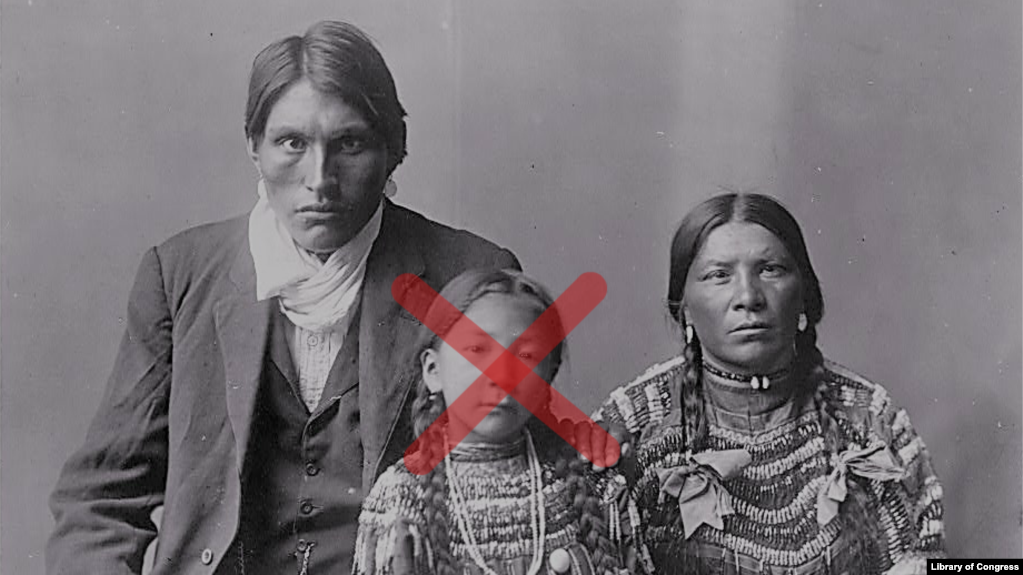
The Indian Adoption Project was a small study interested in understanding the impact of transracial adoption on American Indian children. From 1958 through 1967, researchers spoke with a small subset of American Indian children who were adopted by white families. Proponents of this practice argued that this was an improvement over previous policies which resulted in difficulties placing American Indian children into homes. Harness’ experience and later academic research document a unique perspective on this subject – that of the child adoptee.

“The primary purpose of placing over a third of American Indian children with white families was assimilation,” said Harness. “My adoption, like nearly every other transracial adoption, was a closed adoption. This means our names were changed; our families, our tribes and nation, erased. Our entire identity was kept locked away in files that could be opened only by court order, trusting you could find a sympathetic judge. Therefore, finding our way home would be almost impossible. That’s how it was meant to be. We were not supposed to ‘be’ Indian, we were supposed to become members of the dominant society, with full and complete access to the American Dream.”

"We were not supposed to ‘be’ Indian, we were supposed to become members of the dominant society, with full and complete access to the American Dream."
– Susan Harness (upcoming book Bitterroot: A Salish Memoir of Transracial Adoption, out fall 2018 from University of Nebraska Press.)
keep reading

Susan contributed a story to the anthology STOLEN GENERATIONS: SURVIVORS OF THE INDIAN ADOPTION PROJECTS AND 60S SCOOP   

Thursday, December 7, 2017

Ontario Adoption Records | Tips to Search

CLICK LINK

Adoption records opened for adoptees and natural parents
in
Ontario on June 1st, 2009.

Records Prior to Adoption Act 1921

See Guardianship and Adoption Records – Ontario Archives
http://www.archives.gov.on.ca/en/access/documents/research_guide_223_guardianship_and_adoption.pdf


Once you have obtained the names of your natural parents or the child you lost to adoption, some useful tools for your search include:
  • Searching for names using Google or Facebook
  • Looking in online phone directories including www.canada411.ca and www.pipl.ca
  • Your original birth record indicates where your natural mother and father were born. You can use the phone directory for that city to contact them or other family members to find out where they might currently be living.
  • Henderson Directories (“City Directories”) for the city you were born in, or in which your natural parent was born, and for occupations.  They can also provide relevant older information on names, addresses, and occupations dating back to 1905. Many cities across Canada had these directories in addition to phone-books. Check local libraries and online sources (e.g., University of Alberta) for copies.
  • Check adoption notices in the newspaper after date of completion of adoption.  Also check birth notices that do not mention the time of birth or doctors involved, these are sometimes disguised adoption notices.
  • Check birthday wishes in the paper
  • Peruse highschool and yearbooks for appropriate years
  • Check Obituaries
Many use Facebook and other social media to locate relatives also... Trace

Tuesday, December 5, 2017

What do you call THIS?


By Trace Hentz  (adoptee and editor of the book series Lost Children of the Indian Adoption Projects)


What do you call it when a woman has a baby and a social worker/ judge/ government has pre-judged her, then decides to take that baby, then it happens again and again… each and every time she gets pregnant. What if this happened 5 times, or 9 times? What do you call that?

Debby, Mitzi, Elizabeth (and countless other Native adoptees) your mothers lost you and other children.  What do you call this?  How do you tell people or explain to people a history like this?   
What did they call your mother? Did they demean her, label her crazy, to justify this?

How does anyone define genocide?  What is Human Trafficking?  Choosing one segment of the population for this treatment? Placing American Indian First Nations Indigenous babies with a non-Indian family? This had a purpose. The government paid for this. And until the Indian Child Welfare Act, this decimated tribes to near extinction.

We know with slaves, children were sold. Families separated. Rebellions quashed. Resistors hung from trees. Millions of dollars were made selling human life, with fortunes created, mansions built, and enough wealth for generations.

Who in their right mind would find this acceptable?

What do you call taking babies from their own mothers? Do you give this a name, like adoption. Do you market it as something else? How do you sell people on this? Why did people accept this? 

How did mothers survive losing their children? How do children survive without them?

If this feels like slavery and heinous and insanity and genocide and cruelty, that’s because it is. It is all this.


I will be publishing a new updated second edition of TWO WORLDS this month!  Please tell your friends and other adoptees.  We'll post more on this blog when it comes out.  Please get in touch if you are an adoptee and still searching. Pray for mothers across the planet that they can keep and raise their children.

Friday, December 1, 2017

Latest Development in Florida #OBC Access

We are writing to update you on legislative developments in Florida, specifically around HB357/SB576, which we have all joined in opposing.

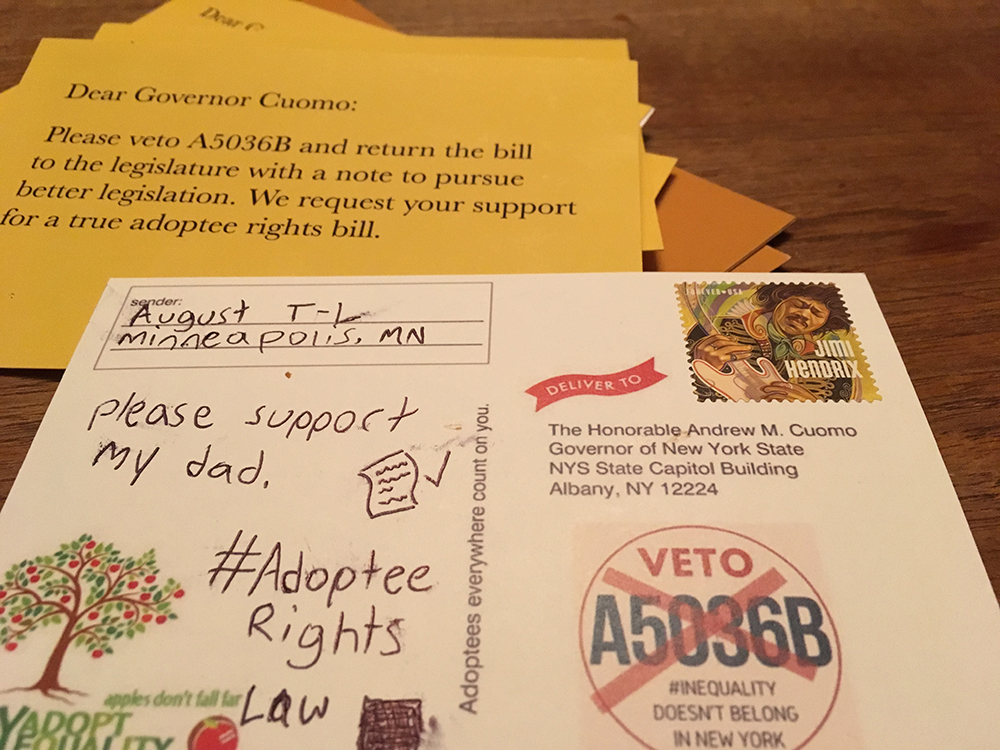
Earlier this week, Rep. Barry Russell, a Democrat from Broward County, filed a clean OBC access bill with a genuine contact preference form (HB821). We are obviously supportive of clean bills. We are, however, cautiously moving forward with support of HB821 at this time. It appears certain that the new bill was filed at the request or direction of Representative Richard Stark, the sponsor of the bill that we currently oppose. With the recent history of two widely different New York OBC access bills being simultaneously introduced and sponsored by the same legislator---with disastrous results for adoptees---we are concerned that the new bill in Florida is not genuine and is instead being used solely to obtain a hearing on Representative Stark’s bill. Representative Stark has represented that at least one committee assigned to his bill will not approve it without adding redaction provisions.

For this reason, we have expressed guarded support for the new bill. At the same time, we are working with Florida constituents to determine whether the current sponsor of the clean bill is committed to the bill and to adoptee rights generally. We will specifically ask him if he is willing to work with supporters in assuring passage of HB821 without discriminatory amendments.

The new bill, which does not have a required senate sponsor, can be found here. We will let you know more details once we talk with Representative Russell.

As always, thanks for your support!

Gregory Luce • Marley Greiner • Susan Friel-Williams + all 26 organizations in unity

Adoptee Rights Law Center
Adoptee Rights Campaign
Adoption Rights Alliance (Ireland)/The Philomena Project
ALARM Network
American Adoption Congress
Banished Babies of Ireland
Bastard Nation: The Adoptee Rights Organization
Concerned United Birthparents
The Donaldson Adoption Institute
National Center on Adoption and Permanency
The National Korean American Service & Education Consortium (NAKASEC)
Saving Our Sisters
Trace L. Hentz, author, Lost Children of the Indian Adoption Projects series
Access Rhode Island
California Open
Canada Open
Equal Access Oklahoma
Equality4Adoptees (Texas)
Florida Adoption Initiative for Reform
Indiana Open
Michigan Open
Minnesota Coalition for Adoption Reform
Missouri Open
Nevada Open
New York State Adoptee Equality
Post-Adoption Center for Education and Resources (PACER)

From:
Gregory D. Luce
Adoptee Rights Law Center PLLC
Twitter: @adopteelaw

click

Contact Trace

Name

Email *

Message *

NO MORE UPDATES

GO TO:  https://blog.americanindianadoptees.com/  for updates and news. THIS BLOG cannot be updated...