BLOGGER changed, not allowing us to UPDATE this back-up blog

(UPDATED 726/2025) issues with blogger are preventing this

Thursday, June 8, 2017

Christians Only: The New Anti-Native Adoption Law in Texas

The Freedom to Serve Children Act, an anti-Native adoption law in Texas, protects the rights of child welfare providers to discriminate.

This law is unlikely to create problems for Indians who are willing to hew to the Christian line, but Texas is home to lots of Indians who follow the Native American Church. It appears to me from the outside that NAC people are as Christian as Mormons are, but I doubt that most Christians in a position to place children for adoption would see it that way, or know the difference between peyote and heroin.
Then there are always some Indians still doing their best to follow traditional beliefs. (Where we say “traditional,” many Christians who demanded this bill would say “heathen.”) Other Indians let go of their traditional beliefs but still did not buy what the missionaries were selling. They end up like a lot of white people: not atheists or even agnostics but rather “unchurched.”

Source: Christians Only: The New Anti-Native Adoption Law in Texas - Indian Country Media Network

Wednesday, June 7, 2017

American Indian Children Still Removed From Homes ...

REBLOG:  AMERICAN INDIAN ADOPTEES: American Indian Children Still Removed From Homes 


By LEX TALAMO

SOURCE (2015)
Almost 40 years after the Indian Child Welfare Act (ICWA) passed,
American Indian children are still being removed from their homes in
highly disproportionate numbers– at a rate almost three times higher
than any other ethnicity, excepting African American children.
Minnesota leads the list of states with the worst rates of
disproportionate removal– where American Indian children are overly
represented in the foster care system– according to a June 2015 report
from the National Council of Juvenile and Family Court Judges.  Other
states with high numbers of disproportionate removal include Nebraska,
Iowa, Idaho, Wisconsin, Washington, South Dakota and Oregon.

Even in states without dramatic removal rates– like Arizona and New
Mexico– many American Indian children find themselves removed from their
families and placed in group homes, treatment centers or foster care.

In McKinley County, New Mexico,  American Indian children make up 73
percent of all children in foster care, according to a 2015  third
quarter report from the New Mexico Children, Youth and Families
Department (CYFD).  And in Arizona, over 1,300 American Indian children
were in the foster care system as of March 31, 2015, according to a
Department of Child Safety Child Welfare Report.

The Indian Child Welfare Act of 1978 applies to any child of American
Indian descent who is an enrolled member or eligible for enrollment in
any federally recognized tribe. When an American Indian child enters
state custody, the state must contact the child’s tribe, and the tribe
has the right to transfer the case to tribal court or to participate in
court proceedings.

In order to help American Indian children stay connected to their
tribal cultures and identities, ICWA also established a placement
preference that starts with the child’s extended family and clan
relatives and then progresses to enrolled members of the child’s tribe
and enrolled members from any tribe– with placement of the child in a
non-Indian family as a last resort.

“Any child who might be Native American, they have a [cultural]
identity,” said Regina Yazzie, Program Director of the Navajo Nation
Division of Social Services.  “It’s a benefit.”


Yazzie added that across the country, state agencies struggle to find
American Indian foster families for children.  Finding placement
families on reservation land can prove equally challenging.
Data from the Children, Youth and Families Department of New Mexico
shows there are currently 43 American Indian foster care providers who
have 79 placements available– nowhere near enough for the 262 American
Indian children in New Mexico’s foster care system.  Melissa Otero from
AdoptUsKids.org also said through an email correspondence that less than
1 percent of all AdoptUsKids placement families identify as American
Indian.
When speaking with the Navajo Post, several tribal members mentioned
hardships on reservations that negatively impacted families’ ability to
foster– including poverty, poor housing, poor mental health care,
suicide, and addiction.
“Part of what’s going on [is] drug and alcohol numbers are sky high,”
said one tribal member, who wished to remain anonymous in order to be
able to speak freely. “There are not a lot of healthy families. There
are tons of families that care, but it takes structure, it takes money
[to foster], and so many families are overwhelmed with the day to day
living, how could they bring another child into their home?”
For the San Carlos Apache Tribe, methamphetamine poses a particular
devastating problem.   Social services Director Terry Ross said that the
reservation currently has an “epidemic of mothers with meth-exposed
babies.”
“We try to work with the family, but when mothers are addicted to
meth… it’s hard,” Ross said. “We can’t make people do anything. They
have to want to change for their child.”
Many tribes offer social services like counseling, parenting classes,
detox centers and emergency supplies to American Indian families in
need. But representatives from several tribes mentioned that funding is
limited and resources are stretched thin, so that American Indian
children continue to find themselves in foster care– where many undergo
significant trauma and loss of identity when growing up separated from
their tribes, communities, and cultures.
A Sense of Belonging

Sandra White Hawk, an enrolled member of the Sicangu Lakota of the
Rosebud Sioux Tribe,  was adopted into a white missionary family when
she was 18 months old in the days before ICWA. The only Indian girl in
her community, she grew up with a sense of being “different.”

“My adoptive mother constantly reminded me that no matter what I did,
I came from a pagan race whose only hope for redemption was to
assimilate to white culture,” wrote White Hawk, now executive director
of the First Nations Repatriation Institute, on her website.

White Hawk added that people in her community were ignorant of her
culture when she was growing up; they would ask her to do rain dances or
give war whoops.  Susan Devan Harness, a member of the Confederated
Salish and Kootenai Tribes, was also adopted into a non-Indian family at
18 months. Harness said she was called “Squaw Girl” growing up and that
she had trouble finding dates in high school because her male
classmates’ mothers believed stereotypes that American Indian women were
promiscuous– and that dating one would get their sons in trouble.

“I have had privileges,” said Harness of her adoption. “Living in a
nice neighborhood, going to college, I have a Master’s Degree…a place at
the table. But I have paid a huge price for those privileges."

As part of that price, Harness said she was always fighting for a
place of belonging, and that many adoptees exist in an “in between
place” between their tribal communities and their adoptive families.
White Hawk’s website states that many adult adoptees also show traits of
survivors of trauma: anxiety, impulsivity, nightmares, guilt, and
unresolved guilt– and that much healing of these issues takes place for
adoptees when they reconnect with their tribal identities or “come
home.”

“In the beginning I didn’t see the importance of why anyone would
want to know my story as an adoptee because I didn’t understand the
prevalence,” said White Hawk. “I get it now.”

White Hawk added that reconnecting with her biological family and
tribe later in life allowed a “whole new part” of herself to awaken. 
She sees similar transformations in the adoptees she works with– as does
Karen Vigneault, a librarian who uses her research skills to search
genealogy records and connect adoptees with their families.

Vigneault said that adoptees face many obstacles back-peddling
through their pasts: opening sealed court documents, misspellings in
their ancestors’ names or lack of names which makes tracing families
difficult, and apprehension at returning to their communities and
families decades later. Despite the challenges, Vigneault provides her
help to adoptees free from charge.

“If Creator has people asking me for help, I can’t charge them for
that,” Vigneault said. “To help them come home… it should be a free
ride.”

A 2009 report published by the Annie E Casey Foundation found that
resilience– the ability to bounce back after a traumatic or difficult
experience– increases dramatically for American Indian individuals who
have seven protective factors in their lives, including: a sense of
belonging to a culture, spirituality, connections to the tribal language
and extended family, a sense of humor, a mindset of forward thinking or
“moving forward to the seventh generation,” and what authors Charlotte
Goodluck and Angela Willeto describe as “responses from the culture”–
which could include beadwork, drumming, sweat lodge, talking circles,
smudging, pow wows and other ceremonies.

The association between resilience and strong rootedness in tribal
culture have significant implications for American Indian children
within the foster care and adoption systems today.

Tania Valdez, associate director of the voluntary treatment foster
care program La Familia-Namaste, Inc in New Mexico, described the change
she saw occur in a young woman in care when an ICWA worker sent her
music and books from her Oklahoma tribe.

“I think it plays a tremendous role in her cultural identity. It’s
part of who she is,” Valdez said. “She’s removed from her community, but
it gave her a piece of her culture, and she embraced that.”

Nikki Kull, executive vice president of The Ranches in New Mexico,
said that children in care struggle to transition from one culture to
another, regardless of their race.

“We had some siblings from the Yuni tribe who were very connected to
their culture… and it was hard for them to be separated from their
culture. It’s heart-breaking to see,” Kull said. “I desperately
understand the need for kids to stay within their culture, but the fact
remains there aren’t enough homes.”

The Indian Child Welfare Act Today


Several judges who spoke with the Navajo Post said that ICWA was
meant to be a gold standard for family law cases– that active efforts to
work with families before removing children from their homes would be
in the best interest of all children regardless of their race.

But lawsuits in several states– Minnesota, Arizona, Oklahoma and
Virginia– challenge the constitutionality of ICWA. Common arguments
include that the Act’s language discriminates against American Indian
children on race alone and that the Act violates due process and privacy
rights guaranteed by the Tenth and Fourteenth Amendments.

Judge Tim Connors, who teaches at the University of Michigan Law
School and helps train new judges in handling ICWA cases, said that
family law is mainly an issue for state courts, so that applying  ICWA– a
federal law– to American Indian family cases is a “foreign concept” for
many judges.  But he added that American Indian children are
particularly harmed when removed from their families.

“Data shows the trauma when we separate children from their
communities and their culture and their lineages,” Connors said. “And it
is particularly harmful for Native American children.”
Judge William Thorne, vice-president of the National Indian Justice
Center and a former member of the Board of Trustees for the National
Council of Juvenile and Family Court Judges, said that while some judges
and lawyers see ICWA as a violation of their code of ethics regarding
fairness, ICWA was created with American Indian children’s best interest
in mind.
“In tribal communities, if you cut a child off from their family,
grandparents, aunts and uncles, cousins, that really is almost active
abuse against that child, because in Indian communities things happen
based on relationships,” Thorne said in a video produced by the
Mississippi Administrative Office of Courts.
Judge Leonard Edwards, a retired judge who served for 26 years as a
Superior Court Judge and six years as Judge-in-Residence at the Center
for Families, Children & the Courts, stated that the adversarial
processes prevalent in courts– where two or more sides argue their cases
and then a “winner” is declared– go against traditional American Indian
practices of resolving conflict.  Edwards said that the intention
behind ICWA was to help make sure that all of an American Indian child’s
resources were being considered.
“Social workers can be creative,” Edwards said. “It’s not mum and
dad, it’s the extended family and community. It’s different [in tribal
communities] and that can be difficult for our judges to understand.”
While ICWA has been acknowledged by many judges as a difficult law to
understand and implement, tribes across the country insist keeping
American Indian children connected to their tribes is of utmost
importance.
“[If not] They lose the language, the culture, the integrity of what
it is to be Native American and the values system,” said Doris Bailon,
director of Social Services of the Santo Domingo Pueblo.
Sandra White Hawk and Susan Devan Harness had a suggestion to reduce
the number of American Indian children entering the foster care system:
providing “front end services.”
“Instead of the money going to clothe and feed kids in foster care,
have that money going to strengthen Native families and communities,”
Harness said.  

The Invisible Indian

The Invisible Indian

It’s strange to me how people always want me to be an “authentic Indian” when I say I’m Haudenosaunee. They want me to look a certain way, act a certain way. They’re disappointed when what they get is…just me. White faced, red haired. They spent hundreds of years trying to assimilate my ancestors, trying to create Indians like who could blend in. But now they don’t want me either. They cant make up their minds.
They want buckskin and face paint, drumming, songs in languages they can’t understand
recorded for them- but with English subtitles, of course. They want educated, well-spoken,
but not too smart. Christian, well-behaved, never questioning. They want to learn the history
of the people, but not the ones who are here now, waving signs in their faces,
asking them for clean drinking water,
asking them why their women are going missing,
asking them why their land is being ruined.
They want fantastical stories of Indians that used to roam this land.
They want my culture behind glass in a museum.
But they don’t want me.
I’m not Indian enough.
They say I’m fake, but they don’t realize that every time I have to write and speak to them in English, the language of the colonizer, I am painfully aware of what I’ve lost. So I sneak around quietly, gathering pieces- beads here, a word there, a dance, a song, until I’m strong enough to stand tall and tell them who I am.
They tried to make Indians like me who could blend in.
My great grandmother moved her children out of their community into the big city of Toronto to try hid in plain sight.
Keep it.
Hush.
Hush.
I will break the silence.
I am clinging to every piece of my mom, my grandma, my great grandma that I have. I am clinging to any bit of tradition that found its way through the cracks, like a plant growing towards the light.
I have always been in love with these small pieces of resistance.
My great grandmother told my dad to bury my umbilical cord in the dirt behind my home, Now a trees grows from that piece of me. I am connected.
When my aunties gather around tea I will absorb every story they tell.
I will stare at photos of my Akshotha until they speak to me.
I will scavenge all the bits of knowledge from here and there and pull them together.
Close to my heart.
Cover them.
Protect them.
Bundle.
I will knit with my grandma’s needles. The only piece of her I have.
I will knit until I know her.
I will forgive. Forgive my mom, her mom, and her mom, for what they couldn’t teach me. They
always did the very best they could.
I will hold on for dear life.
I will dig my hands into the dirt.
I will let them drag
and pull on me
until the earth is embedded under my fingernails.
But I won’t let go.

Wednesday, May 31, 2017

Alicia Keys on Native rights


Friday, May 26, 2017

#ICWA: Michigan and Oregon, thank you

Michigan and Oregon Adopt Pro Hac Vice Court Rules for ICWA Cases


This spring both Michigan and Oregon have changed their court rules to allow out of state attorneys to appear in ICWA cases on behalf of a tribe (Michigan and Oregon) or parent or Indian custodian (Oregon). Both waive the pro hac fees, and do not require the attorneys to associate with local counsel.
Michigan’s rule, MCR 8.126, is here. The rule is effective September 1.
Oregon’s rule, UTCR 3. 170(9), is here. The rule is effective August 1.
In both of these cases, the rule was a result of a recommendation and work from the respective Tribal State Judicial Forums.
In the hopes this is something other states may be willing to take on (hi California! Oh hey, Washington!), we’ve started a page with resources here.

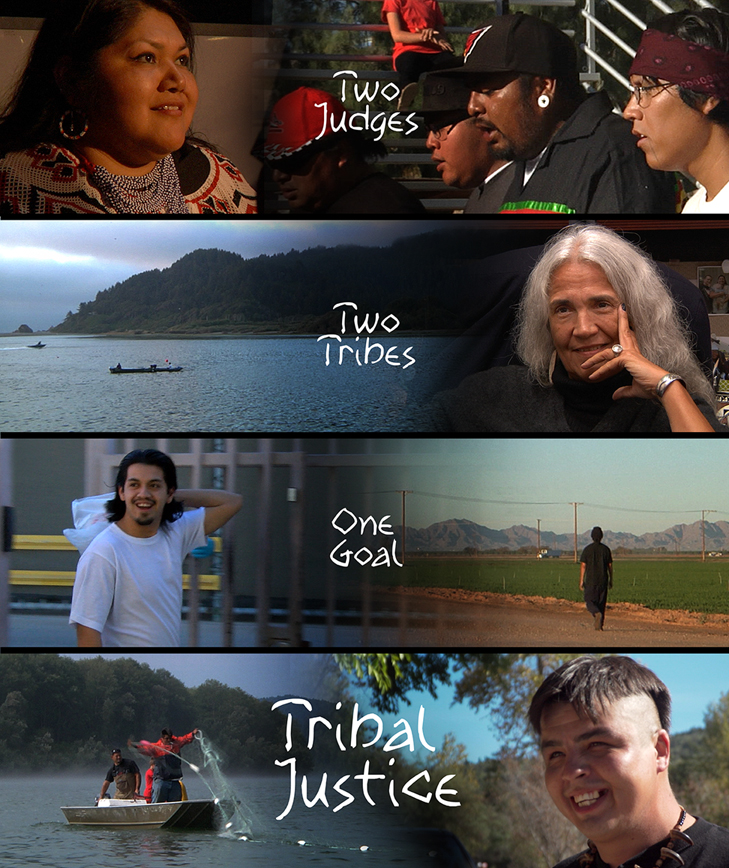
Tribal Justice

Sunday, May 7, 2017

Will Bears Ears Be the Next Standing Rock?

President Trump’s plan to review and possibly reverse his predecessor’s protection of a wild swath of Utah threatens Indian sovereignty.
READ: Will Bears Ears Be the Next Standing Rock? - NYTimes.com

Saturday, May 6, 2017

Defending the Law that Defends our Children #NARF #ICWA

Boy in regaliaCongress passed the Indian Child Welfare Act (ICWA) to put an end to these destructive practices. ICWA ensures that tribes have notice and an opportunity to act before a state tries to remove children from their home and place. It also provides preferred placements for Native children in need of a safe and loving home—recognizing the immense harm done by removing children not only from their families, but from their cultures.
The Indian Child Welfare Act is under attack and we need your help.
In the mid-1970s, a congressional investigation revealed that state agencies and courts were disproportionately removing American Indian and Alaska Native children from their families and placing them in non-Native foster or adoptive homes or residential institutions, never to see their families or communities again. In many cases, state officials removed children because they were unable or unwilling to understand tribal cultures and societies. The removals and placements were devastating to the children, their families, and tribes. Broken families, loss of culture, and forced assimilation led to identity problems, incarceration, addictions, and suicide.
Although a handful of jurisdictions have remained resistant to its provisions and goals, ICWA has been largely successful in increasing tribal participation in children’s cases and ensuring the rights of Indian children are protected. In particular, the last decade has seen many states passing their own ICWAs, and tribal nations are more actively asserting their rights in ICWA proceedings. Continuing this trend, the Bureau of Indian Affairs recently published updated Guidelines for ICWA to clarify what the law requires and ensure that every state provides Native children with all the protections required by ICWA. In February 2015, the BIA announced it intended to take these reforms even further by proposing, for the first time ever, binding federal regulations governing ICWA’s implementation.
 
This success, however, is now being challenged by large, well-financed opponents who are actively and aggressively seeking to undermine ICWA’s protections for Native children as well as have ICWA itself declared unconstitutional. Capitalizing on the outcome in Adoptive Couple v. Baby Girl, ICWA’s opponents are now filing lawsuits across the Nation challenging many of ICWA’s foundational protections, including the membership status of Indian children, the obligation to notify the child’s Tribe of an ICWA case, the right of a tribe to intervene in an ICWA case, and the application of ICWA’s foster care and adoptive placement preferences.
These lawsuits represent the greatest threat to ICWA yet. Not since its enactment has ICWA come under such a direct, coordinated attack by those committed to ending the protections it guarantees every Native child. These attacks against ICWA will not go unanswered. NARF, together with coalition partners such as the National Indian Child Welfare Association and the National Congress of American Indians, is already mobilizing to defend ICWA so that it can continue to work for Native children and families.
Stand up for the rights of Native children – and all children – and JOIN US.
Matthew Newman

On Monday, August 11, 2015, NARF Staff Attorney Matthew Newman was a guest on the Native America Calling radio show. He, and other panelists, discussed the Indian Child Welfare Act and its future.  Listen to their discussion from the Native America Calling website.

Related NARF News:

Source: Defending the Law that Defends Our Children - Native American Rights Fund : Native American Rights Fund

Tuesday, May 2, 2017

Just Watch Me


It is 1969. Paulette Steeves, a ward of the provincial government and incorrigible runaway, has been incarcerated here since the age of 13.
“We were extremely poor,” says Steeves. Born in Whitehorse, her childhood was cut from the cloth of aboriginal marginalization. “My mom was an alcoholic. My parents split when I was five. My stepdad used to beat the shit out of her.”
By the age of 12, Steeves was running away regularly. She dropped out of school, picked apples, panhandled, and made her way to Vancouver, where she survived as a street kid before landing in Willingdon at age 13.
“My mother, who was 80 per cent native, warned us never to tell anyone we were Indians,” she says. The reason was heartbreaking: Long before Paulette and and her siblings were born, her mother had two children who were taken from her by authorities and put up for adoption.
“She never saw them again, and she never, ever got over it,” says Steeves. “Because of that, it was really important to her to hide our Indian-ness.”
Part of racism is who is included and who is excluded, socially, economically and historically. Steeves grew up on the outside, excluded first from her own culture, and also outside of mainstream white culture.

READ: ‘Just watch me’: Challenging the ‘origin story’ of Native Americans | Vancouver Sun
[http://vancouversun.com/news/national/aboriginal-anthropologist]

National Indigenous Survivors of Child Welfare Network


Saturday, April 29, 2017

PART FOUR: Victims of Adoptions and Lies:: Ceremony for Adoptees

By Trace Hentz

I woke up with two thoughts: there are two victims of adoption who need help and not necessarily from each other: the adoptee and the first mother. Each has its own burden and neither can heal the other.

“I get up. I walk. I fall down. Meanwhile I keep dancing.” That is a line in the book “Bird by Bird” by Ann Lamott.  Her comical book offers instructions on writing and life and so far -- I’ve had good belly laughs. Yep, Ann made a funny book!
In part two, Ann was fighting herself over jealousy of another writer friend. She wrote, “Sometimes this human stuff is slimy and pathetic - jealousy especially so - but better to feel it and talk about it and walk through it than to spend a lifetime poisoned by it."

Poison is nothing to mess with.  I spoke with an adoptee friend last night and Levi is sure we adoptees need to create new ceremonies, even some just for us adoptees. I was nodding at every word Levi said.  A lifetime of isolation from what we know to be ours, our blood rights as Indigenous People, our language and culture and the healing offered by participating in ceremony, it was not ours growing up white and adopted and assimilated.

But we adoptees are not victims, Levi said. No, we are changed by adoption but not its victims.

I thought about ceremony, what ceremony I missed growing up, and what other Indian people probably took for granted growing up. That does make me jealous. I didn’t get to meet my grandmothers in flesh, only in dreams.
I am sad I do not how to make my own regalia. I see others dance at powwow and wish someone had time to teach me what I need to know.

I can think of a million things I’d like to know. When I met relatives in Illinois last year, I was over the moon happy.  My Harlow cousins filled many holes in my heart.
I am in reunion. Jealousy is not my poison.

For those not in reunion, their hearts ache.  We need to find a way to heal them.

Levi Eagle Feather has contributed to this blog.

This is the lost post, Part 4 of the series.

Wednesday, April 26, 2017

Black Market Adoption in Indian Country: Stolen Navajo Twins

Boston Globe
June 2, 1996

REUNION DAY AT 43: NAVAJO NATIVE FINALLY HOME

Author: Royal Ford, Globe Staff

TOLANI LAKE, Ariz. -- She stood in brilliant white sunlight, scuffed the cracked skin of the vast, parched land and stared down at the very spot where the old woman told her she had been born, right there, in a hogan that is gone, beside a field where corn once grew.
The woman her family called "the old aunt" reached up with a warm, dark hand and touched her high cheekbone. "You are so like your mother," Besbah Yazzie told her. Weeping in the baked expanse of the Navajo Reservation, they hugged. Yvette Silverman Melanson, stolen along with a twin brother from her Navajo family 43 years ago, raised rich, white and Jewish in Brooklyn, was finally home.

"One more of us is still out there and a whole lot more of the others," Melanson said in reference to her missing brother and thousands of other Native American children stolen from their families over the years and put on the black market for adoption. "This is not right. We have to find them. We have to find the boy."
Navajo natives had come from across the reservation to welcome her home. 

In a hot gymnasium here, 60 miles northeast of Flagstaff, the Tolani Roadman -- Medicine Man -- had wept as he told her tale in the native tongue. Behind him, Yazzie Monroe, her father, brushed tears from his weathered cheeks. The old women of the tribe wore their finest turquoise and silver in her honor. Children danced in a colorful whirl of beads and feathers.
"I don't know my own culture," Melanson told the gathering. "I am going to need your help in understanding. I am humbled. "Teach me, teach my children" she said.
She stood amid the swirling talc-like dust of the reservation, a long way from the cloying green spring back in her Maine home and further still from the life she has lived thus far. 
As a child, there had been winters at a fine Miami hotel, summer camp in Pennsylvania. Later came long trips to Israel where she marched the length of that land and stood military guard at her kibbutz. After her adoptive parents had both died, there were two stints in the Navy and, later, marriage to a retired scallop diver named Dickie, with whom she now lives in Palmyra, Maine.
But forever there had been the question, "Who am I?"  
She had always known she was adopted, but until three months ago that was all she knew. Then one night while exploring on her computer, she found out. 
On a national website, she saw that a Navajo family was looking for its lost twins. The trails of her search and theirs crossed in the Southwest. A piece of tattered and fading paper she possessed, bearing the names Yazzie Monroe and Betty Jackson, solved the puzzle. They were the mother and father of the large family that was looking for her.
It was an unlikely trinity, ancient and new, that brought her home: the Internet, that scrap of paper, and the mysterious works of the Holy People on her reservation who had held ceremonies to help find her.
This weekend, that family welcomes her home. She will stay here for two weeks along with her husband and daughters, Lori and Heather. Her mother died years ago, but her father was there to take her, looking almost fragile, into his great brown arms. Her seven brothers and sisters were there, as were numerous nieces, nephews, aunts and uncles, cousins and members of her clan.
"We have always known she was around somewhere," said Nettie Rogers, her sister.  "We want to thank the Holy People for bringing back our child, our daughter, to the center," Freddie Howard, a Tolani Lake official, told a crowd that streamed into a gymnasium for ceremonies welcoming Melanson and her family to her birthplace. 
She had come to the reservation east from Flagstaff, crossing through the Coconino National Forest. The Navajo lands began where the trees ended and a hot, dusty, vastness sprawled ahead. To the South were towns that bespoke stereotypical western violence: Two Guns, Two Arrows; and a place of real cataclysm, a giant crater created when a meteor smashed into the Earth 50,000 years ago.
Across the reservation were the four sacred mountains of her tribe, dark, bruised buttes and colorful mesas that glimmered like poured sand art."I've never seen mountains go straight up," she said as they shimmered in the white light of afternoon.
Her return came as efforts to find the so-called "lost birds" of the Navajo and other tribes across the country have intensified. 
After Melanson's story made national headlines and television news last month, a website previously set up by the Lost Bird Society, founded by a Lakota woman named Marie Not Help Him, was peppered with inquiries.
And it came as the tribes are fighting a bill in Congress that would make the adoption of Indian children by whites easier. It would weaken a federal law passed in 1978 that requires that Indian children removed from their homes be placed with relatives or other Native families.
In welcoming Yvette home, Navajo leaders rose to speak in defense of their children.  "We are more than dances, turquoise and rugs," Genevieve Jackson said in a plea that the outside world understand what is happening to Native children.  
 "Yvette's story is the Navajo story," Delores Grey Eyes added.  
Melanson's father presented her with a Navajo wedding basket symbolizing Mother Earth, Father Sky and a Navajo people planted in harmony between.  He said, as another sister, Laura Chee, interpreted, that he was "happy to have his daughter home, and now he wants to know if they can get the boy back."
"We must let people know what has happened, what is happening through adoptions," Melanson said, clutching the Navajo blanket the tribe had given her. 
"My family, my friends back home, were outraged. They had no idea something like this was happening."
"The taking of the children has to be stopped," she said.
Later, her family took her to her birthsite and told her how she had been taken.  She'd been born in a hogan and was sickly. A public health nurse came and took both her and her brother to the hospital at Winslow. The family never saw them again.
"Your mother would come to the road here," Desbah Yazzie told her, "and she would hitchhike into Winslow, looking for her children. She never found you, and later all they told her was that the children had been adopted."
Yvette Silverman Melanson, born Minnie Bo Monroe, stood in a ceaseless expanse of her birthplace and marveled."You can see forever," she said. "The sky is endless, the land is so big. If someone disappeared, a baby, how would you know which direction to go to even begin to look for them...
 This story is old (1996) but the fact is she is still looking - there are no updates on her lost twin brother....Trace

In Other Words: Susan Harness and Sandy White Hawk

REBLOG: listen at links

Recently, I was interviewed for a radio program in Missoula, Montana regarding my research on American Indian transracial adoption. It originally aired on Montana Public Radio (MTPR.org) Tuesday, December 11th 2012, on the program In Other Words, which explores experiences through a feminist perspective. The interview looks at American Indian transracial adoption and its intersection with race, history and class. If you weren’t able to catch it live, click on the link below to listen now.

http://www.susandevanharness.com/in-other-words-montana-public-radio/#comments

Sandy White Hawk’s Response to Susan Harness


Below is our friend Sandy White Hawk’s response to the podcast we did with our friend Susan Harness. Enjoy.
_______________
Dear Kevin, (Land of Gazillion Adoptees)
I wanted to respond to Susan Harness’ reference to the Southeast Asian tradition the Gifting of a child as an alternative to standard adoption.
In Indian Country a traditional alternative to standard adoption practice is now developing.  It is called Customary Adoption or Custom Adoption. Long before first European contact Indian nations had a custom that kept and maintained balance with their communities; adoption was one of those customs.
Tribes are beginning to reclaim their traditional ways of maintaining family connections for those who would otherwise be separated from their families and communities if the family was struggling in taking care of their children.
The White Earth Tribe Band of Ojibwe of Minnesota has been the leader in developing this practice in its tribal court. Adoption money, SSI and other benefits follow the child in the process just as in a standard adoption. The major difference is parental rights are not terminated. In White Earth they use the term “suspended.”

Termination of parental rights is not a tribal belief. One cannot severe the familial connection. The termination of parental rights adds to the pain of a struggling parent, family and community. Children need to be protected if their parents who are not able to keep their children safe but terminating parental rights do not have to happen to protect the child or help the struggling parent.
Suspension of parental rights allows the mother and or father to re-enter the child’s life if they get on a good path, as a full custodial parent if that is in the original agreement. The adoptive family is often a tribal member and or approved by the tribe. They do their own home studies and adoptions through their tribal court.
Customary Adoption in White Earth has been very successful. In 2009 they had done about 250 adoptions where only 2 have disrupted. I believe this is due to the tribes Home Study Program they developed. The fact that parental rights are not terminated more relatives come forward to help because they will not have to be part termination hearings, which has to be exceptionally painful for families.
In White Earth Customary Adoption the birth mother or father can have a voice in the placement of their children and the adoptee can come get any information in his/her file anytime they wish.
Since parental rights are not terminated, only suspended, (or whatever term a particular tribe chooses) the mother can re-enter the child’s life, if they get on a good path, as full custody parent if that is the agreement.
Tribes from across the country are starting to develop Customary Adoption. Customary Adoption was passed into California law in 2009, http://www.calindian.org/alerts/62-2010-alert/99-tribal-customary-adoption.
Customary Adoption is based in Native thought – life ways. For the Lakota people it is one of our Seven Sacred Rites, called Hunka (Making Relatives) Ceremony. It is when a child (or adult) is adopted into a family, without severing their original family ties so families expand.
The Making of Relatives binds the adoption through ceremony and is honored until death.
The elders tell us that Hunka happened in many different ways. If a child was lost to disease early in life a family may Hunka another child offered by another family. Adults would make relatives maybe after their family member died so the family would Hunka a young man or young woman to take his place. This helped in a couple ways. The young man or young woman who was adopted would assume the role of the missing family member. That meant contributing by hunting, preparing food, taking care of the children or the old ones; it preserved the family system and strengthened the extended family.  The Lakota people have never stopped Making Relatives in the traditional Hunka Ceremony. It is very common to hear someon say, “This is my Hunka Uncle or Hunka Sister.”
I was honored to witness a monthly White Earth Adoption Day in 2007. Relatives from both the birth family and the adoptive family attended along with community members and the spiritual leader. There were approximately twenty-five people gathered. Words of encouragement were shared by the spiritual leader and then all participated in a traditional pipe ceremony before they went into courtroom. The court room filled up with everyone even the young ones. Both birth mother and adoptive mother are wrapped in star quilts and pictures are taken.  After the formality of law is done everyone gathers for a feast. Another honor song is sung and blessing said. It was beautiful to witness.
I interviewed the young birth mother afterwards and she said that she had five children. The oldest three were placed in stranger adoption (my words) but her two youngest daughters she got to help to choose the parents and visitation was arranged through Customary Adoption.
She admitted that she was not in a place to take care of her babies because she is addicted (as was her mother). Grandmother was a boarding school survivor, distant but tried to be there for her family. She said that she felt good about this adoption.
I know that while she knew she did the right thing for the safety of her children it was still sad for her. When the feast was over she leaned on the large glass window forehead pressed to the glass watching her two young girls walk away with the parents she agreed to let raise her babies.
As a Native American adoptee who was adopted in during the time of systematic removal of tribal children, secrecy and during the time that adopted children were adopted to “have a better life” my heart rested knowing that these Ojibwe children will know who they are, where they come from which will help them understand what they are going to do in life and where they are going to go. The four essential questions in life our elders tell us we have to be able to answer to have balance. Most importantly this generation of White Earth adoptees will remember the drum, the song sung in their honor, the prayers said in Ojibwe, the food, running and playing while the adults visited; a memory of being cared for by a community; no shame, no guilt, only a community of relatives there to support them and their mother.
Another source of information on Customary Adoption can be found at:  http://www.nicwa.org/adoption/.
Sandy White Hawk 2012

Editor's Note: Both Susan and Sandy (Native adoptees) are writing memoirs. Susan's website: http://www.susanharness.com/about/

Monday, April 24, 2017

UPDATES: In The Veins, Goldwater #ICWA lawsuit

www.bluehandbooks.org
In the Veins poetry anthology editor Patricia Busbee (adoptee, Cherokee mix) spoke with Dr. Dawn Karima (who also contributed stunning poetry to this book) about Native poetry and our history recently:

LISTEN:
http://talktainmentradio.com/podcasts/Conversation%20with%20Dawn%20Karima%20042417.mp3

****

Notice of Appeal in Goldwater ICWA Litigation


As they promised they would, Goldwater filed their notice of appeal to the 9th Circuit in the Arizona ICWA class action case.

Here.

Order they are appealing is here.

As always, documents in the case will be housed here.


***LOST CHILDREN  BOOK SERIES

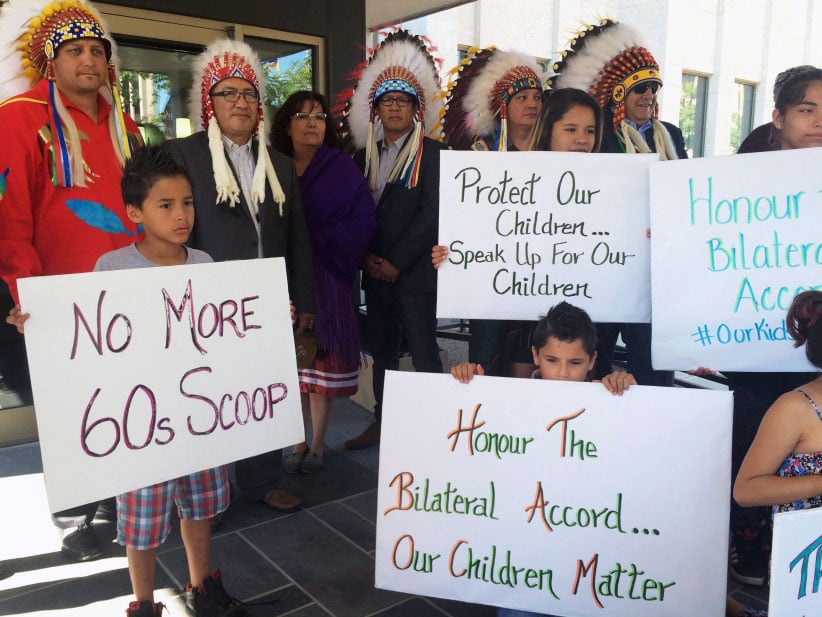
This highly-anticipated collection is part of a history-making book series Lost Children of the Indian Adoption Projects.  This series includes TWO WORLDS (Vol. 1), CALLED HOME: The Road Map (Vol. 2), and STOLEN GENERATIONS: Survivors of the Indian Adoption Projects and 60s Scoop (Vol. 3).  
IN THE VEINS (Vol. 4)  ISBN: 978-0692832646 $9.99, will share part of its proceeds with Standing Rock Water Protectors.
Paperback $9.99   Kindle ebook $3.96

Saturday, April 22, 2017

Dawnland: Maine's Stolen Generations

Dawnland Trailer from Upstander Project on Vimeo.

About the film

When most people hear about children ripped from their families, they think of faraway places or of centuries past. The reality is it's been happening in the U.S. for centuries—and is still happening today. Native American children are more than twice as likely as non-Native children to be taken from their families and put into foster care, according to a 2013 study.
Americans should know that these atrocities are not history. 

READ MORE

We mention this documentary in the anthology STOLEN GENERATIONS (see sidebar)

Thursday, April 20, 2017

My birth certificate is literally ‘fake news’

Connecticut is the home to many Native adoptees who were transferred and adopted there from Washington state - yes, all the way across the country! That is the Indian Adoption Projects and ARENA in action.


Older birth parents and relatives are dying off, so are some of the adoptees leaving their children and grandchildren with big holes in their personal family health histories.  Adds Caffery, “We feel strongly that time is of the essence. It’s time to end this failed social experiment of secrecy and shame. It’s time to threat us as full citizens of our country and our state.”

Monday, April 17, 2017

Special Needs Adoption

Adoption Fairness Bill: Bipartisan Legislation for Tribal Special Needs Children


Adoption tax credit fairness for tribes: Bill would give parents adopting tribal special needs children an adoption tax credit available to ...
Read More »


Click here to learn more about the bill and Click here to read a letter of support from Chairman Dave Archambault II on behalf of the Standing Rock Sioux Tribe.
 

Canada’s Child Welfare Crisis in 2017

Op-Ed in Maclean’s About Canada’s Child Welfare Crisis

Here, by Pam Palmater. Canada’s numbers of Native children in care may be currently worse than pre-ICWA numbers in the United States (Task Force Four Report).
The increasing number of First Nations children being placed into foster care in Canada is nothing short of a crisis. Although Indigenous children make up only seven per cent of the population in Canada, they represent 48 per cent of all children in foster care. It is an astounding number until one examines these rates on a province-by-province basis. In Alberta, Manitoba and Saskatchewan, Indigenous children represent a shocking 73 per cent, 85 per cent and 87 per cent of all children in care respectively, according to the most recent Statistics Canada report. However, Manitoba reports that their numbers of Indigenous children in care are increasing and currently stands at 90 per cent, which represents one of the highest rates in the world. This isn’t much of a surprise given that one newborn is taken away from his or her mother every day in Manitoba as a matter of course—the vast majority being Indigenous. They are not the only provinces implicated as Indigenous children in Ontario are 168 per cent more likely to be taken into care than white children.

MORE: Prisons are the ‘new residential schools’

Friday, April 14, 2017

the Indigenous Rights Movement in Canada Honored with Top Amnesty Intl Award


Published April 14, 2017

MONTREAL – Celebrated global music artist and activist Alicia Keys and the inspirational movement of Indigenous Peoples fighting for their rights in Canada have been honored with Amnesty International’s Ambassador of Conscience Award for 2017, the human rights organization announced today.
The award will be officially presented at a ceremony in Montréal, Canada, on May 27.
Accepting the award recognizing the Indigenous rights movement of Canada will be six individuals representing the strength and diversity of the movement, which has bravely fought to end discrimination and ensure the safety and well-being of Indigenous families and communities. They are Cindy Blackstock, Delilah Saunders, Melanie Morrison, Senator Murray Sinclair, Melissa Mollen Dupuis and Widia Larivière.

Cindy Blackstock hopes that the award will help to focus global attention on the injustices still prevalent in Canada today.
As head of the First Nations Child and Family Caring Society, she led a decade-long legal battle against the underfunding of social services for First Nations children. In 2016, the Canadian Human Rights Tribunal issued a landmark ruling calling on the federal government to take immediate action to end its discriminatory practices.
However, the Canadian government has continued to drag its feet in fully complying with the ruling, meaning that First Nations children are still suffering discrimination.
“The conscience of the people is awakening to the Canadian government’s ongoing racial discrimination towards First Nations children and their families,” said Cindy Blackstock. “Now the question is: What are we going to do about it? Are we going to allow Canada to celebrate its 150th birthday while it bathes in racism, or will we speak up and demand the discrimination stops?”


READ: Alicia Keys and the Indigenous Rights Movement in Canada Honored with Top Amnesty Intl Award - Native News Online

Monday, April 10, 2017

The Rights of an Indian Child

The Rights of Indian Children ABA Article


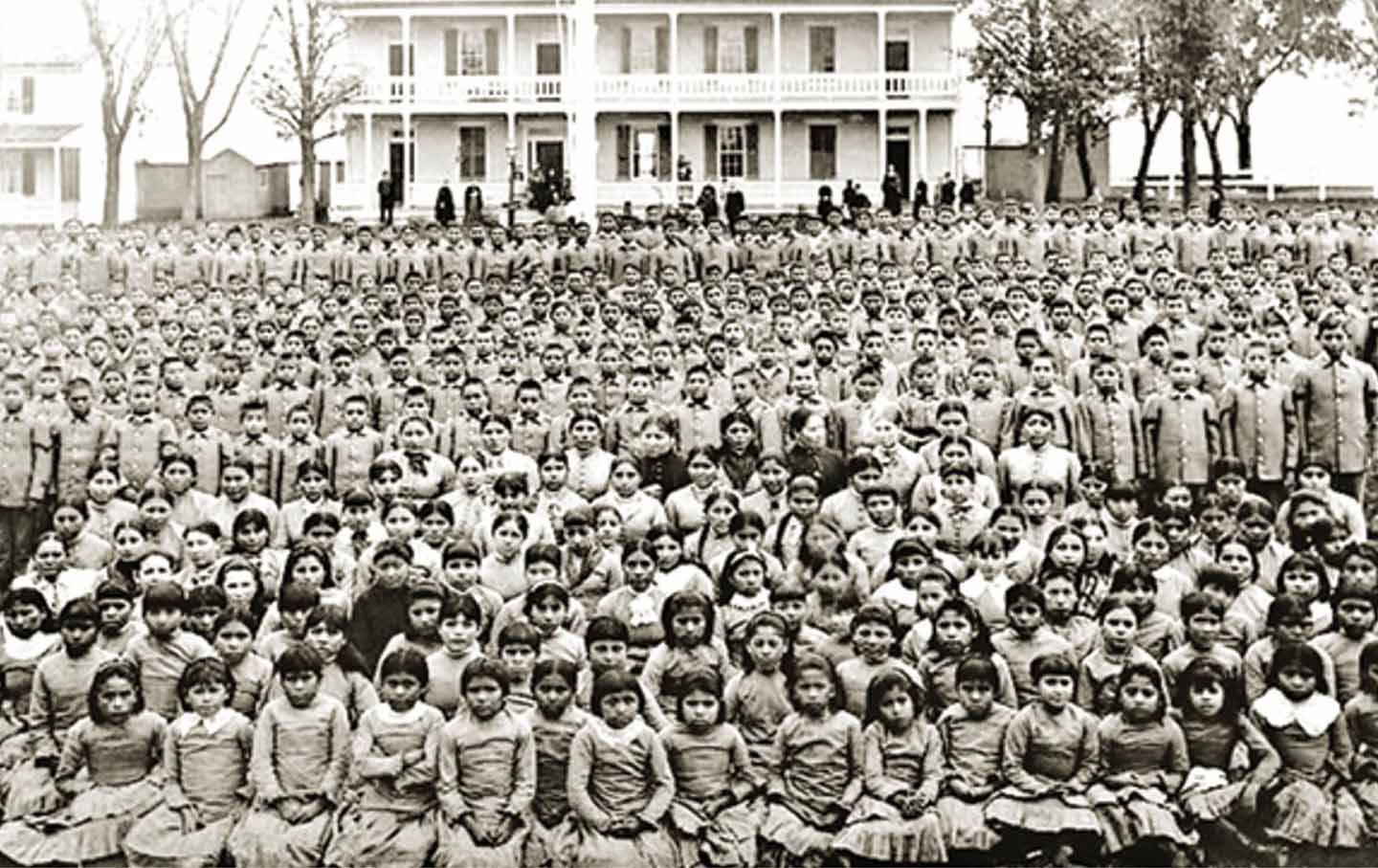
The tribe I worked for decided to “bring the children home” through a focus on children in their community and ensuring resources to support that work. Many strategies were employed, depending on case specifics. Ensuring the tribal children were closer to home, both in proximity and culturally, was the goal. Some cases achieved the goal through reunification with the natural parents, others by placement within kinship care from stranger foster care. One of the primary practices was the transfer of cases to tribal court when the parents were amenable. In the end we brought all but one child back into tribal custody with an over 75 percent kinship placement rate.


AND 2017 ICWA OFFICERS (27 page pdf)


Print them out and use them PLEASE:
2017-Designated Agents for ICWA Service

Thursday, April 6, 2017

Darker Agenda: Is the adoption industry looking to monetize our children or worse #goldwater

A Right-Wing Think Tank Is Trying to Bring Down the Indian Child Welfare Act. Why? | The Nation

Here.
 ...A ruling in Goldwater’s favor, according to Fort and other legal experts, could undermine the authority of tribal courts, shutter tribal casinos, and open up reservations to privatization, something that could benefit oil and gas developers like the Koch brothers. 

Wednesday, April 5, 2017

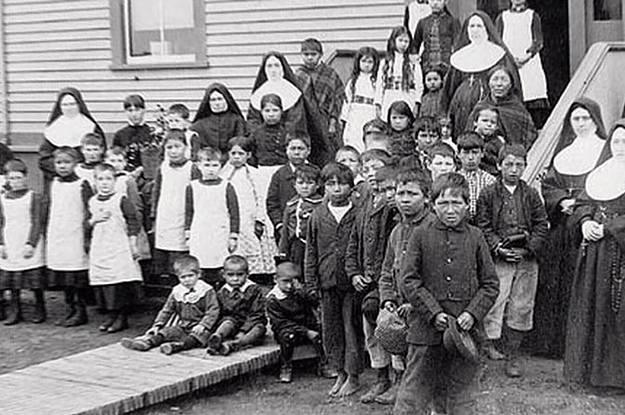
Indian School Road

In Indian School Road, journalist Chris Benjamin tackles the controversial and tragic history of the Shubenacadie Indian Residential School, its predecessors, and its lasting effects, giving voice to multiple perspectives for the first time. Benjamin integrates research, interviews, and testimonies to guide readers through the varied experiences of students, principals, and teachers over the school’s nearly forty years of operation (1930–1967) and beyond. Exposing the raw wounds of Truth and Reconciliation as well as the struggle for an inclusive Mi’kmaw education system, Indian School Road is a comprehensive and compassionate narrative history of the school that uneducated hundreds of Aboriginal children.
Source: Indian School Road

Monday, April 3, 2017

Reconciliation Pole installed on UBC Vancouver campus

Reconciliation Pole at UBC nails the past to confront harsh reality of residential schools

NATIONAL

 
Reconciliation Pole at UBC nails the past to confront harsh reality of residential schools
One of the most distinctive parts of Reconciliation Pole are the copper nails. It has 68,000 of them pounded flat into the surface. Each one represents an indigenous child who died at residential schools across the country, said Haida artist James Hart, who was commissioned to design and carve the totem pole.  Click here to read more ...

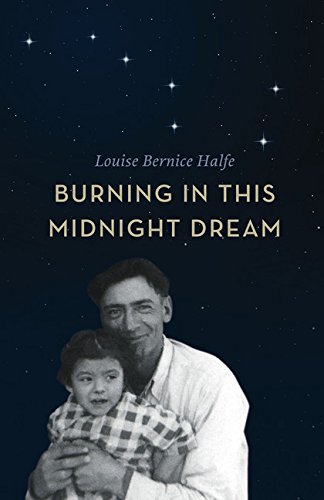
Today's Book of Poetry: Burning In This Midnight Dream - Louise Bernice ...


Louise Bernice Halfe Sky Dancer has published a third volume of poetry, Burning In This Midnight Dream, and it is a burning indictment, a hushed prayer, an angry account.  Burning In This Midnight Dream articulates some of Canada's worst history from the inside looking out.  

These poems are an insider's nightmare memories of Canada's residential schools.

Halfe/Sky Dancer is a quiet poet of considerable reserve yet these poems rumble with thunderous revelations that reverberate off of the page, run up your arms and attack your guilty heart.
nipin nikamowin - summer song

I listened to outrageous laughter
there by the stone-carving shelter
where children painted and listened
to Alex Janvier.
Year after year
on the grounds of Blue Quills
I shared a tent with a friend and we told stories
of those lonely nights and how we preserved
our broken Cree.
I walked, ran, skipped
swore and sang the fourteen miles
from that school all the way to Saddle Lake.
We were told by our guide to meditate, be silent
in our walk. How could we after our voices
where lost in the classrooms of that school?
When I reached my home reserve
the Old Ones received me
and danced me on my blistered feet.
Water, tea, fruit, bannock and deer stew.
What food would heal this wound
bundled against my back?
A child still crying in those long school nights.
I know of a man who still carries his suitcase,
began at six, now sixty years, carrying
those little treasures of home
that was forever gone.
...
Burning In This Midnight Dream is a peat fire of poetry.  You don't see any flames on the surface but you know for certain that you are on hot footing and that all is ablaze underneath, smoldering and determined.

Halfe/Sky Dancer has included several family photos along with the text and this case is the exception that proves the rule about photos and poetry.  These photos are necessary.  The poems work just fine on their own, they are all strong, exude the strength of a brave survivor, but these photos make the stories blood, flesh and bone.  We see the young children in a new and different context, we see them as clearly as the "boy in the striped pajamas," the red-coated lost girl in the opening frames of Steven Spielberg's Shindler's List.  The fine and perfect faces in these photos are calling out through these poems.
Residential School Alumni

An uncle shot his wife
left her lying behind the house
with the rifle at her side.
Their four children peered
behind the curtains.
He was never able to look at anyone.
A lake held him as he froze, standing,
clutching his traps.
One son joined the marines
a mosquito killed him in Vietnam.
In a police chase another son
hit a slough and drowned in his grave.
Their little brother slept in a flaming
house with needles, spoons, heroin and cocaine.
My cousin was left alone.
I remember them.
...
Our morning read here in the Today's book of poetry offices was a little more sombre than usual but that's not to say we didn't enjoy the poems.  We certainly respected them.
Louise Bernice Halfe Sky Dancer wants the Truth and Reconciliation process to succeed.  Burning In This Midnight Dream is an honourable attempt to plow as much truth into the open as the open can bear.

click

Contact Trace

Name

Email *

Message *

NO MORE UPDATES

GO TO:  https://blog.americanindianadoptees.com/  for updates and news. THIS BLOG cannot be updated...